FW
Lectrato participate in CISMA 2019
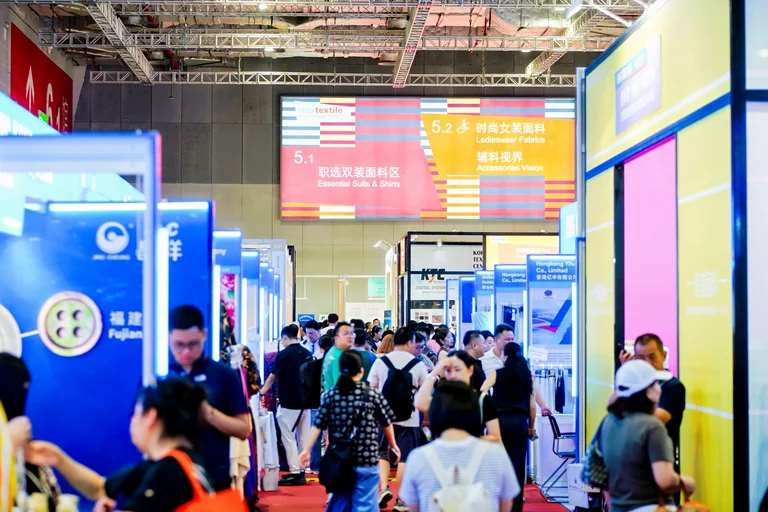
Lectra will participate in the China International Sewing Machinery &Accessories (CISMA) Exhibition to be held at the Shanghai New International Expo Centre from September 25 – 28, 2019. The company will launch its new Industry 4.0 solutions for fashion, automotive and furniture industries, providing visitors with a unique customer experience.
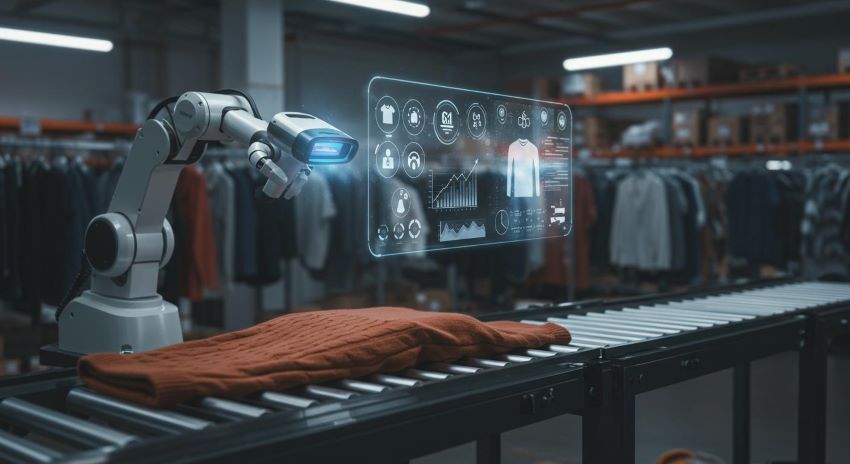
Developed on Industry 4.0 principles, the solutions will support companies in their digital transformation by using data, artificial intelligence, the industrial Internet of things and cloud technology, said Lectra in a press release.
As an Industry 4.0 pioneer, Lectra’s mission is to help brands, manufacturers and retailers meet industry challenges by crafting the premium technology solutions that facilitate the digital transformation of their industry. Lectra provides companies with expertise and advanced integrated technology to help them achieve operational excellence produce superior-quality products and successfully reach their goals.
Lectra will make history with Fashion on Demand by Lectra, fashion’s first end-to-end personalisation offer. Fashion on Demand by Lectra will automate the entire personalisation process, from order reception and product development, to the final cutting stages. Resulting from a four-year research-and-development process, the revolutionary digital solution for on-demand production comes in three packages for a modular and scalable offer: made to order for sampling, small series and quick assortment; made to customise for customisation orders; and made to measure for made-to-measure clothing.
Furniture on Demand by Lectra is the industry’s first end-to-end solution, from order processing to cutting for customised furniture manufacturing. This breakthrough solution gives furniture companies the ability to make customisation and small series production processes more agile, productive and profitable. It is composed of two packages: Made to Customise and Made to Order.
The Made to Order process starts with automatic creation of the cutting order. Made to Customise begins further upstream, automating creation of furniture components directly from the customer order.
CISMA visitors will have the opportunity to discover how these revolutionary solutions can help companies produce highly customised products, enhance competitive advantages, gain customer loyalty and increase revenues. During the event, Lectra will also showcase other innovative solutions for the fashion, automotive and furniture industries.
Lebanese brand infuses ethics into fashion
Emergency Room, based in Lebanon, aims at providing a sustainable and ethical alternative to fast fashion. The name of the brand derives from its belief that fashion is sick and needs help. Using unexpected materials – from old bed sheets, curtains and fabric designed to upholster sofas, to a roll of waterproof tablecloth printed with a misaligned advert for a German beer – it designs statement pieces. The brand is based on two axis: ethical treatment of garment workers; and the sustainable side of fashion, which is the promise to use only dead stock fabric and secondhand clothes.
The brand redesigns and embellishes garments to give them a new lease of life. Other pieces are made from scratch using high-quality fabrics from rolls that are partially damaged or almost finished, known as dead stock. Saving money on materials allows the brand to pay the dozen or so tailors it works with more per piece as well as ensuring that unwanted fabric doesn’t end up in landfill. Each piece is unique because it comes from limited quantities of a fabric, and that has shaped the eclectic DNA of the brand. Emergency Room’s Instagram page not only showcases the clothes, but also ¬features photographs of the tailors who work on them.
H&M and Zara to concentrate on online sales
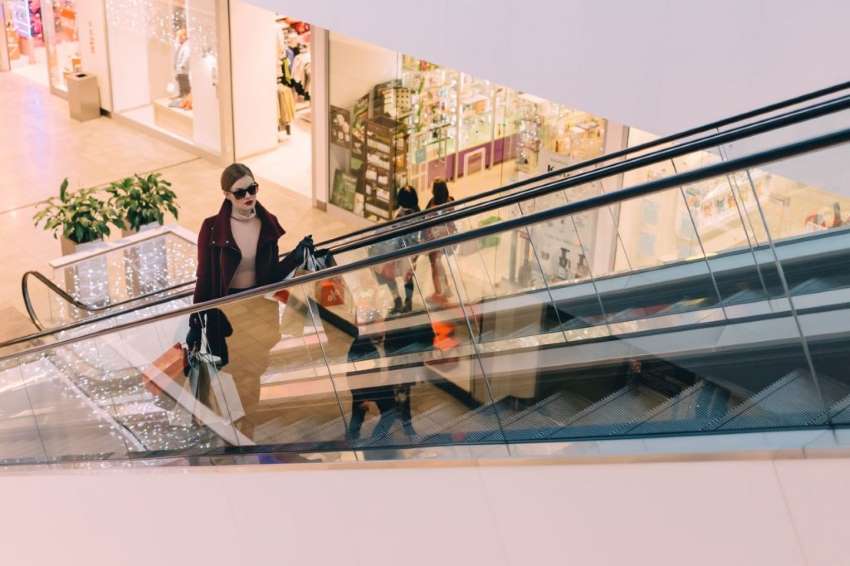
Hennes & Mauritz, the Swedish company behind H&M, Monki and Weekday, and Spain-based Inditex (owner of Zara and Massimo Dutti) are both trimming their network of physical stores and adding more resources into online sales.
After closing about 140 stores last year, H&M has revised down its plans for store openings this year from a net 175 worldwide to 130. The brand is cutting its capacity in Europe, with a net reduction in H&M brand stores across the continent this year.
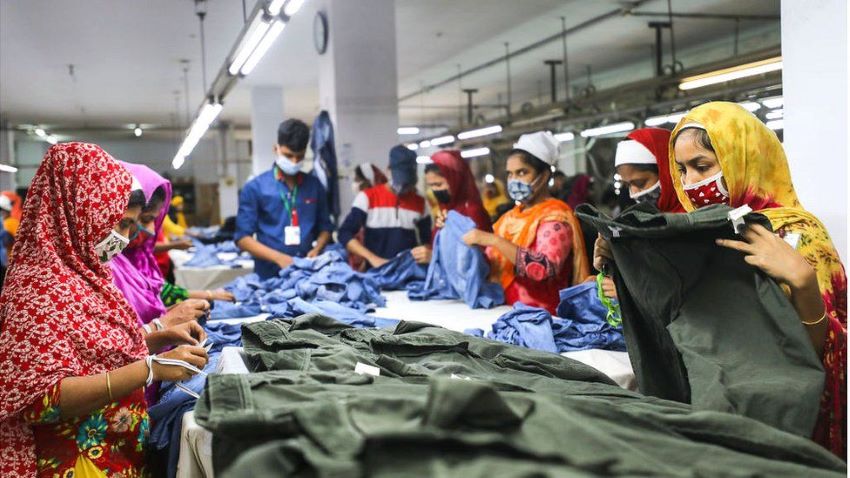
Zara parent Inditex, meanwhile, closed 355 stores last year. It plans to close another 250, while opening 300 this year.The two companies’ plans for online sales this year are striking. Inditex has already opened online stores this year in Saudi Arabia, the United Arab Emirates, Lebanon, Egypt, Morocco, Israel, Serbia, and Indonesia (serving a combined population of nearly 500 million), and it plans to have stores up and running for its fall/winter collections in South Africa, Qatar, Kuwait, Bahrein, Oman, Jordan, Colombia, Philippines and Ukraine.
H&M, meanwhile, is promising big upgrades to its online store, including H&M’s improved navigation and product presentation and shorter delivery times (the latter in particular being an area where it has compared unfavorably to online-only rivals such as Zalando, Boohoo, and, of course, Amazon.com). It also promises more flexibility in payment, building on its investment in fintech unicorn Klarna last year.
AEPC, ILO team up to launch compendium of good management practices
"Not immune to the challenges of recession, unemployment and sustainability in consumption and production, India’s RMG exports has been hovering around $17 billion for the last few years. Increasing competition is making buyers more stringent about brand’s compliance to environment standards. They are also seeking faster deliveries. To make the Indian apparel industry more competitive, ILO in partnership with AEPC has developed a compendium of good management practices to help the industry improve quality, efficiency and sustainability."
 Not immune to the challenges of recession, unemployment and sustainability in consumption and production, India’s RMG exports has been hovering around $17 billion for the last few years. Increasing competition is making buyers more stringent about brand’s compliance to environment standards. They are also seeking faster deliveries. To make the Indian apparel industry more competitive, ILO in partnership with AEPC has developed a compendium of good management practices to help the industry improve quality, efficiency and sustainability. This compendium will be launched on August 30, 2019.
Setting benchmarks for production and management practices
The project aims to set benchmarks for production, management practices and profitability at par with global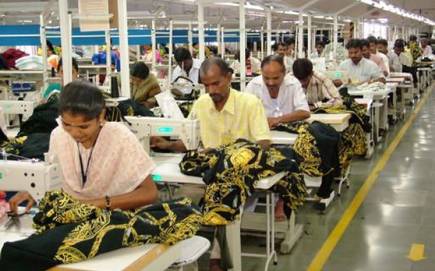 standards. Based on the practices adopted, the participating units would benefit by saving both time and costs.
AEPC under the Ministry of Textiles will facilitate a policy dialogue/consultation to deliberate on pressing challenges being faced by stakeholders in the sector. The key objectives of consultation will include:
• Highlight policy concerns that need priority attention to continue RMG sector growth
• Discuss facilitative policy framework and schemes that the sector requires to meet the dual goal of employment generation and skill building
• Launch the compendium of good management practices that RMG sector can adopt for market alignment and competitiveness.
EU may withdraw privilege for Cambodia
The European Union is contemplating withdraw Cambodia’s Everything But Arms (EBA) access.This, Cambodia fears, can harm 7,50,000 workers in the garment, footwear and travel goods sector and three million families, lead to large job losses and would not serve the EBA program’s objective of poverty eradication and sustainable development.
Concessions offered through EBA had lifted millions of Cambodians out of poverty and significantly contributed to Cambodia’s economic and social development. Of exports from Cambodia to the EU last year, more than 95 per cent were included under the EBA. Workers, unionists and others benefiting from the EBA program would like to see the EU maintain Cambodia’s EBA access.
Three areas of concern initially prompted the EU to launch the EBA withdrawal procedure in February – political freedom, human rights and labor rights. In the labor sector, Cambodia as complied with EU conditions in dropping charges against union leaders as well as making changes to the trade union law. But the EU needs action on political freedom and human rights, too, and if progress were shown in these areas, the EU would consider maintaining Cambodia’s EBA access.
In three months, the EU will take a final decision on Cambodia’s EBA status.
Textile companies working on textile waste
Textiles are evolving to meet consumer demand for sustainability. Companies want to be seen as being environmentally responsible. It’s about reducing waste during textile production and reusing or recycling waste to produce other products. Rugs and outdoor fabrics, for instance, are increasingly being made with recycled materials instead of new plastics. One effort to help consumers reliably identify more eco-friendly companies is a new level of Oeko-Tex certification, called Made in Green, certifying that no harmful chemicals have been used in the manufacture of a certain product.
A lot is happening on the fashion-design front, too, to explore new, sustainably sourced and even compostable types of textiles. An exhibit of textile innovations in the US included a dress made by a Japanese design team that features naturally glowing silk, made from silkworms injected with a green fluorescent protein derived from jellyfish. There was a prototype for Adidas sneakers made entirely of ocean plastic. Another prototype of sneakers was entirely compostable. There was textile made from algae. Fashion design students are experimenting using milkweed and flax to create luxurious fur from 100 per cent plant material. Another student design team has come up with the idea for a spandex-type elastic fabric using a protein found in oysters.
Vietnam’s apparel exports to increase by 10.8 per cent
As per Vietnam Textile and Apparel Association (VITAS), the country’s exports of textile and garments, and leather shoes are likely to increase by 10.8 per cent to $40 billion. The association expects the US to remain the biggest importer, accounting for 42 percent of Vietnam’s total exports, followed by the EU (21.5 percent), Japan (19.5 percent), and the Republic of Korea (14 percent). Meanwhile, the Middle East will be a new market of Vietnamese garment and textiles.
According to the Ministry of Industry and Trade (MoIT), Vietnam’s exports of garment-textiles and leather shoes increased by 10.5 percent year-on-year during January-July 2019 to $18.34 billion. This growth was mainly spurred by the growth of foreign-invested businesses in the country.
Production of garment and textiles registered a robust growth on account of the signing of new-generation free trade agreements like the Comprehensive and Progressive Agreement for Trans-Pacific Partnership (CPTPP) and the EU-Vietnam Free Trade Agreement.
The country witnessed a robust growth in several of its key markets including the US with export revenue of over $7 billion, the CPTPP market with $2.5 billion, EU $1.95 billion and the Republic of Korea with $1.4 billion.The country also produced around 161.4 million pairs of shoes during the seven-month period, increasing by 7.1 percent from the same time last year. Exports of footwear rose by 13.8 percent to an estimated $10.4 billion.
China Fashion Week moves up global ranking of fashion weeks
As Global Fashion Week vitality index, China Fashion Week ranks sixth among top 10 fashion weeks globally, with Paris, New York and London in top 3. The fashion week moved up one spot since last year, when the index was launched. It registered an outstanding performance in search popularity on social media, and its performance in boosting commercial circle consumption also soared. It will run from Oct 25-Nov 02, 2019 in Beijing.
The ranking by Shanghai-based China Economic Information Service, a subsidiary of Xinhua News Agency, was based on a number of indexes such as media influence, radiometric level of commercial circles like the percentage of high-income consumers, the number of participating brands and activity numbers.
Can fast-fashion be sustainable by reworking business culture?
"The growing hazards of fast fashion are forcing many brands to incorporate sustainability initiatives in their operations. A recent example of this is Zara, which introduced a sustainability pledge. However, the brand produces around 450 million garments a year besides releasing 500 new designs every week, about 20,000 a year. This makes its adherence to sustainability difficult."
 The growing hazards of fast fashion are forcing many brands to incorporate sustainability initiatives in their operations. A recent example of this is Zara, which introduced a sustainability pledge. However, the brand produces around 450 million garments a year besides releasing 500 new designs every week, about 20,000 a year. This makes its adherence to sustainability difficult.
The model of fast-fashion business is antithesis to sustainability. Even though many fast fashion companies uphold recycling of garments, they do not have required capabilities to recycle their garments at the scale needed at the current production rates. Many fast fashion companies advocate the use of sustainable fabrics. However, these fabrics require a tremendous amount of energy and natural resources to produce which prevents them from being 100 per cent sustainable.
Need-based production to boost sustainability
Small brands try to be sustainable by producing lesser clothes. They use strategies like producing made-to-order, to curtail waste. Clothe designs are of high quality to ensure longevity. Small brands also follow the ‘anti-fashion calendar’ by producing only when required as against large companies that produce clothes in bulk. So, if large corporate retailers aim to adopt sustainability they need to rework their entire business culture.
Even though corporate brands and retailers provide statistics about their environmental impact reductions within their supply chains, these reports are voluntary and not verified externally. Their method for measuring improvements is also not consistent or standardised.
A brand can’t claim to be sustainable just by using sustainable materials. It still has to deal with issues like cheap costs and speedy production which can lead to labor exploitation. It can’t urge consumers to consume responsibly as this would ultimately affect its bottomline. It can therefore, provide repair or tailoring services which will encourage consumers to use their clothes for a longer period.
To achieve the United Nations Sustainable Development Goals, including the 2C global temperature target, the fashion industry must change their outlook towards sourcing, manufacturing and distributing clothes.
Japanese value retailer Miniso makes India a supply hub
Miniso is forging partnerships with manufacturers to make India one of its supply hubs. In the two years since its launch in India, the Japanese value retailer has opened 110 stores across 41 cities. The plan is to open about 70 stores this year. Miniso will purchase products in India and export to other countries. India will be the second biggest purchase country for Miniso. Some makeup and textile products are already being exported from India though right now these are on a small scale. Going forward it will invest in India from retail to sourcing.
Miniso is known for low-cost products such as mobile phone accessories, handbags, storage boxes, stationery, perfumes etc. As a result, it has opened in top cities, and Tier II markets such as Jalandhar, Kanpur, Howrah etc. Miniso updates products every seven days and targets intelligent consumer product chains. Worldwide Miniso is in some 2,600 stores in 60 countries including India, Indonesia, South Korea, Hong Kong, the Philippines, Thailand, Vietnam, and the United States. Miniso strives to provide consumers with smarter, simpler and stylish products. It takes product structure optimization and product management as its priority, with designs from Japan, Korea, Sweden, Denmark, Singapore, Malaysia and China.