FW
UK retail hit by closures
The UK retail industry is faced with high store closures and job losses. The 12-month average retail sales growth currently is just 0.1 per cent, the lowest on record, though the industry has invested in research and development as well as new technologies.
The UK retail industry accounts for five per cent of the economy and drives 5.1 per cent productivity growth across the industry compared to just 0.5 per cent in the United Kingdom as a whole.
Among the measures needed are lowering the burden of business rates, reforming the apprenticeship levy to allow greater flexibility to spend on any form of accredited training, and protecting hardworking shop workers by bringing forward legislation to safeguard the 115 retail workers who are attacked every day. The British Retail Consortium (BRC) has put forward recommendations for a comprehensive strategy for retail as well as measures to reform funding for digital skills and to tackle both in-store crime and online fraud. In addition BRC wants action to be taken to promote investment and allow the industry to fulfil its vision of success. It wants support for the industry’s transformation driven by new technology and changing consumer behavior. All this, says BRC, is needed if retail is to be the vision of success it sets out to be.
Vietnam apparel exports up 10 per cent
Vietnam’s apparel exports grew 10.4 per cent from January to October 2019. The US is the largest importer of apparel goods from Vietnam. These imports are up 12.84 per cent year-on-year. Vietnam’s exports to member countries of the CPTPP and the EU also grew significantly. Once the free trade agreement with the EU comes into force, investments in Vietnam’s textile and garment industry are expected to increase further.
There are over 2,000 textile and garment projects in the country. Vietnam’s supply chain diversification has been happening for a few years already, mainly driven by rising labor costs in China. Even before the trade war, Vietnam was getting attention because of the proximity to China and because of the existing infrastructure in the country. The full supply chain has been set up in the country for the past decade already.
Despite the increase, there are some opposite downward pulls. Vietnam has been affected indirectly by the perpetual trade war. Yarn exports to China have fallen this year. The shrinking of global fashion industry has also played a critical role. This fiscal orders received by manufacturers have fallen. Like any other apparel sourcing country, Vietnam needs further investment in high-value items.
New products, markets and free trade agreements to help turnaround India’s export story
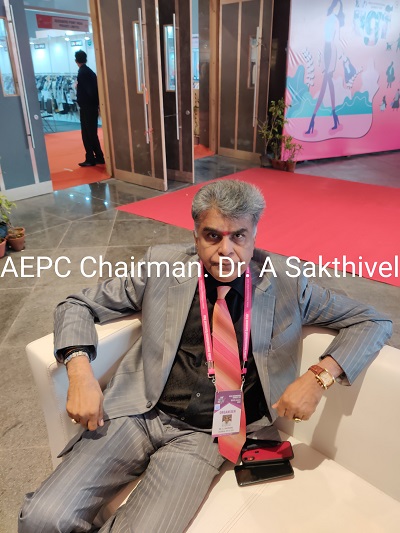 With these being stagnant over the last three years, the Indian exports paint a dismal story. The government recently issued a circular to replace the existing the Merchandise Exports from India (MEIS) scheme with the new Rebate of State Taxes and Levies (RoSTL) scheme. “But we would like the MEIS scheme to be continued upto March 2020 as we have already booked our export orders,” says Dr A Sakthivel, Chairman, AEPC which plans to concentrate on promotion of exports.
AEPC has formed a new management team that will identify new products and markets other than Europe, US and Canada. “We plan to expand in these markets by developing new products and guiding our exporters on how to penetrate these markets. We also plan to strengthen our IT system by developing a portal for small exporters and buyers,” adds Sakthivel.
Another strategy that AEPC aims to adopt is of exploring free trade agreements with Europe, UK and also CEPA with Canada and Australia. “This will enable us to double exports. The only reason other countries are growing is that their buyers don’t have to pay duty. We have to work on these scales. Not only are we planning to set up bigger factories but have also submitted a proposal for an EXIM policy and reduction of the GST on capital goods by half.
Increased sales of yoga apparels sculpts the fitness industry
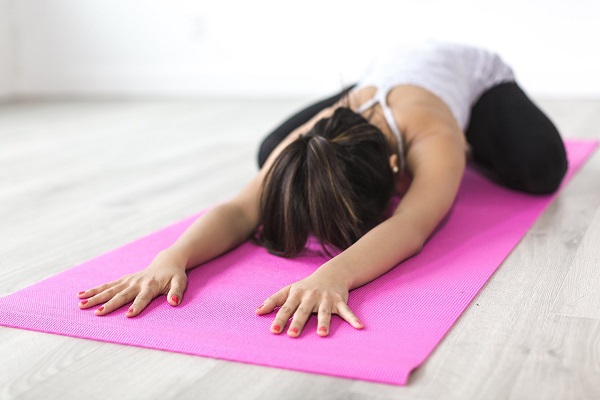
The pandemic if nothing else has proved that there is always a rainbow after the storm lifts, and that is the case with the global health and wellness industry as sales figures spiral up with customers increasingly purchasing apparels and accessories suited for their fitness regimes. Yoga as the most ancient exercise regime has become increasingly popular and this has propelled the sales of yoga clothing and running shoes, accessories such as wristbands and hairbands, yoga mats and blocks has taken a big chunk of the global fitness market pie.
Market poised to increase 7.8% from 2021 to 2030
A new report “Yoga Clothing Market by Product Type, End User, and Distribution Channel: Global Opportunity Analysis and Industry Forecast, 2021–2030” published by US-based Allied Market Research says, globally yoga clothing is doing extremely well and the market size is expected to reach $70,291.0 million by 2030 at a CAGR of 7.8 per cent from 2021 to 2030.
By specific product type, the bottom wear segment is estimated to witness the fastest growth, registering a CAGR of 8.1 per cent during the forecast period. The nylon-polyester-spandex blend of yoga pants, leggings, and fitted shorts for men, women, and children are flying off the online and offline racks. In 2020, when the pandemic was at its height and outside movement was restricted, the wellness segment was also doing extremely well unlike other apparel segments.
The women segment valued at $20,520.7 million accounted for 60.9 per cent of the total global yoga clothing market in 2020. During the pandemic years, a lot of people enrolled for yoga classes and this trend is still continuing. In North America, yoga segment is one of the most prominent markets with a largely obese population and is projected to reach $5,855.5 million by 2030, growing at a CAGR of 6.4 per cent during this forecast period.
Celebrity endorsements and body aesthetics awareness by social influence such as Kim Kardashian, Demi Moore, Madonna, Shilpa Shetty, Kareena Kapoor, and Bipasha Basu among others on various social platforms has sky-rocketed demand. Seeing the vast potential, manufacturers are using new research and developmental strategies to boost profitability while the going is good. Based on global distribution channels, this segment is categorised into: supermarkets/hypermarkets, speciality stores, e-commerce and many others with speciality stores having increased penetration in developed markets like North America and Europe with a more obese population.
India too sees a spurt in demand
Although an Indian wellness regime, it is global attention that has highlighted yoga’s benefits for promotion of good health and disease prevention of many lifestyle-related disorders. Unlike gyms, this particular exercise regime needs no machines and even children are encouraged from an early age to include it in their daily routine.
The Indian wellness market is currently valued at over Rs 500 billion which is expected to further increase. The leading global brands of exercise clothing such as Nike, Puma, Asics, Under Armour, Inc., Adidas, Lululemon Athletica, Manduka, Prana, Hugger Mugger, and Aurorae Yoga are all experimenting with all-new portfolios in India and other countries. Many Indian fitness brands such as Kisha Yoga Company, Yoga Essentials, Satva, Proyog, and My Soul Space have entered the home-grown fitness market.
Looking good and feeling comfortable while working out is part of the whole fitness regime and the one size or style just doesn’t fit all in the concept of these niche brands who understand the Indian body shape the best. Inhale the future and exhale the past is the new concept in these post-pandemic times and working out rather than partying hard is expected to propel the fitness industry to greater heights over the next decade.
ISKO presents ArquasTM 6.0 at Performance Day
ISKO has been working every angle to provide the new era of activewear and sportswear with just the right combination of high-performance properties and its Responsible Innovation TM approach. The result is ArquasTM 6.0 it features 35 fabrics, most of which are made with certified recycled materials.
The company has its expertise in woven textile concepts which hits the Performance Days, the designated stage to present the latest edition of its must-have high-performance fabrics collection ArquasTM 6.0.at November 13th and 14th, Munich.
In ArquasTM 6.0 Nylon is used for the first time presenting super light is woven and cozy outdoor fabrics, reversible and packable styles, as well as patented fabrics, such as 4 way-stretch ISKO Blue Skin TM for a 360° elasticity. To provide groundbreaking inspiration to its customers, the company’s world-class design teams have created both a men’s and women’s garment collection based on three lifestyles active, outdoor and club sports.
The outdoor fabrics that stand for superior comfort, durability, water repellency and breathability protects the element of nature.
Club Sports the perfect golf swing to a wild horse ride, essential features such as maximum flexibility, fit and performance make these the ultimate textile concepts for the sportswear market.
Activewear is ideal for a wide range of sports from yoga to fitness to running. Whether participating in high-or low-impact activities, these fabrics perfectly fulfill the technical requirements of athleisure and performance-wear apparel.
China’s slowdown impacting luxury sector’s business
Chinese government reduced value-added tax up to three percent in an effort to reinvigorate the economy. This resulted in luxury fashion labels such as Louis Vuitton and Gucci slashing their suggested retail prices in Mainland China. In the following month, US President Donald Trump announced plans to roll out tariffs as high as 25 percent on Chinese imports. In retaliation, China also raised the rate on imports for $60 billion of US goods to 25 percent.
 As per research firm Sanford C. Bernstein affluent Chinese consumers are not indulging on luxury and non-essential goods. And analysts predict, the lowered interest by affluent Chinese customers could reduce the capabilities of premium companies. Indeed, China’s trade war with the United States is adversely impacting its luxury sector-further slowing its economic growth. The country’s economy grew by just 6.2 per cent in the second quarter of this year despite $291 billion in tax cuts. This is the slowest growth rate recorded by the country since the first quarter of 1992.
Despite $291 billion in tax cuts this year, Chinese economy grew just 6.2 percent in the second quarter – the slowest rate since the first quarter of 1992. The economy is increasingly linked to global markets and reacts very quickly to external shocks. Political and economic tensions between the world’s biggest economies have continued to impact the country’s economy throughout the spring and summer months.
Tariffs slowdown quarterly sales growth
In April, the Chinese government reduced value-added tax up to three percent in an effort to reinvigorate the economy. This resulted in luxury fashion labels such as Louis Vuitton and Gucci slashing their suggested retail prices in Mainland China. In the following month, US President Donald Trump announced plans to roll out tariffs as high as 25 percent on Chinese imports. In retaliation, China also raised the rate on imports for $60 billion of US goods to 25 percent. Tariffs had a real impact on China with its growth in its quarterly sales slowing down considerably. Its second quarter growth was the slowest recorded in over 27 years.
Luxury sector grows despite slowdown
However, despite the slowdown in China’s economy, luxury brands continue to invest there as the affluent class is increasing its expenditure on high-end goods. This was clearly indicated in the first quarter results of Burberry which showed mid-teens percentage growth. Louis Vuitton’s products also witnessed a strong demand in China. Other brands like Louis Vuitton, Bulgari, and Cartier were successful in reaching digitally savvy Chinese consumers by effectively leveraging influencer relationships and Eastern social media platforms. Meanwhile, analysts expect that a “polarisation” among brands to probably continue, and anticipates that LVMH brands like Louis Vuitton and Christian Dior would be among those maintaining the upper ground.
The Gartner L2’s 2019 “Digital IQ Index: Luxury China” report also reveal adoption of luxury brands by Chinese e-commerce stores is on the rise. More than three-quarters of luxury fashion brands now have their own Chinese e-commerce shops. Luxury brands should hence take the current ‘crisis’ as an opportunity to innovate their mobile-commerce capabilities into truly global online-to-offline shopping experiences.
Profit shares extend for Garware Technical Fibres by 40.5 percent
Garware Technical Fibres Ltd, a leading manufacturer of technical textiles for the Indian and global markets, today announced its financial results for the second quarter and half year ended September 30, 2019.
The Net Sales declined by 11.2percent to Rs. 232.42 Cr in Q2 FY20 as compared to Rs. 261.83 Cr in Q2 FY19Condidering the profit before tax reduced by 10.6 percent to Rs. 43.54 Cr in Q2 FY20 as compared to Rs. 48.69 Cr in the same quarter last year. The net profit after tax has grown by 40.5 percent to Rs. 46.26 Cr in the quarter as against Rs. 32.93 cr in the corresponding period of FY19. Following EPS for Q2 FY20 is at Rs. 21.14; this is a growth of 40.5 percent over Q2 FY19
Following the result Net Sales decreased by 8.2percent to Rs. 464.75 Cr in H1FY20 as compared to Rs. 506.09 Cr in H1FY19. Profit before tax decreased by 9.6percent to Rs. 85.74 Cr in H1FY20 as compared to Rs. 94.84 Cr in the same period last year.Net profit (PAT) has increased by 18percent to Rs. 75.86 Cr in the period as against Rs. 64.30 Cr in the corresponding period of FY19. EPS for the period is at Rs. 34.67 in H1FY20; this is a rise of 18percent over H1FY19.
However, the company has good visibility for the second half of the year and will play for the improved year-end result. On the plus side good working capital management in the first half, resulting in higher fund generation from operations.
Bangladesh apparel earnings up 17 per cent
Bangladesh’s earnings from apparel exports in October 2019 fell 17.19 per cent compared to the same month of the last fiscal year.
The country’s export earnings continued to slump as the major economies of the world are facing a recession amid the US-China trade war, reducing the buying aspirations of consumers. Europe is the pivotal export market for Bangladesh but since last year has lowered its imports. While Bangladesh relies on apparel exports consumers have cut back on clothing and entertainment. While the demand for diversified products is increasing worldwide, the country has failed to diversify its products. Another reason for the export slump is that Bangladesh’s currency has become stronger vis-a-vis the dollar in the last couple of months. And competing countries have depreciated their currencies to give their exporters an advantage. So Bangladesh’s apparel shipments have fallen. The growing online apparel market is affecting export growth.
Bangladesh’s export earnings from the readymade garment sector in the first four months of this fiscal fell 6.67 per cent. However, knitwear earnings rose by 5.73 per cent. Exports of jute and jute goods went up 8.88 per cent. India had slapped an anti-dumping duty on jute sack cloth from Bangladesh.
Candiani launches world’s first biodegradable stretch
Candiani and Denham have launched the world’s first biodegradable stretch denim. Candiani is an Italian denim mill. Denham is a Dutch company. Candiani created this denim from organic cotton wrapped around a natural rubber core. By replacing the common synthetic and petrol-based elastomers with a new, custom-engineered component, Candiani has created an innovative biodegradable stretch denim fabric without compromising on elasticity and recovery properties. The result means brands can offer stretch jeans made from renewable resources and free from plastics and micro-plastics.
The first range of bio-stretch selvedge is exclusive to Denham, and available immediately at Denham stores and on its website. The collection includes limited and individually numbered jeans in its signature York and Razor styles for men.
Biodegradable components have been an area of investment for Candiani. In 2018, the mill debuted its 80th anniversary fabric, ReGen, a rigid selvedge fabric composed of 50 per cent Refibra fibers and 50 per cent recycled fibers. In spring 2019, Candiani released a stretch version, ReLast, made with a recycled elastomer developed exclusively for the mill by Asahi Kasei. At Kingpins Amsterdam in October, Candiani rolled out the last of its Re family of fabrics, ReSolve, a fabric made with organic cotton and a degradable stretch yarn.
Fashion brands enter Vietnam
Major international brands are setting up shop in Vietnam to tap a rapidly growing fashion market. Japanese casual wear retailer Uniqlo is planning its first store in the country. The 3,000 sq mt store would be one of its biggest in southeast Asia.
There are some 200 foreign brands in Vietnam, accounting for 60 per cent of the market. Zara, H&M and Mango are the three most recognised brands, followed by Gap, Forever 21 and Giordano. British brand Topshop has four stores in Vietnam and American brand Gap has five stores. Foreign investors have also been trying to enter with a series of acquisitions in the last few years. Japanese fashion company Stripe acquired Global Fashion, which owns women’s footwear brand Vascara.
Vietnam, with its young demograpy, growing incomes and 95 million population, is considered a huge and promising market. Foreign brands are attracted by its 15 to 20 per cent annual growth. In terms of spending clothes score third after food and saving. Vietnam is ranked third globally in the number of people fond of branded goods after China and India. The change in the level of wealth of the Vietnamese enables them to buy international standard products and services. More and more Vietnamese are choosing to buy luxury goods or exclusive products.