FW
Gucci to reopen Italian facility
After being hit by the COVID-19 pandemic, Gucci has announced plans to reopen its Italian facility to start working on prototyping of new merchandise. They have established a deal with Italian health officials to constantly monitor safety measures for all workers that will be working at the facility.
Italian government is yet to announce plans to end the lockdown; however many suspect that the peak period of the pandemic has passed and the spread of the virus will come to a decline in the coming months.
Gucci was one of the first companies to start manufacturing protective equipment for Italian health authorities and continues to manufacture them while working on employing only 10 per cent of workers at the manufacturing units.
Some of the safety measures that Gucci has agreed to abide by are shorter shifts, constant checking of employee temperatures and allotment of a company car to every employee if they don’t have one.
US fashion firm Lord & Taylor to file for bankruptcy
Many US businesses grappling with the economic fallout from the pandemic have tapped government funds as part of a $2.3 trillion stimulus program. But most retailers have not been eligible for aid. Lord &Taylor plans to file for bankruptcy protection after it was forced to temporarily shut all of its 38 U.S. department stores in the wake of the coronavirus outbreak, people familiar with the matter said on Monday.
Fashion rental service start-up Le Tote acquired Lord & Taylor last year from Saks Fifth Avenue owner Hudson's Bay Company for $100 million. Hudson's Bay kept ownership of some of Lord &Taylor's real estate and assumed responsibility for its rent payments, amounting to tens of millions of dollars a year.
Le Tote also owes Hudson's Bay C$33.2 million stemming from a promissory note from the deal. Le Tote acquired Lord & Taylor to expand beyond e-commerce into brick-and-mortar stores. It acquired Lord & Taylor's operations, including its merchandise inventory, online business and most of its employees. Similarly, Neiman Marcus Group plans to file for bankruptcy as soon as this week, while J.C. Penney Company Inc is also considering a similar move.
AEPC urges government to pay wages of apparel sector workers
AEPC has urged the government to pay wages of workers engaged in the apparel exporting industry for the months of April and May to bail out the sector amid the coronavirus crisis. The council also informed Prime Minister Narendra Modi that the industry has cleared all wages for March dutifully. According to the council, the government can pay wages from the funds available in the Atal Bimit Vyakti Kalyan Yojana (ABVKY) Scheme, which has reportedly huge reserves of about Rs 91,000 crore, as contributed by employees and employers.
The council stated that the apparel exporting industry, a major employer, has been very badly impacted due to COVID-19 as principal export markets of the US and Europe are under lockdown since the past several weeks. The sector urgently needs a big stimulus package from the government, he said.
Apparel products exported to the fashion retailers of the world have a shelf life of two-four weeks only and thereafter they sell at deep discounts, as per the industry body.
World Earth Day: Brands should pledge to be more responsible towards the environment
 Sustainability is a multi-step process, which requires technological advances, modification to processes as well as changes in the raw materials. Although, the word is sometimes treated like a fad, sustainability is actually a long-term process, and the journey to being fully sustainable can take years for brands.
With the negative impact on environment creating a global crisis, the fashion industry is taking several steps towards achieving sustainability. Nelson Jaffery, Head of Design, Liva recommends opting for sustainable cellulose based fabrics like viscose and modal, since these fabrics offer greater fluidity and sheen. Jaffery points out, sustainable fashion is often associated with boxy and rough textures and low style quotient, however, these fabrics ensure great drape and rank high on fashion quotient. Of late, many designers have collaborated and used these fabrics in their collections like Gabriella Demetraides, Gavin Miguel to name a few.
A multi-step process
Sustainability is a multi-step process, which requires technological advances, modification to processes as well as changes in the raw materials. Although, the word is sometimes treated like a fad, sustainability is actually a long-term process, and the journey to being fully sustainable can take years for brands.
One important side effects of the fashion industry is water pollution. Therefore, it is important to treat water from the chemicals and dyes used for manufacturing fabrics before releasing it in the environment. Also, with technological changes and modifications in the processes, brands can reduce their water consumption.
Denim industry’s sustainable initiatives
Denim is one of the most water intensive industries and home-grown brands in India like Spykar Lifestyles are taking initiatives to make the supply chain and production processes more sustainable. The brand also strives to lower the consumption of natural resources like fuel for energy and water. The chemicals used are bio-degradable and non-hazardous. Spykar’s denims are produced in a government approved facility. All denim that Spykar rolls out are made using environmentally responsible processes right from recycled cotton, washes that require less water to technologically advance dry processes such as laser techniques. The brand uses solar power and relies heavily on latest technology like laser machines, ozone wash technology and cloud wash that has aided the brand to lower the material to liquid ratio considerably. In fact, Spykar is among the few brands that refrain from using pumice stone while washing, to not disturb the depleting pumice belt. The brand also has a fully functional water treatment plant which ensures no polluted water is released into any natural water source. The water is re-treated/purified and re-used for washing.
This World Earth Day, brands should pledge to be more conscious, more sustainable and more responsible towards the environment.
Bsamply launches trade show project
 In the world of the fashion sector which, as highlighted by the Camera della Moda, represents the second industry in the country, the Milan fashion week was one of the first events to suffer the consequences of the pandemic, followed by other events in Italy and abroad. The failure to meet supply and demand in the fashion sector closely affects both large brands and small artisan workshops, severely testing Italian excellence.
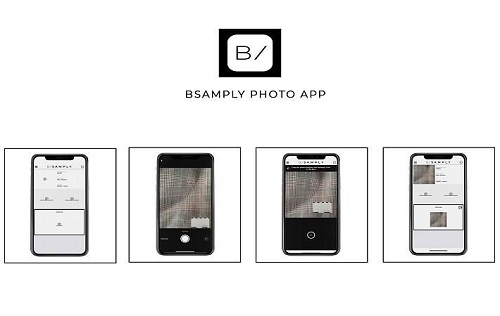
To remedy this problem Bsamply, a startup founded in 2017, has created an innovative platform that allows you to participate in real online fairs, offering a 360 ° experience. Bsamply tradeshow project is much more than a market place or a simple viewing room, but a useful tool that allows suppliers with their sales network and buyers to exchange questions, answers and offers in real time via chat, show the products of the own digital stand and their specifications (composition, color ...), choose to show some products publicly to all users or privately to their customers, sample, start negotiations, conclude orders and even carry out transactions.
Not only for those canceled, the platform can also prove fundamental for the fairs that will take place regularly once the emergency has ended, acting as a bridge between those who managed to participate with their own physical stand and those who were unable to move, integrating online and offline. There are several advantages that it guarantees, including a drastic reduction in costs for travel, freight transport and stand construction. BSAMPLY offers two packages to its customers: a basic one that allows you to upload 500 articles and access from a single account and a standard one that includes technical support, uploading 1000 products and access from multiple accounts.
Intertextile Shanghai Apparel Fabrics and Yarn Expo to merge with Intertextile Shenzhen Apparel Fabrics
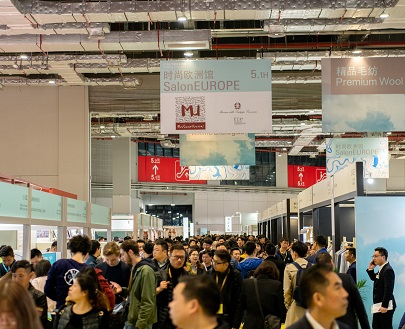 As announced on 8 April, due to the worldwide spread of the coronavirus, Intertextile Shanghai Apparel Fabrics – Spring Edition and Yarn Expo Spring will merge with Intertextile Shenzhen Apparel Fabrics and Yarn Expo Shenzhen for 2020. Exhibitors from these Shanghai fairs will be able to present their spring / summer 2021, as well as a preview of autumn / winter 2021-22, collections at the corresponding Shenzhen editions instead.
Intertextile Shenzhen Apparel Fabrics will be held from 15 – 17 July 2020 at the brand-new Shenzhen World Exhibition & Convention Center. This fair is organised by Messe Frankfurt (HK) Ltd; the Sub-Council of Textile Industry (CCPIT) and the China Textile Information Centre. The fair will be held concurrently with Yarn Expo Shenzhen, CHIC and PH Value.
By providing a platform for international and Chinese industry players to communicate, Intertextile enjoys a unique proximity to these collaborative opportunities – Fila and Nike attended the 2019 edition of Intertextile Shenzhen, while H&M attended the 2019 Autumn Edition of Intertextile Shanghai.
Domestic brands sourcing at the fair in past editions included Marisfrolg, Ellassay and Kaltendin, all of which are present at the nearby Dalang Fashion Town. This is an ongoing development in Shenzhen, subsidised by the government, which aims to form a platform for garment research and development, design, brand marketing, logistics and education.
“Coronavirus lockdown has changed our lifestyles in ways that make buying new clothes particularly irrelevant”
Andrew Lipsman, Principal Analyst, eMarketer
 Consumers are actually spending more on essential goods: Grocery stores saw a 26.9% increase in spending and health stores saw a 4.3% increase. This is partly because these are the only brick-and-mortar stores that are allowed to remain open right now, but it is also because consumers are worried about spending money unnecessarily with a significant recession looming on the horizon. Across the board, sectors that rely on discretionary spending have seen declines. “There is a lot of uncertainty and anxiety about the future,” says Andrew Lipsman, principal analyst at the research firm eMarketer. “People are shifting their spending to focus on the things they really need and cutting their budgets on less essential goods.”
But the coronavirus lockdown has changed our lifestyles in ways that make buying new clothes particularly irrelevant. Since people are finding ways to fill their time at home, hobby shops and bookstores have not been as badly hit, with a 23.3% decline, and home furnishings and furniture stores have seen only a 26.8% decline, perhaps because some people are spending money on making their homes more livable.
Quoted in Fast Company
Marzol develops new spinning layout
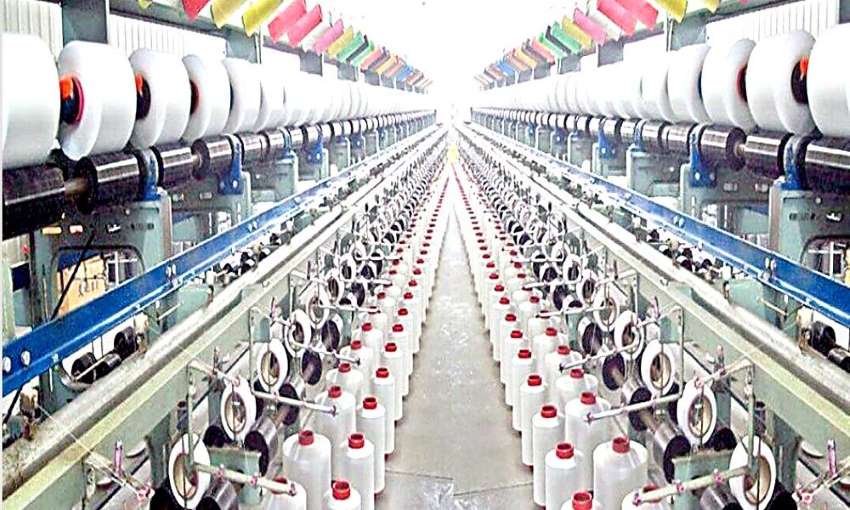
Machine layout plays an important role in the spinning industry. A properly designed layout helps the spinning unit in saving space, higher productivity, less material transport which results in a significant reduction in TCO (Total cost of ownership).
Marzoli has developed a new layout which will have 10 per cent lessinvestment cost (land, building, lighting), 4 per cent less conditioning cost and 9 per cent less logistic and unskilled labor cost Marzoli spinning machines re higher in productivity and lower in power consumption, space. The major difference is in the Comber, Roving frame and Ring frame machines. The new layout of 24000 Carded spindles will save 11% space as compared to the existing layout. It will save 10 per cant space as compared to the existing layout.
Marzoli is has manufacturing experience of textile machinery for over 109 years. Marzoli is owned by the Camozzi group since 1999. Marzoli India has set up in Hosur, Tamilnadu to assemble roving frames and provide Sales & After Sales-Service.
Rudolf Hub 1922 launches Washless Denim
Denim brand Rudolf Hub 1922 has launched Washless Denim which is a combination of two sophisticated and existing Rudolf Technologies: Bionic-Finish®Eco and Silverplus®. The simultaneous application of both of them to a finished garment addresses the opportunity to reduce domestic washing. Bionic-Finish®Eco is a system of macroscopic branches that attach to the fiber.
Without fluorine, it is exactly what happens in nature. Such a system leads to less frequent washing because of the protection against the accidental spill of liquids. And against the accidental droplets coming from someone talking or sneezing.
Silverplus® is a micro-structured elements coated with metallic silver. The concept is very similar to what you find in the catalytic exhaustion of cars. SILVERPLUS® controls odor-causing bacteria and it is exactly the same technology used to prevent infections in clinics and hospitals. Silverplus® keeps the microbiological charge on clothing very low without the help of washing. Washless Denim is an innovative, sustainable garment finish which allows for extended wearing time of the garment between washes.
In Bangladesh western brands demand big discounts from factories: BGMEA
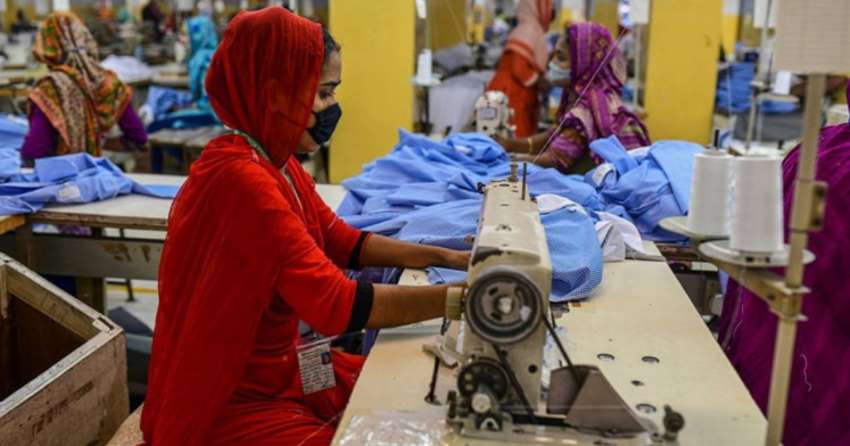
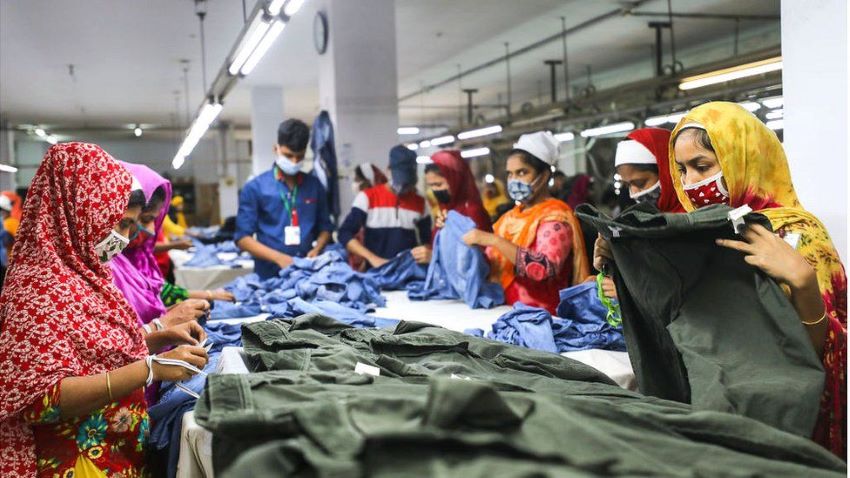
BGMEA has revealed Western clothing brands that agreed not to cancel orders due to the epidemic are demanding price cuts of up to 50 per cent heaping economic pain on a country already reeling from the crisis. Millions of Bangladeshi households depend on the garment sector, which has been hit hard by the epidemic. Exports fell 84 per cent in the first half of April as $3 billion-worth of orders were cancelled or suspended.
Bangladesh, which ranks behind only China as a supplier of clothes to Western countries, relies on the garment industry for more than 80 per cent of its exports, with some 4,000 factories employing about 4 million people, mostly women. With Western economies struggling due to the crisis and retailers in many countries closed, brands have begun cancelling orders, though some have pledged to take delivery of already made or in production clothes. The government announced a $588 million package to help the crucial export sector pay its workers last month