FW
Simon Property Group, Brookfield Property Partners to save JC Penney from bankruptcy
American mall owners Simon Property Group and Brookfield Property Partners are about to finalize an $800 million deal to rescue the embattled department store chain JC Penney from bankruptcy. They will pay roughly $300 million in cash and assume $500 million in debt,
Wells Fargo has also agreed to give Penney $2 billion in revolving credit once the transaction is completed, leaving the retailer with $1 billion in cash Penney plans to seek approval from the bankruptcy judge for this rescue deal early next month.
Meantime, the hedge funds and private equity firms that have financed Penney’s bankruptcy are set to take ownership of some stores and the retailer’s distribution centers, in exchange for forgiving some of Penney’s $5 billion debt load. Penney’s lenders, led by H/2 Capital Partners, are going to own those assets in two different real estate investment trusts, or REITs.
Hit hard by the COVID-1 pandemic, leading to mounting debts, Penney filed for Chapter 11 bankruptcy protection in May. It had nearly 850 locations at the time.
Dozens of other retailers, including the department store chains Neiman Marcus, Stage Stores and Lord & Taylor, have filed for bankruptcy protection during the COVID-19 crisis. Some retailers have not found buyers to rescue them. Lord & Taylor, the oldest department store operator in the nation, and the home goods chain Pier 1 Imports are in the process of liquidating.
Technical textile market to reach $220.37 billion by 2022
The technical textile market is projected to reach $ 220.37 billion by 2022, at a CAGR of 5.89 per cent. The market has grown exponentially in the last few years, and this trend is expected to continue. Based on process, the woven segment is expected to be the fastest-growing during the forecast period. This growth can be attributed towards factors such as easy production and low cost. Woven technical textiles find wide application in various sectors such as construction, clothing, automobiles, and others. Thus, with the growing demand for technical textile in these industries, the demand for the woven segment will also increase. Additionally, advancements in weaving technology such as 3D weaving are also expected to drive the technical textile segment during the forecast period.
Based on application, the mobiltech segment is expected to grow at the highest CAGR between 2017 and 2022. Mobiltech covers technical textile used in automobiles, aircraft, railways, and shipbuilding such as nylon tire cord fabrics, seat covers, seat belts, cabin filters, tufted carpet, upholstery, and others. The automobile sector has been improving its existing market share and creating innovative products through new developments, consequently increasing the demand for technical textile. Therefore, the growth in the automobile sector will drive the market for technical textile during the forecast period.
The Asia Pacific region is estimated to account for the largest share of the technical textile market in 2017; due to rapid urbanization and increase in disposable incomes in the emerging economies of China, India, and Indonesia. Among all countries in this region, the market in China is projected to grow at the highest CAGR during the forecast period. The North American market is expected to grow at the second-highest CAGR between 2017 and 2022, with the US registering the highest growth rate in the region.
SBG adds Welspun to bedding and bath categories
Scott Brothers Global (SBG), the home, lifestyle and entertainment company founded by designers and twin TV hosts, Drew and Jonathan Scott, is delving deeper into soft home by adding to its existing bedding and bath categories with Welspun USA.
The Scott Brothers launched the Scott Living collection in 2014, and since then, they have continued to build the brand by partnering with leading manufacturers in the industry and expanding their distribution outlets. Today, their products are available in major retail outlets across the U.S. and Canada, with over $1 billion in cumulative retail sales.
Recently, SBG announced a new furniture partnership with Home Meridian International, a license that will include brands and products specifically designed for brick-and-mortar retail stores as well as e-commerce channels. In the same vein, SBG is now collaborating with Welspun on two home furnishing lines and several new categories, including sheets, towels, quilts and blankets, which will launch across all channels in the second quarter of 2021.
SBG and Welspun began working together in 2017 to produce fashion bedding for QVC. Through the expanded partnership, SBG and Welspun plan to reach new consumers with products available across more channels.
Welspun will be dedicating space to the Scott Living collection in its highly elevated, two-story virtual showroom at market. The space has prominent positioning within this presentation; however due to COVID-19 restrictions and protocols, Welspun will not be offering a traditional in-person showroom experience.
Prada’s China sales post strong recovery: Bain & Company
According to Bain & Company, Italian luxury goods group Prada's sales in China have recovered strongly since shops reopened there and to date have risen well above last year's levels. The appetite of Chinese customers for luxury goods remained very strong despite the fallout from the coronavirus pandemic, which has tipped the global economy into recession and frozen international travel.
The industry's overall sales are expected to decline by up to 35% in 2020, but luxury groups are betting on a strong rebound in mainland China to limit the damage.
To date, the Prada Group's sales in China have already largely exceeded the levels of 2019, showing double-digit growth since the beginning of the year. the recovery in China had accelerated since the end of March, with sales growth of up to more than 60 per cent in following months. Prada's sales for China Valentine's Day, which this year fell on August 25, hit an all-time record.
The Asia Pacific region accounted for 44 per cent of Prada's sales in the six months to June.
Chinese shoppers were responsible for 37 per cent of global luxury goods purchases in 2019, according to consultancy Bain, with the bulk of the shopping done when travelling abroad.
ITA to procure new machine from Karl Mayer
ITA Construction Composites plans to procure a high-performance wrap knitting machine Biaxtronic Co from Karl Mayer.
The new machine platform comes with new features which open up new research avenues for ITA and its research partners. The possibility to feed in base substrate will allow ITA to fundamentally research applications in the field of geotextiles. The installed Karl Mayer Command System “KAMCOS” includes an ethernet interface for integration into an existing network, which fulfils the requirements for research topics in the field of Industry 4.0, inline quality control, sociology, networking of the process chain etc. The newly developed electronic guide bar control system and the possibility to vary process parameter inline will improve the product quality substantially and help in producing locally adapted tailored textiles.
ITA thrives on the development of new innovative technologies and products, which mainly result from bilateral research projects between industry and universities. Thus, with the acquisition of the Biaxtronic Co, ITA is looking forward to undertake collaborative projects with national and international partners in the coming years. ITA plans to unveil the machine on January 21.
his acquisition of the machine is funded by the Deutsche Forschungsgemeinschaft (DFG, German Research Foundation) and the state of North Rhine-Westphalia, project number INST 222/1264-1 FUGG. ITA extends its gratitude towards the DFG and the state of North Rhine-Westphalia for their financial support.
Century 21 to file for Chapter 11 bankruptcy
The discount department store chain Century 21 has filed for Chapter 11 bankruptcy protection and is closing all of its remaining 13 stores, joining the dozens of other retailers that have been pushed to the brink during the coronavirus pandemic.
The decision stemmed from its insurance providers declining to pay roughly $175 million due in policies to protect Century 21 from the losses it has suffered throughout the coronavirus pandemic.
The company will be removing to the bankruptcy court a lawsuit currently pending in New York against several of its insurance providers for failing to compensate the company for its losses.
The American Property Casualty Insurance Association has said that pandemic outbreaks are “uninsurable.” Insurance regulators approved exceptions for viruses after the SARS outbreak.
Century 21, known for its great deals on clothes and accessories, opened its first location in 1961 in downtown Manhattan in New York, and also has locations in New Jersey, Pennsylvania and Florida.
It’s going-out-of-business sales have commenced at all of its shops and online. Proskauer Rose is serving as Century 21′s legal counsel. BRG is its financial advisor, with Brian Cashman leading as Century 21′s chief restructuring officer. Hilco Merchant Resources is facilitating the going-out-of-business sales.
Century 21 to file for Chapter 11 bankruptcy
The discount department store chain Century 21 has filed for Chapter 11 bankruptcy protection and is closing all of its remaining 13 stores, joining the dozens of other retailers that have been pushed to the brink during the coronavirus pandemic.
The decision stemmed from its insurance providers declining to pay roughly $175 million due in policies to protect Century 21 from the losses it has suffered throughout the coronavirus pandemic.
The company will be removing to the bankruptcy court a lawsuit currently pending in New York against several of its insurance providers for failing to compensate the company for its losses.
The American Property Casualty Insurance Association has said that pandemic outbreaks are “uninsurable.” Insurance regulators approved exceptions for viruses after the SARS outbreak.
Century 21, known for its great deals on clothes and accessories, opened its first location in 1961 in downtown Manhattan in New York, and also has locations in New Jersey, Pennsylvania and Florida.
It’s going-out-of-business sales have commenced at all of its shops and online. Proskauer Rose is serving as Century 21′s legal counsel. BRG is its financial advisor, with Brian Cashman leading as Century 21′s chief restructuring officer. Hilco Merchant Resources is facilitating the going-out-of-business sales.
Calvin Klein, Tommy Hilfiger ban use of exotic animal leather
Designer brands Calvin Klein and Tommy Hilfiger have finally banned the use of exotic animal leather decades after People for Ethical Treatment of Animals (PETA) urged their parent company, PVH Corp. to stop killing animals for luxury products. PETA celebrated this victory with a campaign showcasing the clothing brands owned by PVH which also include Van Heusen, IZOD, Arrow, Warner's, Olga, True & Co., and Geoffrey Beene. In addition, PETA sent a box of vegan chocolates to PVH as a thank you for listening and executing on their commitment to ban animal leathers.
Back in 2017, Tommy Hilfiger decided to drop fur from all of its products, and with the new ban of exotic animal leather, the designer brand dove into a fully vegan market. On Earth Day (April 22nd), Calvin Klein celebrated by reaffirming its commitment to their Forward Fashion climate and sustainability goals. The luxury brand successfully honored their commitment and is working to inspire others to live a cruelty-free life.
The fashion industry has recently seen a shift into a more sustainable approach as mink fur farms shut down overseas, Macy's banned the sale of fur in all of its stores, Prada stopped selling Kangaroo leather, and Valentino banned the use of alpaca wool.
Cinte Techtextil attracts 409 exhibitors
Cinte Techtextil held its 2020 edition on September 4, with both the in-person event and a new online sourcing platform. The fair attracted 409 exhibitors and over 15,300 visitors across 38,000 sqm at the Shanghai New International Expo Centre. This year marked the last time the fair would be held biennially, as it will switch to an annual event starting in 2021.
Wendy Wen, Senior General Manager of Messe Frankfurt (HK) said, while some things changed this edition, namely the addition of a new online platform to allow those who couldn’t travel to Shanghai to source from our exhibitors, what remained the same was the fair’s strength as a platform to capture the opportunities of China’s still-growing technical textiles and nonwovens market. While the pandemic has undoubtedly had an economic impact, specifically for this market the prospects remain bright, with China’s industrial output growing YoY in the second quarter of this year, spending on high-tech infrastructure expected from a stimulus package, and increased emphasis on the government’s new ‘dual circulation’ economic framework strategy of boosting domestic demand while at the same time attracting foreign investment and stabilising trade.
These factors all lead to an increase of 16 per cent in the number of visits compared to the 2018 edition, as well as a strong domestic exhibitor participation this year which ensured the size of the fair remained the same as the previous edition.
Cinte Techtextil China is organized by Messe Frankfurt (HK) the Sub-Council of Textile Industry, CCPIT; and the China Nonwovens & Industrial Textiles Association (CNITA).
US apparel groups unite to ban forced labor in Xinjiang
 Apparel groups in the US apparel have requested US Customs and Border Protection (CPB) department to block imports of China-made textile and apparel products as they are being made by forced labor in the Xinjiang region. If approved, this order can affect US textile and clothing imports worth millions of dollars from the Xinjiang Uygur Autonomous Region (XUAR). Known as the Withhold Release Order (WRO), it would mandate goods to be re-exported or destroyed if CBP determines they were made with forced labor. Barring the use of any Xinjiang cotton in clothing shipped to the US would be an escalation of US actions expressing disapproval of forced labor and other human rights abuses in the region.
The US Commerce Department has already shortlisted around 50 Chinese operations on its Entity List for their involvement in unfair practices. Additionally, the US State Department has accused the Chinese government of engaging in forced labor by detaining over a million Uygurs, ethnic Kazakhs, ethnic Kyrgyz, and other Muslims in the XUAR.
New legislation to ban sourcing from XUAR
As per the US Agriculture Department, China grows almost 85 per cent of its cotton in Xinjiang, a coalition of union and activist group also estimates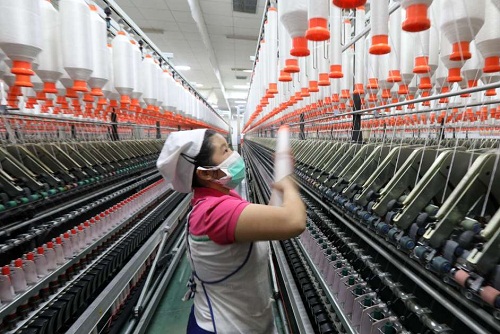 about one fifth of all cotton garments sold in the world contain Xinjiang cotton or yarn. The cotton, yarn and fabric produced in Uygur are also used by other countries such as Vietnam, Indonesia, Cambodia, Bangladesh and Sri Lanka to make clothing.
According to the activist groups, all brands including Adidas, H&M, Lacoste, Nike, Ralph Lauren and Zara use cotton and yarn produced by factories employing forced labor in the region. Therefore, a bipartisan group of lawmakers in the US House of Representatives and the US Senate have introduced a new law mandating corporations to prove that their products sourced from the XUAR are not made with forced labor.
A risky move
In addition, the American Federation of Labor and Congress of Industrial Organizations (AFL-CIO) and several Uygur rights and anti-slavery groups have directed CBP to issue a regional WRO on cotton procured from Xinjiang. In their petition, the AFL-CIO and the other groups said, a regional WRO would compel China to either continue the persecution of the Uygur people or lose contracts worth billions of dollars from US companies and others.
However, monitoring imports worth tens of billions of dollars would be a massive task for the CBP, and require it trace the supply chain of goods that arrive in the US. As per the trade data from the US International Trade Commission, US’ exports of cotton-related products to China rose by 62 per cent in the first seven months of the year, and 206 per cent in July alone. If the US bans China’s textile products, China would retaliate by stopping imports of US cotton, leading to disastrous effects results.
American firms are already stuck due to the Treasury Department’s recent sanctioning of the Xinjiang Production and Construction Corps (XPCC) as they have shipped hundreds of millions of dollars’ worth of cotton harvesting machinery to the region, often through XPCC-linked dealerships. These companies have to extricate themselves from their dealings with the XPCC by September 30 or risk being banned.