


FW
APTMA grants Rs 100 million funds to the government
Adil Bashir, Chairman, APTMA, granted Rs100 million to Abdul RazzakDawood, Advisor to Prime Minister on Commerce and Investment for Pavilion of Pakistan in Dubai Expo 2020 to be held from October 01, 2021 to March 31, 2022.
As per Global Village Space, Dubai Expo 2020 was originally scheduled for 20 October 2020 – 10 April 2021. However, due to the COVID-19 pandemic in the United Arab Emirates, it was postponed.
Continuing its legacy of being a Prime Trade Organization representing the entire textile value chain, APTMA on behalf of all its members supports the Dubai Expo for the collective benefit of the entire Textile Chain.
Chairman also apprised the Minister on the effective performance of the textile value chain industry; working at full capacity, for the first time in over a decade as a direct consequence of the Government’s policies, especially Regionally Competitive Energy Tariffs.
Bashir thanked the government for its relentless efforts in resolving the issues of the textile industry to increase exports rapidly. He also assured the Minister that the Textile sector is ready to meet all the challenges and invest in expanding production base to achieve a target of $26 billion of exports by the year 2023.
Global Fashion Group’s worldwide operations become carbon neutral
Global Fashion Group has achieved carbon neutrality across its operations in Australia, New Zealand, Southeast Asia, Latin America and the CIS.
As per an Insider Retail report, the group now uses 100 per cent renewable energy across its nine fulfilmentcentres across the globe, used by subsidiary businesses such as The Iconic and Zalora, while offsetting any carbon generated by purchasing high quality carbon credits from renewable energy projects across China, India and Brazil.
Australia’s The Iconic led the way in getting the business off the grid, shifting its own operations to a renewable energy provider in 2020, while fulfilmentcentres in other parts of the world purchased Renewable Energy Certificates to offset their own operations.
JaanaQuaintance, Chief Sustainability Officer, Global Fashion Group, the group has reached an inflection point as a global community whereby the impetus for the transition to a low carbon economy is undeniable. Formalizing its carbon mitigation strategy is an important step to support the group’s transition to carbon neutrality. While the purchase of offsets and renewable energy certificates will not distract it from true reduction efforts, they mark an important milestone in GFG’s journey.
China to collaborate with BRI nations during the 14th Five-Year Plan
To reduce dependence on the United States and Australia, China aims to collaborate with nations participating in the Belt and Road Initiative (BRI) during the 14th Five-Year Plan (2021-25), says Li Fuguang, Head, Institute of Cotton Research under the Chinese Academy of Agricultural Sciences.
Central Asia's potential in cotton production will help China meet import demand of 2 million metric tonne, Li adds.
Cotton production in Central Asia covers nearly 2 million hectares, and the environment there is similar to the Xinjiang Uygur autonomous region, which accounts for 84.9 per cent of cotton production in China.
China will focus on introducing cotton cultivation technology to Uzbekistan in the next five years, and keep advancing it in Tajikistan and Kyrgyzstan, he added.
It will also beef up efforts to modernize of the sector by upgrading systems and cultivating innovation in key technologies.
The country plans to strengthen the collection and utilization of cotton germplasm resources, explore excellent gene sources, and create excellent resources with high yield, good quality and wide adaptability, according to the academy.
The China Cotton Industry Alliance, a non-profit led by the institute, will play a major role in improving cotton quality and integrating the entire industry chain.
EmenegildoZegna Group buys Tessitura Ubertino
The EmenegildoZegna Group’ has acquired control of Tessitura Ubertino, the top-shelf fabric maker.
As per Fashion Network, Zegna will buy a 60 per cent majority stake in Tessitura Ubertino, while the two sons of founder AdalgisoUbertino, Alberto and Paolo, will retain a 40 per cent stake, as well as responsibility for both management and creative direction.
The acquisition will strengthen Zegna’s position in the high-end textile market, where it also controls historic Italian specialist producers like Bonotto, the 100-year-old, fourth-generation, Venetian slow-fashion exotic-wool producer; knitting experts Dondi and Tessitura di Novara, famed for its silk weaving.
Together with LanificioZegna, the group’s fabric division, these manufacturers embody a unique Italian luxury textile empire aimed at creating unparalleled quality textile products while preserving the specificities, know-how and craftsmanship of Made in Italy, Zegna said in its release.
Founded in 1981 by AdalgisoUbertino, Tessitura Ubertino is a boutique weaving mill that has been creating premium quality fabrics for women, such as tweed and jacquard, for over 30 years. Today it supplies fabrics to major fashion marques showing on the runways of Milan and Paris.
ABG buys the Eddie Bauer in partnership with Sparc Group
American brand management firm Authentic Brands Group (ABG) alongwith with Sparc Group has bought the US outdoor brand Eddie Bauer.
Sparc Group is a joint venture between ABG and Simon Property Group.
As per Apparel Resources, henceforth all core operations at Eddie Bauer will be a part of Sparc. Besides, the company will manage brand’s sourcing, product design and development, wholesale and planning in partnership with SPARC.
Additionally, together it will manage e-commerce and the 300 physical stores in the US and Canada.
ABG will also own Eddie Bauer’s intellectual property. The deal couldn’t have happened at a better time for ABG and SPARC as the market for the outdoor brand has been growing at a faster pace worldwide.The global outdoor apparel market size is, reportedly, expected to grow at CAGR of over 5 per cent to $3.9 billion during the forecast period 2021-2024.
Last year, Authentic Brands bought the reputed Lucky Brand, Brooks Brothers and Foreever21. It also owns athletic apparel and equipment brands such as Airwalk, Prince Sports, Tapout and Volcom.
Pandemic disrupts US RMG market as import of knitted, woven apparels falls
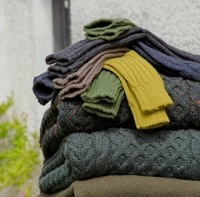 One of the leading importers of apparels goods in the world, the US’ import knitted apparels however, fell from $48 million in 2019 to $38 million in 2020 due to the pandemic. US’ imports from China declined to $9million during 2020 from $14 million in 2019. One reason for this was the ban imposed by US on imports from China, says a Textile Value Chain report. However, despite the decline, China continued to dominate US’ apparel imports with a global share of 24.44 per cent. Vietnam was the second largest exporter of knitted apparels with exports worth $7 million in both the years with 19.38 per cent global share.
Knitted apparels imports expected to rise soon
US imports of knitted apparels from India declined from $2 million in 2019 to $1.5 million in 2020. The country had a 4.03 per cent share in global exports of knitted apparels to the US in 2019 and 2020. Apart from the top 10 countries, imports of knitted apparels from the rest of the world was $23.74 per cent which was less than China’s total share. Bangladesh share in US imports of knitted apparels was 4.39 per cent amounting to $1.6 million in both years. Though US imports of knitted apparels dropped during 2020, it is eventually expected rise with the pandemic under control.
China also dominated US imports of woven apparels in 2019 and 2020. In 2019, US imported woven apparels worth $12 million from China which declined to $10 million in 2020. The country’s imports from China amounted to 30.96 per cent of its total global imports of woven apparels.
Vietnam was the second largest exporter of woven apparels to the US with 17.51 per cent share and exports totaling $5 million each in both years. The third largest exporter was Bangladesh with imports worth $4 million and $3 million in 2019 and 2020, respectively. On the other hand, US imported woven apparels worth $2 million from Indonesia in 2019 and $1 million in 2020. The country’s share in US’ total imports was 5.22 per cent. India’s export to US mirrored Indonesia’s with exports of woven apparels worth $2 million in 2019 and $1 million in 2020, respectively.
Robust yarn making capacity boosts Bangladesh garment exports
In 2019, US’ apparel imports from El Salvador, Indonesia and Mexico declined but its imports from Bangladesh, Cambodia, Honduras, India, and Vietnam increased. In the first five months of 2020, US’ imports from Bangladesh amounted to 9.40 per cent of its total global exports, despite COVID-19 and the US-China trade war.
The country’s robust yarn making capacity helped boost garment exports. However, the country also lost garment orders worth $3.2 billion due to pandemic, reveals Bangladesh Garment Manufacturers and Exporters Association (BGMEA). Manufacturers have currently requested upto 180 to 210 days to finish their orders.
Made-to-order, renewable materials help W Africa boost sustainability in the textile, fashion sector
 As the textile and fashion sector is expected to drive West Africa’s economic recovery post COVID-19, key players are exploring ways to make the industry more sustainable. As per an Investorsking report, textile and apparel companies are adopting new and sustainable means of production. For instance, UK-based, Africa-focused online fashion retailer Jendaya has decided to shun plastic use and package goods in recyclable cardboards. The company has also decided to cut production to made-to-order clothes only. This will help reduce waste and manage inventory efficiently.
Promoters of made-to-order business models
Other African companies promoting made-to-order models include Nehanda & Co in Zimbabwe, Naked Ape in South Africa, Nkwo in Nigeria and Awa Meite in Mall. The companies are using natural materials in their garments. The model is also being supported on an institutional level by Fashionomics Africa, an initiative developed by the African Development Bank. Promoting the use of renewable materials and recycling clothes, the model aims to develop a sustainable textile value chain across the country.
Amongst other companies driving sustainable solutions across the West African textiles industry is the India-headquartered Arise. The company is constructing two textiles parks in Togo and Benin that will adhere to all environmental, social and governance (ESG) standards of production.
The textile park in Togo will process 100 per cent sustainably sourced cotton, under Cotton Made in Africa standards besides using 100 per cent renewable electricity, offsetting 20 tons of carbon emissions per day. It will also reuse 90-95 per cent of the water used during processing and comply with independent international certifications when it comes to dyeing and finishing fabrics.
Bhavin Vyas, Chief ESF Officer, Arise affirms, the textile industry in Africa needs to adopt responsible production models and fair labor practices besides ensuring sustainable use of natural resources. This will help the sector to boost economic growth in the region post COVID-19, he adds.
Driving future sustainable growth
In April this year, the government-led coalition, African Circular Economy Alliance, classified the African textiles and fashion industry as one the ‘Five Big Bets’ that could drive sustainable development in the continent in future. The continent mainly produces unprocessed cotton that is shipped to South and East Asia for processing. Every year, West African cotton-producing nations Benin, Burkina-Faso and Mali export 1.8 million tons of unprocessed cotton worth $922 million to these countries. This cotton is then processed and finished cotton textiles and apparels worth $2.4 billion are re-exported to West Africa.
To help West Africa reduce these processing costs, Arise’s textile park in Togo aims to convert 56,000 tons of cotton fibers valued at $73 million into apparels worth $1.5 billion. The project will also enable the company create 20,000 direct and 80,000 indirect job.
On the other hand, the Benin government has imposed a ban on 30 per cent of cotton lint exports by the 2021-end. This will it help boost production of domestic cotton garments. The ban will be further increased to 100 per cent of lint exports by 2023.
International Woolmark Prize teams up with Saint Heron to highlight finalists’ works
The International Woolmark Prize is teaming with American singer-songwriter Solange Knowles’ creative firm Saint Heron to highlight the work of this year’s six finalists in a digital format, which includes all visuals, website design and a fashion film being released Thursday.
Concepted by Knowles, the film “Passage” features a diverse cast of artists showcasing looks from Bethany Williams, Casablanca, Kenneth Ize, MattyBovan and The be Magugu, who were selected from more than 380 applicants from 55 countries.
The winners will be revealed June 10. The recipients of the grand prize and Karl Lagerfeld Award for Innovation will receive 200,000 and 100,000 Australian dollars, respectively.
A new prize, the Woolmark Supply Chain Award, will also be given to recognize the outstanding contribution by a trade partner and presented to a member of the supply chain.
This year’s finalists have received 60,000 Australian dollars funding to create a six-look merino wool collection with a “less is more” approach to celebrate slow and responsibly produced fashion and craftsmanship.
They have also been participating in a yearlong mentoring program from IWP’s innovation academy, which offers finalists access to 43 supply-chain partners and mentors, product development support, textile research and development, business and sustainability strategies.
Some of them help a designer enrich their brand’s digital journey, such as the virtual ready-to-wear design system Hologarment, which produces an interactive AR showroom experience, and Blue Bite, which empowers brands to create digital experiences out of their physical products.
Clovia ropes in Sharen Jester Turney as its new advisor
Clovia has roped in Sharen Jester Turney, Former President and CEO, Victoria’s Secret as its new advisor.
As per Economic Times, Turney is currently a board member and advisor to several global retail and techology brands and philanthropic organizations. Her expertise and advisory roles span the globe including London-based Marks and Spencer, Gloria Jeans in Russia, Cosmo Lady in China, Sweden-based global brand Happy Socks, , and New Store Omnichannel platform in the USA, to name a few.
She was president and CEO of the global lingerie brand Victoria’s Secret for nearly two decades.
Women’s innerwear, loungewear, and personal care brand Clovia has been one of the key branded players in the Indian direct-to-consumer space, which has been scaling profitably on the back of extensive use of technology and data in all its business areas.
Turney will support the organization support across functions like business strategy, category expansion like personal care, market insights, strengthening of brand positioning and experience, and international expansion.
Rent the Runway expands into resale
Rent the Runway is expanding into resale to enable customers to buy used designer clothes from the business in addition to renting them.
As per CNBC reports, customers will not require any membership to bu these clothes as Rent the Runway looks to broaden its reach and give shoppers more feasible entry points. Previously, only paying members were able to buy gently used Rebecca Minkoff dresses, Tory Burch tops and even Lululemon leggings from Rent the Runway, at a discount.
The launch comes as Rent the Runway is clawing its way back from the effects of the COVID pandemic. The company said that getting into the resale market offers another engine of growth and a fuller realization of our value proposition. It added that it has noticed twice as many customers self-reporting that they’re coming to Rent the Runway for sustainable fashion solutions, compared with 15 months ago, a sign that shoppers’ appetite to add secondhand apparel to their closets is growing.
With the launch, Rent the Runway positions itself as a closer competitor to already established resale marketplaces including Poshmark, ThredUp, TheRealReal and StockX. The latter, known for landing coveted sneakers, is expected to go public later this year. E-commerce marketplace Etsy plans to buy secondhand fashion app Depop for $1.62 billion
The total resale market in the U.S. will be worth more than $33 billion by the end of this year and is on track to top $64 billion by 2024, according to GlobalData.
Analysts say thrifting for clothing, accessories and home goods could be an even more compelling value proposition coming out of the health crisis, especially as Americans look to clean out their closets to make room for new styles, potentially in new sizes.











