FW
CDC approves three new projects
The Council for the Development of Cambodia (CDC) has approved a trio of new garment projects. Together, these projects entail an investment of $14.9 million. They are anticipated to generate some 3,200 new jobs.
The first of these projects is the J.A.K Garment Co’s project to build a facility in Takhmao district, Kandal province with a capital investment of $2.4 million. The factory will employ 1,053 people. The second project by Premier Tech Garment (Cambodia) Co involves building a $4.3 million in Bati district with an investment of $4.3 million. The project is anticipated to create 748 new jobs.
The third project will be developed by Chanco Textiles (Cambodia) Co which will also build a factory in the capital’s Russey Keo district. A total of 424 new jobs will be generated to create bed sheets, pillowcases and other linens.
Ken Loo, Secretary-General, GMAC said, the new projects would help strengthen the Kingdom’s pillar industry, particularly after the disruption caused by the pandemic.
Lockdowns hit small-scale weavers in Coimbatore and Tirrupur districts
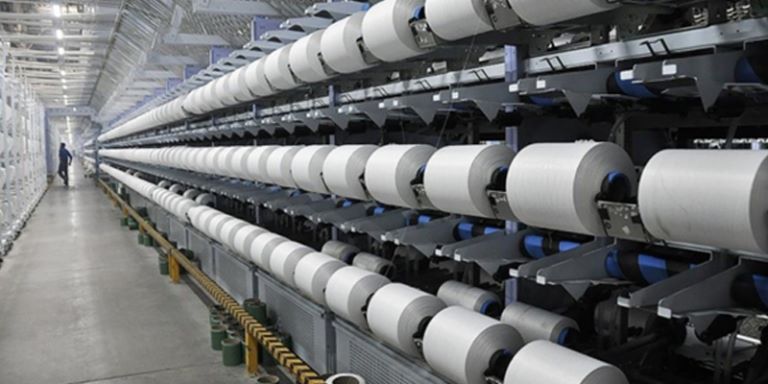
The recurring lockdowns in textile manufacturing states has started affecting small-scale weavers in the country. Especially affected are the weavers operating in Coimbatore and Tirrupur districts who are unable to supply cotton fabrics to Maharashtra, Gujarat, Rajasthan and Delhi, says Velusamy, a powerloom weaver at Palladam in Tiruppur district. This led to stocking of goods by suppliers.
Though the Northern and Western states have relaxed restrictions, industries in Coimbatore and Tiruppur districts are not permitted to operate. This prevents weavers from producing goods. It also impacts supply of yarn as the small-scale textile mills are shut. This is likely to lead to price fluctuations and disrupt business cycles, says Velusamy.
Textile mills in these districts supply part of the yarn produced to the weaving units in the State and the rest to Maharashtra. Though they have resume supplies, cotton prices have increased steeply in the last two weeks. Further, demand in Maharashtra has shot up. These factors are likely to result in a hike in yarn prices. While the larger mills have stocked cotton, the other mills, especially those in the small-scale sector are unable to buy cotton due to their high prices.
Fashion for Good collaborates with industry players for Renewable Carbon Textile Project
Fashion for Good has collaborated with key industry players to launch the Renewable Carbon Textile Project. The project, that aims to explore, test, and verify solutions in the PHA polymer space, will be developed in coloration with PVH Corp., Bestseller, Norrona, and the fabrics division of WL Gore & Associates. Laude’s Foundation will provide catalytic funding for the project while participating innovators Bio Craft Innovation (formerly Biomize), Full Cycle Bioplastics, and New light Technologies will provide insights to scale the industry in the long term.
PHA polymers offer a bio-based, marine, and soil compostable solution of polyester fibers derived from fossil fuels for the fashion industry.. PHAs are produced through the fermentation process using various renewable carbon-based feedstocks.
Katrin Ley, MD, Fashion for Good, opines, the industry needs to find replacements for the predominantly fossil-based fibers in the fashion industry through solutions such as biosynthetic from renewable sources. This project focuses on validating the technical feasibility of the output, working with the Nonwovens Innovation and Research Institute (NIRI) to run melt-spinning trials. Alongside the technical feasibility study, the Renewable Carbon Textiles Project includes a range of degradation tests that will be conducted by Organic Waste Systems.
Philippine garment exporters urge government to address logistic issues
Robert Young, Trustee, Philippine Exporters Confederation (PHILEXPORT) and President, Foreign Buyers Association of the Philippines (FOBAP) has urged the government to address the deteriorating shipping and logistics situation in the country. Young said, the domestic garment industry is losing millions of dollars due to supply chain squeeze. Exporters are facing transport issues, including vessel capacity constraints and surging freight prices, leading to cargo delays of two weeks to two months and revenue setbacks.
This is creating production issues in the country besides delaying shipments delays and restricting cash flow, Young added. Besides slow release of permits and import license, rising cost and shortage of raw materials, it is adding to manufacturing costs and leading to continuing loss of business in favor of Vietnam and Indonesia. Sergio Ortiz-Luis Jr President, PHILEXPORT urged the government and private sector to work closely together to effectively address the logistics constraints.
H&M Group sales reach pre-pandemic levels
Although the group continues to be affected by COVID-led disruptions, H&M Grou’s sales have reached pre-pandemic levels in recent weeks. As per Women’s Wear Daily, sales surged 75 per cent in the second quarter ending May 21 up 35 per cent in local currencies for June 1 to 13 period compared to 2019, they surged by 2per cent.
The group’s quarterly sales figure fell slightly short of analyst expectations. However, as per analyst, progress achieved at the outset of the third quarter is ahead of consensus forecasts which helps it to maintain forecasts. H&M, which operates Cos, Monki, & Other Stories, Arket and Weekday in addition to H&M, has also been cutting costs and shedding jobs in Spain. The group has been renegotiating leases for retail network since the pandemic. Executives at the group are continuously evaluating the fleet of physical stores, even as they wait for customers to return. In recent years, the group has also been integrating digital shopping avenues with stores as a key priority.
EAC urges partner states to explore export opportunities for raw cotton
Kevit Desai, Kenya’s Principal Secretary, East African Community (EAC) has urged partner states to explore export opportunities for raw cotton to the global market. As per All Africa report, the EAC region produces 100,000 metric tons of cotton, compared to its potential to produce 400,000 metric tons. It currently exports only 8 per cent of cotton to the world market, notes Dr Desai.
To boost exports, the region needs to promote the textile value chain. It needs to invest production of leather and textile goods and turn a crop like pyrethrum into aerosols, adds Desai. Desai, who is also the Chairperson of the Coordination Committee that brings together Permanent/Principal/Under Secretaries for EAC Affairs in the partner states, was addressing the media at the EAC Headquarters in Arusha. He says intra-EAC trade currently stands at only 15 per cent as compared to other regional economic communities like the European Union (EU) and the Southern African Development Community (SADC).
He emphasized on the need for greater aggregation and consolidation to increase the region's exports to external markets. EAC partner states should also create the necessary networks to promote collaboration, he says.
Combined operating revenues of China’s garment companies rise 13.4 per cent
The combined operating revenues of major Chinese garment enterprises grew by 13.4 per cent year-on-year to 407.8 billion yuan in the first four months of this year, shows data from the Ministry of Industry and Technology. From January to April, total profits of 12,444 major garment firms increased by 37.9 per cent from a year ago to 18 billion yuan. The companies also witnessed a 23.87 per cent rise in their output to over 7.05 billion pieces during the period from a year ago.
China's online apparel retail sales grew 33.8 per cent year on year in the first four months, while the garment exports soared by 51.7 per cent year on year to $44.4 billion. China is the largest producer and exporter of textiles and apparel in the world. Textile exports increased 30.4 per cent in 2020, boosted by the demand for face masks and personal protective equipment (PPE) in the wake of the Covid-19 pandemic. Its closest rival, the European Union economic bloc, exports only 75 per cent of that, with regional competitors exporting far less.
In 2019, China was the top ranked global clothing exporter with a share of approximately 30.8 per cent, followed by the European Union (27.6 per cent), Bangladesh (6.8 per cent) and Vietnam (6.2 per cent).
Budget 2021-22 fails to meet expectations, complain Pakistan textile exporters
Pakistan’s textile exporters say the Federal Budget 2021-22 fails to meet expectations as it does not restore zero rating of GST, reduce withholding tax rate to 0.5 per cent or suspend EDF surcharge. Jawed Bilwani, Chairman, Pakistan Apparel Forum; Jawed Tariq Munir, Chairman, Pakistan Hosiery Manufacturers & Exporters Association (PHMA) South and North Zone; Rafiq Godil, Chairman, Pakistan Knitwear and Sweater Exporters Association Chairman, etc say imposition of 17 per cent GST has made textile exporters, especially SMEs financially unviable due to stuck up liquidity. The tax has made it difficult for them to fulfill export commitments, pay utilities and salaries to staff and workers, and to clinch new export orders.
Exporters had requested the government to reduce and fix tariff for electricity, indigenous gas and RLNG, which they complained had not been addressed. They say though the government has allocated Rs 20 billion for DLTL scheme, cases amounting to Rs 32 billion were pending with the State Bank of Pakistan. They had requested the government to increase allocation to Rs 75 billion for clearance of backlog and new DDT / DLTL claims.
They also opposed raising sales tax on import of plant and machinery from 10 per cent to 17 per cent. They are against the introduction of new 203(A) section to arrest and prosecute according to which the Federal Board of Revenue (FBR) would have the power to arrest on their discretion.
BGMEA requests for extension of EBA scheme
Faruque Hassan, President, BGMEA has requested Switzerland to extend the EBA (Everything but Arms) scheme under its Generalized System of Preferences (GSP) program for 10 years for Bangladesh's smoother transition.
The request was made at the recent meeting held between Hassan and Nathalie Chuard, Ambassador of Switzerland to Bangladesh, Thomas Baumgartner, Head, Political, Economic and Cultural Affairs at BGMEA office in Dhaka.
Syed Nazrul Islam, First Vice President, BGMEA and Md Shahidullah Azam, Vice President also attended the meeting. The discussions covered issues pertinent to the readymade garment industry in Bangladesh, and its progress in the area of social and environmental sustainability.
It discussed progress of garment industry in the area of social and environmental sustainability, highlighted the future potential of the industry. Leaders also talked on the need for an industry upgrade particularly in the area of skills and efficiency enhancement, technological expertise, and diversification of products.
The BGMEA sought support from the embassy regarding the need for unified code of conduct for the social audits and collaboration to promote the untold stories of the industry's transformation.
Bangladeshs: Fall in volume compels manufacturers to accept all work orders
Decrease in work orders from the US is compelling Bangladesh RMG manufacturers to accept all types of work orders, says Fazlul Haque, Managing Director, Plummy Fashions. He expects the spike in coronavirus infections to delay business recovery by six-seven months. Haque also expects RMG exports to decline if the COVID-19 doesn’t rapidly improve. As per Textile Focus, US apparel imports declined 25 per cent in 2020. In the first two months of 2021, imports improved slightly as COVID cases fell. Imports from Bangladesh also increased during these two months.
However, due to a new spike in infections, imports again declined. OTEXA stats show, US imported $64.07 billion (6,407 crore) of clothing products in 2020. In the first two months of 2021, US’ clothing imports declined 13.85 per cent to $10,91 billion. In the first two months of 2021, imports from Bangladesh declined to $1 billion (Rs 8,500 crore). After China and Vietnam, Bangladesh has become the third biggest exporter of clothing to the US market.
In January-February 2021, US’ imports from Vietnam declined 12.9 per cent to $2.09 billion. Over the corresponding period of 2020, Vietnam exported clothing worth $2.34 billion to the US. Imports from India and Indonesia to the US also declined during these two months. India’s imports declined 21.89 per cent to $590 million.