FW
US’ PPE imports increase 284% from January-May 2021
From January-May 2021, US’ PPE imports increased by 284 per cent on a Y-o-Y basis to $10.68 billion, shows an OTEXA report. As per Textile Today, US’ import of face masks and shields under increased to $ 2.07 billion during period. Import share of face masks from China increased by 68.20 per cent to $1.41 billion. Global import of nonwoven disposable apparel during the period increased to $929.19 million in which two types of products were imported isolation gowns and disposable apparel. Of this, China’s share increased to 77.90 per cent to $717.95 million
China’s increasing PPE shipments to the US is threatening the livelihood of new mask producers in the US. As per The Coalition for a Prosperous America (CPA) report, around 1,500 workers employed with a Florida-based masks making company have lost their jobs in the last couple of months.
Suryalakshmi Cotton Mills reports Rs 6.82 crore profit in Q1 FY2021-22
Suryalakshmi Cotton Mills reported Rs 6.82 crore loss in first quarter of FY 2021-22 that ended June 30, 2021. The company’s total income for the quarter declined to Rs 151.94 crore compared to Rs 189.39 crore during Q4 FY2020-21 that ended March 31, 2021. EPS declined to Rs 4.09 during the quarter ended June 30, 2021 compared to Rs 5.45 for the quarter ended March 31, 2021. Suryalakshmi Cotton Mills posted a net profit of Rs 6.82 crore during the period ended June 30, 2021 as against a net loss of Rs 43.47 crore during the period ended June 30, 2020.
The company’s total income grew to Rs 151.94 crore during the period ended June 30, 2021 as compared to Rs 43.47 crore during the period ended June 30, 2020.
Order index for Italian textile machinery rises by 214%: ACIMIT
Italian textile machinery’s order index for April-June 2021 increased 214 per cent compared to the same period last year, shows a ACIMIT, the Association of Italian Textile Machinery Manufacturers survey. Compared to the April-June quarter in 2020 that was influenced by COVID-19 pandemic, the current value of the index was attested at 150.7 points (basis: 2015 = 100).
The index of orders intake is expected to grow by 122 per cent during the first six months of 2021 compared to the first half of 2020 in both the domestic and export markets. ACIMIT’s survey reveals substantial stability compared to the previous three months for domestic orders and a prevailing caution also abroad, where 74 per cent respondents expect order to either remain stable or decline.
ACIMIT is a private non-profit making body and its main purpose consists in promoting the Italian textile machinery sector and in supporting its activity, mainly abroad, through the most updated and innovative promotional means, constantly improved during its 70 years of life.
In order to promote the Italian textile machinery knowledge throughout the world, ACIMIT gives any kind of information on the activity of the producers and organizes a wide range of promotional activities (such as exhibitions, technical seminars, missions in Italy and abroad, etc.) most of the time in collaboration with Italian Trade Agency.
Withdraw 10 per cent duty on cotton imports, urges SIMA
Ashwin Chandran, Chairman, Southern India Mills Association (SIMA) has urged the central government to withdraw the 10 per cent import duty on cotton to avoid further damage to the cotton textile value chain. Chandran has expressed concerns over the rapidly rising cotton prices in the country. Such a rise will lead to higher prices of apparel and textile goods for domestic consumers as well, he said
India’s cotton prices soared by Rs 3,800 per candy within 15 days in July due to a strong demand from the domestic market, depleting stocks and 10 per cent import duty levied on cotton.
Since the beginning of July this year, Cotton Corporation of India (CCI) increased the cotton price from Rs 51,000 to Rs 54,800 per candy of 355 kg. Prices of Gujarat-based Shankar-6 cotton increased from 43,300 in January 2021 to Rs 57,000 in July.
The high demand caused cotton stock with the CCI to deplete to around 9 lakh bales, which in turn pushed up the prices. The corporation had close to 115 lakh bales of cotton at the start of the current season in October 2020 and procured 92 lakh bales during the season.
Additionally, the largest cotton producer in the world, slipped down as the state of Texas faced a severe drought last year, thus causing cotton prices in India to firm up since December 2020.
Foot Locker to expand business with new acquisitions
Footwear retailer Foot Locker plans to expand its business by buying two smaller shoe store chains for a total of about $1.1 billion in cash. The company plans to buy California-based WSS for $750 million and Japanese streetwear retailer Atmos for $360 million. As per reports, WSS has a fleet of 93 off-mall stores across California, Texas, Arizona and Nevada, and has a largely Hispanic consumer base which Foot Locker is looking to tap into.
Meanwhile with 49 stores in Japan, Atmos is popular for its collection of special edition footwear in collaboration with brands including Nike Inc. WSS and Atmos will continue to operate under their own names. Both deals will be funded through available cash. Evercore served as financial adviser to Foot Locker on both the deals, while RW Baird advised WSS.
Foot Locker’s witnessed a boost in sales this year due to a pent-up demand for sneakers and athletic gear from US shoppers, as well as government stimulus
Inditex outlines plans to target net zero emissions by 2040
At its Annual General Meeting held in Arteixo, Pablo Isla, Executive Chairman, Inditex, announced the retailers’ plans to target net zero carbon emissions by 2040. It also aims to increase use of sustainable or recycled cotton by 2023, reports Indian Textile Magazine.
Isla highlighted the group will spend €2.7 billion in transformation to a more digital and sustainable business model. Of this, €1 billion will be invested in digitalization and €1.7 billion will be invested in incorporating the latest technology across the Group stores, with the opening of as many as 450 major flagships planned for the period. In parallel with these investments, the different brands will deepen the digital integration of stores and online, adding new and innovative digital services such as the Store Mode.
In 2020, the Group’s apps and websites received over 5.3 billion visits and the eight brands’ various social media handles amassed 200 million followers. Inditex’s executive chairman noted the sharp acceleration in the transformation strategy and associated investments will allow the full development of the Group’s proprietary technology platform, known as the Inditex Open Platform (IOP). The IOP – the keystone of Inditex’s strategy – constitutes a hybrid, cloud-based digital replica of every phase of Inditex’s business model; it encompasses the entire product life cycle and enables constant interaction, feedback and fine-tuning.
The Group will also continue to make progress on existing sustainability commitments, such as the elimination of plastic. By 2023 it plans to eliminate all single-use plastics from customer interfaces. All materials the Group uses in operations (cardboard, plastic, paper will also be completely recycled by 2023. In fabrics, by 2023 all garments made of cellulosic fibers will be 100 per cent sustainable and by 2025 all polyester and linen will be 100 per cent recycled or sustainable, in line with the parameters the company has set out. The Group will continue to champion innovative research in textile recyclability over the coming years, working with partners from across the supply chain, as well as with prestigious research centres such as the Massachusetts Institute of Technology (MIT). The Group will also forge ahead with all the programs encompassed by its ‘Worker at the Centre’ strategy, designed to respect and promote social conditions in the supply chain.
Nahar Spinning Mills posts Rs 100.33 crore profit in Q1 FY2021-22
In Q1 FY2021-22 that ended June 30,2021, Nahar Spinning Mills posted a net profit of Rs 100.33 crore. Tthe company’s income for the quarter grew to Rs 739.52 crore as compared to Rs 728.36 crore during Q4 FY2020-21 that ended March 31, 2021.
On annual, Nahar Spinning Mills posted a net profit of Rs 100.33 crore for the period ended June 30, 2021 as against net loss of Rs 25.41 crore for the period ended June 30, 2020. The company reported total income of Rs739.52 crore during the period ended June 30, 2021 as compared to Rs.211 crore during the period ended June 30, 2020. Its EPS grew to Rs27.81 for the period ended June 30, 2021 as compared to Rs.7.05 for the period ended June 30, 2020.
Global Brands Group’s US arm files for Chapter 11 Bankruptcy
American arm of Global Brands Group has filed for Chapter 11 bankruptcy. The US-based firm plans to sell a significant portion of its remaining assets including the Airband, Ely & Walker, Yarrow, MagnaReady and B New York brands, amongst others. It recently sold its assets and inventory related to the Frye and Spyder brands.
The Group’s apparel sales have been impacted through the pandemic-hit year. Sales at US-based subsidiary dipped 44 per cent during the year that ended March 2021. Some suppliers also demanded cash on delivery and tightened terms, adding to the retailer’s financial worries.
Global Brands Group also owes royalty money to million to Kenneth Cole, $2 million to Sequential Brands and $860,000 to Marquee Brands. It is an apparel, footwear and brand management company, which designs, develops, markets and sells products under a diverse array of owned and licensed brands and a wide range of product categories.
Cotton prices to be bullish this year predict analysts
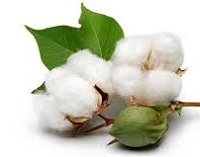 Cotton futures contract reached a 7.5-year high in August as falling global supply gave a boost to demand from China. A report by execution-only service provider Capital.com says, the benchmark intercontinental exchange (ICE) cotton contract for October delivery hit 96.27 cents a pound (lb) on August 27. Although prices have fallen since, they stabilized around 95 cents. Starting at 77.31 cent a pound this year, the price index on cotton futures surged in the next two months as demand recovered post-COVID-19.
Growth halted in late February as Europe imposed fresh lockdowns to curb the third COVID-19 wave. Rising cases in India and Philippines and a ban on cotton from Xinjiang also derailed price growth. Increased demand from China started boosting prices in late March. This caused the October 2021 cotton contract to recover above 80 cents in early April. However, the index still remained significantly below the record high of $1.9455 a pound in 2011 amid a global supply shortage.
US’ share in China’s cotton imports sees a rise
In first 11 months of MY2021, China imported 1.2 million tons of cotton from the US. This raised US’s share in China’s cotton imports to 45 per cent,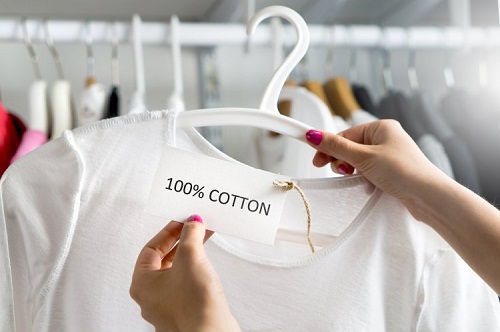 reports the US Department of Agriculture (USDA). Published on September 10 this year, the USDA report says, US exports to China reached their highest levels in eight years, with demand mostly led by China’s State Reserve. Rise in demand from China is expected to further support the US cotton market rate. The US agricultural export for the full-year (FY) 2021 is also expected to rise 24 per cent over last year to $173.5 billion, says USDA quarterly trade forecast.
In MY 2021/22, China total cotton imports are forecasted to reach 2.6 million metric ton, shows data from the Chinese Office of Agriculture Affair. Cotton consumption the country is expected to increase to 8.7 million metric ton during the year. Most consumption will be driven by improved demand from the domestic and international market, says the Chinese Office of Agricultural Affairs.
Bullish prices in 2021
Analysts at FXStreet opine, the price rise in cotton will continue until it reaches 94.5 cents a pound. This level can be used as an entry point for placing a pending order to buy. Agricultural product data provider Mintec also predicts, cotton market will remain bullish this year as cotton farmers have switched to more profitable crops such as soybean and maize (corn), due high demand in the Chinese market. However, COVID-19 and resurgence of new cases are likely to dampen consumer demand and manufacturers’ willingness to place orders, notes Cotton Incorporated in its August report.
CFDs to rescue traders from losses
In such a scenario, investors can trade cotton with contracts for difference (CFDs) on Capital.com. These CFDs allow traders to speculate on price changes in the commodity without owing the underlying asset.
With CFDs, traders can also benefit from the positive and negative price fluctuations as they maximize gains on volatile assets such as commodities. However, traders need to be aware of the high risk involved in such trading it can also maximize their losses in case the asset price moves in the opposite direction Traders need to make a thorough research on CFDs before investing in them. They should not invest more than they can afford to lose.
Plus size fashion moves ahead as designers adopt the right attitude
 For years, plus-size fashion was stereotyped as something created to hide a woman’s unpleasant curves. This grossly limited the fashion choices for healthy women who had to contend with whatever was available in the market. Now this attitude towards plus size fashion is changing. Rising acceptance of diversity and body inclusivity is translating into more choices for large-size women. Still, size issues continue to persist.
Dealing with size issues
As per a Forbes report, most plus size garments are designed in a single size and later scaled up or down according to requirement. However, a garment can be scaled only up to a certain size. Extending it beyond this size can ruin not just its fit but also the overall look, says Nadia Boujarwah, Co-Founder, Dia & Co, As a solution, SHEFIT, a manufacturer of sports bras, extends its bra designs only upto three sizes. Beyond that, it revamps the designs to fit larger sizes. This approach helps the company double its revenues every year.
Though attractive, this process is quite expensive as companies have to bear the cost of buying inventories for each expanded range of sizes before their garments are sold. This leads to most companies bypassing this route, opting instead to extend their existing sizes and making only a small number of garments in plus sizes.
Meeting specific needs with right attitude
One key to be a successful a plus size retailer is to respect the customer. Companies like Dia & Co, Shefit and Ashley Stewart describe their business as a mission to meet the needs of a specific group of customers with products and the right attitude.
The concept of plus-size is nowadays not limited to fashion. It has also extended to other categories such as beddings. For instance, Big Fig Mattress makes beds only for plus-size people. The company’s President, Jeff Brown, sees its initiative as an opportunity to change the world.
Respect for consumers has become a critical component of a brand’s success these days. It is helping the industry abandon its traditional attitudes and create a new all-encompassing world.