FW
NACOTAN’s one-day seminar seeks to rejuvenate Nigerian cotton sector
A group of key players in Nigeria’s cotton, textile and garment value chain, National Cotton Association of Nigeria (NACOTAN) organized a one- day seminar in Abuja to introduce a unified policy to stimulate the progress of the sector. As per a New Telegraph report, the seminar aimed at reviving the textile sector in Nigeria was organized in collaboration with the German Cooperation agency Deutsche Zusammennarbett, the European Union and the Nigerian Federal Ministry of Industry, Trade and Investment.
The seminar was inaugurated by Anibe Achimugu, National President, NACOTAN, who talked about the future roadmap for implementation of the CTG (Cotton, Textile and Garment) policy of the federal government. He said to achieve this, Nigerian textile stakeholders would focus on integrity and relationship building. The seminar advised industry leaders to establish a CTG Council with about two government officials to regulate growth in the sector. The council would also have private sector players, it added.
It also advocated a strategic business plan for the CTG Development Forum and an active collaboration among the players in the CTG Development Forum. It advised players in the sector to ensure that their activities make the Nigerian market space unprofitable for importers and smugglers of fabrics into the country.
The stakeholders also resolved to create CTG processing zones/clusters in different parts of the country. They said, this would aid concentration of infrastructures in those areas besides reducing production costs.
Pay up pending dues, urge Indonesian garment workers to brands
In an open letter to brands, garment workers from the bankrupt Jaba Garmindo factory in Indonesia garment workers have urged brands Uniqlo and s.Oliver to pay their pending dues. Around 2,000 Indonesian garment workers are demanding $5.5 million legally owed to them in severance pay since 2015. The workers made clothes for Uniqlo, s,Oliver, etc.
Both Fast Retailing and s.Oliver are affiliates of the Fair Labor Association (FLA), which released the results of their investigations of the case in July 2021. The report recommended brands to come together to establish a financial relief fund for workers. However, this has not yet materialized. With its business booming during the pandemic, Fast Retailing has become the world’s most valuable fashion retailer. Its current share price of €88.7 billion surpasses that of Inditex.
However, the pandemic has dealt a severe blow to former Jaba Garmindo workers. It has rendered many of them jobless and unable to afford vital medical care, school costs and even food. Having no social security system to support them, the workers are struggling to survive, and have to borrow money to cover daily expenses.
H&M reopens store on Alibaba’s Tmall
Swedish fashion giant H&M has reopened its official store on Alibaba’sTmaill e-commece platform 16 months after the Chinese site took it down following the brand's criticisms of human rights abuses in Xinjiang.
Tmall and many other Chinese platforms and apps scrubbed references to the fashion brand when it was revealed that H&M had pledged not to source cotton from China’s 's far western Xinjiang region, citing concerns about human rights abuses there.
UN experts and rights groups estimate over a million people, mainly Uyghurs and other Muslim minorities, have been detained in recent years in a vast system of camps in Xinjiang. China denies all accusations of abuse.
H&M, the world's second-biggest fast-fashion retailer, first opened on Tmall in March 2018.
It was one of many Western brands caught up in the Xinjiang cotton controversy in March last year and was disproportionately impacted as one of the first to be targeted by netizens on Chinese social media.
While other brands such as Nike, Adidas, Burberry and Converse saw celebrity ambassadors sever ties over their public commitments not to use Xinjiang cotton, H&M was the only brand to see its online identity in China removed to such an extent.
Denim brands to launch mixed fibers pants
Denim brands in India are planning to launch pants made from mixed fibers to contain the rising inputs costs due to a sudden surge in cotton prices. As per a Textile Value Chain report, cotton prices in India surged to historic highs in the last few months without any indication of slowdown. This is compelling brands to reduce the number of pants made from 100 per cent cotton and indigo color.
Rising cotton costs along with other unrefined components have surged raw material costs for denim brands by around 30 per cent. The prices of raw cotton have dramatically increased from Rs 35,000 for each candy of 356 kg in mid-2020 to over Rs 75,000 currently. This has led to a 10 per cent decline in cotton consumption by denim brands in India.
Need for responsible labor practices to resolve Myanmar garment workers problems
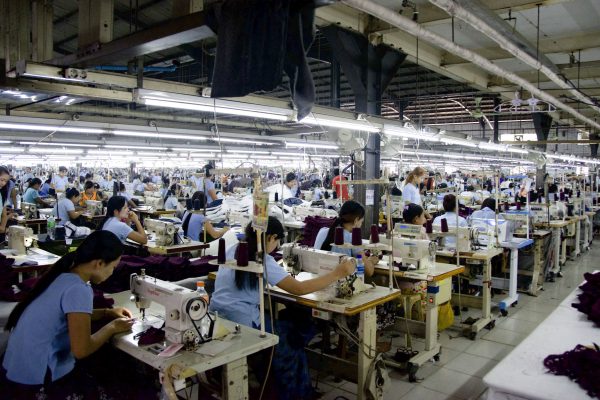
Myanmar’s garment sector, that drove the country’s export-oriented growth post political and economic transition in 2011, has been deeply impacted by the pandemic. From 2012 to 2019, Myanmar’s garment exports grew fivefold accounting for 28 per cent its total export value, reveals The Diplomat. The country also won preferential access to the European markets under the European Union’s Everything But Arms (EBA) scheme. Garment industries growth also boosted employment in the country, particularly amongst young women forming 90 per cent of garment workers.
The gains achieved by the industry were unraveled by the outbreak of COVID-19 in 2020. A survey by the EU’s Center for Economic and Social Development indicates, Myanmar’s garment and footwear industry faced 26 per cent labor shortage in 2020. Workers also faced pay cuts and long working hours, reducing their remittances. EU’s Myun Ku Program and the government’s COVID-1 Economic Relief Plan also failed to uplift workers’ conditions.
Global brands exit due to military coup
The military coup in February, 2021 caused additional supply and demand shocks to the garment industry with major global brands including H&M and Primark suspending operations in the country. Demand and liquidity shortages and transportation disruptions intensified factory closures and workers’ layoffs. Almost one in three garment factories were compelled to shut in 2021.
The value of local currency kyat also dropped to historic low in September 2021, reducing the purchasing power of garment workers. The coup also pressurized garment workers politically forcing them to navigate through conflict zones or military checkpoints in areas under martial law to reach their workplaces. The emergence of labor unions also made garment workers targets of factory raids and arrests by security forces attempting to quash anti-coup resistance.
The junta also targeted garment workers during its anti-coup labor activism. It banned 16 labor organizations and arrested prominent union leaders. These impacted unions’ abilities to improve laborers’ working conditions. One year after the coup, Myanmar’s political uncertainly continues to plague garment industry recovery, says a Work Bank study. Garment workers face the difficult task of balancing the industry’s COVID-19 recovery with ongoing efforts to take a stance against the junta.
Exports to determine garment sector recovery
The future recovery of Myanmar’s garment sector is likely to be shaped by its exports to the EU, US and Japan. In December 2021, the primary international labor rights organization - Action, Collaboration, Transformation (ACT) initiative –suspended operations in Myanmar compelling 130 trade organizations to urge international fashion brands to divest from Myanmar and support the All Burma Federation of Trade Unions and the Federation of General Workers Myanmar.
Trade Unions have also activists have also urged the European Union, the United States, and other governments to expand sanctions on Myanmar and withdraw its EBA preferential arrangements.
Understanding workers’ challenges
However, labor unions’ demand for broader sanctions have found no support from global industry leaders, reveals a December 2021 survey by the Workers’ Solidarity League of Burma. Such varied tactic by individual workers and unions highlight the complexity of Myanmar garment workers’ approach to their work. Acknowledging this complexity, the European Chamber of Commerce in Myanmar plans to continue supporting fashion brands sourcing from the country and provide laborers decent work opportunities.
To introduce an effective solution for the Myanmar crisis, trade unions need to understand workers’ challenges. They need to adopt responsible labor practices to reduce harm to workers even as European and US stakeholders seek to take stand against the military junta.
African investments can boost Vietnam’s textile and garment exports

Defying COVID-induced downturn, Vietnam’s textile and garment exports grew 22.5 per cent to $8.94 billion in Q1FY22. However, labor shortage impacted production and business activities during the pandemic, says Tran Troung Anh, Deputy General Director, Hoa Tho Textile and Garment JSC. Around 1,719 employees in her company tested positive for COVID-19, disrupting production plans.
Post return to work, the health of these employees remained poor, leading to low productivity. Hence, the company planned to reschedule delivery time, rearrange production plans and focus on urgent orders first, as per an EIN Presswire report. The company also arranged different workplaces and canteen for the infected.
Labor shortage lead to flexible work schedules
Covid infections forced many companies to change their strategy and introduce flexible schedules. For example, 8-3 Textile Co, which also faced labor shortage during the pandemic adopted a flexible work schedule by changing shifts and rotating workers. This enabled it to continue its production and business activities unhindered. Another manufacturer Aligro JSC prioritized garment orders as company mostly had seasonal fabrics with it, notes Hoàng Văn Linh, Chairman. The company also ensured workers’ safety by focusing on their social and welfare interests.
Hòa Thọ Textile and Garment JSC encouraged infected workers to immediately seek treatment. It also supported them with finance and meals for two week post their recovery from the illness. The company stabilized production by changing shifts and rotating workers.
Vietnam seeks new growth partners
From a Zero COVID policy, Vietnam has shifted its focus to effective control of the pandemic and development of its economy. Textile and garment manufacturers in the country expect textiles and garments exports to reach $43 billion this year. They look to collaborate with new partners and leverage growth opportunities. One potential partner for Vietnam is Africa as of now. The continent offers multiple growth opportunities for Vietnamese fashion manufacturers, says Lê Hoàng Tài, Deputy Director, Việt Nam Trade Promotion Agency (Vietrade).
Low awareness hinders Vietnam-Africa trade
However, not many African brands are aware of Vietnamese fashion products, says Hoang Ta. To promote Vietnam’s fashion businesses, Vietrade recently organized a business matching webinar that was attended by 50 Vietnamese and African fashion manufacturers and traders. The seminar helped Vietnam seek new partners and step up exports to African markets
The Vietnam textile and garment industry has received many large orders from across the world. However, supply to the African market continues to be limited, notes Tai. With 55 countries and a population of over 1.2 billion people, Africa offers a huge business opportunity to Vietnam, points out Nguyễn Thị Tuyết Mai, Deputy General Secretary, Việt Nam Textile and Apparel Association (VITAS).
Mai says, Vietnam’s implementation of zero-COVID policy and new FTAs also benefit African businesses. Abundant human resources, quick adaption to new technologies including digital transformation and circular economy makes the country an ideal investment destination for Africa. Mai therefore urges African fabric manufacturers to step up investments in Vietnam. Meanwhile, Vietnam also needs to increase cotton imports from Africa to enhance cooperation between the two countries.
Performance Days 2022 to introduce latest textile trends
To be held on April 27– 28, 2022, Performance Days Munich will introduce the latest trends and innovations in the world of textiles, yarns, finishes, and accessories for functional sportswear, workwear, sports fashion and athleisure at the area MesseMünchen.
Performance Days 2022 is organizing its first fair dedicated to textile sourcing after the European Comission published its "Circular Economy Action Plan" in March 2022. Designers and material manager will lookout for sustainable innovations that comply with the future binding regulations, concerning any requirements of a circular economy.
Performance Days will feature designers, product, purchasing and material manager interested in the latest trends and innovations in the textile industry. The event will coincide with the April- May and October-November seasonal sourcing schedules offering sustainable fabrics for sportswear, workwear, sportivefashsion and athleisure collections.
Welspun Corp bags order from American customer
Welspun Corp has won 26 KMT line pipe order from a long-standing customer in North America. This order will be executed from our US facility in Little Rock, Arkansas.
The receipt of the orders indicates a revival in the Oil & Gas business outlook in North America, says the company. It believes, many such opportunities for both Sprial and HFIW pipes may emerge in future. The order also reiterates customers’ trust in Welspun Corp's systems, processes, quality and people to execute prestigious projects, says the company.
Based in Mumbai, Welspun India is Asia's largest and the second largest terry towel producer in the world It exports more than 94 per cent of its home textiles products to more than 50 countries. It exports more than 68 per cent of its production to US, 23 per ent to Europe and the balance to Middle East, Australia, Mauritius. It supplies to 17 out of the top 30 retail chains in the world.
Morgan Stanley upgrades Gap Inc’s outlook
In its new report, Morgan Stanley & Co upgraded Gap Inc. to ‘equal-weight’ from ‘underweight’ and said i that the retailer’s stock decline implies the market appreciates its concerns of broader turnaround uncertainty against recent mis-execution and potentially overly optimistic 2022 EPS guidance. The Morgan Stanley report also says, Gap is in need of significant transformation.
The report says, the analyst is less confident of Gap’s ability to execute following [third quarter 2021’s] mis-execution. Its gross margin gains are likely to reverse, and it is unclear if higher marketing spend will yield sales reacceleration. The company’s multiyear program of closing Gap and Banana Republic stores in North America — 350 in total by January 2024 — was at the end of the fourth quarter 70 percent complete.
Gap Inc. also operates Old Navy, where the performance has recently slowed, and Athleta, which continues to be the star performer in the portfolio and on track to reach $2 billion in volume in 2023. There have been reports that shareholder activists are pressuring the Gap board to spin off Athleta to raise shareholder value. Some analysts believe Gap brands, if separated out, would yield more value to shareholders than Gap Inc. as it stands now.
Kusumgar Corporates to hold Innotex2022 Grand Finale on April 22, 2022
India’s leading technical textile manufacturing company Kusumgar Corporatesin association with the Textile Manufactures Department of VeermataJijabai Technological Institute -Mumbai will organize the grand finale of ‘Innotex 2022’, the country's first and only national project competition of its type, with the aim to recognize the top minds in technical textile sector.
INNOTEX encourages students and academia from all over India to submit their finest ideas for technical textile innovation.
The grand finale of the competition will be held in offline mode at KrantijyotiSavitribaiPhule Auditorium, VJTI Mumbai. The competition has received a great response from students all over the country and a total of 11 entries were received of which three are shortlistedby an eminent panel of evaluators for the final round.