FW
KPR Mills achieves high turnover and PAT in FY’22
Driven by solid performance from all segments during the quarter, as well as for the whole year, KPR Mill achieved an all-time high turnover and profit after tax during the year.
In FY22, the company established a new garment facility with a capacity to produce 42 million knitted garments per annum. The company has established an eco-friendly processing facility and sophisticated high-resolution printing facility. KPR Mill forayed into the retail segment with its brand ‘FASO’ – 100 per cent organic cotton men’s innerwear, sportswear and athleisure wear. The company has established a subsidiary in Singapore to support its export market expansion.
KPR Mill currently has annual production capacity of 100,000 MT of cotton yarn, 4,000 MT of viscose yarn, 40,000 MT of fabric, 157 million garments, 25,000 MT of fabric processing and 7,500 MT of fabric printing.
Keeping pace with the market demand KPR Mill has upgraded its entire spinning capacity to value-added yarn such as compact, melange, colourmelange, PC, slub, grindle and vortex, contributing to 37 per cent of the company’s total revenue. Of the total yarn manufactured, 29 per cent is exclusively consumed to manufacture value-added products. The company has large capacity for knitted fabric manufacturing, contributing to nearly 6 per cent of annual sales revenues. Around 61 per cent of the fabric is consumed to manufacture value-added products. Its garment manufacturing facility is one of the largest in India and contributes nearly 40 per cent of the total revenues, exporting to over 60 countries, including Europe, Australia and the US.
The company is one of the largest vertically integrated textile players with a strong presence across the entire value chain from ‘fibre to fashion’. It has made strategic investments in wind power projects and co-generation plant for captive consumption. KPR Mill boasts of marquee clients with more than 1,200 regular domestic clients for yarn and fabric and exports to nearly 60 countries for garments. With 115 million knitted garments’ capacity, KPR Mill has become one of the largest apparel manufacturers in India.
Global textile sales to surpass $1,440 billion
Fact.MR predicts the global sales of textiles will surpass $1,440 billion by registering a CAGR of 3.77 per cent in the forecast period 2022-2032. Penetration of e-commerce websites is playing a crucial role in the increasing demand for textiles. Moreover, demand for natural fibers owing to the rising environmental concerns is positively influencing the demand for textiles.
Historically, from 2015 to 2021, the global textile sales flourished at a CAGR of 3 per cent , being valued at $990 billion by the end of the aforementioned period. The onset of the COVID-19 pandemic affected the sales and demand of various industries. Due to the restriction on movements, the purchasing of consumer goods witnessed a dip. This, in turn, affected the demand for textiles. As the world is gaining normalcy, the demand for textiles is expected to upsurge in the assessment period.
Furthermore, demand from end user sectors such as medical and households is creating lucrative opportunities for textile industries. In addition, rapid urbanization and increasing population across various countries in the globe is propelling the demand for textiles.
By application, fashion and clothing is expected to gain more than 70 per cent market share for textile market. Natural fibers are expected to hold more than 45 per cent market share for textile market.Textile industry expected to possess nearly 30 per cent market share throughout North America.Textile industry expected to possess nearly 50 per cent market share throughout Asia Pacific. S, Canada, India, Bangladesh and Vietnam are the top five countries driving demand for textile.
CCI introduces cotton fiber from the US to Indonesia
Cotton Council International (CCI) has introduced the cotton fiber from the United States to the Muslim fashion industry players in Indonesia.
As per an Indo Textiles report, made of high quality, the cotton is comfortable and durable. It is also sustainable and made with transparency.
Dr Andy Do, Representative- Indonesia, CCI, says, the council ‘s commitment and consistency in providing added value to the textile industry globally, including in Indonesia, has always been realized through various initiatives.
The council has introduced three solutions; Cotton USA Licensing Program, Cotton USA Solutions, Cotton Trust Protocol as three effective solutions to help growth textile business in Indonesia
The Cotton USA Solutions Program offers free expert technical assistance to Indonesian spinning mills that are Cotton USA licensees and/or U.S. members. Cotton Trust Protocol.
Meanwhile, the US Cotton Trust Protocol benefits Indonesian textile manufacturers by enabling them to verify, measure and prove that the US cotton they buy is a sustainable product that is free from environmental and social risks.
Sangam India reports 51% rise in revenues
Top producer of PV dyed yarn and seamless apparel, Sangam India (SIL), reported 51 per cent Y-o-Y growth in revenues to Rs 746 crore in Q4FY’22 ending March 31, 2022. As per an Equity Bulls report, net profit for the quarter rose 45 per cent Y-o-Y; sales increased to Rs 2,438 crore for the full year. The company has also been rated ‘A’ with Stable outlook for the current year by India Rating for long term debt and Al for short term lending based on FY21 February 3, 2021. EBITDA grew 36 per cent Y-o-Y during the Q4 to Rs 108 crore from Rs 78.9crore from the corresponding quarter previous year.
Established in 1984, Sangam India is one of the foremost producers of PV dyed yarn, cotton and OE yarn and ready to stitch fabrics. The NSE & BSE listed company produces 35 million meters of PV fabric and 48 million meters of denim fabric annually. This magnitude of production is possible with a highly organized production base equipped with more than 236,000 spindles and 2300 rotors. The Group has also introduced a seamless garment manufacturing facility with 52 seamless knitting machines that have the capacity to produce 5.4 million pieces per annum.
Bruckner develops new stenter concept
German machinery producer Bruckner has developed a new stenter concept with double heating system. The concept enables the company to operate production lines with not just gas or oil but also other combinations with steam or renewable energies are possible. In addition, Bruckner has developed intelligent assistance systems for its machines that allow the machine operator to use the best possible process to operate the line as energy-efficiently as possible. It also saves energy with its energy-efficient motors or heat-recovery and exhaust air cleaning systems.
To reduce chemical usage, Bruckner has developed Eco-Coat Minimum Application Unit for knitted, woven fabrics and also nonwoven fabrics. With the minimum application via an engraved roller, a single-sided application of up to 100 g/sq m can be achieved. The unit enables double-sided and higher application quantity, by impregnation in the nip. Irrespective of the selected fabric path, a very small liquor reservoir means that only minimal quantities of waste water are produced when changing batches or liquors, and the use of chemicals can also be significantly reduced. In addition, less water has to be evaporated in the subsequent drying process than, for example, in the case of impregnation in a water bath, so the energy requirement is significantly reduced.
Teejay Lanka registers a demand surge for its products
With the company shifting production away from China, knit fabric manufacturer Teejay Lanka is seeing a surge in demand for its products. Bloomsberg reports, the company, which manufactures about 45 tons (of fabric a day in Sri Lanka, plans to expand operations by next month. It predicts, current strong demand will continue until July this year. However, slowdown in the US economy may impact retail sales, says Hasitha Premaratne, Director, Teejay Sri Lanka.
Inflation in Sri Lanka accelerated to its highest levels of 39.1 per cent in May this year as citizens suffered from food, medicine and fuel shortages besides enduring daily power outages of as much as 13 hours. Teejay is coping by using generators during the electricity cuts to ensure uninterrupted operations. The company increased its net income by 8.6 per cent in the Q4FY’22 The depreciation of the local currency in Sri Lanka will currently offset the rupee cost increase. This will help the nation keep overheads intact at the dollar level.
Yarn prices in the country will gradually stabilize by the beginning of FY24 while increased towards high margin synthetic fabric and enhanced market share will help Teejaky Lanka to cushion negative impact arising out of rising cost pressures, says Hiruni Perera, Analyst, First Capital.
Brokerage First Capital downgraded earnings for the financial year ending March 2023 to Rs 3.6 billion ($10 million), and for the year after to Rs 5.7 billion, considering higher commodity prices and the resultant impact on margins.
Puma ranked most sustainable brand in the industry
Latest rankings by Business of Fashion lists sports brand Puma the most sustainable brand in the industry. As per a Business Wire India report, Puma was ranked amongst 30 largest companies in the fashion business. The brand achieved high scores in the water & chemicals, workers’ rights and transparency categories. It was also applauded for improving its emissions score compared to last year. Overall, PUMA scored 49 out of 100 points, well above the industry average of 28.
However, much remains to be done to bring the brand in line with the Goals of the Paris Agreement on Climate Change as well as the UN Sustainable Development Goals, says Bjorn Gulden, CEO, Puma. Earlier this year the brand announced it had reduced carbon emissions by 88 per cent from own operations and 12 per cent from supply chain, as a part of its Forever Better sustainability strategy. Puma collaborates with the Fair Labor Association and the ILO Better Work Program to improve workers’ rights in supply chains. It also publishes wage data and other social performance indicators in its annual report.
Bangladesh to extend corporate tax on textiles for three more years
Subject to its compliance with some conditions, the Bangladesh government plans to extend the 15 per cent Corporate Tax for the textile sector for another three years.The government will also extend benefits to spinning, yarn dyeing, finishing, coning, fabric dyeing, printing or any other such industries. To enjoy these benefits, both companies must be registered under the Companies Act, and comply with all provisions of that ordinance.
From July 1, 2022, the extension will remain effective until June 30, 2025. Currently, the corporate tax rate is 30 per cent for non-listed companies and 22.5 per cent for the listed ones. This has helped Bangladesh secure second position in RMG exports globally. Extension of reduced tax rate will help Bangladesh sustain this achievement and get expected revenue from this sector. Hailing this as an encouraging move, Mohammad Ali Khokon, President, Bangladesh Textile Mills Association (BTMA) urged the government to continue this facility till 2030 to deal with post-LDC challenges.
Kautubuddin Ahmed, Chairman, Envoy Textile, says, extension to thereduced tax rate is not enough for the sector as its total tax burden has increased due to the Source Tax. He requested the government to provide more facilities to the textile sector such as easy access to gas and electricity connections and loans at low interest rates. Meanwhile, the government plans to slash wholesale rates of fabrics at the local market to 2 per cent from 5 per cent from the next fiscal year.
Monsoor Ahmed, CEO (in-charge), BTMA, said the VAT rate cut will give a relief to local consumers as product prices have already gone high due to hikes in raw material prices. He also demanded that VAT on synthetic and viscose yarns be reduced in line with cotton yarns.
Production cost of woven fabric remains highest in Italy, lowest in India: ITMF report
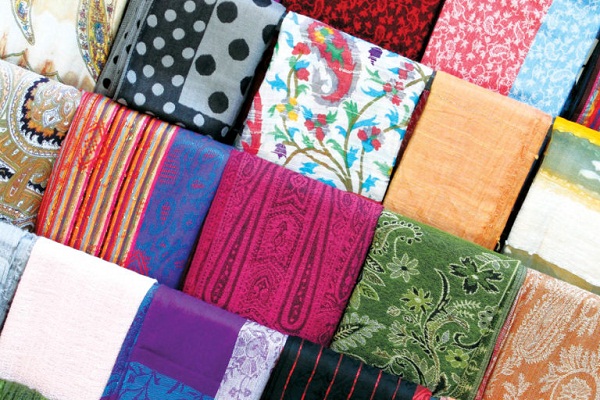
Producing one meter of woven fabric from cotton 1-1/8" in a continuous open width process (COW) costed $1.36 /metre on average in 2021. Cost was highest at $1.91/metre in Italy and lowest in India at $1.11/metre, reveals latest edition of International Production Cost Comparison (IPCC) from International Textile Machinery Federation.
The report calculates production costs of different textile products in primary textile industry markets based on various elements at each stage of value chain. Besides traditional markets of Bangladesh, Brazil, China Egypt, India, Indonesia, Italy, Korea, Pakistan, Turkey, the US and Vietnam, the edition also analyzes production costs of different textile products in Central America and Mexico. Analyzed products include texturing, weaving, knitting, and finishing segment.
Woven fabrics forms 19% of total fabric production costs in 2021
The report states, cost of finished woven fabric formed 19 per cent of total fabric production cost across the world in 2021.Fabric production costs ranged from 15 per cent in Korea to 22 per cent in Central America. Rise in yarn prices led to an increase in production costs by 19 percentage points on average. Fabric production costs increased in the range of 14 percentage points in Egypt and 26 percentage points in Italy in 2021. Weaving increased production costs by 31 percentage points and was in the range of 26 percentage points in Egypt and 33 percentage points in the US, Turkey, and India.
Average cost of raw materials needed to produce a meter of woven fabric formed 31 per cent of fabric’s production cost. Raw material costs ranged between 22 per cent in Italy to 40 per cent in Egypt.
Energy dominates fabric production cost in Mexico, Central America
With power costs forming 28 and 25 per cent of production costs, Mexico and Central America remained more dependent on energy cost for spinning NE/30 yarn then other countries. On the other hand, the US, and Egypt were less dependent on energy cost for apparel production. Energy costs formed 10 and 11 per cent of their total manufacturing costs, respectively.
Labor costs determine fabric production in Italy and the US
Fabric production costs in Italy and the US remained more dependent on labor costs during 2021. Labor costs constituted 40 and 30 per cent of production costs in these two countries. However, labor costs made up only 2 to 3 per cent of total manufacturing costs in India, Pakistan, Bangladesh, and Egypt. Capital costs was 40 per cent of production costs for spinners of NE/30 yarn in Egypt, Central America and Pakistan. In 2021, spinners in Italy and Korea Rep faced lower capital cost at 21 per cent.
Turkiye’s apparel export surge by 20.79% during January-April 2022
Turkiye’s apparel exports surged by 20.79 per cent Y-o-Y in January-April 2022, shows data from the Turkish Statistical Institute and Ministry of Trade, Turkiye exported apparel worth $6.78 billion, in the first four months of the current year compared to exports of $5.61 billion during the same period of 2021.
Turkiye’sknitted and crocheted clothing and accessories (HS chapter 61) exports grew by 18.6 per cent to $3.742 billion in January-April 2022 as against $3.156 billion earned during the same months of the previous year.
Exports of non-knitted apparel and accessories (HS chapter 62) increased by 23.6 per cent to $3.042 billion compared to $2.460 billion exports made in January-April 2021.
Exports of old clothing and other textile articles and rags (HS chapter 63) also grew by 9.5 per cent year-on-year to $1.046 billion during the period under discussion.
Meanwhile, Turkiye’s imports of cotton, cotton yarn and cotton textiles (HS chapter 52) increased by a sharp 69.4 per cent to $1.733 billion over $1.023 billion in the first four months of 2021.
Likewise, man-made filament (HS chapter 54) imports too shot up by 78.1 per cent year-on-year to $1.172 billion, the data showed.