FW
SAC targets 45 per cent reduction in GHG emissions by 2030
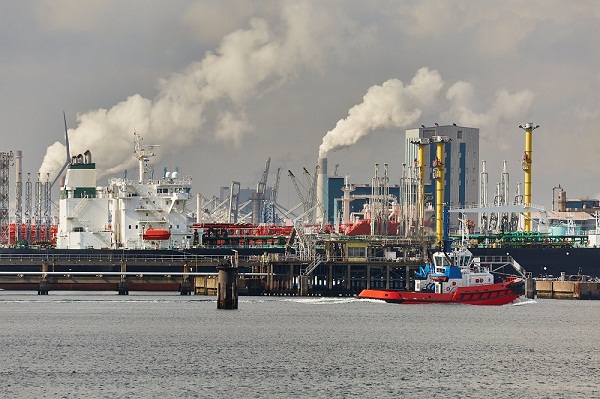
Global multi-stakeholder nonprofit alliance for consumer goods industry, Sustainable Apparel Coalition (SAC) has partnered Fair Wear and the Ethical Trading Initiative to introduce collective action to reduce greenhouse gas emissions by 45 per cent by 2030. Launched under The Industry We Want (TIWW), the initiative aims to ensure dignity for workers by providing them with decent jobs, growing their businesses along the supply chain, and making a positive impact on the planet.
Helping TIWW develop new strategies
TIWW measures actions against the three pillars of social, commercial and environmental by developing a set of metrics for the garment and footwear industry. To be presented in TIWW’s first ever industry dashboard, these metrics will be updated annually and function as a “temperature check” for the entire sector. TIWW’s environmental pillar will be led by SAC which will update the dashboard data annually in partnership with the Apparel Impact Institute (Aii). The SAC will also help TIWW develop overall strategy, communicate with partners, support TIWW led events and identify improvements by evaluating the project annually.
The partnership will help SAC achieve its vision of developing a sustainable fashion industry, It will also enable the industry to cater to needs of people, says Amina Razvi, Executive Director, SAC.
Achieving science based targets
Through this partnership, SAC will able to support organizations to achieve clear science based targets (SBTs). The coalition will be able keep the industry on track of fulfilling its climate change commitments, particularly, its targets to reduce GHG emissions by 45 per cent.
Launched by Fair Wear and the Ethical Trading Initiative in early 2021, TIWW aims to explore the full potential of the garment and footwear industry. Its dashboard’s first iteration was based on data from Aii’s & WRI’s report ‘Roadmap to Net Zero: Delivering Science-Based Targets in the Apparel Sector’, based on SAC’s and Textile Exchange data. Created in collaboration with the WageIndicator Foundation and the Better Buying Institute, the dashboard presented metrics on the living wage gap and purchasing practices in the sector.
Tracking industry progress
Fair Wear and ETI’s partnership with SAC ensures the industry makes required progress on environmental impact as well as on commercial and social practices, believes Alexander Kohnstamm, Director Fair Wear and Peter McAllister, Director, ETI. To explore the details of GHG metric, TIWW will host a Deep Dive Session on May 12 . The event will explore the metric’s methodology and ways to accelerate progress towards net-zero for a sustainable garment sector.
India: Cotton purchases are unprofitable as prices remain high despite duty cut

Removal of the 11 per cent duty on cotton imports has failed to benefit spinning and composite textile mills as cotton prices continue to hover around Rs 90,000 per candy. As predicted, duty removal has not boosted India’s cotton imports as international prices continue to remain high. The industry could have benefitted if the decision was taken before February, opines Cotton Association of India.
Limit cotton hoarding and futures trading
Current cotton rates are unaffordable for spinning mills as they do not get such high prices from weavers, says Saurin Parikh, President, Spinners Association of Gujarat (SAG). The surge in prices can be attributed to hoarding of 60 lakh bales of stock by a handful of multinational companies and cotton futures on platforms like MCX and NCDEX. The government needs to limit cotton storage and future cotton trading to protect the entire textile value chain, he adds. If prices do not decline quickly, the spinning industry will have to wait for fresh stocks to arrive, says Parikh. Buying at current rate may prove unprofitable and impact bottom lines over the next six months, he adds.
By the time, import duty was suspended, a lot of foreign trading and funding firms had already cracked deals, explains Chintan Thaker, President Welspun Group. The deals would be finalized by April by then, cotton rates may decline. In case, they don’t, the government will have to suspend cotton exports and crackdown traders engaged in cotton hoarding.
Cotton production to remain low
This season, farmers may have to carry forward nearly 40 lakh bales of cotton stocks, opines Atul Ganatra, President of CAI. They are still holding 15 per cent crop with 7 to 10 lakh bales still expected to arrive in the market from June to August from Tamil Nadu and Karnataka. This will ease cotton supply in the next two to three months, he adds.
From Rs 48,000 per candy in the beginning of current season, cotton prices have almost touched a high of Rs 98,000 per candy. Cotton production in the country may remain low at 335 lakh bales, says Ganatra. Exports are likely to touch 45 lakh bales while imports will total 15 lakh bales, he adds. Spinning mills may consume 340 lakh bales this year, Ganatra believes. According to him, cotton sowing will increase by 15-25 per cent with farmers in states like Gujarat, Maharashtra, Tamil Nadu, Andhra Pradesh, Madhya Pradesh and Punjab shifting from other crops to cotton.
Tencel launches Tree Climate fabric collection
Leading global producer of wood-based specialty fibers, Lenzing has launched the Tree Climate fabric collection by Tencel™, curated by outdoor fabric innovators David Parkes and Marco Weichert, at Performance Days in Munich.
The new Tree Climate outdoor fabric collection features the wide range and versatility of TENCEL™ branded lyocell fibers. It displays a great variety of base, mid, and outer layer fabrics each offering a range of inherent performance qualities, as well as waddings made of wood-based Tencel™ Lyocell fibers for outdoor applications. The three-fold collection allows the creation of synthetic free and enhanced synthetic content layering solutions for different weather conditions.
The environmental impact of the fibers is amongst the lowest of all materials according to the Higg Materials Sustainability Index, an industry-wide tool that measures and communicates the environmental impact of materials used for apparel. In addition to the clear sustainability benefits, the collection demonstrates the versatility of TENCEL™ Lyocell fibers in functional outdoor applications. Wind and water resistant, with optimum breathability and thermal regulation, makes the fabric ideal for outdoor sports lovers all year round. The fibers, which are gentle on skin, also blend well with natural fibers such as wool and hemp.
Uniqlo, Marni team up for a capsule collection
Japanese ready-to-wear brand Uniqlo and Italian luxury label Marnihave teamed up for a capsule collection thatwill be released in Uniqlo stores and on the brand’s e-shop. The limited-edition collection features vibrant, colorful items patterned with floral prints, stripes and checks. It includes dresses, anoraks, raincoats, trousers, button-down shirts, T-shirts with graphic motifs and more. One of the stand-out items is a unisex jacket decorated in a floral pattern.
Francesco Risso, Creative Director, Marni, has reinvented Uniqlo’s signature looks, adding a luxury feel to them. The palette is vivid, full of typical spring colors: blue, green and yellow.
Uniqlo is also launching a Spring/Summer 2022 collection in collaboration with ready-to-wear label MameKurogouchi, founded by Maiko Kurogouchi. It will be available on Uniqlo’s e-shop and at selected stores from June 9 2022. This womenswear collaboration will celebrate women through a unique wardrobe in a soft, earthy colour palette ideal for highlighting all skin tones
Sustainable Apparel Forum to be held on May 10, 2022
Government ministers and advisors, the European Union, UN bodies, brands, global fashion campaigners, brands, manufacturers and industry leaders will rub shoulders at the Sustainable Apparel Forum that will be held in Dhaka, Bangladesh, on May 10, 2022.
This year’s SAF, the third such event, aims to establish Bangladesh as the world’s most responsible apparel sourcing destination. That’s why senior government representatives will be speaking and in attendance, listening to the needs of industry and thrashing out what needs to be done to take Bangladesh garment production to the next level.
Senior representatives from globally renowned recycling and renewable energy companies will also be in attendance as well as exhibit their sustainability and green technologies, products and solutions under the same roof.
The SAF will showcase opportunities for much-needed green financing in the industry.Issues under the spotlight will include climate action, environmental social & governance (ESG) and green finance, purchasing practices, circular economy, and regulatory reforms.
The Embassy of the Netherlands in Bangladesh is title sponsoring the 3rd SAF. Pacific Jeans, Cotton USA and KDS are platinum sponsors; Epic, Laudes Foundation, Higg and H&M are gold sponsors; while Better Work Bangladesh is silver sponsor of the event.
Surging prices compel Union Government to ban cotton exports
The Union government plans to impose a temporary ban on cotton exports if prices continue to surge, says Upendra Prasad Singh, Textile Secretary.
Cotton prices have doubled in barely a year to over Rs90,000 per candy. Prices of some varieties of cotton have even touched Rs100,000 per candy. A ban could help soften prices by freeing up cotton for the domestic market, adds Singh.
High cotton prices affect the Indian textile industry disproportionately, as it is heavily dependent on cotton, unlike other markets where man-made fibre occupies a larger share.
Singh opines, cotton prices are unlikely to decline before October when the new cotton crops arrive. Cotton prices have been a “dampener" and the problem could persist for some time as there is a global shortage of cotton, he adds.
Istanbul Yarn Fair to shape international yarn trade and production
To be held from February 24-26, 2022 at Tuyap Fair Convention and Congress Center in Istanbul. International Istanbul Yarn Fair will be a sales and marketing platform that shapes the international yarn trade and textile production. The fair will feature leading yarn companies showcasing their organic and technological innovations. The fair will be organized in collaboration with industry leaders who shape the international yarn trade. It will give Turkey's and the world's leading yarn manufacturers an opportunity to exhibit their new products manufactured using modern concepts.
The biggest fair in Eurasia, the event will be the 18th edition of the International Istanbul Yarn Fair. It will offer various advantages in terms of prices, diversity, and technology for the industry's professionals. With the highest number of participants among the others in the field, the International Istanbul Yarn Fair will have the best manufacturers of fancy, cotton and polyester yarn. It will allow visitors to access and compare more products in a short period of time.
The Yarn Fair will offer its visitors an opportunity to find the best yarn manufacturers for tricots with the best prices under the same roof.
Japan’s cotton spinners relocate as domestic demand declines
Cotton spinners in Japan continue to relocate their spinning capacities to overseas joint venture textiles as domestic demand declines. As per a Textile Network report, in FY 2020-21 Japan’s cotton imports declined 34 per cent to 31,570 tons from 47,790 tons in 2019-20. The decline is mainly attributed to a stagnant demand and disruption caused by the COVID-19 pandemic.
Main sourcing destinations were the United States, followed by Greece, Australia and Brazil. Imports from the US declined 39 per cent to 16,300 tons, accounting for 52 per cent of Japan’s total imports. Imports from Australia declined 45 per cent to 3,700 tons. On the other hand, imports from Brazil declined 45 per cent to 2,800 tons. In contrast, imports from Turkey surged by 125 per cent to 1,500 tons.
The US, Australia, Greece and Brazil accounted for 89 per cent of Japan’s total imports in 2020-21. Japan’s cotton consumption in 2020/21 declined to 31,600 tons as demand stagnanted demand and COVID-19 caused several disruptions in supply.
China to approve ratification of ILO conventions on forced labor
The National People’s Congress of China has decided to approve the ratification of International Labor Organization’s (ILO) Forced Labor Convention, 1930 (No. 29) and the Abolition of Forced Labor Convention, 1957 (No. 105). With the ratification of these two instruments, classified as Fundamental Conventions, the total number of ILO conventions ratified by China will increase to 28, including six of the eight Fundamental Conventions.
ILO says, the ratification reinforces China’s commitment to eliminate all forms of forced labor within its jurisdiction, realize work in freedom for its 1.4 billion people, and respect ILO’s fundamental principles and rights at work. These conventions will enter into force in China a year after their instruments of ratification are deposited with ILO.
These ratifications will create renewed momentum towards human-centred development in China in line with the ILO Centenary Declaration on the future of work, says Guy Ryder, Director General, ILO.
Commence Rupee-Rouble trade immediately, urge Indian apparel exporters
Failure to receive payments from Russian brands is forcing Indian apparel industry to urge for the immediate commencement of the Rupee-Rouble trade mechanism with Russia. Payments from Russia have got stuck due to the sanctions imposed by the US and the western countries. This is making MSMEs’ operations challenging and difficult for them to sustain business.
Tirupur knitwear exporters, who earlier received payments in Euro/Dollar currency are now not receiving them due to the sanctions and exclusion of Russian Banks from SWIFT platform. Buyers have been willing to make the payments. However, they are constrained with no options, says Raja M Shanmugham, President, Tirupur Exporters Association. TEA has urged Nirmala Sitharaman, Union Minister of Finance, and Piyush Goyal, Union Minister of Textile and Commerce to resume the Rupee-Rouble trade mechanism with Russia immediately to receive stuck payments. From April 2021 to February 2022, India exported apparels worth $61 million to Russia.