FW
Burberry Q2 sales up 11 per cent, aims to refocus on Britishness
For the second quarter Burberry’s sales grew by 11 per cent. The progress happened due to increased tourist spend. For the first half of the year the brand’s revenue rose by five per cent. Adjusted operating profit for the period climbed six percent.
The strategy for the next phase for growth includes a target to double sales of leather goods, shoes, and women’s ready to wear.
British luxury brand Burberry has an extraordinary legacy, a unique British heritage and a very strong platform to build on. The strategy also aims at refocusing on Britishness and strengthening the connection with British design, craft and culture.
As the pandemic effect eases Burberry’s boutiques are all open back up fully. Burberry has been pursuing a fusion between social media celebrities and the blockchain, including the launch of NFTs in the gaming world. Burberry’s ultra-savvy marketing drives are helping the company win new style-hungry customers across the world, desperate to get their hands on a slice of the brand and willing to pay full price for the privilege.
In January 2022, Burberry’s higher quality business saw its full-price sales rise 26 per cent in the quarter versus comparable 2019 levels, while its total same-store sales slid three per cent.
Its return to luxury as sales rise across the world, Asia leads the pack
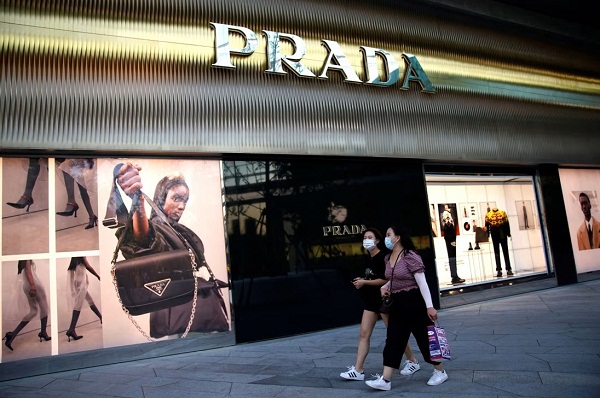
When the sector’s growth percentage for 2022 is at 22per cent, then luxury can claim to have returned to its pre-pandemic glory. As per a Bain & Company Luxury Study presented earlier this week in Milan, the news is good for a sector that took a beating during the last two pandemic years. The consumer base figures have already reached the 400 million mark and by 2030 will be at half a billion. The better news is that the Tier I luxury brands contributed 40 per cent of the luxury sector’s value this year. The study forecasts the luxury sector will have total value of $591 billion by 2027. Currently it is pegged at $570.21 billion.
Markets drive return to sales
Year 2022’s, the three biggest luxury markets are: US, Mainland China and Japan. Combined, these three countries account for 47 per cent of this year’s global luxury market. It is interesting to note that the US continues to maintain its pole position as the world’s biggest luxury market valued at $74.7 billion, despite cutbacks on discretionary spending that was a fallout of the post-pandemic mood of political and economic instability coupled with lower volumes of sales to international tourists.
China continues to be in the second position with a total value of $53.3 billion as its current population of luxury-lifestyle millennial fans is 400 million, multiple times more than that of the US. Of course, Chinese international tourists also continue driving global growth through sales in the US, Europe, Australia, Singapore and the UAE.
Japan stands at the third position with a total value of $29.9 billion. Like Europe, Japan too banks a lot on Chinese tourists purchasing luxury items and post Japan opening up its inbound tourism, the trend continues. McKinsey’s East Asia Luxury Consumer Survey shows Japanese luxury consumers are finally embracing the omni-channel experience which it had not embraced unlike other parts of the world, as recently as 2021.
Asia leads luxury consumption
As predicted, it is Asia that is spearheading the return to luxury in global play. The highest spending comes from China, followed by Japan, South Korea and Singapore followed North America, Europe, Australia, South America, Africa and Oceania. Luxury is also percolating from quintessential large metros to smaller towns as is evident in China and India. Traditionally cities like Guangzhou, Beijing, Shanghai, Hong Kong, Delhi and Mumbai have been luxury retail centers in China and India. With the lockdown, many professionals in both countries adopted work from home, leaving these metros to return to their towns of origin. E-commerce played a key role in providing these returnees the access to continue their purchase of luxury products, thereby spreading luxury into Tier II and II cities in both countries.
Another segment fuelling sector growth is the recent rise of luxury menswear. This has resulted in brands such as Prada, Gucci, and Dolce & Gabbana, which traditionally have not been known for their menswear lines, to open stores focused only on men.
Online and offline retail the new model
Luxury brands were the last to embrace the values and benefits associated with e-commerce and now there is no looking back. Premium brands are now adopting digital technologies to not only replicate the in-store shopping experience on their e-commerce platforms but to also enhance the physical store experience. Luxury brands’ need to maintain exclusivity, quality and craftsmanship that led them to be strong on physical experience is giving way to a more robust and winning omni-channel experience.
Casual wear brand inspired by cricket
Luxury fashion brand Shantnu Nikhil has launched a new casual wear brand named Shantnu Nikhil Cricket Club. The new bridge-to-luxury label catering to men and women is inspired by India’s love of cricket and modern sports style and offers clothing, footwear, and accessories.
Sport as a medium has had an impact on how the designer dup carved their design career and it has been one of the stronger virtues of their design philosophy.
Shantnu Nikhil Cricket Club is inspired by their love for cricket and a vision to connect the sport to a lifestyle promise.Fashion has always been a part of sports but they have steered away from the conventional route of sportswear and ventured into a direction no Indian designer has taken yet.
SNCC presents a new fashion vocabulary that represents a vision of modern everyday dressing injected with a jolt of much needed youthful swagger.Like most Indians, the designers’ core childhood memories come from the friendly cricket matches played in the parks of residential colonies and school. The line mixes striped tops with preppy knitwear, more streetwear inspired tracksuits, and smart casual separates including shirts, jackets, and chinos. The brand’s logo features a cricket player and a brand crest is one of the new signatures for the label.
Swedish companies map carbon footprint
Over the past year, TMAS, the Swedish Textile Machinery Association, has been working with Climate Partner on a corporate carbon footprint mapping project with its member companies.
The aim is to move toward a more sustainable textile industry.Over half of the members of TMAS are participating in the project, which involves calculating each operation’s Scope 1, 2 and 3 emissions in order to identify the current climate impact and areas where reductions can be made.
The project’s scope examines all aspects of a business split into five areas: facility management (heating, electricity, water, cooling agents and waste disposal); employee mobility (commuting and company cars); business travel (flights travel by train, rental cars), procurement (production, packaging and office materials), logistics (inbound and outbound). Primary data is being used wherever possible and emission factors originate from internationally recognised databases.
The Textile Machinery Association of Sweden (TMAS) comprises leading Swedish companies with textile technology, automation and production processes. The expertise of its members ranges from advanced systems for yarn fault detection and tension monitoring, to yarn feeding technology for weaving, automated sewing production lines, cutting machines, embroidery technology, effective material handling systems, spray application system for fabric finishing and much more.Each company is very different in terms of size, structure and operations, but share common goals in the design and production of textile machinery that is flexible and highly automated, and wherever possible enables savings in energy, water and chemicals consumption.
Industrial sewing threads growing at six per cent
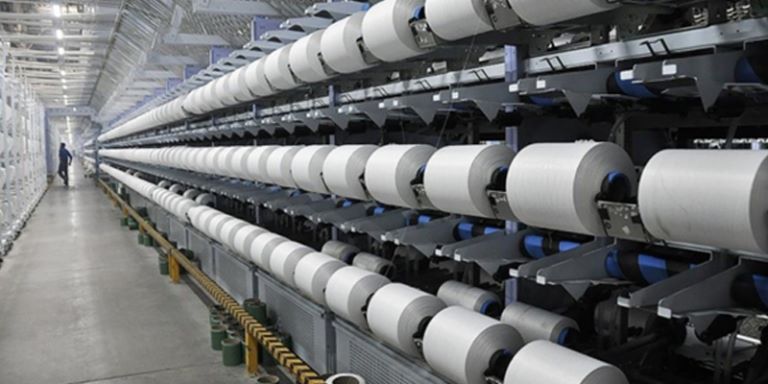
The global industrial sewing thread market is growing at six per cent a year.
Sewing thread is essential for the footwear and apparel industries but is now expanding into other textile products such as home interiors, automobile interiors, and technical textiles.
The growing popularity of low-cost clothing is another driving factor that fosters the market’s growth.Threads are also an important component of finished textiles, and the sewing threads used in technical textiles are made of polyester, polypropylene, Nylon6, Nylon6.6, and other synthetic materials. These threads are intended for use in both high and low-temperature applications.
China, India, Turkey, and Italy are among the key exporters of industrial sewing thread, comprising over 50 per cent of total exports. In terms of imports, Italy, the US, the Philippines, and Guatemala are the key importers of industrial sewing thread, comprising over 25 per cent of total imports.
However, in light of the recent Covid outbreak, numerous industries’ operations have either been temporarily halted or are operating with a minimal workforce due to strict lockdowns and restrictions. The industrial sewing thread market is also witnessed a significant impact. Besides that, the high costs associated with installing and maintaining these machines may impede the growth of the global industrial sewing thread market.
Denmark, India to have textile craft interactions
As part of a cultural exchange program Danish artists and designers will travel to India to work with textile masters.
They will explore Indian textile crafts including hand block print, hand appliqué, bandhani tie and dye, kanthastitch embroidery, and ikat weaving. They will get an opportunity to celebrate and explore the skill, tradition, and beauty of Indian textile crafts and explore the techniques and materials that over so many generations have provided inspiration for western design and handicrafts.
Similarly Indian master craftsmen will travel to Denmark to conduct workshops for Danish artists. The program is expected to strengthen collaboration between Danish and Indian textile designers and highlight the value of craftsmanship within textile and design.
The program also echoes the need to encourage exchange in the fields of design and crafts with special attention to traditional craftsmanship and sustainability.Value craftsmanship and the need to preserve what is rare and near extinction are yet another need of the hour.
Bangladesh to lose LDC status in 2026
Bangladesh will no longer be a least-developed country from 2026.
After becoming a developing nation, Bangladesh will lose its preferential market access and face ten per cent to 12 per cent duty on its exports. However, it will enjoy the duty preference in the European Union up to 2029 as the trade bloc has extended a three-year grace period.
Bangladesh has set a target to raise the nation's share in the global apparel market to double-digit in three years. The country has a six per cent market share in the global apparel supply chain. But product diversity is needed as more than 75 per cent of exported garment items are confined to the top five products although the country is the second largest apparel supplier in the world.
Improvement of efficiency and making more garments from manmade fiber can help overcome the challenges of the duty imposition after the LDC graduation. Globally, the use of manmade fiber is rising. Worldwide, almost half of all apparel exports are of manmade fiber products while 42 per cent are cotton-based garment products. In Bangladesh, 72 per cent of the garment exports are cotton-based apparel and just 24 per cent are of manmade fiber.
Bangladesh’s share in the global market for manmade fiber is less than five per cent at present.
Adidas appoints retail head
Andrea Dorigo is senior vice president of Adidas and head of retail. He will oversee the activities of the brand’s 2,500 stores worldwide. With the sports giant focusing on its approach to direct sales, which already accounted for 38 per cent of its sales last year, this is a highly strategic position.
Due to complications in the Chinese market, Adidas is in the process of closing and adapting its network in the Middle Kingdom, where it had up to 12,000 points of sale. For the third quarter, Adidas’ currency-neutral revenues increased four per cent.
Deteriorating traffic trends in Greater China as well as slowing consumer demand in major Western markets weighed on the revenue development. In addition, the company’s decision to suspend its own operations in Russia significantly reduced revenues during the third quarter, particularly impacting the company’s direct-to-consumer (DTC) business. Excluding Russia/CIS, revenues in the company’s own distribution channels were up at a double-digit rate, reflecting the successful sell-through of Adidas’ products. Within DTC, the company’s e-commerce revenues increased eight per cent.
Dorigo is a retail expert who has evolved in various companies, marketing very different types of products. He has been with Estee Lauder, Pirch, Oakley, Brooks Brothers.
Asics Q3 sales up 12 per cent
For the third quarter Asics’ net sales grew by 12per cent. The company’s gross profit also increased by 12 per cent. Operating income increased 0.7 per cent mainly due to the impact of the increase in net sales. Ordinary income decreased four per cent mainly due to the impact of the increase in foreign exchange loss.
Net sales of the performance running category increased 17 per cent. Asics is a Japanese multinational sporting goods company. For the sports style category, net sales increased 18 per cent. Category profit increased 13 per cent. Total assets increased 28 per cent from the end of the previous fiscal year, total liabilities increased 23 per cent and total net assets increased 35 per cent.
According to the company’s forecast for the fiscal ending December 31, 2022, net sales are expected be 18 per cent more than the net sales of the previous fiscal, while operating income is estimated to be 54 per cent up from the previous fiscal. The company is expecting its ordinary income to be 44 per cent up from the previous fiscal, while the profit attributable to owners of parent is expected to be 123 per cent up from the previous fiscal.
Australian imports from China up 13 per cent
In 2021, Australia’s imports of textile and apparel products from China rose by 13 per cent year on year. In the first three quarters of 2022, Australia’s imports from China were up by 22 percent year on year. Of Australian imports of textile and clothing products every year, China is the largest source, accounting for about 60 percent of the total, much higher than China's 38 percent global market share by value.
Chinese textile products have gained popularity among Australians, not only because China leads the world in the innovation and use of carbon-neutral and recyclable fabrics but also because of the complete supply chain and efficient business operations in China, which are more competitive than those of many other countries.
Frequent high-level interactions between the two countries have brought a significant change from the stalemate that has been in place since 2019. Both sides have expressed their willingness to improve relations through dialogue. China-Australia relations are stable and improving after falling to a low point, which gives strong confidence to the economic and trade circles of the two countries.
Australia is also a resource-based country, with wool and cotton, the raw materials for textiles and clothing, among its main export commodities, which shows the high complementarity of the two countries in trade.