FW
US footwear event Materials Show in August
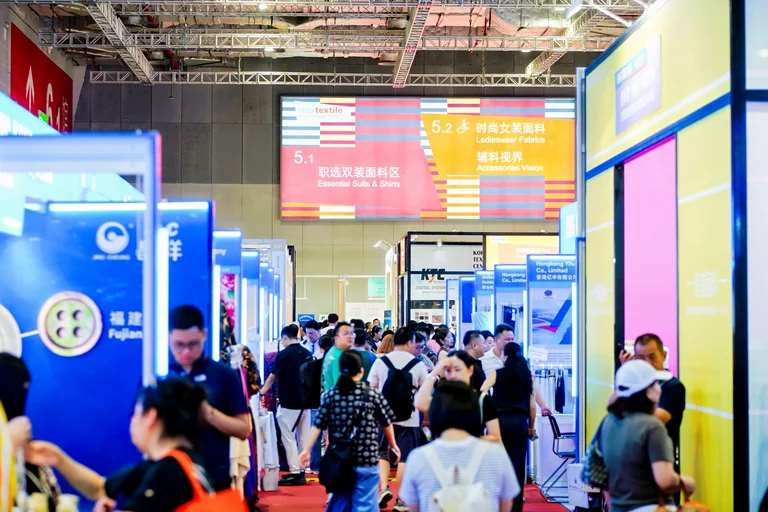
Materials Show will be held in the US, August 6 to 7, in Portland, Ore. and August 14 to 15, in Willmington, Mass. Buyers, designers, and thought leaders in the footwear industry can mix, mingle and source material and components. The semi-annual Materials Show is one of the most forward-thinking trade expos in the industry. Footwear designers seek out inspiration for upcoming seasons, and buyers source the practical components, textiles and processes they need to turn those designs into reality.
The event is designed to position attendees and exhibitors at the forefront of what’s happening in the footwear industry. This is the only event in the US focused on helping professionals better understand current and emerging materials and development at an in-depth technical level.
Attendees will participate in sessions led by suppliers and professors with decades of material expertise. Materials and innovation leaders from top footwear companies will discuss current trends, challenges and best practices. Attendees can tour textile development labs, learn about new materials, and explore how to better manage cost and quality issues. Presentations will explore key socio-cultural and aesthetic influences uncovered through extensive research and summarize the mindsets, desires, societal pressures, and other factors brands should expect to see exerting a force on the market in three or five years.
Consinee offers wide yarn capabilities
Consinee is China’s largest spinner and exporter of cashmere yarn. Using advanced manufacturing techniques, Consinee has a full-range of ready-to-wear and luxury cashmere yarn capabilities.
The company produces and sells nearly 10,000 tons of high-grade yarns and fabrics annually, including cashmere and other natural raw materials, of which 100 per cent cashmere yarn exceeds 2,000 tons, accounting for 20 per cent to 25 per cent of the world’s pure cashmere raw material production. Founded in 1999, the group is the only large textile yarn manufacturer in China that uses a new imported automation assembly line. In 2017, Consinee, in cooperation with Siemens, became the only enterprise in the textile industry to build a fully intelligent digitization system served by unmanned aerial vehicles. Among Consinee’s customers are Ralph Lauren, Calvin Klein, Burberry, Hugo Boss, Max Mara, Chanel and Hermès.
This is the first textile company in China to introduce a recycled production line from Italy. Currently, Consinee sustains two raw material production lines imported from Italy that produce 400 to 500 tons of high-grade natural recycled yarns annually. Consinee is also the first enterprise to advocate conscientious caring for animals and protection-pasture plants. It serves as one of the sponsors of ICCAW, the international cooperation committee for animal welfare.
India undecided on China after RCEP
In view of the Regional Comprehensive Economic Partnership (RCEP), India is looking at different arrangements to give the minimum tariff cuts to Chinese goods and delay the concessions by as many years as possible.
India has considered duty cuts on Chinese goods over a maximum 25 year period. Industries like steel, copper, textiles, aluminium, engineering, pharmaceuticals, leather and food have expressed fears about Chinese dumping. While the textile industry has sought protection of cheap manmade fiber imports from other RCEP members, the auto industry wants 28 sensitive automotive tariff lines to stay on the negative list for all member countries. The aluminium industry wants aluminum and its articles in the negative list or the exceptions to products they want to open up for imports under RCEP and the copper association has sought zero duty on copper ore and concentrate to prevent an inverted duty structure.
RCEP is a regional trade agreement spanning the ten Asean countries and the group’s six free-trade agreement partners — Australia, New Zealand, Japan, China, South Korea and India. Though talks on seven of the sixteen chapters of the agreement are complete, the key areas of goods, services and investment are still being negotiated. India wants to know the number of years various industries need to give zero duties to imports from RCEP countries especially China.
Rising costs, protectionist policies top business challenges in 2019
A report from the US Fashion Industry Association lists, rising production and sourcing costs and protectionist trade policies have emerged as the fashion companies' top business challenges in 2019. According to the survey, the number of companies holding a positive five-year outlook dropped from 84 per cent in 2018 to 64 per cent in 2019.
The report also noted around 83 per cent of the respondents to the survey plan to reduce their sourcing from China. Only 6.7 per cent of respondents plan to "reduce sourcing significantly" however, demonstrating the continued business value of maintaining a presence in China. Half of the respondents said their Chinese vendors lowered prices in an attempt to keep from losing customers to Vietnam, currently the alternative manufacturing country of choice.
According to the report, during 2018, American fashion brands and retailers paid more than $12 billion in tariffs on apparel and home textiles and another $3 billion on imported footwear. In spite of these costs, the effect on US reshoring has been negligible. The trade war has increased the production costs of textiles and apparel 'Made in the USA,' and to cover these costs these brands will have to increase their prices.
Iran to produce 50per cent of the required cotton
Domestic demand for cotton in Iran currently stands at 120,000 to 130,000 tonne per year in Iran. Around 50 per cent of this, 60,000 tonne -65,000 tonne are expected to be produced domestically as the country aims to become self-sufficient in cotton production within the next six years.
As reported by Fars News Agency, around 86,880 hectares have gone under cotton cultivation this year, which is a 23 per cent increase year-on-year.
The main provinces producing cotton in Iran are Golestan, Khorasan Razavi, Ardabil and North and South Khorasan.
Iran was once an exporter of cotton, besides meeting its own domestic demand. But the situation changed, as land under cotton cultivation in the country declined by 75 per cent from 300,000 to 70,000 hectares during 2001-16.
Japanese firms invest heavily in Vietnam’s textile and garment sector
Japanese firms are scaling up investment in Vietnam’s textile and garment sector. Japanese company Matsuoka produces casual apparel in Vietnam to be exported to Japan and China. Matsuoka Corporation first set foot in Vietnam in 2014. It mainly produces apparels for Uniqlo to be exported back to Japan. The company has chosen Vietnam for capital injection and production expansion in recent years to take advantage of the opportunities anticipated to be brought by new-generation free trade agreements such as the EVFTA and the CPTPP. Matsuoka has three plants in Vietnam with one more coming up. The firm’s medium-term business plan intends at minimising its dependence on China by nearly 50 per cent by March 2021 by shifting its focus to Vietnam from China, where production costs are on the rise.
With around 30 plants in operation, Sakai Amiori, another Japanese company, has opened an export apparel production plant. The plant finished construction in April 2017 and now sees stable production and exports.
The influx of foreign direct investment continuing to flow into export-oriented sectors like textiles and clothing has the dual benefits of helping to boost the sector’s capacity and turning Vietnam into a global manufacturing base.
Indian women’s wear has great export potential: CII
CII’s recent study ‘Indian Exports: The Next Trajectory - Mapping Products and Destinations; has listed women’s wear as a product category to focus on to help increase Indian exports. Other products highlighted for their export potential in the study include furniture and drugs. The CII report suggests developing export strategies at a state level to tailor the strategy to the specific region. The study also suggested that domestic production must be increased whilst targeted promotions are simultaneously rolled out overseas. This sentiment is echoed by the government’s “Make in India” drive which calls for an increase in domestic production, notably for textiles and garments, in order to reduce imports and increase exports.
This export strategy assumes greater significance given a rapidly changing global trade landscape, shifting of global value chains and new free trade agreements, including mega trade agreements.
Meridian opens yarn dyeing plant in the US
Meridian Specialty Yarn has opened a yarn and fiber dyeing plant in the US. This is the first such plant to be built in the United States in over two decades and the only textile manufacturing plant of this type in North America. The plant offers a broad number of traditional capabilities, from chemical treatments to dyeing to a combination of the two. It also offers new capabilities that have the potential to revolutionize some aspects of the US textile industry. It utilizes next-generation technology, machines, controls and robotics. The facility now also provides the only tow-dyeing capacity in the United States. Until this summer, all producer-dyed acrylic tow was imported from outside US borders. In this and other ways, Meridian is opening the door to a new world of possibilities for other companies within the US textile supply chain.
The technology gives Meridian the capability to process every dyeable fiber in various forms, including yarn, tow and top. This is very unusual in the dyed yarn world. It enables chemically treating or dyeing all fiber substrates, ranging from cellulosic and animal fibers, to polyester, nylon and dyable aramids. The company is now in a position to source from all over the world, from every type of textile fiber, supporting a wide array of end uses.
Australian wool faces lower demand
The Australian wool market is starting the season with nervousness. Chinese textile mills have been scaling down buying orders and processing activities since April. Domestic shoppers in China, who consume half that country’s processed wool, are spending less, and European and North American demand has also slowed this year leaving mounting stocks of unsold product in wool’s pipeline.
At the very least, wool growers should expect a volatile year ahead. Woolen mills have adopted hand-to-mouth buying strategies to avoid being caught with too much raw stock or processed textile lines, while tightening supplies from Australia’s shrinking flock would exacerbate the trade’s price volatility and supply pinch points.
Today’s Australian wool clip is just one third its size in 1990 while the national sheep flock is the smallest since the mid 1920s. Wool’s longest running price surge since the 1980s has finally encountered consumer resistance and slower buying orders in May and June. Consumer resistance has coincided with economic uncertainty in Europe caused by Brexit and a slowing German economy, and processors had grown increasingly wary of the China-US trade war’s consequences. Facing a drought, the wool industry’s biggest problems in the years ahead would revolve around longer term wool supply. Average yield is at its lowest point in eight years because of the drought’s impact on fleece quality.
Connect Fashion Global initiative makes circularity smoother
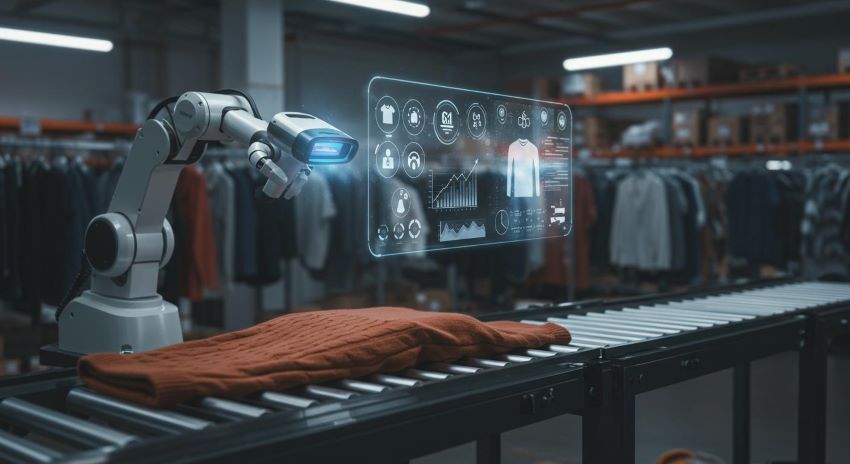
The Connect Fashion Global initiative aims at solving circularity’s transparency challenge by creating digital infrastructure to enable data sharing across the apparel industry’s value chain. The vision is for brands to attach a physical identifier to each garment, which will link to its digital identity or twin on the web, when scanned. This will include detailed information on an item’s bill of materials, authenticity, product details, dye process, manufacturing location, recycling instructions and anything else a brand might want to communicate down the value chain. A garment will be scanned during its life, creating a digital passport or record of its movement along its lifecycle.
The project’s founding partners include: Target, H&M, Microsoft, Waste Management and PVH Corp. Access to an item’s digital twin would reduce the time it takes to renew a product and get it available for sale. In other words, resale will be cheaper and easier than it is now with the help of an end to end connected system.
From growing re-commerce market to innovative new approaches to prototyping, textile dyeing, material selection and recycling, the circular opportunity for apparel is beginning to take shape. However, despite improvements across the apparel value chain, a truly circular system will require alignment and connection between these disparate projects.