FW
Bangladesh: Garment export plummets by 83.74 per cent, says BGMEA
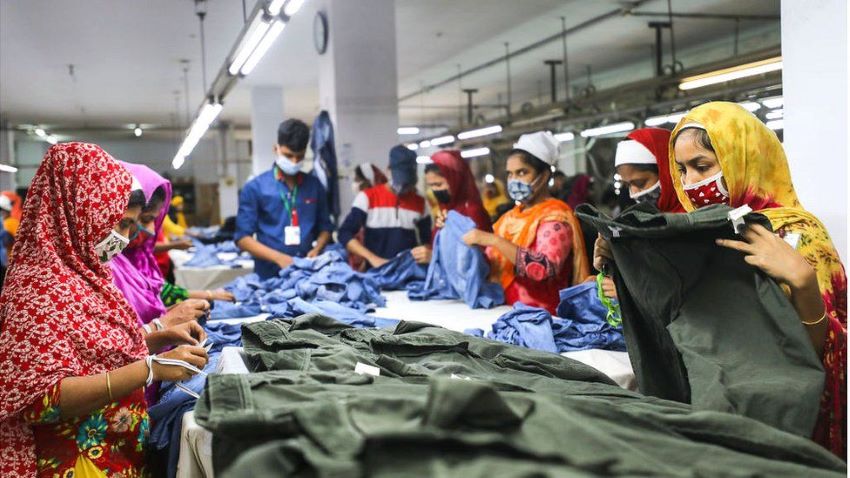
Data from BGMEA indicates, garment export fell drastically, by 83.74 per cent to $194 million in the first 15 days of April compared to the same period last year. In the first 15 days in 2019, the earning from garment shipment was $1.19 billion. The pandemic affected shipment of garments significantly as a majority of Western retailers and brands shut down their stores in Europe and the US.
Apart from the steep fall in shipment, international retailers and brands have already cancelled work orders from different local factories worth more than $3.11 billion as of this week due to the COVID-19 pandemic. The receipts from garment shipment also declined significantly in March this year. Garment export declined by 26.70 per cent to $1.97 billion in March this year compared to the corresponding month in 2019, when export netted $2.69 billion.
Canada RMG imports declines 13 per cent
Canada has registered a massive fall of 13.54 per cent in its apparel import values during January-February ’20. The country imported apparels worth $1.40 billion during this period as against $1.62 billion in the corresponding period of the prior year.
India, China, Bangladesh and Vietnam dwindled significantly and that’s one of the rarest occasions when all top four apparel exporting destinations fell in value-wise RMG exports to Canada. Shipment from China to Canada was worth $440 million, marking 26.79 per cent downfall on Y-o-Y basis. Bangladesh shipments fell 13.10 per cent to. On the other hand, Vietnam’s shipment value of $148.43 million. India’s shipment to Canada valued at $48.38 million, reduced by 17.45 per cent on a yearly basis. Exports to Canada did not pick even in March as India and Bangladesh were facing industry closures to stop COVID-19 spread.
While China recovered in early March, there are no buyers from any part of the world coming forward to place orders for now.
Bestseller, LVMH assure cooperation to suppliers
Bestseller, the Denmark-based clothing company with over 20 brands, and French multinational corporation LVMH are in communication with suppliers, working in close cooperation with them and even supporting them during the Covid-19 crisis.
During this period, Bestseller reached out to suppliers to spark a dialogue on current and future orders. LVMH is also committed to maintaining responsible and fair relationships with its partners. The brand has given special instructions to accelerate payments to suppliers. Furthermore, several of its Maisons have provided guidance and concrete support for the sanitary crisis by giving gels, masks, etc. to our suppliers.
Assuring suppliers of support, Bestseller will do its utmost to live up to its commitments and take delivery of garments already made and those in production. The brand emphasizes on collaborating with its suppliers and placing orders for the coming seasons.
US retail sales decline by 4.4 per cent
Apparel retail sales in the US by dropped 4.4 per cent in March compared to last year, after a 7.8 percent increase in February. Department stores were hit hard with a drop of 25.3 per cent and apparel/accessories stores dropped 52.0 per cent year-over-year. A large portion of department store sales come from fashion businesses like clothing, shoes and accessories.
Revenue loss comes at the most pivotal time in the spring season, precisely when regular price selling takes place across most categories. The missed Easter sales and warmer weather selling will significantly impact the margins, especially in fashion apparel goods. As former Macy’s senior executive stated, basic commodities will likely be taken in since they have little to no margin risk. However, it is most likely that buyers and wholesalers have been in negotiation as the pandemic has escalated to reduce or cancel orders where possible.
New tech to blur lines between digital experiences and reality in fashion
 The impact of digital disruption can be seen everywhere in the fashion industry, right from production and supply chain to marketing and sales. Digital devices, platforms, and technologies such as smart phones, social media, advanced data analytics, artificial intelligence, and e-commerce are re-shuffling the dynamics of the fashion market.
A platform for retailers to enhance shopping experience
The rise of online-only retailers provides a platform for selling fashion products, besides enhancing customer experience. Retailers use different means, such as social media, advanced data analytics tools, and artificial intelligence. These digital tools enable customers to react quickly to consumer insights and incorporate them into their decision-making process.
The trend of using digital tools and platforms to buy fashion products will continue to increase rapidly over coming years. To survive, traditional fashionplayers will have to integrate new technologies, invest in adopting innovative business models, and engage consumers through different digital channels to provide an excellent shopping experience online.
Artificial Intelligence to be more common
Many fashion retailers and brands are already using AI in their operations. This trend will increase in functions ranging from production to supply chain management to customer service. Fashion retailers can personalize their offerings using digital data and trend analysis tools. Since consumers interact with digital tools and platforms more, they also give away a lot more data about themselves. A clever use of this data can be made through advanced data and analytic tools.
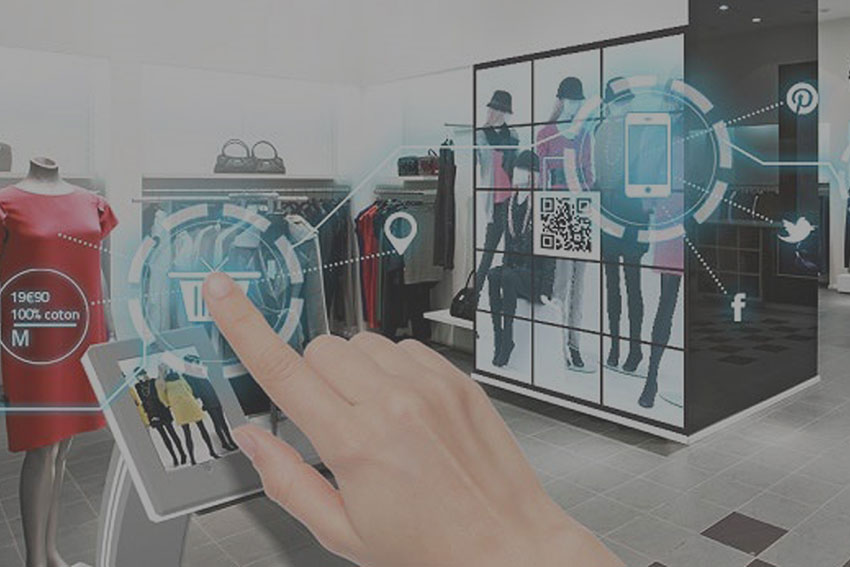
Rise of smart fashion
Established brands are moving away from the traditional fashion calendar and imitating the “drop” approach commonly used by street wear labels to release smaller and more frequent collections that create rarity value and elevate anticipation. This has given rise to a broader range of holiday offerings as well as the introduction of micro-seasons.
From connected jackets to smart sports apparel, clothing is quickly becoming connected to the Internet of Things (IoT). Soon, clothing will incorporate devices like heart rate monitors.
Fashion companies are embracing wearable technology as a component of their products. One example is the “data dress,” which is a dress that is customized based on personal information gathered about the customer.
Challenges faced by retailers
As consumer demands keep changing retailers face several challenges such as:
Faltering brand loyalty: Consumers have numerous options to choose from, it is difficult for them to be loyal to a particular brand. In addition, consumers today can avail of a variety of brands easily.
Rise of multi-channel shopping: Most consumers still prefer to try their clothes before buying them. Hence, finding a garment that not only looks good but also fits well can be a time-consuming chore. When consumers know they can quickly jump online and order it right while they are standing in the store, however, they are more likely to frequent stores that offer this option.
Lack of Data Analyses: Online data gives retailers a competitive advantage over brick and mortar stores just don’t have. Smart tech is certainly moving the fashion world forward, but this may also cause some retailers to get left behind.
In future, technology will continue to blur the line between digital experiences and reality. 5G will finally be rolled out commercially, enabling technological advancements across the board. On-demand product customisation and 3D printing will lead a boom in personalised offers.
Retailers turn to digital fashion and games to boost sales
 Analysis of US consumers by Quantum Metrics till late March reveals, online revenues of apparel retailers declined 11 per cent year-on-year, their overall online revenue increased 50 per cent. This indicates the rising importance of platforms that let people engage with clothes digitally.
Users of fashion try-on apps are doubling each week. Users are spending 50 per cent more time on these apps and trying almost double as many outfits per user, says Ben Chiang, co-founder and CEO of the six-month old fashion gaming app Drest. Similarly, data from App Annie reveals, overall time spent on apps has increased by 20 per cent globally with an increase in apps that allow consumers to maintain normality while staying at home.
Opportunity to increase customer engagement
Digital platforms offer brands an opportunity to increase engagement, attract new customers and harness the power of fashion as a respite from real life.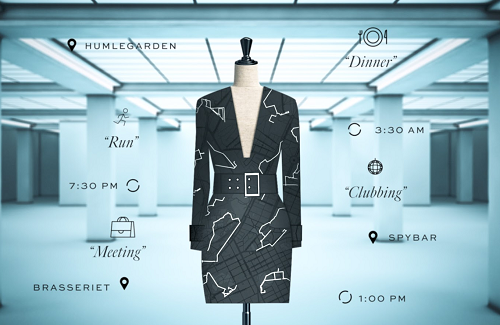 For digital players, this could serve as an unexpected catalyst that helps transition digitized clothes from fun experiment to must-have tool. The Forma app, launched in 2019, lets users try on fashion virtually by uploading a front-facing image of themselves or selecting a model. Thousands of outfits on the app, from brands such as Marc Jacobs, Proenza Schouler and Farfetch, are sourced directly. Brands can also add a Forma try-on option to their e-commerce pages. The company has seen a “huge jump” in inbound requests from brands and retailers, with pilots in the works.
Using virtual games to boost sales
Drest, a fashion styling game created by former magazine editor Lucy Yeomans lets players dress model avatars in digital versions of real designer clothes. Users can compete in style challenges, pay for in-game extras and click to buy the products from brands like Gucci, Burberry and Farfetch. In addition to the dramatic increases in app installs, sharing and connectivity have moved to the next level.
Roblox, which has offered virtual Nikes, added a user-generated content store to provide players with a catalogue to buy digital hats, hair, wings and glasses — all designed by other users — to dress their in-game avatars. The monthly average revenue for full-time creators selling items on the Roblox UGC store is about $26,000, with the most successful making an annual income that’s in the high six figures The top-selling item, a pair of “Deal With It” shades, sold 500,000 times.
Creators and designers understand their audience because they are in the same age category as buyers, believes chief business officer of Roblox, Craig Donato. While the platform originally was popular with children and Gen Z, now more than 40 per cent of users are older than 13.
A fertile environment for innovations
This unprecedented time is providing a fertile environment for digital designers to test concepts beyond games and apps. Last week, digital fashion house The Fabricant began testing Leela, a platform that creates 3D avatars from users’ submitted selfies. They can then see themselves in the same types of digital designs that last year sold for $9,500 at a blockchain conference.
Jonas Niedermüller and Grigorij Aronov have introduced digital fashion brand Rohbau with a collection of hoodies designed by Central Saint Martins alum Assaf Reeb. For €40, customers can submit an image that is then dressed in one of four hoodies that are chrome or transparent.
Online store visits to the brand, launched on 21 February, have doubled with sales increasing by 500 per cent, and influencer posts about the brand received approximately 49,000 likes.
Once the lockdown ends, many of these new trends will continue. As Niedermüller says, inertia is strong and everybody keeps doing more of the same when things are fine, so sometimes it takes something bigger to break the inertia.
CMAI urges government to protect industry’s interest
 CMAI has urged both central government as well as the states, to come up with innovative ways of protecting the interests of the workers without causing irreparable losses to the industry and possibly leading to massive financial bankruptcies in the MSME Sector.
In a recent survey conductead by CMAI, it was revealed that at least 20 per cent of its members believe they may consider closing down their business, unless some Government assistance is provided.
The Clothing Manufacturers Association of India (CMAI), represents the domestic garment manufacturing industry, which is one of the highest employers after agriculture, directly employing close to 12 million employees, with close to 40 per cent being women.
More than 90 per cent of garment manufacturers in the country are in the MSME Sector, with more than half of these being in the Micro segment.
COVID-19 has plunged the industry into a crisis of unprecedented proportions, threatening the very survival of many of our smaller manufacturers.
The revenues of its members have come to a total halt for the last 30 days and are likely to remain so in the coming 60 to 90 days. On the other hand, the Government has issued advisories that enterprises must pay full salaries and wages to all workers, and that no employee should be out of employment.
Hence, in a situation where there is no income for such an extended period, it will be impossible for many of our smaller members to continue paying full salaries and wages, unless we receive some Government support.
Informa Markets announces new dates for Project New York, Liberty Fairs
As COVID-19 forces fashion calendars around the world to shift, trade show organizer Informa Markets announced new dates for several of its New York City-based events.
The July men’s show Project New York, scheduled for July 19-21, will move to September 22-24 alongside Coterie, Moda, Fame and Children’s Club, which are also shifting dates from August 2-4.
This allows attendees to visit one place for Spring/Summer 2021 men’s, women’s, children’s and accessories. NY Women, scheduled for Aug. 2-4, is cancelled to accommodate this new all-in-one concept. The September shows will take place at the Jacob Javits Center, which is currently serving as a temporary field hospital for coronavirus patients.
Liberty Fairs and Man NYC are also joining Informa in this endeavor by postponing their July events to September however, they have not named exact dates or locations at this time.
This decision is especially significant for the men’s market, said Nan Walsh, president, fashion at Informa Markets, as the sector has made the united decision to move all shows to September in New York, thus allowing the industry to come together in a unified way.
Uzbekistan asks rights groups to lift cotton boycott
Uzbekistan has asked the coalition of human rights groups, the Cotton Campaign, to end boycott of Uzbek cotton and textiles so that the Central Asian nation could boost export revenue and create jobs at a time of a global recession. The government estimates ending the boycott, which is supported by more than 300 apparel manufacturers and retailers, could allow the country to earn an extra $1 billion by selling cotton and textiles on Western markets.
In an open letter to the Cotton Campaign leadership, Uzbek labor minister Nozim Khusanov urged it to consider both the progress made by Uzbekistan in eradicating forced labor and the country’s economic circumstances. Rights activists launched the boycott campaign in 2006 in an attempt to force Uzbekistan to abandon a long-running custom of sending students and public sector employees such as teachers and doctors to pick cotton for meager pay.
Today, because of the boycott, supported by the likes of Amazon, Calvin Klein, Adidas and Inditex, the nation of 34 million mostly sells cotton and textiles on Asian markets, which it says means lower prices and limited growth opportunities. The Uzbek government expected to boost textile exports to $3 billion this year from last year’s $2 billion, but if the boycott was lifted, export volumes could double year-on-year.
Shares of Vietnam textile and garment companies lose appeal
The value of textile and garment shares in Vietnam has declined due to the investors’ pessimism about the epidemic in the country and the world. Textile and garment companies in the country have suffered from the interruption of input material supply from China, and most recently, they have been informed that partners from the EU and US have stopped importing products.
Vietnamese textile and garment enterprises need input materials from China to maintain production. Vietnam imported $11.5 billion worth of textile and garment materials from China in 2019, according to the general Department of Customs (GDC).
A lot of textile and garment companies in the country have shifted to make face masks, which has allowed them to survive the current difficulties. Vinatex’s face mask output is 28-30 million a month and will be 50 million face masks a month, if necessary.
TNG Investment and Trade also reported revenue of VND288.6 billion in February, an increase of 65 percent over the same period last year. The sharp increase is attributed to the big orders for face masks.