FW
Florida Swimwear Association cancels October edition of SwimShow
The Swimwear Association of Florida has cancelled its plans to host an October edition of SwimShow in Miami. The association has launched a digital edition of the event, which made its debut on July 11. The virtual offering will run through the end of the year, with hopes that a return to a physical model will be possible in July 2021. The platform will be constantly updated with new imagery, look books and sheets as vendors continue to have collections.
In May, the association had cancelled its July event at the Miami Beach Convention Center during Miami Swim Week due to the uncertainty surrounding the COVID-19 pandemic. The event would have celebrated its 38th annual edition had it not been canceled.
One of the largest of its kind in the world, the SwimShow attracts more than 7,500 buyers, manufacturers, designers, corporate personnel, press, bloggers, influencers, fashion consultants, stylists, VIP’s and other fashion industry leaders from over 60 countries across the globe to showcase brands and create business opportunities.
Virtual Home Textiles Sourcing Expo planned in July
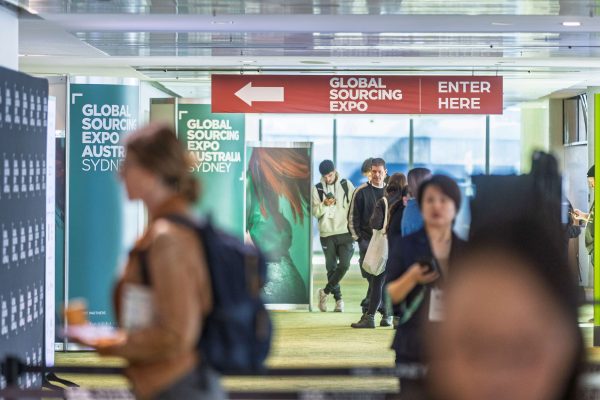
Traditionally held at the Javits Center in New York, Home Textiles Sourcing Expo will be held on a virtual platform from July 21-23. Connecting Asian resources with American buyers, the show will focus on offering a free access to sourcing and education, AI-powered matchmaking, dynamic online showrooms with vivid customization, live chats, virtual networking, interactive educational programming and flexibility to engage at the user’s convenience during the live event and beyond
The show will provide manufacturers, retailers, jobbers, converters, contract specifiers and designers a dedicated avenue to locate new fabrics and products for their latest home collections. It will solely focus on fabrics and finished soft goods for home applications. The show will be held in collaboration with Texworld USA and Apparel Sourcing USA.
Istanbul’s textile trade volume to decline 40%: Report
A report by Turkish daily Dunya says the overall textile trade volumes in Istanbul’s Laleli, Osmanbey and Merter districts are likely to decline by up to 40 per cent in 2020. According to a report, when the country began reopening its economy by gradually lifting most of the previously imposed restrictions, the number of closed companies in Laleli increased.
Gıyaseddin Eyyüpkoca, Chairman of the Laleli Industrialists and Businessmen’s Association (LAS-AD), which represents some 2,500 traders in Laleli, said in 2019 the district reported about $3 billion in commerce. A large portion of this trade was conducted through applications such as WhatsApp during the coronavirus restrictions.
ICRA predicts a drop in revenues of Indian cotton spinners
Revenue of Indian cotton spinners are likely to decline 25-30 per cent year-on-year in 2020-21 due to COVID-19 led disruptions in manufacturing activities and weakness in demand in global as well as domestic markets, Icra Ratings said in a report. This will further add to the woes of the sector which saw an estimated 5-7 per cent decline in revenue and 200-250 basis points (bps) correction in operating margins in FY20.
The report says, business outlook appears adverse owing to an inventory pile-up being witnessed across the value chain, which is likely to keep demand from downstream segments subdued over the next few quarters, while keeping working capital requirements high.
Even though the nationwide lockdown, implemented from March 25 onwards to contain the spread of the virus, was officially lifted from the second week of June 2020, spinners were not able to fully ramp their operations. Their capacity utilization averaged at 30-40 per cent in the first quarter of FY21.
Apart from COVID-19 related concerns, another cause for worry for the Indian spinning sector has been the flare-up witnessed in geo-political tensions between India and China in recent months. While the tensions have since de-escalated to an extent, it remains a key monitorable for the sector, as China has been one of the major export destinations for Indian cotton yarn over the past one decade, accounting for as much as 45 per cent of India’s exports at its peak level (in FY16).
Fashion retailers hope for US-Kenya FTA
Fashion retailers are keeping a close watch on the ongoing trade talks between US and Kenya which could lead to a free trade agreement between the two countries. According to a data, 99.7 per cent of US apparel imports from Kenya got all AGOA benefits between 2015 and 2019. Brands hope these benefits will continue with FTA.
Almost 100 per cent of these imports gained from ‘third country’ fabric facility wherein Kenya enjoyed duty-free access to US market for clothes made of yarn and fabric originating from anywhere else in the world. These will surely be the core areas of discussion before the FTA comes into effect. The agreement should not make any changes with respect to market access and duty-free treatment for apparels made in Kenya effective from the date of entry into force of the agreement, views fashion brand PVH.
However, many feel the FTA may help move to yarn-forward rule of origin in phases to help the development of the local textile industry in Kenya. Betty Maina, Cabinet Secretary for Industrialization, Trade, and Enterprise Development, also believes that the trade agreement will help Kenya foreign direct investment from the US.
CMC to introduce virtual event series at LA Fashion Market
Los Angeles–based California Market Center (CMC) will introduce virtual-event series CMC Uploaded for its August edition of LA Fashion Market. The virtual show will run August 3–5 on Zoom. Matthew Mathiasen, Manager-Buyer and Community Relations, CMC will host live chat sessions featuring showrooms, salespeople and brand representatives. The package also will include features on the CMC’s social media, blogs and e-blasts.
CMC Uploaded’s participation package offers a one-hour time slot where sales representatives will be able to talk about a product they represent. The program is open to CMC showrooms in addition to businesses that are not located in the building but would like to participate.
The CMC plans to be open for the upcoming LA Fashion Market, scheduled to run August 02–05. Event organizers noted that individual showrooms would be open at their discretion.
A mix of new, established brands to help retailers adapt post-pandemic world
 The shifting of wholesale brands to direct-to-consumer channels during the COVID-19 pandemic has opened up space for smaller independent labels in large department stores and multi-brand boutiques. A department store group adapting to this change is French retailer Galeries Lafayette, which counts mass-market brands like Sandro, Maje, Claudie Pierlot and Comptoir des Cotonniers among its list of longstanding partners. They now plan to replace these three to four smaller, digital brands to target specific customers at specific stores. The retailer plans to grow the share of smaller labels at its Galeries Lafayette stores from 30 to 40 per cent over the next few years.
Galeries Lafayette isn’t the only retailer opening doors to a wider cohort of new fashion talent. UK-based retailer Selfridges too has been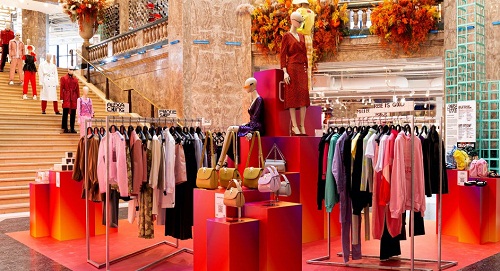 bringing in platforms like Fashion East and independent designers such as Rejina Pyo and Charlotte Knowles. The retailer has also launched pop-up stores to feature curations by Instagram, Highsnobiety and artist Daniel Arsham.
An opportunity for brand experimentation
According to Ida Petersson, Buying Director, Browns, it is difficult to predict how this shift will ultimately affect retailers. One of the disadvantages for retailers is that it makes their merchandise niche. However, Petersson believes it is important to support new and emerging brands.
Giacomo Piazza, Founder of Milan-based multi-brand showroom 247, believes reconfiguration will continue as the pressure to connect directly with consumers weighs on established labels. This gives retailers more opportunities to fill the gap left by bigger brands. This approach has enabled Selfridges to defy the industry-wide decline by adopting a youth-centric strategy and stocking labels of new and upcoming designers. Similarly, it has helped Galeries Lafayette to attract a new clientele. Working with independent designers has also made the group’s business model more flexible besides allowing it to test newer brands to roll out across its wider store network.
Be experiential
Though this trend of box retailers adapting their offerings to that of independent designers is welcome, it is replete with several challenges. The foremost amongst them is fear and apprehension about the unknown amongst shoppers. Though shoppers expect retailers to introduce them to new brands, they still look for their tried and tested names which boost financial capabilities, says Steve Dennis, Founder and President, SageBerry Consulting.
Hence, retailers need to find a mid-way by stocking both established and new brands, says Dennis. He recommends stores to adopt an aggressively experimental mindset to test out new business models and brand curations but refrain from shifting their offerings completely. On their part, younger designers should work on improving their operational efficiencies, building sustainable production relationships and negotiating workable deposits.
COVID-19 hits cost cutting plans of Arvind Ltd
The ongoing Corona pandemic has hit the Rs 440 crore cost cutting plan of textile firm, Arvind Ltd, as the company expects a sharp fall in the demand for its products and sagging sales in the first quarter of the current fiscal, say bankers. Both Lalbhai group companies, Arvind and Arvind Fashions however, are taking several steps including asset sale to cut costs and reduce debt in the current financial year.
The Ahmedabad-based Arvind Ltd had promised banks that it would reduce its fixed costs by around Rs 440 crore during FY21 by reducing salaries, cutting its IT budget, foreign travel and advertisements, and by selling its loss-making units.
Apart from cutting its capital expenditure, the Lalbhai group firm has also decided to take the debt moratorium on its outstanding loans and working capital limits. Bankers iexpect the company to go ahead with more asset sales to cut debt by Rs 400 crore in the coming months from it total debt of Rs 2,500 crore as on March this year. Its debt was Rs 2,950 crore as on March 2019. In the current year, the company plans to develop its land parcels near Ahmedabad and sell villas to customers. But with a slowdown expected in the real estate sector, the demand from customers may not pick up, bankers fear.
Separately, another Lalbhai group firm, Arvind Fashions sold 27 per cent stake in its subsidiary, Arvind Youth Brands, for Rs 260 crore to Flipkart. Arvind Youth Brands retails well-known denim brand, Flying Machine on the online retail platform. The firm is also raising Rs 400 crore via a rights issue this week.
2020 Circular Fashion Pledge pushes for industry-wide change
The 2020 Circular Fashion Pledge, an initiative launched by sustainability consultant Adam Siegel on April 23 this year during Fashion Revolution Week is pushing for industry-wide commitment to circularity.
Around 117 small and medium-sized enterprises (SMEs) have signed the pledge, recognising fashion’s significant contribution to climate change and environmental pollution and committing to take action to substantially reduce waste generation to achieve UN Sustainable Development Goal target 12.5 by 2030.
Of these, 62 per cent are launching take-back/resale initiatives, 60 per cent will increase recycled content, and 50 per cent will focus on designing for durability. Nearly half of the cohort have committed to two circular actions.
But the Pledge isn’t just for fashion businesses, the service industry and individual customers can also pledge to help drive a circular economy by offering support services and shopping from fashion brands committed to circularity.
Myanmar’s garment factories struggle on lack of orders: MGMA
Myanmar’s CMP (cut, make and pack) garment factories are struggling due to the lack of orders from the European Union, says Myanmar Garment Manufacturers’Association (MGMA).
In January, the majority of clothing factories were forced to stop running overtime due to dwindling stocks. Around 90 percent of supplies came from China, which were blocked because of coronavirus, and the rest came from Indonesia, Vietnam, Thailand and South Korea.
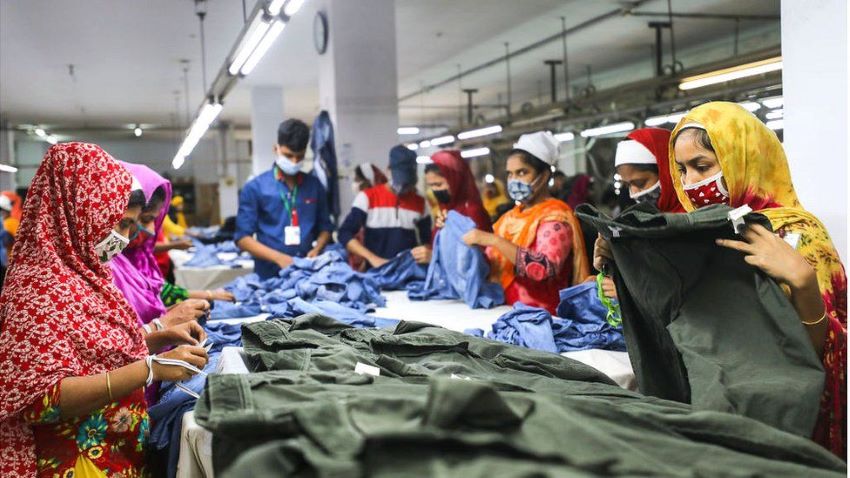
Many factories have reduced working hours and cut jobs, while some have permanently or temporarily shut down. Some factories have not received orders or even price enquiries since March.
Many clothing shops across Europe have closed and the demand from Japan has declined by almost half, he said. Without new orders, many factories will be forced to reduce their workforce and working hours, and close either temporarily or permanently.
International closures have removed 50 percent of market demand for Myanmar’s clothing, handbags and footwear, according to the MGMA. Garment exports are mainly shipped to the EU, Japan and South Korea and the country earned over $4.5 billion (6.2 trillion kyats) from the sector from Oct 1 to July, according to the Commerce Ministry.
Export revenues are down $65 million (90 billion kyats) compared to the same period a year earlier, mainly due to COVID-19.