FW
Textile Forum to showcase UK’s reputed fabric manufacturers
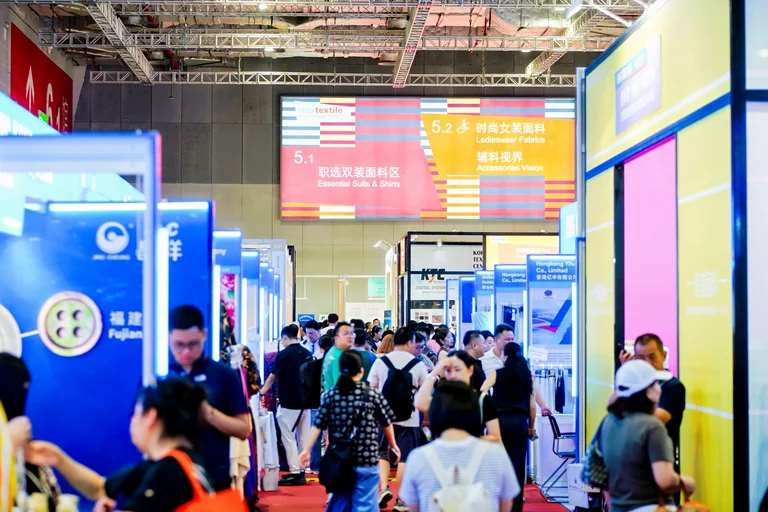
To be held on October 13 and 14, 2021 at One Marylebone in London, Textile Fourm-the Fabric Fashion show will showcase UK’s reputed fabric companies like Litmans, Michael’s Bridal Fabrics, Pongees, The London Embroidery Company, Graham Smith, Carrington Fabrics, Partap, Bridal Fabrics, The National Weaving Company, Laurent Garigue, Henry Bertrand and James Hare.
As per Amy Packhan, Event Director, Textile Forum, besides fabrics, the event will showcase accessories, trimmings, buttons, linings, and a group of garment manufacturers supported by UKFT. Since launching in 2002, Textile Forum has cemented itself as London’s premier sourcing event for luxury fashion fabrics, now presented over two floors at our prestigious venue One Marylebone. As per a Drapers Online report, the show attracts fabric buyers from major fashion retailers and brands, established independent design businesses and start-ups, tailors, craft shops, seamstresses and costumiers.
Heimtextil 2021 to include 80 per cent exhibitors from previous edition
Around 80 per cent of exhibitors at Heimtextil 2020 are expected to participate in the upcoming edition of the fair scheduled to be held from January 11-14, 2022. As per a Textile Network report, highlight of the program of events in 2022 will once again be the Trend Space inspiration area in Hall 4.0. The upcoming edition will highlight the changes caused by the pandemic in people’s lives and their home furnishing methods.
The spectrum of products displayed will be supplemented by digital services. These will include live streams and online contributions from the program of lectures. They will cover a variety of topics, such as ‘sleep’, the Heimtextil Trends and interior, architecture, hospitality, the service for (interior) architects and hospitality experts. Lectures will illuminate the sustainability theme and the Future Materials Library.
Order and data-management portal Nextrade will provide an around-the-clock business relationship between dealers and suppliers. As the first digital B2B marketplace for home and living, Nextrade brings together demand and supply from the entire sector and thus creates significant value added for both sides.
TAF collaborates with World Knitting Textiles for a new fabric range
An Aditya Birla Group Company Thai Acrylic Fibre Co (TAF) has collaborated with garment manufacturer World Knitting Textiles to develop a new fabric range for innerwear and base layers with the combination of wool and Pilbloc, the everlasting anti-pilling acrylic fibre.
As per Sombat Chatromyen, Managing Director, World Knitting Textiles, the new anti-piling fabric has a unique inherent function. It has a soft touch that makes it very comfortable for consumers. Ashwini Chotani, Chief Marketing Officer, TAF adds, the Pilbloc and its anti-pilling function is generated with a specially engineered process that ensures its longevity and durability. The company initially used the function to produce the fabric in coarser deniers, but now, it also offers micro denier which makes Pilbloc perform even better and can be used for circular knit and very light-weight fabrics that are suitable for innerwear and base layers.
Established in 1986 under the name World Knitting Industries, World Knitting Textiles is a garment manufacturer and exporter with the major markets in the US, EU, and Japan. Later in 1990, it set up the knitting department and expanding into dyeing and finishing by 2004.
Conference on textile finishing to highlight industry’s sustainability commitment
The Conference on Sustainable Finishing of Textiles will be held online from September 30 to October 1 and from October 7 to 8, 2021. It will highlight the commitment of textile coaters and laminators to act and invest in material technology and machinery to abate detrimental impacts on the environment and ensure a sustainable future for the industry. The Conference will.
The conference will explore materials, processes and machinery that can help dyers, finishers, coaters and laminators achieve this goal. It will address issues new finishing technologies, new brands and companies driving the growth of these technologies, new laws to propel its growth, etc. The textile industry is currently in a state of flux, with environmental and economic pressures driving the industry towards new digital models, both in respect of how products are manufactured and how they are sold.
Many apparel brands have committed to ambitious goals in respect of their sustainable performances. Along an extremely complex textile supply chain, new processing technologies, fibers, dyes and finishes are rapidly being perfected, with the potential to significantly reduce the industry’s energy, water and raw materials consumption.
IIFW to organize next edition of IIFW NXT Intimate Fashion Tour in Pune
India Intimate Fashion Week (IIFW) plans to organize the next edition of IIFW NXT Intimate Fashion Tour) in Pune. IIFW is among the top three fashion week properties in Asia and one the fastest growing brand showcase & exhibit platform, marked global footprints in the shortest ever time.
India Intimate Fashion Week (IIFW) is a platform designed to shed a powerful spotlight on all facets of the intimate apparel and personal care industry. The event exposes both emerging and established brands and designers, manufacturers and distributors from India and around the globe, spanning market categories of lingerie, loungewear, sleepwear, Legwear, lingerie accessories, men’s underwear, swimwear, beachwear, shapewear, etc.
On its third anniversary, IIFW conceptualized “IIFW NXT – The Intimate Fashion Tour” to make it even bigger and better. IIFW NXT was launched generated with intent to create awareness on plus size, queer fashion, and personal hygiene.
Browzwear accelerates product development with $35 million expansion
Browzwear, a pioneer of 3D digital solutions for the fashion industry, announced the closing of a $35 million funding round from growth equity firm Radian Capital. The investment will accelerate delivery of the company’s aggressive goals for platform development and market expansion.
Radian, an investor in mature, capital-efficient B2B technology companies including industry-leading software and platforms such as Mural, Emailage and Encompass Technologies, invested in Browzwear based on the company’s existing leadership position and track record of growth.
With a visionary management team, pioneering technology and large global customer base, Browzwear is already the leader in end-to-end digital product creation for the apparel industry, with a 40 percent year-over-year growth over the last five years. The additional capital from Radian will enable the company to build on those advantages and deliver on its goal to more than double the size of the business over the next two years.
To support this accelerated growth, Browzwear is instituting an aggressive recruitment plan, intending to triple its global workforce over the next two years. The company plans on adding new talent across areas that will widen the company’s technological leadership in the industry, such as R&D and product development, while simultaneously bolstering its customer-facing teams to enhance service while supporting scale.
Browzwear is also exploring opportunities for inorganic growth while planning substantial expansion of its partner program. Currently consisting of more than 100 partners, the partner program is an ecosystem of complementary products and services that enhance the overall value of Browzwear for customers. By building on this network and bringing together the industry’s most cutting-edge technologies, Browzwear can catalyze further innovations that extend the value of true-to-life 3D through product development and manufacturing to consumer-facing solutions that will power next-generation e-commerce capabilities.
Bangladesh RMG exporters hope EU’s GSP plus withdrawal for Pakistan will boost exports
Bangladesh RMG exporters hope the withdrawal of GSP plus facility in EU for Pakistan may help them to bag more orders. However, for this the government needs to keep yarn prices stable and competitive. It also needs to ensure the availability of containers for shipment with competitive price, and exports should be given financial support from banks. The Bangladesh RMG industry was badly hit by the second wave. It had just recovered from the first wave, and had started getting new orders from July onwards when once again lockdowns were imposed by the government.
Post lockdowns, most exporters have resumed operations as outlets in the EU and the US are opening. However, most exporters are shipping intermediate goods like basic T-shirts and polo shirts due to a lack in demand for festive clothes. This is preventing them from negotiating prices with buyers despite the increase in yarn and other raw material prices. Their production has increased by almost 45 per cent whereas buyers are offering less than the real cost increment.
Exporters’ shipment costs have also increased by over 4-folds which is hindering their export targets.
New RoDTEP rates to boost textile orders for Gujarat exporters
The new rates under the Rebate on Duties and Taxes on Export Products (RoDTEP) scheme are expected to boost orders for textile exporters in Gujarat, besides offering them better cost-competitiveness. The raw rates have increased export incentives for yarn and fabrics from 2.5 per cent to 4.5 per cent. Even though ceilings have been imposed on procurement price, textile exporters expect the rebate to improve their cost-competitiveness. Exporters will be able to offer a competitive price to their customers. This will help them gain more orders and boost their revenues, says Chintan Thaker, Chairman, Assocham-Gujarat State Council.
Demand for textile exports has begun to increase with inquiries pouring in for yarn, fabric as well as garments from various countries. The new rates will help exporters leverage demand, believe industry players. Manufacturers of technical textiles as well as manmade fibre (MMF) are likely ti have an edge as their competitiveness will increase leading to an increase in order volumes, says Narain Agrawal, past Chairman, Synthetic and Rayon Textile Export Promotion Council (SRTEPC).
Ludhiana exporters suspend order processing over Taliban concerns
Concerned over Taliban’s takeover of Afghanistan, Ludhiana exporters have suspended processing of orders they had received earlier. Vinod Thapar, President Knitwear and Shawl Club says, Taliban’s takeover of Afghanistan has created panic amongst exporters who have suspended the processing of the recent orders received from Afghanistan. Taliban might change rules and regulations related to international trade and incase civil war breaks out, shops and businesses might be shut down. However, the situation might normalize and trade resume without any problems once the Taliban appoints all ministers and government officials, he adds.
Harish Kairpal, Finance Secretary, Knitwear Club, adds Afghanistan accounts for sizeable exports from Ludhiana’s garment and textile industry. This fiscal, manufacturers have exported jerseys and other allied products of synthetic fibres worth about Rs 125 crore and sweaters and cardigans worth over Rs 33 crore. Advance payments of several crores of Afghanistan traders are lying with the Ludhiana industry. Exporters are under pressure to either process their orders or return their money, he adds.
TAF to trace Aditya Birla Group’s flagship Radianza™ fiber
The new digital traceability platform launched by Aditya Birla Group company- Thai Acrylic Fibre Co (TAF) will trace its flagship fiber brand – Radianza™. Backed by blockchain technology, the digital platform will ensure complete transparency and traceability for brands, retailers and consumers of Radianza™ fibre in the finished garment. The platform has been developed by Canada based company – Licof Inc, reports Textile Focus.
Radianza™ fiber is the first and only acrylic fiber to have Material Sustainability Index (MSI) Scores published by Higg Co based on the Life Cycle Assessment Impact study conducted by Thinkstep (now Sphera). The fiber uses the revolutionary gel-dyeing technology.
Earlier this year, the TAF become the first and only acrylic fiber company to become a bluesign® SYSTEM partner. The traceability platform will further strengthen the company’s leading position in sustainability in textiles. The company will work with its value chain partners to get the platform adopted across the entire value chain.