FW
ShanghaiTex 2021 to be held in hybrid mode
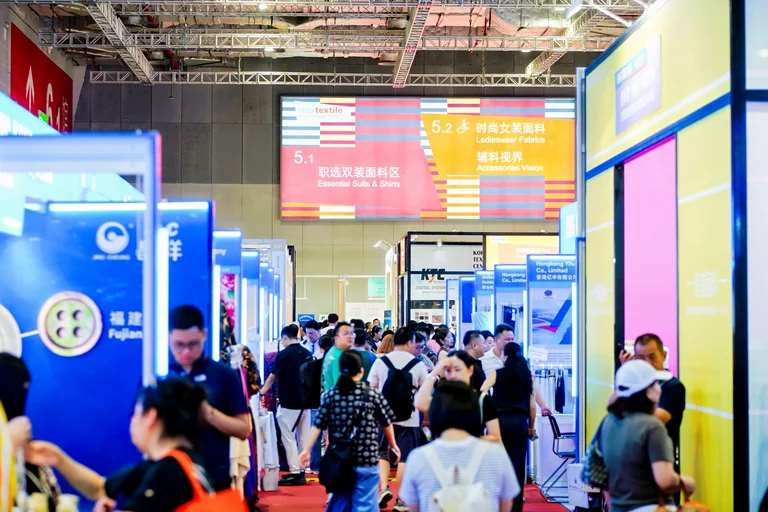
Scheduled from November 23-26, 2021, the 20th International Exhibition on Textile Industry (ShanghaiTex 2021), will be held in hybrid mode. As per a Textile Value Chain report, the trade show will combine online exhibition with physical events in Pullman Shanghai Skyway Hotel and focus on five innovations in textile machinery, equipment manufacturers, yarn suppliers, apparel fabric suppliers, clothing suppliers, designers of Shanghai Fashion Week, academic experts and explore government policies at a macro-level and analyze future trends.
Branded ‘Textech Inno Week,’ the edition will offer a new cross-platform experience of textile, technology and innovations. The online events will include procurement, new technology releases, online exhibitor interviews, business appointment, business matching, etc., allowing industry players to stay closely connected via internet despite the time and geographical constraints.
Meanwhile, offline exhibition zones will host international conferences, forums, business matching activities, featured theme zones and other concurrent event. The event will focus on five innovative themes including Cross-platform Experience, Innovative Technology, New Materials, Revolutionary Designs, E-commerce Business.
British Wool prices increase despite challenges
As witnessed during the fifth British Wool sale of the 2021 season, despite challenges in terms of haulage, transport and energy prices, wool prices continued to increase. Sale saw 99 per cent clearance with 1.2 million kilos of wool sold. There was particular interest in the Blackface wool as well as continuing interest in the Medium & Mule wool. Welsh Mountain was also sought after and specialist types such as Bluefaced Leicester once again achieved record prices.
Average prices during the sale reached 73 p per kilo. Andrew Hogley, CEO, British Wool expects prices to sustain through the year. Having received over one million kilos of wool this season from producers, the association encourages more producers to deliver wool to ensure they benefit from the current market recovery.
British Wool aims to drive sustainable demand for the wool produced in the country through the collective marketing of the clip on behalf of its members. With reduced cost base, recovering market and exciting new initiatives such as the recent Wool Britannia carpet yarn launch by the Headlam Group and a Harrison Spinks traceable mattress range, the association is driving new demand for British Wool and increasing its value.
CCI to support Indonesia’s textile, fashion industry adapt to changing demands
Anh Dung (Andy) Do, Representative, Indonesian Cotton Council International (CCI) says, his organization aims to support Indonesian textile and fashion industry in adapting to changing consumer demands by focusing on sustainability, transparency and traceability. Many Indonesian fashion manufacturers have switched to using sustainable materials, adds Andy. CCI aims to help these manufacturers set up sustainable business through US cotton industry initiatives such as the US Cotton Trust Protocol.
US The Cotton Trust Protocol® is a US cotton industry program that sets new standards for sustainably grown cotton. The program brings quantifiable and verifiable goals and measures for sustainable cotton production and drives improvements in key sustainability metrics.
As per an Indo Textiles report, by joining the program, members can prove measure and verify that they are buying sustainably produced and quality fiber, and the supply chain from field to the mill is free from environmental and social risks. This has been proven through Field to Market, measured with the Fieldprint Calculator, and verified with Control Union Certifications equipped with the best technology.
CleanChain’s new program promotes sustainable chemical solutions’ across the industry
 Clothing production more than doubled in the 21st century as consumer spending increased and operational costs reduced. The rise of fast fashion culture further revolutionised the apparel business as production cycle churned out latest fashion trends on a weekly basis. However, production techniques lagged as suppliers failed to match rising standards. The industry continued to be accused of poor social and sustainable practices.
To transform production practices of the industry and make it more sustainable, CleanChain, an application designed to increase profitability across the apparel value chain has launched the ‘Chemical Score’ program that facilitates adoption and usage of sustainable chemical, solutions in the industry.
Helping brands make more eco-friendly choices
Designed in collaboration with global brands, ZDHC and leading third-party safer chemistry solution providers Scivera and ToxServices, The CleanChain Chemical Score, enables businesses to make more environmentally friendly choices by assessing and rating chemicals and chemical substances.
The chemicals are rated by leading independent third-party providers, Scivera and ToxServices, through a standardized and transparent scoring methodology with full material disclosure of assessed formulations, thereby promoting the usage of safer alternatives.
Improving sustainable chemistry
The ranking system enables brands to rank factories according to the volume of chemicals used in their inventory. It also helps factories track and improve their sustainable chemistry goals by selecting safer alternative products, or working with formulators to score additional chemical products and help improve the industry’s visibility and awareness in general.
The program illustrates the progress made by the apparel industry toward Zero Discharge of Hazardous Chemicals. says Joe Rinkevich, Founder & President, Scivera.
An insight into brands’ supply chain
CleanChain’s partnership with Scivera and ToxServices helps it provide brands and suppliers the required information to select safer formulations, adds Daniel Murray, Managing Director. It is an award-winning environmental software solution that helps suppliers run their businesses more effectively.
A part of ADEC Innovations, CleanChain also gives brands an opportunity to engage with their supply chain, and gain visibility and insight into their environmental and social practices throughout their supply chain.
Launched in 2008, Scivera promotes safer and more sustainable chemistry and material health decisions across all consumer products. The company’s flagship software-as-a-service, SciveraLEN is used by global brands, their manufacturers, and chemical suppliers to achieve safer chemistry and material health success, while reducing cost and protecting confidential ingredient information. SciveraLENS is the largest CHA knowledge base in existence, providing subscribers the ability to forecast chemical scores for multiple sustainability certification programs and deliver safer chemistry results for their customers and the world.
Taiwan Textile Roadshow to showcase garment products
The upcoming Taiwan Textile Roadshow from October 6 to 7 will showcase garment products from Taiwan (China). To be held at the Hanoi International Exhibition Centre, the trade show will be co-organized by The Taiwan Textile Federation (TTF) and the Vietnam National Trade Fair and Advertising Company (Vinexad). It will be sponsored by the Bureau of Foreign Trade under the Ministry of Economic Affairs of Taiwan. As per a Vietnam Plus report, the event will strengthen cooperation between Vietnamese and Taiwanese enterprises in the textile and garment sector.
Around 12 Taiwanese textile manufacturers will participate via Zoom, exchanging experience with and introducing products to Vietnamese enterprises with interpretation support. They will introduce techniques to produce fabric using dyeing treatment that can reduce the impact on the environment. They have also applied innovative technologies in production to produce fabrics with many outstanding features such as fabric from recycled plastic, warp-print fabric, antibacterial fabric, UV protection fabric, cooling and multi-functional fabric.
In 2020, Vietnam was Taiwan's largest textile and garment export market. It accounted for 25.3 per cent of Taiwan’s total export turnover of textiles and garments. The top five export markets, including Vietnam, mainland China, the US, Indonesia and Hong Kong (China), account for 60.3 per cent of Taiwan’s total apparel exports.
Taiwan's largest and second-largest sources of textiles in 2020 were mainland China and Vietnam, accounting for 43 per cent and 14 per cent of total textile imports and valued at $1.46 billion and $467 million respectively. The main import items from mainland China and Vietnam were clothing and accessories.
Inverted duty structure may raise garment prices by 7 per cent, say experts
The government’s approval of inverted duty structure on apparels costing above Rs 1,000 may increase their prices by about 7 per cent, says Sanjay Jain, Chairperson, Textile Expert Committee, Indian Chamber of Commerce. The GST Council has been deliberating on correcting the anomaly in textiles and had announced a three-month waiting period till December at its meeting in Lucknow last week before making the change. The changes will, therefore, take effect from January 2022.
Jain says garment prices have already shot up 20 per cent in the last one year because of increase in the prices of cotton and other fibers. A further increase in rates may severely impact small garment manufacturers. It may also lead to a rise in unaccounted activities, adds Vinod Gupta, Co-Chairman, Textiles Sub-Committee, Bharat Chamber of Commerce, and Senior Vice-President, West Bengal Hosiery Association.
The industry also expects a rise in working capital requirement especially for the MSME textile manufacturers if the rates are increased, says Ramesh Agarwal, Past President, Merchants Chamber of Commerce and Industry.
Egypt’s cotton prices double in 2021
Egypt's cotton prices have almost doubled to a record level in 2021, shows the latest report by Cotton Research Institute. Growth is mainly attributed to the government’s initiative of promoting the textile industry, by expanding the cultivated areas and improving the quality of seeds. As per the Big News Network, the price of a qantar of cotton (45 kg of lint cotton) has surged more than 70 per cent to 3,900 Egyptian pounds (nearly $248) compared to $114.5 last year. Hisham Mosad, Manager, Cotton Research Institute attributes the rise in cotton prices to new marketing system that depends on holding auctions across the country periodically and the government's new approach of selling cotton this season.
The cotton planting area in Egypt increased to 236,000 feddans (991,200,877 sq m), in 2021 compared to 183,000 feddans (768,600,680 square meters) in 2020, Mosad says, predicting that cotton will represent a big share in the types map of plantation across the country in the coming few years. So far, some 20 countries have signed contracts with Egypt to import Egyptian cotton, he said, naming India, Pakistan, the US, China, some EU countries, and Japan as the top importers of Egyptian cotton.
Egypt exports the majority of its long-staple cotton and imports three million qantars of short-staple cotton that is originally used in local textile production, according to official statistics.
However, under the government's new strategy for 2025, 60 percent of the cotton production will be used in local industries, adds Mosad.
European Commission approves proposal to improve EU GSP
The European Commission has approved the legislative proposal to improve the European Union’s (EU) generalized scheme of preferences (GSP) and extend its period from 2024 to 2034. Through its proposal the Commission aims to make GSP more focused on reducing poverty and increasing export opportunities for low-income countries. It also aims to incentivize sustainable economic growth in low-income countries and offer new room for engagement on environmental and good governance issues.
The new GSP framework strengthens the EU's ability to use trade preferences to create economic opportunities and advance sustainable development. The modernized framework also expands the grounds for the withdrawal of EU GSP preferences in case of serious and systematic violations.
The new proposal ensures smooth transition for all countries set to graduate from Least Developed Country (LDC) status in the next decade. These countries can apply for the special incentive arrangement for sustainable development and good governance (GSP+) if they commit to strong sustainability standards and can thus retain generous tariff preferences to access to the EU market.
The new scheme also proposes to set up a well-defined framework for the current GSP+ beneficiaries to adapt to the new requirements, offering an adequate transition period and requiring the presentation of implementation plans.
Sri Lanka set to achieve $800 million export turnover this year: FAAMA
With Sri Lankan apparel industry’s order books for October-December quarter being full, the Fabric and Apparel Accessories Manufactures Association (FAAMA) is confident of achieving the $ 800 million turnover target for the year. As per a Daily FT report, despite facing many challenges last year, the apparel industry staged a major recovery that confirms its relevance to the growth and way-forward strategy of overall exports of the apparel industry. FAAMA is a key sub-sector of the $5 billion apparel industry, which has grown to be worth $800 million from $500 million a few years ago.
Apparel factories in the country are currently operating in full swing, adhering to the Health Ministry stipulated protocols, despite additional cost borne by the manufactures, says Pubudu de Silva, Chairman FAAMA. Manufacturers’ value additions increased from 30 to 50 per cent over the past five years. In-country sourcing has helped Sri Lanka save foreign exchange outflow, besides tightening control over supply chains.
The government had earlier set an ambitious $6 billion export target for the apparel industry but it was later revised to $5.1 billion due to setbacks resulting from the fourth wave of COVID. Last year, apparel exports dropped to $4.1 billion from $ 5.6 billion in 2019.
The country faces port-related logistics issues that it hopes to resolve with the help of Joint Apparel Association Forum (JAAF) and relevant authorities. However, the foreign exchange crisis in the country has aggravated the challenges faced by all exporters. FAAMA is also working closely with the Government to find sustainable solutions for waste management issues.
Asahi Kasei to restructure production strategy across Europe
Asahi Kasei plans to restructure its production strategy across Europe to face the new, unexpected and critical market situation. As a part of this process, the company will discontinue production and sales of Roica’s German subsidiary, Dormagen-based Asahi Kasei Spandex Europe GmbH, by March 31, 2022. However, the group will continue to develop sales, technical and marketing services in Europe through Asahi Kasei Europe, the European regional headquarters of the Asahi Kasei Group in Dusseldorf, Germany.
As per a Spin Off report, the company will continue to serve the European market through manufacturing sites in Asia including Japan (Shiga prefecture), Taiwan (Taipei), China (Hangzhou) and Thailand (Chnonburi). The company is discussing an appropriate withdrawal process for Asahi Kasei Spandex Europe’s current workforce of 181 people. The Japanese chemical specialist markets the premium stretch brand Roica through production sites in Japan, Thailand, China and Germany and sales facilities around the world,