


FW
Asian garment industry gets smarter
Asia is the biggest stakeholder in the global garment manufacturing industry. Seven among the top 10 garment manufacturing countries are located in Asia. Fast fashion retailers depend on Asia for manufacturing their apparel products. This manufacturing hub is witnessing an immense transformation as global consumers are moving from cheap knitwear apparel products to value-added sportswear and manmade-synthetic fiber-based fashion products. Also, consumers now value garments with speed, precision, traceability and adaptability over bulk. Moreover, due to fast fashion, fashion seasons have shortened and garment brands are turning to manufacturers who have shorter production times and more sustainable processes. As a result, garment manufacturers in Asia are transforming themselves with technology.
Some garment brands are moving their smart factories from the West to Asia to improve manufacturing. For instance, Adidas has moved its speed factory to Asia to bring more efficiency to the manufacturing process. As Asian countries improve their capacity in tech manufacturing, garment manufacturing in Asia is expected to become smarter. Companies are investing in new technology to shorten lead time. They are now using automated cutting machines and self-driving carts as in-house innovations and high-speed fabric inspection machines with facial recognition technology to monitor thousands of meters of fabric a day.
Falling revenues, uncertainty force brands to bypass Hong Kong for entering China
"Bypassing Hong Kong, many brands are now making Shanghai or Beijing their first port of call. The city, which European and American brands identify with for its culture, language and shopping habits, has since long being known as a China-light launch pad. Its Causeway Bay and the malls of Central and Tsim Sha Tsui are packed with smaller labels that have little to no presence on the Mainland but hope Hong Kong might be their gateway to China’s shopping classes."
 Bypassing Hong Kong, many brands are now making Shanghai or Beijing their first port of call. The city, which European and American brands identify with for its culture, language and shopping habits, has since long being known as a China-light launch pad. Its Causeway Bay and the malls of Central and Tsim Sha Tsui are packed with smaller labels that have little to no presence on the Mainland but hope Hong Kong might be their gateway to China’s shopping classes.
With its numerous stores, Lane Crawford can ease some of the barriers to entry and import complications that foreign companies struggle with. However, the sharp drop in revenue that Hong Kong retailers have recorded due to months of violent anti-government protests, have scared away many high-end shoppers. Tourist visits plunged by around 50 per cent by late last year.
Closing of rail and sea links leads to decline in revenues
Compounding the problem, recent Coronavirus epidemic has led to the closure of a number of rail and sea links between Hong Kong and the Mainland further curtailing the mass flood of Chinese tourists who previously took advantage of lower apparel prices. As the recent decline in K-beauty brands’ average Baidu Index by 3 per cent in the second half of 2018 revealed, Chinese visitors to South Korea dropped to 4.8 million from 8 million in 2016 due to the THAAD (an anti-ballistic missile defence system) dispute.
LVMH’s revenue in Hong Kong declined 40 per cent in Q4 of last year while Prada closed flagship stores in Causeway Bay due to Hong Kong’s anti-government protests.
Brands invest in locally relevant initiatives
However, these protests are not the only reason designers are taking Hong Kong out of their business plans. In order to reach Chinese consumers, brands are investing on locally relevant marketing initiatives. Smaller brands are partnering Chinese investors who can help them clear hurdles that once tripped up foreign designers. For example, US shoe brand Allbirds and London-based label Self-Portrait are planning to open stand-alone boutiques in Shanghai, Beijing and Chengdu, without testing Hong Kong waters first. Allbirds plans to launch more brick-and-mortar outlets in China that will focus on provincial capitals, as well as other first- and second-tier cities.
Shenzhen Ellassay Fashion, which owns a controlling stake in Vivienne Tam, acquired French brand Iro’s entire operations and the brand rights to American apparel brand Ed Hardy in China, among others. This would enable the company to expand its market share rapidly.
New e-com platforms for smaller brands
E-tailers are also setting up e-commerce platforms for smaller brands. The well established E-tailer Tmall platform has become an important incubator for emerging designers hoping to break into China. The platform offers brands that are new to the market support in multiple areas including promotions to build awareness, CRM [customer relationship management], data, and product development through the Tmall Innovation Centre.”
Though things are not easy in Mainland China either, many international brands are entering the country with local partners. This may soon cause Hong Kong to lose the distinction it once had as an entry to the country’s awe-inspiring spending power.
Geo-textile tubes: An innovative solution for coastal defences
Garware Technical Fibres Ltd. (formerly Garware-Wall Ropes Ltd.), a leading solution provider of technical textiles for the Indian and global markets, held a press conference in Bhubaneswar on the success of Pentha Project which was completed within a span of 3 years (2013-2016) in Orissa.
The Pentha project was a pioneering project in Odisha to use soft intervention technology with 3 tiers of geo-textile tubes, for coastal protection. The Geo-textile tubes helped in withstanding the extremely severe cyclones (viz) ‘Phailin’ ,’Hud Hud’ and ‘Fani’ that hit the state of Odisha and its coastal neighbours . The geo-textile tube acts as a massive bund that can be used as a protective measure against tidal wave action due to cyclones or tsunamis. At the time of cyclone last year in the months of April 2019, the Pentha Village and the adjoining villages were not affected because of the existence of the Geosynthetics-Tubes.
The Chief Guest for this occasion was Shri Sujeet Kumar, Advisor, Special Development Council, and Government of Odisha who stated that coastal erosion was an important subject for the state of Odisha. The technical expertise was brought in by Prof Sundarvadivelu of IIT Madras, who had designed the project, and explained the complexities therein, in simple terms.
Sharing his view on the success of the Pentha Project, Mr. Tiru Kulkarni, President Geosynthetics Division Garware Technical Fibres Ltd. stated, “The Pentha Project is a landmark project for Garware technical Fibres Ltd.; as this project had proved to be immense help for the villagers residing along the coastline. The livelihood of people based out at Pentha is primarily based on farming and the Geosynthetics-tubes helps in protecting around 6000 hectares of crop land and prevents the salty water to enter into the paddy fields.”
The Pentha Project is a sea wall embankment, initiated by the Water Resources Department of Odisha and Design & Project Management Consultancy by IIT Madras, using Geotextile tubes at Pentha, Odisha.
Geotextile tubes offer ideal erosion mitigation solution as they are environment friendly and flexible with the nature.
Knitwear Capital of India, Tirupur Invites for its historic 47th IIKF
The 47th India International Knit Fair is scheduled to be held from 17 -19 Feb, 2020 at IKFA Complex, Tirupur. This fair will showcase an entirely fresh range of latest designs in high fashion knitwear garments for men, women, and children. This All-Season Fair is truly a feast for the Fashion World, Renowned Designers, Business Houses World Class Manufacturers, International Buyers, and Celebrities etc.
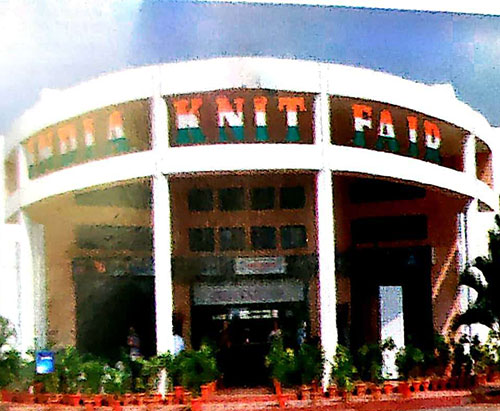
India Knit Fair Association is conducting India International Knit Fair since over two decades instigated with the goal of exporting the competencies/ capabilities of India Knitwear products out of India. The fair aims to showcase the end to end products related to the knitwear sector. The fairs are always held in its permanent complex which has all required amenities and facilities of Global Standards/ norms. It is organised by in collaboration with the Apparel Export Promotion Council Ministry of Textiles to promote knitwear exports to maintain contemporary global quality standards and parameters.
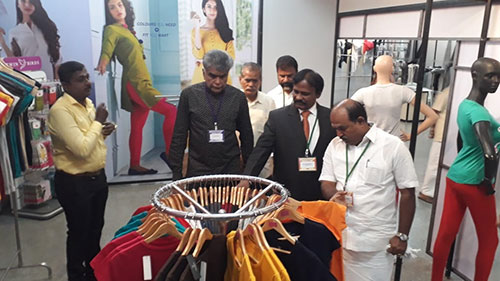
The prominent participants included leading export houses were Poppy's Knitwear, Eastman Exports Global Clothing, SCM Garments, RBR Garments, True Worth Inc.,Clifton Export, N Tex Apparel, Anandhi Texstyles, Kinsley Knit International, Wiseman Exports it also had players like Twin Birds which has diversified to domestic market to stabilize/ derisk business portfolio, etc. What's noteworthy is Tirupur is a big time supplier/ vendor of inner wear to the entire domestic market which was amply domonstrated at some of the prominent stalls; needless to say some of the global brands also source notable innerwear quantities out of this center.
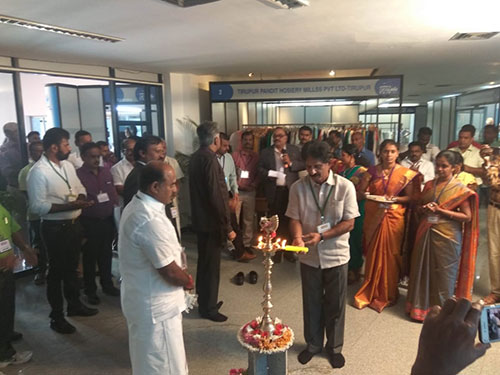
Not only that Tirupur is currently driven by innovations in the new areas like woven side of the garments, new age fabrics, textile digital printing to make it one point solution sourcing destination in the coming years. Additionally some of the industry players here are seriously looking at exploring green field/ brownfield strategic investment opportunities in the overseas markets to go places/ global.
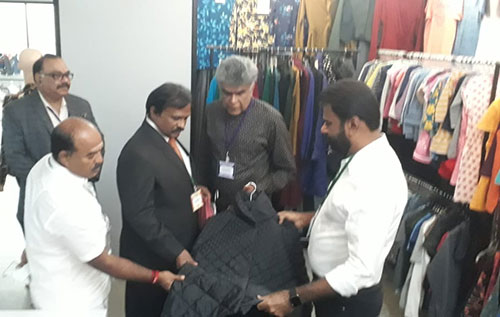
Also supply chain players are there in this exhibition which entailed players like KG Denim, Siruvani Yarns, Filamento local propritory software devolpers, Singapore based group Super Dry Desiccant to add width & depth to this show of repute. There were trade support bodies like NIFT-TEA college of Knitwear Fashion, ATDC Tirupur Center, ECGC Tirupur, Textile Committee,Tirupur to name a few.
The fair offers a unique opportunity of making the direct buyer meet seller in the most conducive business environment helping business nourish and prosper. It shall help achieving great business as around 700-800 global buyers are expected to visit this prestigious fair. Fair organisers have taken pains to invite buyers from all across the world to make sure in this not so great global business environment they spare no stone unturned to help it's garment fraternity.
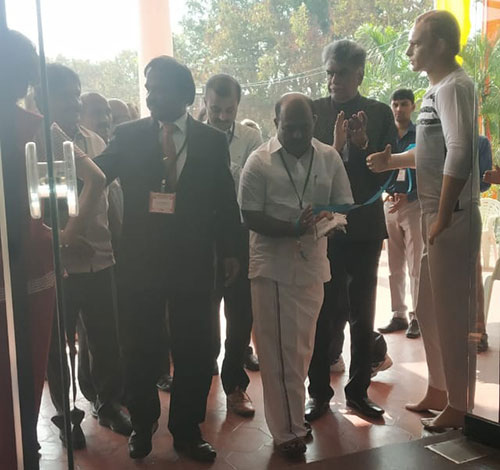
IKFA Help Desk is been set up at the Coimbatore airport to ensure a smooth passage and red carpet treatment for buyer & buyers' team to this mega fair.
What further gives the heart is when world is faced with slow down situation and China faces economic headwinds out of the outbreak of Coronavirus in the short to midterm. Though general trade view is that Tirupur is likely to gain out of this global supply chain disruption only in limited ways as Indian apparel industry continues to face the biggest challenge of lacking the scale and speed to market. So in this given scenario the fairs like IIKF have a vital role to play.
Turkey apparel exports up five per cent in January 2020
Turkey’s apparel exports in January 2020 were up by 5.8 per cent compared to the same month last year. The share of apparel in Turkey’s overall exports in January 2020 was 10.1 per cent. Turkey’s garment exports are projected to rise by ten per cent due to the Coronavirus outbreak in China, which has delayed shipments from the mainland.
Turkey’s apparel exports to the EU went up by 7.7 per cent in January 2020. Of total apparel exports in January 2020, 73.4 per cent were to EU countries with Germany and Spain being the main destinations
.
Turkey is the seventh biggest cotton producer in the world. It has the biggest machinery park in the world. The Turkish textile sector has a very strong image in the global market. The sector stands out thanks to its state-of-the-art technology, flexible production ability, capability of producing special products and high-quality workforce. It is the biggest textile manufacturer in Europe. It continues to make significant breakthroughs not only in design and fashion but also in technical textiles. The Turkish textile and readymade clothing sector as a whole has the highest foreign trade surplus. The sector ranks first in the country in terms of share in the gross domestic product and in terms of parameters such as domestic input use.
Madhya Pradesh attracts Rs 3,200 crore from apparel and textile companies
Madhya Pradesh is attracting huge investment from Indian textile and apparel companies. In a round table conference held in Delhi, various apparel and textile firms has announced investments of more than Rs. 3,200 crore in the state.
Among them, Pratibha Syntex, a leading Indian apparel exporter, will set up a textile park for MSME units in Indore at an investment of Rs 100 crore in assistance with Apparel Export Promotion Council (APEC). Importantly, all these investments are expected to create employment of around 14,000 people.
These companies will have their plants covering major cities across the state like Bhopal, Gwalior and Indore. Now, garment units outside the industrial/textile parks will be eligible for incentives offered under the garment sector package of State Government garment policy.
For setting up of investment projects in the state, Madhya Pradesh offers immediate clearances and licenses for up to 40 services within 7 working days under the Time Bound Clearance Act.
IFC develops web tool for Bangladesh RMG sector
The International Finance Corporation (IFC) has developed a web tool to help calculate resource consumption in Bangladesh’s readymade garment industry. PaCT (Partnership for Cleaner Textile) is a data-driven monitoring software that will provide real-time analytics for readymade garment factories, helping them in their efforts to improve use of resources like water and energy. Through programs like PaCT, IFC hopes to contribute toward improving sector competitiveness by promoting resource efficiency through innovative ways and evolving with global trends. IFC is a member of the World Bank Group.
Supported by Denmark, Australia, and the Netherlands, PaCT’s multi-stakeholder partnership has already helped the industry save 25 billion liters of water and 2.5 million megawatt hours of energy annually. Launched in 2018, PaCT works with 132 factories to adopt state-of-the-art efficiency and reduce water, energy, and chemical use to meet global standards.
Bangladesh is the world’s second largest clothing exporter. More than six per cent of world apparel exports originate from Bangladesh. The European Union is the largest customer of the fashion industry in Bangladesh. However, Bangladesh is expected to slow its fashion exports to Europe. In parallel, the Asian country is expected to enter the list of less developed regions in 2024.
Vietnam boosts bilateral trade with India
Vietnam and India hope to boost bilateral trade of strong commodities. The two countries hope to boost trade and step up trade promotion activities and business exchanges, especially in 2020 – the year Vietnam and India mark the 48th anniversary of their diplomatic ties. India’s share in Vietnam’s imports of manmade fiber textile is 3.34 per cent. Of Vietnam’s total textile imports, India has a 2.29 per cent share. There is significant untapped potential for trade in the area of textiles between the two countries. India is one of the major material suppliers of Vietnam’s garment and textile sector. India hopes to be a reliable partner for supplying yarn, fabrics, and machinery at competitive prices. Under the India-Asean FTA most types of yarns, woven and knit fabrics can be imported duty-free from India.
Vietnam has high quality and competitive products such as agro-fishery and fresh fruits, especially dragon fruit and basa fish, which it hopes to export to Indian businesses and consumers. Besides agro-fishery products, Vietnam also has a developed garment-textile industry. However, in the context that China is suspending the operation of many manufacturing factories, Vietnam is facing difficulties in material supply for the apparel sector and has asked for India’s assistance in this field.
A joint study highlights linen’s growing appeal among young consumers
Linen is in vogue with growing number of young, environmentally conscious consumers. Creative minds of the linen supply chain are developing new manufacturing methods such as winter linen, formaldehyde and fluoride-free waterproof linen, denim and stretch linen as well as decorated linen with particular digital printing techniques. A new study presented during the Milano Unica fair highlighted the advantages of linen. The study presented by the Sezione Lino (linen section) of Sistema Moda Italia and the European Confederation of Linen and Hemp presented the study conducted by Centrocot. The study centered around Europe’s certified linen supply chain: the brand Masters of Linen® and it focused only around production phase of linen.
Linen is a naturally sustainable fiber which has a low environmental impact, especially when compared to other traditional fabrics such as cotton, wool, polyester and viscose. A point in its favor is that the agricultural stage doesn’t require large quantities of pesticides and fertilizers. The fact that the linen supply chain requires a lot of energy and that this comes mostly from renewable sources is another point in its favor. Linen is also highly durable, resistant, hypoallergenic, breathable, acts as a thermoregulator and comes in an array of different colors. Linen has many modern applications because it brings together characteristics recognised since antiquity, such as the fact that it doesn’t absorb humidity and that it’s naturally wrinkled, with technical performance criteria such as it being crease-resistant, waterproof and offering protection from UV rays. Nowadays, linen has a modern and sporty appeal to it thanks to its blending with other fibers and special finishing techniques.
Chinese raw material supplies to Vietnam dip due to Coronavirus
Vietnamese companies which import feedstock and raw material from China have started looking at alternative sources. The Coronavirus has affected Vietnam’s trade not only with China but also other markets and started hurting Vietnamese businesses. The impacts include prolonged delivery times and customs clearance due to the quarantine requirements on both sides. Trade by road, rail and air with China has slumped. The epidemic has caused Chinese businesses to shut down production. Vietnam’s textile industry sources a significant proportion of feedstock from China. Since many textile plants in China are likely to be closed until the end of February, or even longer, supply to Vietnam would be hard hit. If the epidemic continues for the next one or two months, Vietnam’s economy would be in trouble. Companies, especially small and medium-sized enterprises, need support in the form of preferential loans and access to new technologies to sustain their business.
With Chinese goods not available, Vietnam has been unable to source materials, which has affected its production and exports to third markets. Many textile and footwear enterprises are therefore looking at raw material imports from other markets such as South Korea, India, Bangladesh, and Brazil.
The epidemic has had a significant impact on public health, transportation, tourism, education, and, importantly, trade and commerce.











