


FW
Manmade textiles to benefit from duty removal
India’s withdrawal of the anti-dumping duty on purified terephthalic acid (PTA) would further improve the affordability of manmade textiles. In addition, the removal of duty would lead to higher imports, thereby reducing supplier concentration and improving the bargaining power of downstream producers. Consequently, there would be an improvement in the profitability and credit metrics of sector companies.
PTA, along with mono ethylene glycol (MEG), accounts for almost 80 per cent of the total raw material cost involved in the manufacturing of chips and granules in the manmade fiber sector. In fiscal 2018-19, India had a PTA production capacity of around seven million tons. During February 2020, PTA prices fell by ten per cent on account of a fall in crude prices, resulting from a decline in demand for the same. Prices are likely to fall further in fiscal 2020-21.
Removal of duty is expected to exert pressure on the realisations of domestic PTA manufacturers and lead to increased imports from countries like China. However, the coronavirus outbreak in China would remain a key factor, as that has led to uncertainties regarding supply in the short term. China has a PTA production capacity of 45 million tons, of which 35 million tons are consumed locally, and the remaining is exported.
Ikea reduces emissions by four per cent
Carbon emissions throughout the full value chain of Ikea furniture fell 4.3 per cent last year. This was driven by a large increase of renewable energy in the production of Ikea products plus significant increases in energy efficiency of the lighting and appliances range. Ikea is aiming for its value chain to be climate positive - where it cuts more greenhouse gas emissions than it emits - by 2030. This includes everything from the production of raw materials and products through to customers' use and disposal. Ikea produces around ten per cent of its range itself, mainly wood-based products, and sources the rest from suppliers. To speed things up, in November Ikea earmarked 100 million euros for encouraging direct suppliers to switch to renewable energy and an additional 100 million euros for projects to remove carbon from the atmosphere through reforestation and forest protection.
Ikea, the world’s biggest furniture brand, is hopeful emissions in the value chain will shrink further this year. Ikea India has undertaken a campaign which aims at inspiring and enabling people to reduce their carbon footprint by using more climate-friendly products. There are currently 403 Ikea stores in 49 countries. It currently has more than 50 suppliers with 45,000 direct employees and 4,00,000 people in the extended supply chain.
Egypt cotton exports down 38 per cent
Egypt’s cotton exports fell 38.6 per cent from September to November 2019 compared to the same period last year. Reason: decreased cotton production. The total amount of cotton locally consumed increased 14.1 per cent over the same period. The quantity of ginned cotton decreased 32.3 per cent.
Egypt is planning to develop the cotton industry, diversify its uses in the industry and thus improve the quality of products manufactured by Egyptian cotton, making them more appealing to global markets. Egyptian cotton production is on course to rebound with help from a devalued currency and a bigger cultivation area, recovering from a slide in exports of the world-famous crop since 2011 that was caused by a drop in quality. Output fell drastically in 2011, when political upheaval meant regulations to maintain quality were not enforced.
Egypt has regulated cotton trading. The decree limits cotton trading to specified collection points. Farmers are allowed to get the highest possible price through auctions, and prices will be set according to international cotton prices and the comparative advantage of Egyptian cotton. The decree also links all collection points electronically to ensure transparency, with a consideration for applying the new system through new collection points in some governorates as a pilot version to avoid any problems in the future.
Textile and apparel exports slump by 21%
As per National Board of Revenue, imports from China slumped 21 per cent year-on-year in volume in the one and a half months to February 15 amid supply disruption caused by the Coronavirus. Businesses imported 36 lakh tonne of products in the first seven months of fiscal 2019-20, down 19 per cent from a year earlier. In monetary terms, imports also declined this year compared with the same period a year ago, said the revenue administration in a report on the possible impact of the outbreak in the world's second largest economy.
Bangladesh's main export earner apparel and textile industry is highly dependent on China for cotton yarn and fabrics, textile fabrics and garments accessories. It also suggested considering alternative sources to import parts of mobile phones to support the budding mobile handset assembling sector.
China is the biggest trading partner of Bangladesh and the biggest source for imports. The world's second largest economy accounted for more than a fifth of the country's imports of $56 billion in fiscal 2018-19, Bangladesh Bank data showed. The NBR report comes amid growing concerns among businesses about potential supply disruption of raw materials, intermediate goods and other materials brought about by the coronavirus outbreak in December last year.
The NBR report assessed the possible effects of the coronavirus pandemic on export and imports by taking seven top-ranked inbound and outbound items to and from China.
Utenos trikotažas becomes first Greenpeace-complaint company
Global environmental organisation Greenpeace has recognised SBA Group company Utenos trikotažas as the first and so far the only company in the world to work entirely according to its textiles procurement standard. Greenpeace has already started to produce its own t-shirts at the Lithuanian company.
Utenos trikotažas has already finished the first batch of Greenpeace's new collection and will continue the production later this year. The company and its partners have shown that for the first time ever, steps to avoid hazardous chemical use and contamination have been taken across the entire production chain, from fibers in the processing of raw materials, to dyeing and printing according to Detox principles, and finally to the sewing and packaging of high-quality garments, made to last.
The new Greenpeace standard is an example of best practice for any company implementing an ambitious plan to detox.
Coronavirus strikes at Tirupur units
The Coronavirus shutdown will affect the Indian textile and apparel industry especially in Tirupur. The garment sector in Tirupur is heavily dependent on China for sourcing accessories. The present stock position could last till March. The total shutdown in China has disrupted the supply chain. The sector may hurt its margins if accessories are sourced from a trader in India or from an overseas market other than China. Accessories bought by Indian manufacturers from China are stuck as no deliveries have taken place after the Chinese new year since all units in that country remain shut.
For one, a decline in China’s imports of cotton yarn is possible, thus impacting the cotton yarn export business of India. This will divert India’s surplus cotton yarn to the domestic market, further reducing the price of cotton yarn. If China continues to battle with the coronavirus, Indian garment manufacturers will need to look at other alternatives, including local sourcing, which in turn may increase the cost of finished goods by three per cent to five per cent. In addition to this, identifying vendors in such a short time can take a toll on lead times, quality and cost. On an average, India exports 25 million kg of cotton yarn a month to China.
DeSL Launches New Creative Sales Platform
Discover e-Solutions Ltd. (DeSL) is a leading provider of end-to-end software solutions for the fashion, apparel, textile, and footwear sectors.
Announcing DeSL’s Creative Sales Platform developed as the digital infrastructure to connect customers and global sales teams in real-time, ultimately shortening the overall order processing cycle and reducing the need for physical samples. Creative Sales Platform is part of the Made for You series of specialized, standalone,or fully integrated modules.
Teams around the globe can collaborate on collections using the online platform regardless of their physical location. Full drag and drop functionality is available to create collections for specific customers, by region, or sales channel. The platform is an online replacement for hard copy collections, line books, and catalogs. Gain exposure to all required key digital assets, including 3D product models and core sales images. Compile financial data for planning and analysis, while viewing sales forecasts and actuals. Benefit from flexible price and discount editing with multi-currency settings. Workflow is based on integration to an existing ERP solution, DeSL ERP or other.
Creative Sales Platform organizes product sales and marketing messages in one central hub. View real-time customer ratings and feedback, while easily identifying the “winners” and “losers” in a collection. Robust sales analytics offer data for making more informed selling decisions. Brands can view online order confirmations and estimated delivery windows to communicate back to customers. Creative Sales Platform can be used in conjunction with DeSL’s other modules to deliver the ability for purchase order creation to satisfy the demand of customer sales orders.
Creative Sales Platform joins DeSL’s other Made for You series of modules covering all key business processes starting at product concept and reaching through to final sale and delivery.
Tintex - combining an environment-driven approach with cutting-edge technology
 Jersey manufacturer Tintex has established itself as a global leader in smart innovation. The commitment to support brands in creating responsible collections is interwoven with its motto `Naturally Advanced’. At Première Vision the company presented its S/S 2021 collection and a new strategic approach to make the world a better place, a garment at a time. “That’s why we decided to update our statement-motto in Naturally Advanced Evolution: a promise and an invitation to work together to develop further collections combining an environment-driven approach with cutting-edge technology. Textile producers and fashion brands should develop their partnership in a much more collaborative way,” said Ricardo Silva, Head of Operations of Tintex.
In a move towards its partners, the company has reorganised its products collection into distinct categories and further evolved its production process in order to guarantee the highest quality and performance of its fabrics and, at the same time, to become more competitive and to allow its clients to orientate better and easily find the most suitable and practical solution.
Tintex presents new collaborations with the premium brands Hanro, J.Lindeberg and Outlier for sustainable smart innovation. The collaborations born from this vision involve:
• Hanro, with the “Balance Shirt” is made of 100% Tencel fabric by Tintex enriched by the premium Naturally Clean finishing and thereby the basic shirt for everyday wear – it’s high-quality, functional and has a relaxed, comfortable fit. The understated “Balance Shirt” by Hanro puts the focus on the basic, quality lyocell fabric, which ensures a soft drape and a subtle sheen.
• J.Lindeberg offers versatile products designed for an active life always finding new ways of doing things; new materials, new design and new technologies. Focus is on details, fit and execution. The brand selects smart cotton knits by Tintex in pure versions or in blend with Tencel or recycled polyester.
• OUTLIER makes hardcore, performance-driven clothing that empowers the wearer to do more while owning less. The brand selected 100% smart cotton options by Tintex to develop an experimental, box cut, heavyweight t-shirt unlike any other. At 8oz it’s very heavy for a tee, but thick cotton yarns knit at a low-gauge give the fabric a stand-off-the-body structure and hidden openness for wide ranging comfort. The t-shirt is enriched by a GOTS certified 100% Organic cotton rib for the neck.
Make It British Survey reveals the bitter sweet outcome of Coronavirus
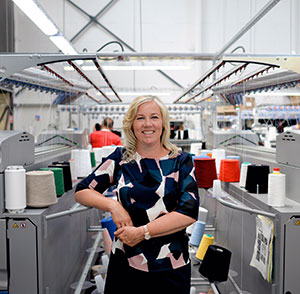 50% of UK fashion and textiles manufacturers are reporting an increase in new business enquiries linked to the ongoing impact of coronavirus, according to a survey carried out by Make it British.
Kate Hills, CEO of Make it British, explains: “Coronavirus is causing chaos for big retailers and their supply chains as many factories in China remain largely closed, where a large proportion of the world’s fashion brands are made. A lot of retailers are worried they’ll have no stock in their stores soon because so much comes from the Far East now, particularly in textiles. They’re urgently looking at how they can plug gaps for products that are due on shelves in as little as eight weeks. And that’s where UK manufacturers can offer a solution!”
Amongst the products that are being ordered are high summer stock, such as dresses and swimwear, as well as the raw materials to make winter stock, such as wool yarn and cloth. Sewing factories are also being asked to make face masks.
Whilst the increase in enquires for these manufacturers is good news, many are cautious of taking on lots of new customers. They fear that the work will be taken away from them again, once the Chinese factories reopen. They have had their fingers burnt in the past by retailers looking for a quick fix to supply chain issues and turning to UK manufacturers for a solution, often expecting to be given the same cost prices as they were paying the Chinese factories.
Whilst the current influx of enquiries might be just a flash in the pan, one thing the coronavirus outbreak has shown the industry is how fragile global supply chains are when something like this happens. 35% of the UK manufacturers surveyed said their own supply chains had been disrupted because many of their raw materials come from China or Italy.
Alkesh Kapadia of Barcode Design says: "A lot of UK manufacturers are relying on imported fabrics. The impact is growing and the prices of the raw materials has gone up by 4% already. The UK fabric manufacturers will get busy but they will have to source yarns from different countries and that may affect the prices too.”
Brands that manufacture locally and source their raw materials from the UK are in a much better position. When the whole supply chain is local, and is not reliant on crossing borders, it is much less vulnerable when something like this happens. This is a sentiment echoed by Steff McGraph of Something Wicked: “We’re relieved that we manufacture in the UK and use UK suppliers wherever possible. I would be extremely worried if I outsourced to China.”
Jenny Holloway runs Fashion Enter, a social enterprise garment factory in London, and describes coronavirus as a ‘dual-edge sword’: “There’s been a spike in sampling and we have opened two new accounts for bulk production almost immediately, but the downside has been yarn supplies. This in turn has created a further opportunity with retailers panic-buying stock fabrics, which is then coming to the UK manufacturers. Many knitters had bulk yarns in reserves. However, these stocks are going to run out...so what then? Surely this all points to a new type of collaboration between retailers and manufacturers and not before time. We are already aware of one retailer giving shares to their supply base binding them together. It’s a start, but there’s a long way to go yet.”
China has been the dominant player in manufacturing for the last 20 years, but this worldwide disaster could be the turning point that UK manufacturers need to make people realise that sourcing closer to home is a better option. Some feel that Government should be doing more to help protect our UK manufacturing base. As Ihthshaam Sheikh from Ask Trading says: "Government should be providing funding to increase capacity so that we can show customers how great it is to manufacturer in the UK. This will in turn bring customers back, once they see the speed and quality."
Kate Hills concludes: “The spread of the coronavirus is happening fast, and there is no doubt more disruption is to come. But if there is one bitter sweet outcome to the tragic situation, it is that this might just be the wake-up call that the industry needs to relook at the wonderful manufacturers that we have closer to home.”
Recoupex: Making Indian exporters/importers aware of cargo claims
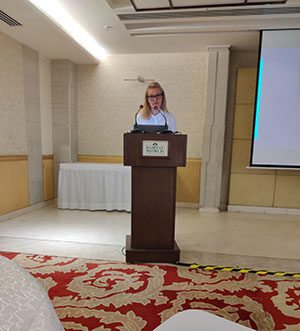
Lina Jasutiene, Recoupex presenting at recent Federation of Buying Agents (FBA) monthly meeting.
 India’s textiles sector is one of the oldest industries in Indian economy. Textiles, textile goods semifinished and finished products have witnessed growth in demand recently. Despite the positive economic outlook for textile industry, many importers, exporters and freight forwarders face cargo damage in transit. In this article we discuss solutions on how to stop absorbing financial losses when cargo gets damaged in transit.
India based importers and exporters historically have been absorbing losses for cargo damage, even if they were not at fault for the damages. Freight forwarders also take part in the losses in order to keep customers due to very tight competition in the market. The trade volumes in and out of India increase, so is the frequency of cargo claims. Globally cargo claims have gotten really bad name in transportation industry and the reason for this is just because there are so many parties involved in international trade and oftentimes the blame for cargo damages is put on the weakest party in the transaction.
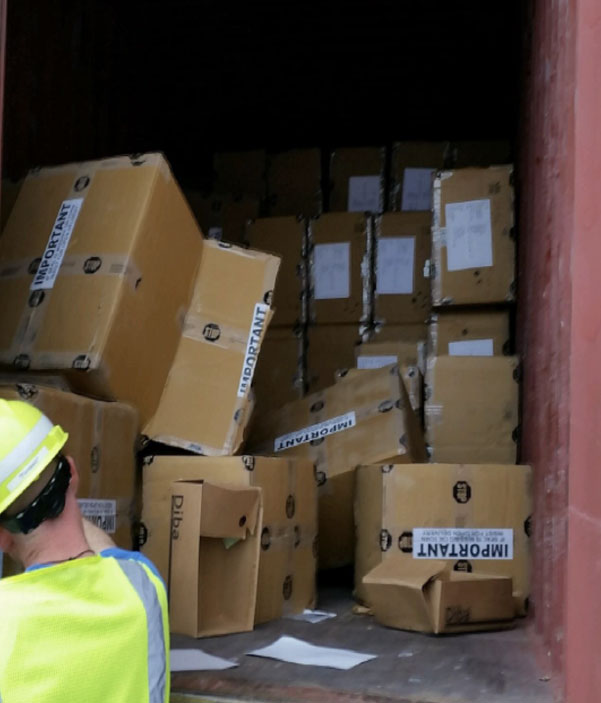
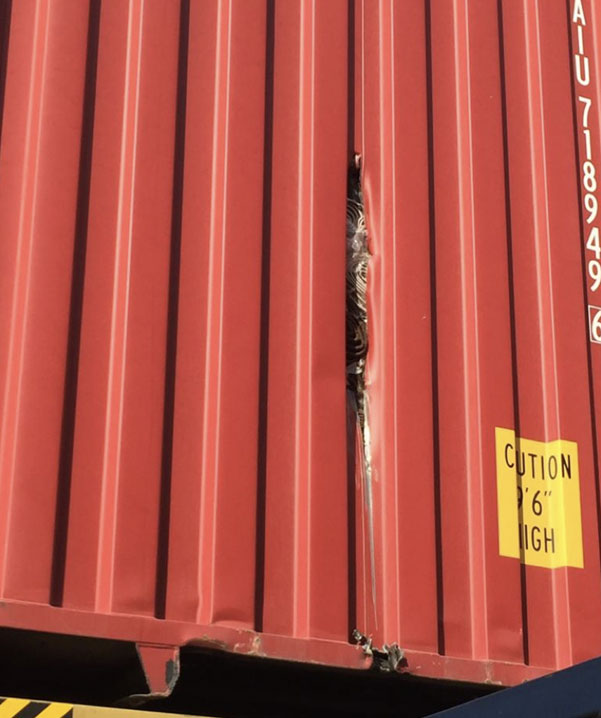
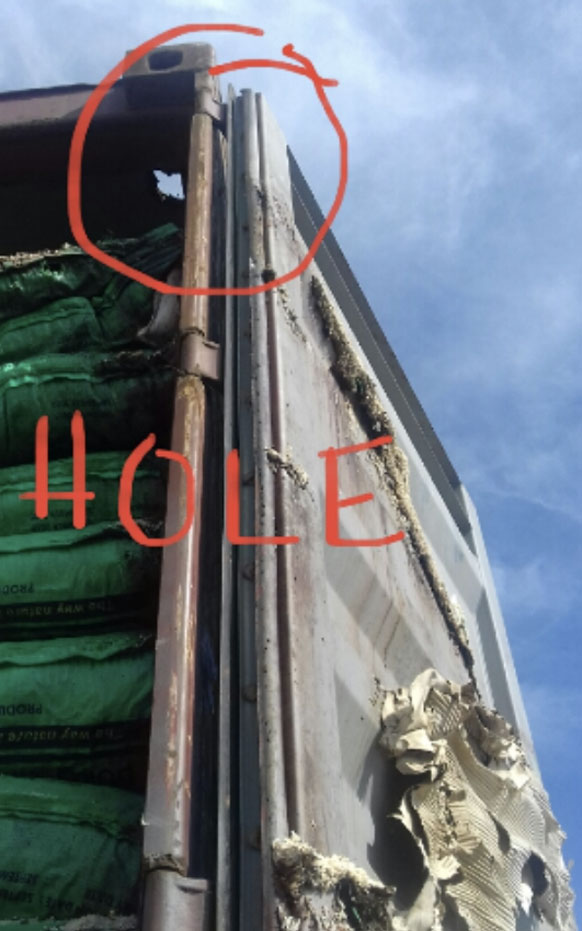
Typical damages in transit for textile and garment cargo are water ingress through holed, dented or rusty container. Textile goods and garments are sensitive to high humidity. After long exposure to humidity, different fabrics get damaged and often times become unsuitable for further use. Another cargo damage in transit is physical cargo damage due to mishandled container during loading, discharging operations. Cargo theft is also frequent in particular in certain port terminals. Cargo damages create friction between importers and exporters. International trade is growing, vessels are bigger, more transshipment ports get involved to transport container from origin to destination. This guarantees that witness cargo damages will not vanish.
Recoupex, one-stop platform for cargo claim refunds, aims to create a frictionless cargo claim refund experience through technology, globally active network of lawyers and experts to substantially reduce the losses for freight forwarders and cargo owners when cargo is lost or damaged in transit. Dr. Lina Jasutiene, Managing Director of the company, expounds on the scenario on cargo claims in India.
It is very hard to get compensation from a liable party. There is a lot of uncertainty about rights and responsibilities in this process adds Jasutiene. Industry statistics show, that eight out of ten claims are rejected by the liable parties. Only one claim out of the ten gets paid at one tenth of the original value,” she explains.
Eighty five percent of all cargo claims are claims 50,000 USD. Due to high operational costs they become delinquent and dropped as uneconomic to pursue. All these losses are shared between exporters, importers and freight forwarders, states dr. Jasutiene.
Seeking for the compensation from the shipping line is a legal right importers and exporters have regardless if they are based in India and other countries. Recoupex helps shippers to obtain compensation they are entitled to at no win, no pay basis. Only if Recoupex is successful in getting compensation back they charge 20% service fee. Otherwise customers pay nothing. Global network of Recoupex highly specialized lawyers and technology enables higher value and faster settlements. Majority of Recoupex customers are importers and exporters who don’t have conventional insurance, or are undercovered. Some of our customers have insurance, however they prefer to obtain compensation through us as they don’t want their premiums to go up. Another group of customers wants to outsource legal support in claims handling. Either they don’t have capacity in house or it is not economically viable for them to have expertise in house,” adds dr. Jasutiene.
The future for the Indian textile industry looks promising, buoyed by both strong domestic consumption as well as export demand. With consumerism and disposable income on the rise, the retail sector has experienced a rapid growth in the past decade. To ensure sustainable profitability for importers and exporters remains of immense importance, while seeking compensation from the liable party as regard the damaged cargo in transit is one of the most untapped resource that needs to be explored.











