FW
Leatherworld Paris to be bi-annual event
"Leather Concept Design, a Tunisian leather goods workshop attracted large numbers of visitors. The company was included in the new Artisan circuit dedicated to handmade products. For the most part ranges at Leatherworld displayed a profusion of synthetic furs and alternative materials, to suede for example."
 From this February, Leatherworld Paris will become a vital twice-yearly event. Held from February 11-14, 2019, in Paris, the event is an integral part of the Fairyland for Fashion trade shows. This year the event attracted 30 exhibitors from six different countries. The international trade fair was dedicated to flexible materials, leather and fur for use in leather goods, for footwear, bags, small accessories, detailing on clothes or outerwear.
It is an event with an international reach for all those involved in the textile industry from producers of fabrics with a leather look to manufacturers of synthetic materials.
The setting of the event designed by the artistic directors was extremely effective and resembled the atmosphere at a village square where people enjoy interacting with each other. 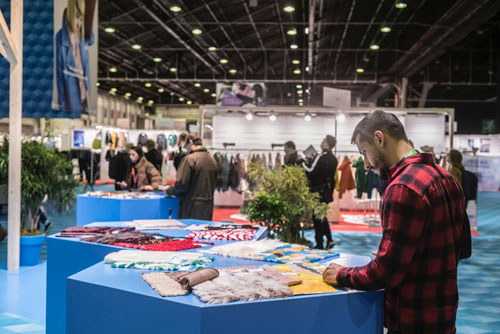
Leather Concept Design, a Tunisian leather goods workshop attracted large numbers of visitors. The company was included in the new Artisan circuit dedicated to handmade products. For the most part ranges at Leatherworld displayed a profusion of synthetic furs and alternative materials, to suede for example.
Catwalk shows and presentations on the latest developments provided additional information . Presentations on January 12, “Skins and materials: how to respond to end consumers’ new expectations”, focused on alternative materials and emphasised the importance of both the factors of material features and consumer behavior. The catwalk show dedicated to exhibitors’ products opened the programme of events in the catwalk area.
The Fairyland for Fashion, Paris
Organised from February 11 to 14, 2019 at Le Bourget, Paris The Fairyland for Fashion recorded a new high in number of visitors, with a 2.35 per cent increase over February 2018. A total of 13,929 visitors attended this event.
The rise in visitor numbers was seen from top five countries of the American continent -- Brazil, USA, Colombia and Mexico. Asia too demonstrated an overall 14 per cent growth in attendance with India constituting 13 per cent of visitors, South Korea 6 per cent and Israel 4 per cent. The number of Japanese visitors grew by 30 per cent after a decline in visitors after the tragic events of 2016. There was a growth in the number of Chinese buyers as well.
16th Apparel Sourcing, Shawls & Scarves Paris showcased latest services, accessories
"The products offered at Apparel Sourcing Paris suited every budget. This allowed buyers to keep in mind future collections while looking for suppliers. The return of Ethiopia generated a positive response. Desta Garment, Eltex Textile and Velocity Apparel, manufacturers of casual clothing, reflected the range of specialisation in different clothing: from sportswear to denim."
 The 16th edition of the Apparel Sourcing and Shawls & Scarves Paris shows, part of The Fairyland for Fashion, Paris, attracted 366 and 26 exhibitors respectively. The success of the show demonstrated their immense importance for clothing production and textile accessories.
Ethiopia emerges a growth centre
The products offered at Apparel Sourcing Paris suited every budget. This allowed buyers to keep in mind future collections while looking for suppliers. The return of Ethiopia generated a positive response. Desta Garment, Eltex Textile and Velocity Apparel, manufacturers of casual clothing, reflected the range of specialisation in different clothing: from sportswear to denim.
Warm reception for Cambodian products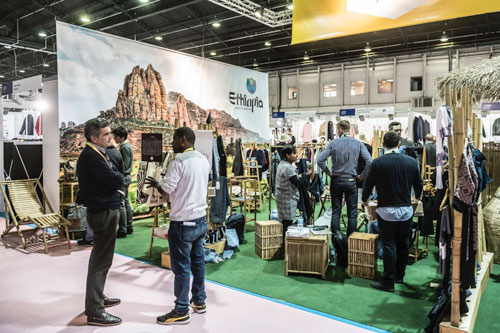
Cambodian products selected from the weavers’ associations especially handwoven silk was very well received. They primarily showcased scarves and shawls and fabrics with ikat patterns. Other regular exhibitors, in Bangladesh, Pakistan and other pavilions, were not overshadowed either. Jordanian exhibitor, Al Samah caused quite a stir with their collection of sophisticated stockings.
The accessories section featured bags, belts, hats and gloves etc. Men’s clothing as well as products with a strong vintage feel were in demand.
The new “Artisan” circuit showcased traditional silks from Cambodian Khmer Artisanry, which lend added value to outfits with their handcrafted quality. Another circuit that was well attended this session was sustainable development. The services powered by Mouvtex, focussing on the services necessary for the smooth running of businesses was organised in all shows.
Logistic services providers, design specialist attend show
Alongside major logistics services providers such as Bolloré Logistics, sourcing and networking such as Mouvtex or textileaddicts.com or QIMA’s certifications, there were further specialist organisations in design and styling with fashion schools (ESMOD et AICP), companies providing training and consulting such as OsmoZ Group or P&C Partners, which concentrates on design consulting and PR.
The catwalk shows and lectures dedicated to new developments in fashion industries, highlighted the talent from Montfermeil. The lecture on the advantages offered by Ethiopia was well attended. The presentation on skills and world heritage left a lasting impression on the audience.
The Fairyland for Fashion, Paris
Organised from February 11 to 14, 2019 at Le Bourget, Paris The Fairyland for Fashion recorded a new high in number of visitors, with a 2.35 per cent increase over February 2018. A total of 13,929 visitors attended this event.
The rise in visitor numbers was seen from top five countries of the American continent -- Brazil, USA, Colombia and Mexico. Asia too demonstrated an overall 14 per cent growth in attendance with India constituting 13 per cent of visitors, South Korea 6 per cent and Israel 4 per cent. The number of Japanese visitors grew by 30 per cent after a decline in visitors after the tragic events of 2016. There was a growth in the number of Chinese buyers as well.
Intertextile Sanghai Apparel Fabrics 2019 to showcase innovative products
"The Spring edition of Intertextile Shanghai Apparel Fabrics will be attended by over 3,000 exhibitors from over 20 countries and regions. The event, to be held from March 12-14, 2019 will span a huge range of textile product categories, from fashion to technical innovation. The event will have comprehensive product zones reflecting the demand for sustainable solutions, functional fabrics, digital printing, accessories and denim. The fair will offer a versatile experience through its seminars that will reflect the latest industry opinions and regulations."
 The Spring edition of Intertextile Shanghai Apparel Fabrics will be attended by over 3,000 exhibitors from over 20 countries and regions. The event, to be held from March 12-14, 2019 will span a huge range of textile product categories, from fashion to technical innovation.
The event will have comprehensive product zones reflecting the demand for sustainable solutions, functional fabrics, digital printing, accessories and denim. The fair will offer a versatile experience through its seminars that will reflect the latest industry opinions and regulations.
A must-visit for eco-friendly textile innovations
The All About Sustainability zone featuring Chinese and European exhibitors is a must-see destination for environment-friendly textile products and innovations. The zone will include Foshan Chicley Textile’s sustainable fashion fabrics – a range of organic linen and cotton, Lenzing EcoVero, Modal and Tencel, as well as digital print fabrics.
The zone will also house exhibitors who provide testing and certification services such as Hohenstein Textile Testing and Testex that offers Standard 100, STeP, Eco Passport, Detox to Zero and Leather Standard by Oeko-Tex. These exhibitors will also host a seminar where Hohenstein Textile Testing will explain the amended Oeko-Tex regulations, while Testex will discuss how these new regulations help to build trust with today’s consumers.
Other exhibitors offering testing services include Intertex Testing Services, SGS-CSTC Standards Technical Services and TUV Rheinland. An ideal place for eco-friendly textile products and sustainable business approaches, this product zone meets the world’s growing demand for green fashion.
Fresh innovations at the Functional Lab
Functional Lab will offer fresh innovations such as functional yarns and fabrics by Nano Mintex Technology and synthetic, natural and functional knit fabrics by Paradise Textiles. Chori will display wearable biometric monitoring fabrics – made with silver fibres.
This comfortable fabric can monitor the wearer’s ECG, heart rate and daily activity logs. Artex Textiles will offer woven fabrics, made of 100 per cent polyester and mixtures with viscose, nylon, cotton, linen and elastane. Changshu Baofeng Special Fiber will bring its flame-resistant MeltArmor collection, as well as its ArcArmor collection, which offers electric and flash fire protection that performs in a variety of climates, with lightweight options.
Another highlight of the fair, the Digital Printing Zone will include onsite demonstrations of direct-to-garment digital inkjet printing solutions from leading exhibitors like MS Printing Solutions and Machine Elements (Fujian) Smart Print Technology.
The Beyond Denim zone will house over 110 domestic and overseas exhibitors from China, Pakistan, Turkey, Vietnam, etc. The Denim International zone will offer garment production and denim wash expertise.
Lastly, the Accessories Vision zone will comprise over 450 domestic and overseas exhibitors from countries including China, Hong Kong, Italy, Korea, Thailand and the UK.
Energy and sustainable development in focus at Texworld Paris
"The Sustainable Development segment showcased exhibitors that observe the criteria for sustainable materials, environmentally friendly processes or transparent social standards. In parallel with this trend, and still very much in keeping with the Avantex Paris show, fabrics or manufacturing methods that incorporated innovation attracted visitors’ attention."
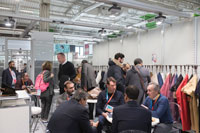 Held as a part of the Fairyland for Fashion event from February 11-14, 2019 in Paris, the 44th edition of Texworld Paris assembled 696 exhibitors from 20 countries . The event focused on the themes of energy and sustainable development
Spotlight on environment-friendly materials
This event was marked by the public’s growing interest in sustainable and responsible production. Demand concentrated on natural materials, environmentally correct processes, obtaining certification, and the concept of recycling fibres, which was fairly new to visitors.
The Sustainable Development segment showcased exhibitors that observe the criteria for sustainable materials, environmentally friendly processes or transparent social standards. In parallel with this trend, and still very much in keeping with the Avantex Paris show, fabrics or manufacturing methods that incorporated innovation attracted visitors’ attention.
For some exhibitors, the excellent opportunities to meet people were also due to the fact that entrance to the exhibition was free which made access much easier. The attraction and the sense of ease induced by the backdrop also played a role.
Asian circuit showcases manual craftsmanship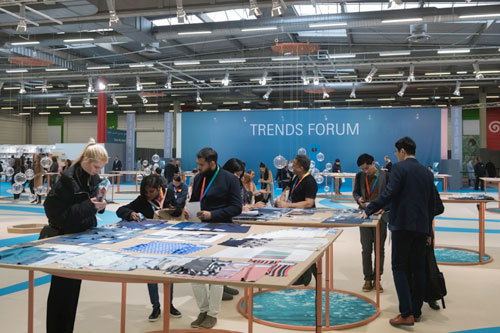
The all-new Artisan circuit showcased manual craftsmanship. It also covered some Indian embroiderers. The functional textile segment showcased materials relating to sports and leisure. Certain exhibitors displayed new products, developed for the army and for protection, in order to demonstrate the breadth of their expertise and possible applications for fashion.
Business segments records satisfactory transactions
Elite, the segment for businesses that offer their customers a wide range of ancillary services, recorded the same levels of satisfaction, both in terms of business transactions and contacts established.
Some exhibitors with specific skills, such as the Lebanese lace maker/embroiderer Kaskas always attract young labels and independent designers.
The lectures on Source, the trends for spring/summer 2020 created by the artistic directors,
and the presentation by Pantone on colours were very well attended, as was the lecture on 12 February devoted to "extra services, an essential aspect in capturing markets and making them sustainable.
The Fairyland for Fashion, Paris
Organised from February 11 to 14, 2019 at Le Bourget, Paris The Fairyland for Fashion recorded a new high in number of visitors, with a 2.35 per cent increase over February 2018. A total of 13,929 visitors attended this event.
The rise in visitor numbers was seen from top five countries of the American continent -- Brazil, USA, Colombia and Mexico. Asia too demonstrated an overall 14 per cent growth in attendance with India constituting 13 per cent of visitors, South Korea 6 per cent and Israel 4 per cent. The number of Japanese visitors grew by 30 per cent after a decline in visitors after the tragic events of 2016. There was a growth in the number of Chinese buyers as well.
Techtextil to focus on shaping future urban life through technical textiles
"The trade fair, on all four days, will comprise lectures, discussions and interactive sessions with the Techtextil Forum. The forum, which replaces the Techtextil Symposium, will be held in exhibition Hall 4.1. Trade visitors can look forward to contributions in the following thematic areas: sustainability, digital transformation, smart textiles, urban textiles, composites, and technical textiles in medical technology. In addition, both the Dornbirn Global Fiber Congress (GFC) and the textiles competence centre at the General Association of the German Textile and Fashion Industry (Gesamtverband der deutschen Textil- und Modeindustrie e. V.) will organise a thematic block."
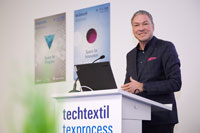 To be held from May 14 to 17, 2019, Techtextil will focus on the theme 'Urban Living – City of the Future' and demonstrate how technical textiles will shape urban life in the future. Suppliers at Techtextil represent the complete spectrum of technical textiles and nonwovens. There is a significant increase in the number of suppliers in the fields of technology, as well as fibers and yarns. Suppliers of woven fabrics, coated textiles and functional apparel textiles are also strongly represented. All areas of application for textile materials are covered. In particular, representatives from industry, architecture and construction, the fashion and clothing industry, the automotive sector, aerospace, medicine, sport, and hazard protection will find a more comprehensive range of products than before.
Techtextil Forum to provide an open platform for exchange
The trade fair, on all four days, will comprise lectures, discussions and interactive sessions with the Techtextil Forum. The forum, which replaces the Techtextil Symposium, will be held in exhibition Hall 4.1. Trade visitors can look forward to contributions in the following thematic areas: sustainability, digital transformation, smart textiles, urban textiles, composites, and technical textiles in medical technology. In addition, both the Dornbirn Global Fiber Congress (GFC) and the textiles competence centre at the General Association of the German Textile and Fashion Industry (Gesamtverband der deutschen Textil- und Modeindustrie e. V.) will organise a thematic block.
Awarding innovative ideas
Techtextil will also present Innovation Awards for outstanding new and further developments in the field of technical textiles,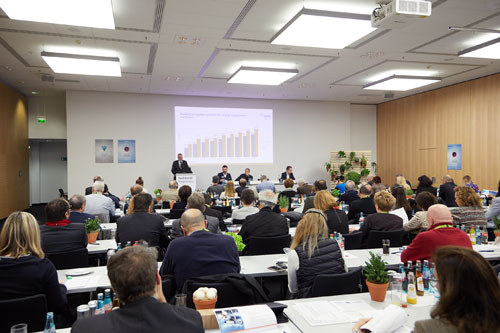 nonwovens and functional apparel fabrics. Also, for the 15th time, Techtextil will award students and young professionals for their work, as part of the 'Textile Structures for New Building' competition. The competition is supported by the international network TensiNet as sponsor, the Institute for Lightweight Structures and Conceptual Design (Institut für Leichtbau Entwerfen und Konstruieren - ILEK) at the University of Stuttgart, and the architecture and design platform Architonic. The award ceremonies will be held during Techtextil. All the award-winning works and ideas will be presented in special shows.
Exhibitors’ sustainability efforts in focus
Sustainability is one of the central themes at both upcoming Techtextil and Texprocess. For the first time, these two fairs will showcase exhibitors’ efforts towards sustainability. The Techtextil and Texprocess Innovation Awards will award sustainable textile innovations and processing approaches. In addition, the Texprocess Forum will offer a thematic block exclusively around the theme of sustainability in the textile and fashion industry, with an offshoot of Fashionsustain, Messe Frankfurt’s conference about sustainable textile innovations.
Techtextil and Texprocess share space for the first time
In May 2019, Techtextil and the parallel Texprocess will share an exhibition hall for the first time. In Hall 4.1, Techtextil will showcase some of the suppliers of woven, laid web, braided and knitted fabrics, coated textiles, and nonwovens, as well as selected suppliers of textile machines. In addition to these, exhibitors for product preparation, finishing, textile logistics, internal material flow and textile refinement, as well as providers of sewing solutions, will also be present. In the shared hall, visitors will get an insight into the entire production process, from raw material to finished product.
Fairyland for Fashion: Five shows for the fashion industry that attract global visitors, stakeholders
 The trade shows organised by Messe Frankfurt France, under the Fairyland for Fashion umbrella maintain their significance as an international business platform for the fashion industry. This year around 13,929 visitors attended this mega event, a 2.35 per cent increase over previous years.
America clocks in biggest visitor turnout
The top five countries in the American continent registered the most number of visitors. Brazil topped the list with a 22 per cent increase in visitors followed by the US which registered a 20 per cent increase. Attendance from Columbia and Canada also grew stronger with a 9 per cent and 6 per cent increase respectively.
Attendance from Asia went up 14 per cent, particularly from India (up 13 per cent), South Korea (6 per cent) and Israel (4 per cent). Japanese visitor numbers, which had declined after the tragic events of 2016, also went up 30 per cent.
The five shows held under Fairyland for Fashion include
Apparel Sourcing Paris/Shawls & Scarves Paris: The 16th session of the Apparel Sourcing and Shawls&Scarves Paris shows, with 366 and 26 exhibitors respectively, demonstrated their immense importance for clothing production and textile accessories in global terms. The event offered diverse products for all budget ranges
Avantex Paris: Pioneering technical and technological solutions, the 8th edition of Avantex Paris presented innovative services and processes for every branch of fashion. It welcomed passionate visitors who sought original solutions for their fashion needs.
Leatherworld Paris: Leatherworld Paris, an integral part of the Fairyland for Fashion trade shows, assembled 30 exhibitors from six different countries. The international trade fair was dedicated to flexible materials, leather and fur for use in leather goods, for footwear, bags, small accessories, detailing on clothes or outerwear.
Texworld Paris: Prime contractors at the 44th session of Texworld Paris expressed their determination to find the best solution for their projects fast. They compared their ideas with what was offered at the trade show in order to assure themselves of the best deals. Around 696 exhibitors from 20 countries attended the event which focused on energy and sustainable development.
Texworld Denim: The 4th session of Texworld Denim, the trade show for sourcing denim textiles and clothing, attracted around thirty exhibitors from the all-important countries for the denim sector: Bangladesh. China, India, Pakistan and Turkey. This year the show concentrated on essentials. It also interacted with prime contractors’for their demands for sustainable development.
Texprocess to focus on micro-factories for quicker, flexible and sustainable processing
"All four micro-factories at the upcoming Texprocess will demonstrate how integrated textile processing works and where micro-factories are already being used. The event, in collaboration with the German Institutes of Textile and Fibre Research in Denkendorf and partners from the industry will display a ‘Digital Textile Micro-Factory. This ‘Digital Textile Micro-Factory’ will showcase three production lines for apparel manufacture, 3D-knitted shoes and processing technical textiles, largely for the motor-vehicle and furniture industries."
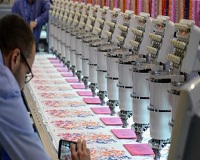 Micro-factories, based on networked and integrated procedures, represent the progressive way of making textile processing quicker, more flexible and more sustainable; whilst, at the same time, producing personalised products. These micro-factories will be the main theme of Texprocess to be held in Frankfurt am Main from May 14 to 17, 2019.
Combining 3D simulations with direct data transfer
All four micro-factories at the upcoming Texprocess will demonstrate how integrated textile processing works and where micro-factories are already being used. The event, in collaboration with the German Institutes of Textile and Fibre Research in Denkendorf and partners from the industry will display a ‘Digital Textile Micro-Factory. This ‘Digital Textile Micro-Factory’ will showcase three production lines for apparel manufacture, 3D-knitted shoes and processing technical textiles, largely for the motor-vehicle and furniture industries.
These production lines will demonstrate various stages involved, including CAD/Design, printing, cutting out, assembly, finishing and labelling. They will also combine 3D simulations of clothing with direct data transfer in virtual reality (VR) and augmented reality (AR).
The ‘3D-knitting Line’ demonstrates the entire process from the 3D model to the creation of a geometrically accurate knitting pattern by the software, based on the 3D data set, and the development of a specification of the final knitting data, through to the manufacture of a 3D-knitted prototype. Knitting is the additive manufacturing process for textiles. This line’ is partnered by Stoll.
The focus of the third production line of the ‘Digital Textile Micro-Factory’ 2019 is on the automated processing of technical textiles, personalised for the individual customer, taking us right through to the finished product. Trade visitors will see an on-demand inkjet printing and networked machines with integrated sensors, which are linked through a bus system – a future-oriented topic for integrated manufacturing. In addition, the display will also show how creative ideas from the Cloud can be incorporated in the manufacture of technical products.
Smart Textiles Micro-Factory to provide new interaction techniques
In the ‘Smart Textiles Micro-Factory’, the Institute for Textile Technology (ITA) at the RWTH Aachen University, together with partners from industry and research, will produce a ‘smart’ pillow which, with the help of integrated LEDs, provides new ways of interaction. The partners in the project will present an exemplary, industrial-style manufacturing process for a smart textile from design to finished product. The following companies are involved in the ‘Smart Textiles Micro-Factory’: the Institute for Textile Technology (ITA) of the RWTH Aachen University (project coordination), Gerber Technology GmbH, the Korea Institute for Industrial Technology, VETRON TYPICAL Europe GmbH, Wear it GmbH and ZSK Stickmaschinen GmbH .
World of Digital Fashion to focus on customisation of apparel
Six companies have grouped together under the ‘World of Digital Fashion’ umbrella. Together, these companies will showcase ways of integrating and combining their products in a variety of workflows within the value creation chain. Their focus will be on the customisation of apparel and fashion items.
Efka and Gemini to showcase individually designed knitted garments
Manufacturers of drive mechanisms for industrial sewing machines Efka will, in collaboration with CAD suppliers Gemini, showcase the production of a knitted garment that can be individually designed. The core element of this micro-factory, which closely reflects industrial practice, is the link to the sewing stage of production, something which is already available today as an economic, partially automated solution.
Reduction in fund allocation under ATUFS upsets Indian weavers
The weavers in Surat are upset as the Finance Minister has reduced allocation under Amended Technology Upgradation Funds Scheme (ATUFS) to Rs 700 crore. The ATUFS scheme and Rebate on State Levies (ROSL) have been reduced from Rs 2,300 crore to Rs 700 crore and Rs 2,164 crore to Rs1,000 crore, respectively.
This will likely to affect the modernisation in the textile industry. The power loom weavers who have to repay loan installment will face a difficult situation. Backlog in the ATUFS would be over Rs 2,000 crore as over 3,000 projects that got implemented are yet to receive subsidy due to complicated guidelines of ATUFS. The government had earlier allocated Rs17,822 crore, including Rs5,151 crore for ATUFS for the 13th Five Year Plan in order to clear long-pending committed liability.
Surat based Federation of Gujarat Weavers’ Association (FOGWA) has given a representation to Textile Minister to clear the backlog of TUF subsidy. Power loom weavers stated that 1,500 files from Surat are pending for subsidy approval at the textile commissioner’s office under the ATUFS for 10 per cent subsidy. The weavers had ordered machinery from foreign countries for taking benefit of the subsidy. The complicated guidelines of ATUFS have resulted in non-reimbursement of the subsidy amount to the weavers.
Dyeing units sealed in UP, India
Six textile dyeing industrial units in UP have been sealed.
They were found to be operating without any license or pollution clearance certificate. The dyeing units were releasing polluted water without treating it first. All dyeing units need permission for operation from the Uttar Pradesh Pollution Control Board, which is granted only after an effluent treatment plant is installed at the site. The units were engaged in dyeing jeans and the waste water was being dumped in drains nearby without being treated.
Additionally, these industries were set up in a residential area which does not conform to the prescribed norms.
Following complaints by residents, the units were inspected. Electricity supply to these units has been disconnected.
Noida and Greater Noida have several dyeing industrial units. However, all of them have obtained permission from the department and have installed an effluent treatment plant. An effluent treatment plant treats acidic chemicals released by color and other raw materials used in dyeing.
The team which inspected the site, headed by the city magistrate, was formed based on instructions by the National Green Tribunal.
Meanwhile, the food safety department also inspected and sealed a spice manufacturing unit. The inspection was carried out following a complaint, and it was found that the artificial color used to manufacture the spices was not food grade.
Turkish February exports up three per cent
Turkish exports rose 3.4 per cent in February.
Sales of goods to target markets like India and Mexico also recorded substantial growth.
On a sectoral basis, the automotive industry came first in February exports. Turkey’s export champion industry was followed by chemicals, and the textile and garment sector. The highest sectoral increase was seen in the shipping and yacht sector, whose exports rose by 35.4 per cent.
Exports of manufacturing goods accounted for 81.3 per cent of Turkey’s total exports last year.
The exports-to-imports coverage ratio based on the general trade system advanced to 88.6 per cent in February, up from 69.4 per cent in the same month last year. The ratio formed on the special trade system also increased from 69.4 per cent to 86.1 per cent last month.
Germany, the UK and Italy were the top three destinations for Turkish exports in February. The sale of goods to the European Union recorded a 2.3 per cent rise. The share of the EU in Turkish exports totaled 51.7 per cent. Spain and the US ranked fourth and fifth, respectively, in the top export markets list of February. Strikingly, exports to Malta rose by 18 times and exports to Niger and Gabon tripled.