FW
Coats and Osram launch light system
Coats in partnership with Osram has launched a LED light system. Called Coats Signal Active Illumination, this is washable, lightweight and customizable and is aimed at helping improve people’s safety and visibility. The system is designed for application in garments and accessories. Visibility range is approximately three times more than retro-reflective products are able to achieve. The device is made of flexible light guides which draw their energy from a USB power bank, the size of a credit card. It retains a charge for up to eight hours, which as the average length of a work shift is especially relevant to those wearing it as part of their work wear. The power bank can be easily unclipped and removed to enable the garment including the LED light system to go through machine washing and drying.
Coats is an industrial thread company, Osram is a lighting specialist. The combination of Coats’ deep expertise in textiles with Osram’s wide technical knowledge of lighting is expected to shape the next generation of high visibility work and active wear.
Homogenous illumination in garments can literally power improvements in people’s visibility and therefore also their safety. The potential to extend the range to respond to sensory safety detection like approaching vehicles, vital signs of the wearer or a sudden fall could create a life saving product.
Applied DNA receives patent for manmade cellulosic fibers
Applied DNA Sciences has received a patent covering methods of tagging manmade cellulosic fibers or materials with a DNA tag.
The patent also covers methods of authenticating the nucleic acid-tagged fibers and materials through detection techniques to confirm provenance and authenticity. Manmade cellulosic fibers include viscose, rayon, acetate, lyocell, Tencel, modal and cupro materials. Most such fibers and materials are primarily derived from wood. Their use is moving the textile industry toward greater sustainability, but has also yielded social and environmental concerns related to deforestation and biodiversity. There has been heightened awareness related to the sourcing of wood raw materials from endangered or ancient forests, the social and environmental concerns relating to the chemicals used in production, as well as the amount of energy and water used to manufacture manmade cellulosic fibers. Volume of global manmade cellulosic fiber production more than doubled from 1990 to 2018; and is expected to continue growing at an annual rate of nine per cent through 2024.
Applied DNA Sciences, based in the US, is a provider of molecular technologies that enable supply chain security, anti-counterfeiting and anti-theft technology, product genotyping and pre-clinical nucleic acid-based therapeutic drug candidates. The company continues to collaborate with its global network of manmade cellulosic fiber producers and manufacturers to assure that their brands are verified and traceable.
Big Indian promoters hike stake in textile companies
Promoters of several textile companies in India have increased their stake in the last nine months by purchasing fresh shares in the open market on expectations of a recovery in demand, and thus better profit margins. An increase in shareholding of promoters is considered positive as it sends out an affirmative message that they see value in their companies at the current levels and are optimistic about the long-term prospects.
Raymond’s promoters have increased their stake by 290 basis points to 46.7 per cent between April and December 2019. Similarly, promoters of Arvind have raised their stake by 165 basis points in the same period. Indo Rama Synthetics, which has a low market capitalisation, has witnessed its promoters increasing their stake by over 18 percentage points. Other players, such as Filatex India and Trident, too, have raised their stake since April 2019.
India has become competitive in both polyester yarn and fabrics in the last couple of quarters. This has prompted leading companies in the sector — Arvind and Filatex — to expand their fabric and polyester yarn capacities. The overall sentiment is currently weak because of the global economic slowdown. But the sentiment is expected to recover in the next one or two quarters.
Training, education to prepare Bangladesh workers for RMG automation
"The series of upheavals currently being witnessed in the Bangladesh RMG industry such as robotics, automation, machine learning, and artificial intelligence are negatively affecting the country’s job market and its economy. The introduction of new production machinery is affecting unskilled and semi-skilled workers in the country. The Bangladesh government’s a2i project and the International Labour Organisation (ILO) reveals, around 60 percent of garment workers in the country are likely to become unemployed by 2030 and be replaced by robots due to automation in the RMG sector."
 The series of upheavals currently being witnessed in the Bangladesh RMG industry such as robotics, automation, machine learning, and artificial intelligence are negatively affecting the country’s job market and its economy. The introduction of new production machinery is affecting unskilled and semi-skilled workers in the country. The Bangladesh government’s a2i project and the International Labour Organisation (ILO) reveals, around 60 percent of garment workers in the country are likely to become unemployed by 2030 and be replaced by robots due to automation in the RMG sector.
Though the garment sector has created numerous jobs in Bangladesh, a large portion of this labor is unskilled. Automation is likely to impact workers adversely as they are likely to lose their jobs. Though Bangladesh is the second largest garment and textile exporter in the world, it cannot create sufficient jobs for the workers leading to the probability of mass unemployment in the country.
Factory owners integrating new machines in factories
Garment unit owners are now integrating automatic machinery in their factories which enables them to overcome the challenges across their production process. They have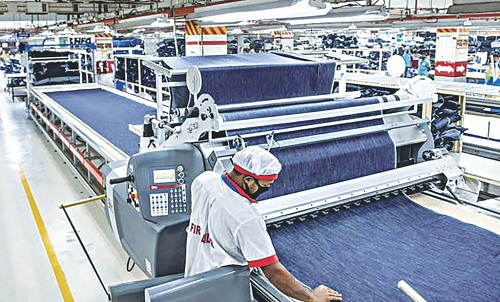 introduced automation at almost all stages of apparel making which has, in turn, reduced their dependency on labor.
The Bangladesh Garments Accessories aAnd Packaging Manufacturers and Exporters’ Association (BGAPMEA) reveals that every year around 100 new factories now use advanced technologies in their entire apparel-making process. The use of these advanced technologies enables them to cut their production costs significantly besides ensuring higher productivity and reduced lead times. Though, the introduction and use of automatic machinery in the RMG sector is costly it will help the sector reap benefits in the long run in terms of higher efficiency.
Negative impact on employment market
Though automation in the RMG sector is likely to bring in some inevitable challenges for Bangladesh, the country has no other option but to embrace them in order to take the apparel sector to the next level. Automation in the country will definitely lead to layoffs and job cuts, but it will also create new jobs as the new installed machines will require supervision and experience wear and tear, on the other. The type of jobs created as a result of automation will require skill and education—which the country lacks.
Skill development to ensure job retention
Automation will create more jobs in the service sector for which they need to invest more in education and training. Furthermore, it needs to ensure favorable labor laws, take initiatives for skills development, and provide social protection. There is a dire need for training for developing and expanding labor market skills to ensure job retention and assist terminated workers to find alternative ways to make a living.
Restructuring the country’s education system and reducing the gap between its education and employment will reduce its dependence on expatriate managers and curb youth unemployment. The government must therefore prepare its labor force for the smooth transition of its RMG industry to a higher value added industry.
ISKO creates dimension for sportswear at ISPO
ISKO once again brings innovation to ISPO, by present its pioneering creative in the world of sportswear and activewear. The leading denim ingredient brand will be presenting the latest edition of ARQUASTM, the much-loved fabrics platform set to bring about an even more responsible era.
Featuring 35 fabrics, most of which are made with certified recycled materials, ARQUASTM 6.0 combines high-performance properties with the mill’s Responsible InnovationTM approach a holistic vision based on creativity, competence and citizenship that constantly defines new standards.
Although many of the textile concepts included in the collection may have the look and hand feel of knitted fabrics, they are all woven, thus ensuring superior durability and greater recovery.
Among the many qualities that come with ARQUASTM 6.0, moisture management, UV and wind protection, heat retention, water and stain repellency stand out. Nylon, which is used for the first time in this edition, allows for super light woven and cozy outdoor fabrics, reversible and packable styles, as well as patented fabrics, such as 4 way- stretch ISKO Blue SkinTM for a 360° elasticity. To provide trailblazing inspiration to its customers, ISKO’s world-class design team have created both a men’s and women’s garment collection based on three lifestyles active, outdoor and club sports.
ACTIVE: Ideal for a wide range of sports from yoga to fitness to running. Whether participating in high- or low-impact activities, these fabrics perfectly fulfill the technical requirements of at leisure and performance-wear apparel.
OUTDOOR: Fabrics that stand for superior comfort, durability, water repellency and breathability, protecting the wearer from the elements of nature in any kind of setting.
CLUB SPORTS: From the perfect golf swing to a wild horse ride, essential features such as maximum flexibility, fit and performance make these the ultimate textile concepts for the sportswear market.
On January 26th and 27th a special guest will join ISKO’s booth. Stefan Mitiu, Olympics Rings Athlete, will perform an exclusive athletic show that will take place three times a day.
Freudenberg to launch first ever 100 percent biodegradable padding at ISPO Weinheim, Germany
Freudenberg Performance Materials Apparel is launching the first fully biodegradable padding made from sustainably produced cellulose fiber that completely degrades in soil within just under 60 days. At the same time, it meets all requirements for high-performance thermal insulation for sports and outdoor clothing. comfortemp® Lyocell padding is the result of a cooperative venture with the fiber manufacturer Lenzing.
The innovative thermal insulation will be launched onto the market in January 2020 and will be presented for the first time at ISPO from January 26th to 29th the degradation of polyester, which is contained in 60 percent of all garments, takes an average of 500 years.
In addition to reduced consumption, more recycling and increasing the quality of garments to ensure that they can be worn for longer, innovative ecological solutions are urgently needed for the end of the garment life cycle. Freudenberg is a pioneer in this field and is now launching comfortemp® Lyocell padding, the world’s first 100% biodegradable padding. It is completely biodegradable within 60 days without polluting the soil.
Environmentally friendly production process
The padding is based on Lyocell, which is manufactured by fiber producer Lenzing. Lyocell is a cellulose produced from natural raw materials in an environmentally friendly production process using eucalyptus wood from sustainable forests. The solvent used to obtain the fibers is almost completely reused in the production cycle, which is a clear advantage over other cellulose fibers such as viscose. The EU has presented the process with the European Award for the Environment.
Warm, soft, light
The fine fibers created from the natural raw material and their innovative processing enable comfortemp® Lyocell padding to be as light as a feather and as efficient as synthetic paddings. The thermal insulation provides warmth and is both soft and highly breathable. Thanks to its excellent moisture management, the padding absorbs body moisture up to 45 percent and thus minimizes perspiration. The thermal insulation is also water-repellent, dries quickly, is antistatic and conforms to the OEKO-TEX 100 standard. Consequently, comfortemp® Lyocell padding meets the high demands placed on clothing for sports and outdoor use.
Myanmar clothing sectore on the upswing
There is a boom in Myanmar’s clothing and textile industry. This comes at a time, when wages in other regional production hubs such as Vietnam and Cambodia have risen, driving manufacturers to cheaper nations. The minimum wage in Myanmar is among the lowest in Southeast Asia.
Myanmar is becoming more stable in the textile industry. Myanmar’s export revenues from the textile manufacturing sector make up nearly 10 per cent of the country’s export revenues. The country exports its garments and textiles mainly to Europe, Japan and South Korea. If manufacturers make a shift from the Cut, Make, Pack (CMP) production system to a free on board (FOB) system, annual earnings could swell tenfold should demand remain at the current level. Under a CMP system, all raw materials, such as fabric and buttons, are imported by local factories, which then assemble the garments for export. Under an FOB system, the exporter quotes a price that includes all costs, including delivery of goods aboard an overseas vessel. The local factory is responsible for the whole production process. The European Union is working with more than a hundred garment and textile factories in Myanmar in expanding training and capacity building programs for social and environmental performance.
Teijin introduces lightweight fabric
Teijin Frontier has introduced a lightweight, tear-resistant, flat-surfaced fabric that is soft, eco-friendly and abrasion resistant, which makes it ideal for sports and active wear.
There is significant increase in demand for sports apparel that combines functionality with new appearance and texture with the arrival of diverse fashion styles in terms of sports and outdoors. Current fabrics have various problems in terms of hard textures, uneven surfaces which sometimes results in snagging and low abrasion resistance. In response, Teijin Frontier used a thin, high tenacity polyester yarn and applied innovative yarn arrangement and weaving density to produce lightweight and highly tear-resistant fabric which proves to be ideal for sports and outdoor wear with its flat even surface, soft texture and high abrasion resistance.
The company will promote this new fabric as a key product for spring/summer ’20 sports and outdoor collections targeting maximum sales for a wide range of applications such as sports and outdoor wear, fashion wear, school and corporate uniforms.
Teijin Frontier, based in Japan, is a fiber and product converting company with advanced spinning processing, yarn processing and finishing methods. Its main fields of operation are high-performance fibers such as aramid, carbon fibers and composites, healthcare, films, resin and plastic processing, polyester fibers, products converting and IT.
Jan Singer is the new CEO of J Crew
Singer will assume responsibility for all aspects of the J Crew and J Crew Factory brands. Jan Singer moves from Victoria’s Secret. At the lingerie brand she was responsible for leading the company’s intimates business and its network of 1,000 stores and digital platforms. She worked to improve the brand’s performance by introducing innovations in its core categories, while also relaunching its sleep business and introducing exclusive collaborations. She has also been at Nike, where she oversaw the successful launch of products including the Nike Flyknit and the Nike Free as well as innovations such as Nike Seamless, Nike AeroLoft and Nike Tech Fleece. Singer has skill and experience in driving growth and modernization at omnichannel brands.
J Crew is a fashion retailer. In the third quarter J Crew’s revenues were up one per cent while the net loss widened significantly. The new CEO is expected to help in rebuilding the strategic positioning and prestige of the brand and company. The J Crew group currently operates more than 500 retail locations in the US. Sales at the J Crew brand fell four per cent in fiscal 2018. The company’s attempts to relaunch and reposition its namesake brand have proved to be largely unsuccessful.
LVMH turnover up 15 per cent
LVMH’s turnover has grown 15 per cent the previous year. Louis Vuitton is the premium marque of luxury in the world. On an organic basis, sales rose by 10 per cent. However, harmed in part by events in Hong Kong, sales in the final quarter grew 12 per cent. Profit from recurring items also grew 15 per cent while the operating margin reached 21.4 per cent. And group share of net profit was up 13 per cent. LVMHʼs key sector, fashion and leather goods, scored a 20 per cent advance in sales, over one third of LVMH’s turnover, and three times the size of perfumes and cosmetics. The luxury conglomerate’s second largest division is selective retailing. Other divisions are wines and spirits and watches and jewelry.
LVMH had another record year, both in terms of revenues and results. The desirability of its brands, and the creativity and quality of its products, the unique experience offered its customers, and the talent and commitment of its teams are the group’s strength and once again made the difference.
In November 2019, LVMH took over Tiffany, the US jeweler famed for its engagement rings and white diamond necklaces. The all-cash deal marked the biggest-ever takeover for LVMH.