FW
Cambodia’s textiles garment exports to Japan on the rise
In 2018, Cambodian exports to Japan soared 27.3 per cent while imports grew by 17.8 per cent. The country is improving its production chain to provide added value to its textile products exported to Japan. Potential products for export from Cambodia to Japan are clothes, footwear and electronics. Of Cambodia’s total exports, Japan ranks fourth with a market share of 7.7 per cent. The main products that Cambodia exports to Japan are garments, footwear, sugar, fish and seafood. Imports from Japan are mainly machinery, automobiles, electronic products, beef, iron, steel and pharmaceutical products. Cambodia’s exports have been buoyed by efforts to assist its exporters, including the simplification of export procedures and in particular the implementation of an online system to process export documents.
Cambodia is geographically located in the center of Asean and provides favorable conditions for businesses with rapid infrastructure development and fast-rising economic growth, investment, trade and tourism. Currently, there are 137 Japanese investment projects in Cambodia, mainly involved in the manufacturing of electronic and electricity components, auto spare parts, agro-industry products and food processing materials, hotels, tourism, hospitals and malls. Most Japanese factories in Cambodia are located in special economic zones, which produce a lot of products that are exported to Japan. Japanese investment in non-textile manufacturing has contributed to diversifying Cambodia’s economic base and human resource development.
Bangladesh looks to corner Cambodian orders post GSP removal
Bangladesh hopes to gain from the suspension of the European GSP facility to Cambodia. Post GSP removal, buyers are expected to shift sourcing from Cambodia with rising prices of Cambodian products. And since there are similarities between readymade garment products produced in Cambodia and Bangladesh for export to the EU market, garment exporters in Bangladesh hope to increase export orders. Some orders have already shifted from Cambodia to Bangladesh in anticipation of buyers for months precluding EU suspensions of GSP. Bangladesh is the second largest exporter of readymade garments to the EU with GSP facility. However Bangladesh’ss gain from Cambodia’s lost orders would mainly comprise low cost items.
The EU has partly suspended the Generalised Scheme of Preference facility to Cambodia. The European bloc generally offers duty-free benefit to some least developed and developing countries under the Everything But Arms deal to boost trade and business. GSP suspension would put Cambodia’s apparel industry in a challenging situation as it would now need to pay 9 to 12 per cent duty on exports to the EU.
Freudenberg presents the world’s first nonwoven crimping material
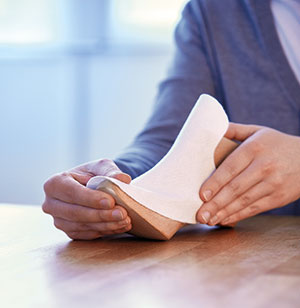 Freudenberg Performance Materials (Freudenberg) will be presenting an innovation that meets the increasing demands of manufacturers and consumers alike in the footwear market. Made from nonwoven fabric, the innovative crimping material optimally combines high permanent moldability and shape retention with flexibility and suppleness. This unique crimping material enables manufacturers to reduce their production costs while consumers benefit from increased comfort. The world’s leading supplier of innovative technical textiles will present the innovation for the first time at the Milan Lineapelle trade show from February 19-21.
Consumers are increasingly looking for ever softer, more flexible and at the same time fashionable shoes. This in turn places greater demands on shoe manufacturers in terms of production technology. Freudenberg’s innovative nonwoven-based crimping material succeeds in reconciling the demands of consumers with the associated technical challenges for manufacturers.
The advantages at a glance:
Multi-directional stretching properties
In contrast to knitted linings, the material’s multi-directional stretching properties enable uniform longitudinal and transverse stretching over the entire vamp area.
Lower production costs
Compared to conventional knitted fabric-based crimping materials, faster thermoplastic moldability means shorter production times and thus significantly reduced manufacturing costs.
Improved fitting
The crimping material offers better shaping, last-true vamp mold retention and optimum shape and stability. Even after more than 72 hours of wear, the molded vamp still retains 100 percent of its true lasted shape.
Optimum wearing comfort and greater design freedom
The material’s extremely fine fibers allow shoes to be designed that are very soft in character and provide optimum comfort. At the same time, the exceptionally high cutting-edge stability increases the range of creative design possibilities.
Reduced weight
The significantly lower weight-to-area ratio of the nonwoven-based crimping material reduces the weight of the shoe while at the same time ensuring better shape retention.
Ind-Texpo Edition 2.0 –Sets the wave for Responsible Sourcing of Indian Textiles
 Ind-Texpo 2020 - a specialised Reverse Buyer Seller Meet in its 2nd edition, will take place at CODISSIA Trade Fair Complex, Coimbatore, Tamil Nadu from 17-19 March 2020. This one-stop sourcing platform for a variety of textiles across the value chain is supported by Ministry of Commerce & Industry and Ministry of Textiles, Government of India.
Show Highlights
• Featuring over 100+ quality importers visiting from over 25+ countries/regions
• 75+ Indian Textile companies to exhibit with the latest product offerings
• Showcasing Indian Textiles “Farm to Fashion”
• Textile Innovations showcased by selective suppliers
• Sourcing made simple under one roof
The 2nd edition will witness 100+ quality importers visiting the show from over 25+ countries and regions in their pursuit for de-risking their businesses and developing alternative sources of supplies on account of the shutdown in China due to outbreak of 2019 – nCoV.
The event showcases top quality yarns, apparel fabrics, denim fabrics, and choicest home textiles to include range of living room, bed, bath and kitchen products ‘Made in India’.
Buyers from countries including Colombia, Chile, Peru, Paraguay, Ecuador, Bangladesh, Sri Lanka, Vietnam, UAE, Middle East, Ethiopia, Kenya, etc. have already confirmed their registration to visit the show. There have also been increased enquiries from importers in EU and other countries to source Indian yarn, fabrics and home textiles.
Over 70+ Indian companies are expected to exhibit at the show with their latest product offerings and selective innovations to connect with the leading buyers from international markets.
As a part of its business matchmaking program, Ind-Texpo 2020 will also feature exclusive B2B meetings for the exhibiting companies to spend quality time with overseas buyers based on a pre-determined schedule of time slots during the exhibition.
Ind-Texpo, since its launch edition has been successful in integrating the textile value chain at a single global trading platform. Alongside the exhibition, the event also facilitates exchange of high quality market intelligence to support industry efforts to attain a competitive edge and move up the value chain with a renewed vigour and better understanding of global trade.
U.S.-China impacted by phase 1 implementation and coronavirus
National Cotton Council economists point to a few key factors that will shape the U.S. cotton industry’s 2020 economic outlook.
This past year can be characterized as a year with significant uncertainty and volatility in the global economy and the world cotton market. On January 15, 2020, Trump signed the Phase 1 trade agreement with China. As part of the agreement, China has agreed to purchase an average of $40 billion in U.S. agricultural commodities, including cotton, over the next two years. However, the overall impact for cotton remains uncertain as commodity specific details have not been released.
While the Phase 1 trade agreement provided some cautious optimism for an improvement in the cotton economic situation, the China coronavirus outbreak in the early weeks of 2020 could delay China’s ability to increase purchases in the near-term. As a result, the potential impacts of the coronavirus represent a significant wildcard in the outlook for the world cotton market in the 2020 crop year.
In her analysis of the NCC Annual Planting Intentions survey results, Campiche noted that export markets continue to be U.S. raw fiber’s primary outlet. World trade is estimated to be higher in the 2019 marketing year, but the retaliatory tariffs and increased competition from other major exporting countries has led to a sharp decline in the U.S. trade share in China. Despite the continued U.S.-China trade disruptions, U.S. export sales to other markets have been very strong for the current crop year.
Sales reached the highest level in the marketing year during the week ending on February 6. While export competition from Brazil remains strong, the U.S. has had increased opportunities for export sales to other markets in the 2019 crop year. Lower production in Australia, Pakistan, and Turkey has led to higher U.S. export sales. As a result, the United States will remain the largest exporter of cotton in 2019 with 16.5 million bales.
Prior to the implementation of tariffs, the United States was in a prime position to capitalize on the increase in Chinese cotton imports. With the imposition of the 25.0 percent tariff, China has turned to other suppliers during the 2018 and 2019 marketing years, allowing Brazil, Australia, and other countries to gain market share. Vietnam is currently the top export market for U.S. cotton in the 2019 crop year, followed by China and Pakistan.
U.S. exports are projected to drop slightly to 16.4 million bales in the 2020 marketing year. For this outlook, the U.S. is assumed to export 2.5 million bales to China in the 2020 crop year as compared to an estimated 2.0 million bales in the 2019 crop year. However, with record stocks outside of China, increased production in Brazil, and a partial recovery in Australia’s production, the U.S. will continue to face strong export competition in 2020.
Based on the underlying assumptions and resulting cotton balance sheet, stable stocks outside of China, increased export competition from Brazil, recovery in Australia’s production, and low manmade fiber prices will have a bearish influence on cotton prices. A quick containment of the coronavirus and a successful implementation of the Phase 1 trade agreement would provide support to prices.
Strong wage policy, timely adjustments to enable Bangladesh RMG sector meet targets
"Though the Bangladesh RMG sector witnessed insignificant growth during the fiscal years 2016-17 and 2017-18, growth rate picked up the following year owing to Taka’s depreciation and a rise in exports to the United States. However, now the country’s major export-earning industry faces a number of challenges."
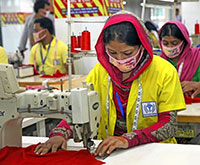 Though the Bangladesh RMG sector witnessed insignificant growth during the fiscal years 2016-17 and 2017-18, growth rate picked up the following year owing to Taka’s depreciation and a rise in exports to the United States. However, now the country’s major export-earning industry faces a number of challenges.
One major challenge is the weaning off of preferential trade benefits like Generalised System of Preferences (GSP) once it graduates as a middle-income country. This will lead to loss in cost competitiveness that can be detrimental for the apparel sector. Another challenge is the evasion of low value-low margin market segment that produces volume-driven products.
Sub-contracting hinders development of high-end products
The sector also lacks the capacity to produce products with higher ticket prices as sub-contracting is a big issue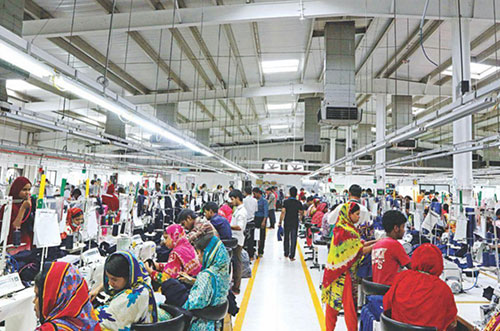 in the industry. Apparel companies currently in operation need assistance to develop their organisational and human resources skills. Still, the country has been able to change foreign buyer’s perception about the sector mainly on account of the pressure exerted by the Accord and Alliance Bangladesh.
However, compliance interfere with profit margins of these companies as small and medium enterprises (SMEs) often fail to comply with labor laws and buyers' codes of conduct. They fail to send shipments on time and suffer from liquidity crisis and thus are unable to pay worker's wages timely. Therefore, they the face risk of losing business. Consequently, there will be a rise in unemployment rates.
Creating export-oriented sector for employment generation
On the other hand, as large factories meet compliance requirements, workers who lose their jobs on account of shutting down of inefficient factories may attain employment in large factories. However, majority of workers still stand to lose their jobs. To prevent this, Bangladesh needs to ensure inclusive development and create export-oriented sectors, in order to generate quality jobs.
The RMG sector also needs to balance setting up of minimum wages with maintaining the sector’s competitiveness. As a consequence, some factories have opted for automation to reduce their dependency on labour. Automation will have adverse effects on workers employed in the RMG industry.
Despite these challenges, the RMG sector has set a target of $50 billion exports by 2021. This target can be reached if the country focuses on inclusive growth by introducing a strong wage policy and making timely adjustments to minimum wages prior to consultation.
Production Expected to Shift Gears by the End of February
Survey Shows Coronavirus Impact on Chinese Textile Industry -Part II
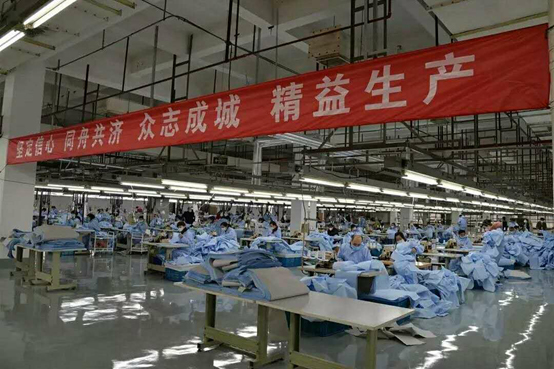
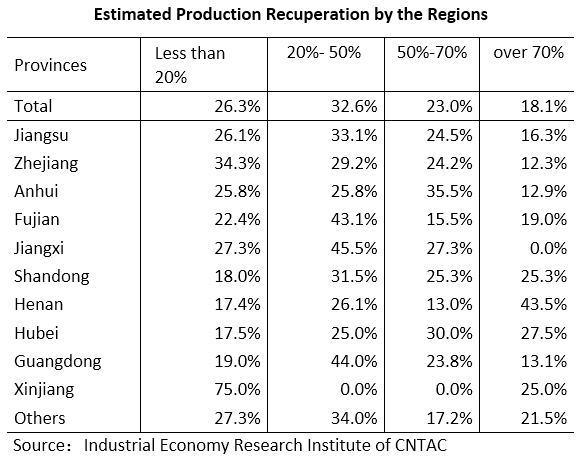
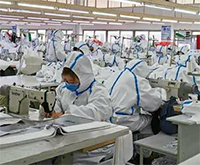 The Survey analysis continues to shed light on production expectation at the end of February after the first part of the report is focused on the situation that was seen and expected before the middle of this month. To our dismay, only 18.1% of all the 1201 respondents under the survey reported to recover their capacity up to over 70% while 23% of them could have 50%-70% revitalized, and nearly 60% of the total companies in the survey are in the view that they are able to get the lines running in 50% or less, a gloomy picture if their answers turn out to be true.
A national online survey in Questionnaires was conducted by China National Textile and Apparel Council(CNTAC) from Feb.7-10, with a report circulated only to limited readership to show a comprehensive outlook and insight of the textile industry by specific sectors in different provinces on the basis of 1201 respondents, just a sample of the whole textile economic fabric if we can see wood and see forest. Continuing here with Part II of survey analysis, as how the Chinese production is expected to pick up by the end of Februry.
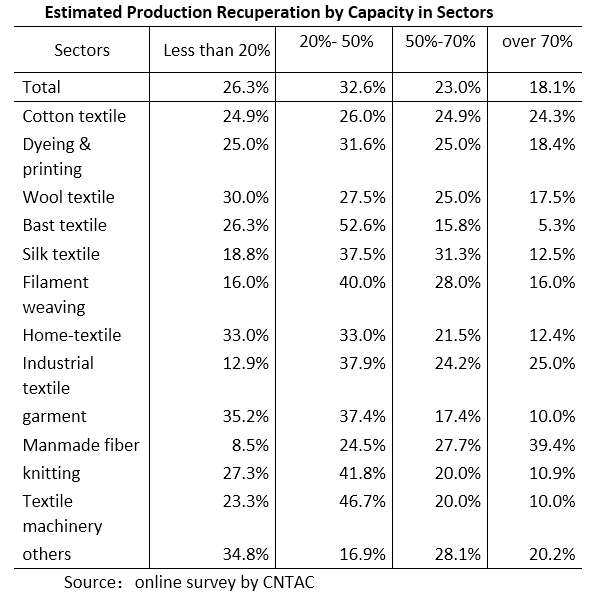
These answers are not persistently consistent if we look into the different sectors in the up-mid-down streams of the whole textile industry. Obviously, as massive consumption on shopping boom is not optimistically foreseen at the moment when consumers are not encouraged to expose themselves to outdoor activities, the garment and home-textile industrial sectors that produce finished goods are subject to a bit harder impact brought forth by necessarily strict measures for disease prevention and control, leading to a slow production recovery, to such an extent that only 10% and 12.4% respectively from these two sectors expressed their belief that they both will re-steam their production up to over 70 percent at the end of the month, far short of what is expected. Noticeably, the number of companies foreseen to run the factory less than 20% of the rated capacity takes up a considerable bulk of the total respondents in these finished-goods sectors, 35.2% and 33% each. Every cloud has its silver lining, the manmade fiber and industrial textile sectors present a sunny side of the picture, with 39.4% and 25% of their companies in the survey promising to regain production to over 70% of the full capacity.
If we see the production to be re-energized to run capacity in the provinces that were chosen as important sampled regions, Henan province in Central China is more optimistic with 43.5% of the respondents ready to gear up to over 70 percent of the production capacity at the end of February.
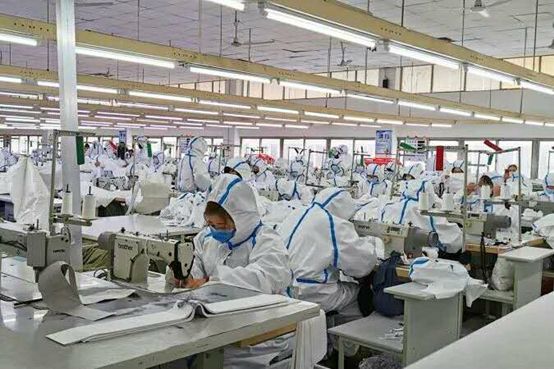
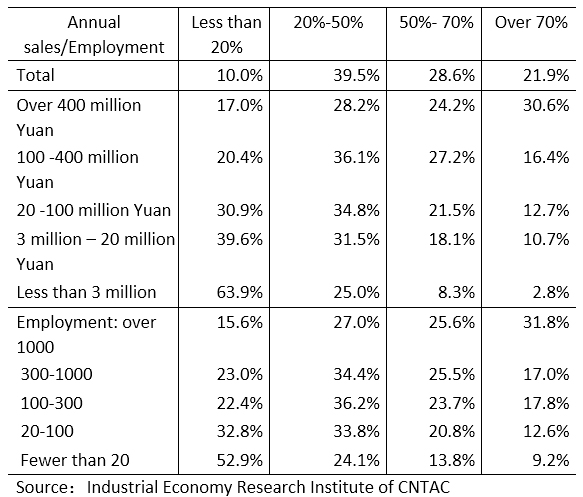
If we see the picture based on companies’ size and scale in the sales income profile and employment, it is reasonable to find that the bigger the company is, the better the company runs in capacity resumed.
The following table shows 30.6% of the big companies are able to recover 70 percent of the installed capacity, while only 10.7% of the small ones can do the same. Some smaller ones or micro companies, 63.9% of them, are devoid of such an aim, expected to resume less than 20% of their production at the best when it comes to the end of February.
Production to be Recuperated in the Companies under Survey in Different Size & Scale by Annual Sale and by Employment
(To be continued)
Contributed by Mr. ZHAO Hong
He is working for CHINA TEXTILE magazine as Editor-in-Chief in addition to being involved in a plethora of activities for the textile industry. He has worked for the Engineering Institute of Ministry of Textile Industry, and for China National Textile Council and continues to serve the industry in the capacity of Deputy Director of China Textile International Exchange Centre, V. President of China Knitting Industry Association, V. President of China Textile Magazine and its Editor-in-Chief for the English Version, Deputy Director of News Centre of China National Textile and Apparel Council (CNTAC), Deputy Director of International Trade Office, CNTAC, Deputy Director of China Textile Economic Research Centre. He was also elected once ACT Chair of Private Sector Consulting Committee of International Textile and Clothing Bureau (ITCB)
Coronavirus impacts UK retail
UK retail is reeling from the affects of Chinese Coronavirus. Delays in product deliveries will impact high streets already reeling from a dismal Christmas. Until January 23, sales forecasts for 2020 were looking good. But with some Chinese cities now on full or partial lockdown, and a spike in new cases, shopping malls are deserted, workers are at home, and the luxury goods industry is seriously worried.
UK companies are closing their offices in China. Whether Chinese consumers come over to the UK to shop and spend, or whether they go up there into their own cities to shop for UK brands, it's going to cause a problem, because there's just no product and there's nobody there to retail the product. If products haven't been on the seas a few weeks ago, there is going to be a delay of up to two or three months, and if that happens, the question is whether customers are going to want it at that stage. Though high end goods like Burberry and John Smedley are still manufactured in the UK, mid-range quality like M&S is being outsourced to China.
UK retailers are now facing delays to their spring fashion collections of at least four to six weeks. At London Fashion Week 2020, Chinese buyers were missing.
Bestseller intensifies partnership with BSR HERproject
Bestseller has intensified its long-term partnership with BSR's HERproject™, a collaborative initiative that strives to empower low-income women working in global supply chains. The new strategic partnership will help Bestseller accelerate towards its Fashion FWD goal of supporting 100,000 women in Tier 1 factories to achieve workplace empowerment and improved life skills.
In addition, Bestseller has become a Catalyst Member of HERproject™, making it possible to take a leading role in furthering the impact of HERproject™ by providing strategic advice and thought leadership to steer the direction of the program. BSR's HERproject™ is a collaborative initiative that strives to empower low-income women working in global supply chains. Through its HERhealth™ and HERfinance™ programs, women develop knowledge and skills on health issues and financial management topics. The HERrespect program focuses on addressing the root causes of violence and sexual harassment against women in the workplace.
To date, Bestseller’s work with HERproject™ has reached more than 37,000 women in Bestseller’s supply chain across Bangladesh, Cambodia, China, India, Pakistan and Vietnam. Factoring in HERproject™ programmes supported by other brands, the total number of women in Bestseller’s supply chain is just over 50,000.
Tiruppur Export Association welcomes Rs 1,224 crore budget allocation
The Tiruppur Export Association (TEA) has welcomed the Budget allocation of Rs 1,224 crore to the development of handlooms and textiles businesses in Tamil Nadu. The association welcomed the expanding of benefits available under Prime Minister’s Employment Generation Programme (PMEGP) and the Unemployed Youth Employment Generation Programme (UYEGP). The budget also enhanced the existing project size limit of Rs 10 lakh to Rs 15 lakh and eligible subsidy under the scheme to Rs 2.5 lakh. The provision for this scheme has been enhanced to Rs 33 crore in the Budget estimates 2020-21.
The budget also allocated Rs 500 crore for environmental clearance under the Athikadavu-Avinashi irrigation scheme. Interest subvention under the Technology Upgradation Scheme and the Credit Guarantee Fund Trust scheme has been increased from 3 per cent to 5 per cent. He appreciated enhancing of the maximum capital subsidy under the NEEDS scheme from Rs 30 lakh to Rs 50 lakh and the Rs 100 crore fund allocation for this scheme in the Budget estimates 2020-21. Reduction in stamp duty for rental agreements under the new Tenancy Act to 0.25 per cent from 1 per cent and registration charges on such agreements to 0.25 per cent from 1 per cent subject to a maximum of Rs 5,000 was also seen as a welcome move.