FW
Australian fashion agency notes rise in athleisure demand
Slyletica, an Australian fashion agency that makes activewear and athleisure brands, has seen an unprecedented rise in the number of people wanting to start an athleisure brand during COVID-19. Tracking firm Edited reveals tracksuit sell-through rate has increased by 36 per cent in the United States and the United Kingdom compared with the same period last year, and sweatpants sales were up 79 per cent in the former from February to April.
With people working and working out from home, demand for comfort particularly from US and UK continues to surge. According to the Business of Fashion sale of activewear garments increased 40 per cent in the United States and 97 per cent in the United Kingdom year on year during the first week of April.
While other sectors of fashion cancelled orders with their factories prior to the lockdown, many activewear labels are thriving and Slyletica is on boarding clients at a rate higher than ever before.
Slyletica is preparing to launch more than seven new influencer brands in the coming months and handles everything from design and manufacturing to e-commerce, marketing and order fulfillment, all from its Melbourne headquarters.
US retail rents to fall by 8-13 per cent
Real estate analytics firm CoStar Group estimates retail rents in the US will fall by 8-13 per cent post the coronavirus crisis. These rents have risen by 2.6 per cent over the last three years. As retail business came to a standstill in the months of March and April while some even continue into May, national retail chains in Europe and US are crumbling.
With most of them negotiating rent agreements with landlords or not being able to pay rents altogether, mall operators’ rent collections have hit rock bottom, casting doubt over the ability to sustain business. In April, the total rent collection for mall operators in US was only 15 per cent rent collection and the trend is forecast to fall further for May.
As many retailers like Macy’s and Tapestry struggle to reach common consensus with mall owners, the inability to meet the rent agreements has led to store closures all over the country. Retailers are of the view that rents have been riding too high in the recent past and in order to keep more stores from either leaving premises or closing down, mall owners will have to rethink their rent strategies.
Tantalize consumers with entry-price baubles: Xiaohongshu
As China resumes luxury spending, users on China’s popular social commerce platform Xiaohongshu believes brands need to seduce them with tantalizing entry-price baubles, or ramp up prices on more luxurious and iconic handbags.
Xiaohongshu users documented busy scenes in Chanel stores across China. According to the platform, the pandemic has forced luxury brands to close their stores in Europe and North America for nearly two months, and seen their share prices plummet, while retailers such as Neiman Marcus, J. Crew and True Religion have filed for Chapter 11 bankruptcy protection.
Luxury brands are implementing a mix of strategies to recapture the business they had lost. In addition to price hikes for best-selling core products, as Vuitton and Chanel did, brands like Dior, Gucci, Prada, Hermès and Vuitton are also doing major pushes of entry-level products with their China-focused campaigns.
Dior unveiled two local ambassadors for its beauty line last week: Actress Ziwen Wang as its cosmetics ambassador, and Jinyan Wu as the face of the Capture Totale skin-care line. Gucci and Prada, on the other hand, are going big on the 520 Chinese Valentine’s Day with a focus on classic styles and lower-price-point items.
Hermès and Vuitton are mixing both tactics. While shipping lots of rare Birkin bags to China, Hermès launched a WeChat mini-program store for 520. The program features products with more affordable price-point products such as silk scarves, belts, earrings, sandals, a Baby Hermy toy and a Kelly wallet available in four colorways.
Vuitton worked with China’s top livestreamer, Austin Li, to promote its fragrance collection on Xiaohongshu, as well as releasing a dedicated campaign later this week.
Latin American T&A makers seek government help amidst cancelled orders
Latin American textile and apparel makers have urged the government to launch an aid package for ailing enterprises, substitute low-cost imported fabric for domestic alternatives and institute other actions to combat contraband and piracy. These businesses have been struggling to cut losses as US and European fashion brands cancel or postpone orders as the pandemic slows retail around the world.
Mexican banks are quickly curtailing lending to fend off a deep recession. When they do offer credit, they do so at prohibitive interest rates, Mexico’s government has demanded manufacturers shutter output but continue to pay workers while idle. And while makers can delay social security payments, they must repay them at a 2.5 percent interest rate once the crisis subsides, double the normal bank interest rates.
Suppliers in Central America are also suffering as hundreds of apparel makers serving the likes of Under Armour, Nike or Lululemon have closed shop, leaving production half staffed mainly because of a shift to make personal protective wear) or virtually shut such as in Dominican Republic, Nicaragua or Honduras. Most garment makers have given up on collecting payment for lost orders and will simply record the losses.
In Colombia, Grupo Crystal, which makes garments for companies including Chico’s, Zumba and Michael Kors, has received cancellations but is allowing clients to defer payments, said Jaime Sierra, who leads the company’s manufacturing plants in the city of Medellin.
Brazil retailers have been hit hard by strict lockdowns that are expected to last for two months. Designer Lenny Niemeyer, who makes bikinis and other beachwear for international department stores such as Bergdorf Goodman in New York, El Corte Ingles in Spain and Le Bon Marche in Paris, has lost up to $700,000 in international orders, nearly 50 percent of the $1.5 million it exports annually, and expects similar losses until the situation has normalised.
Italian fashion and textile sector looses €3.5 billion revenues in Q1
Research by Confindustria Moda shows, in the first quarter of 2020, Italian fashion and textile companies lost more than €3.5 billion in revenues and their sales could decrease by a total of about €9 billion by the end of the year. The report analyzed the performances of companies represented by SMI — Sistema Moda Italia, and those that have been significantly impacted by the coronavirus outbreak in the country since February.
It showed, 42 per cent companies interviewed registered a loss between 20 and 50 per cent in revenues, while 28 per cent posted a decrease between 10 and 20 per cent. In addition, compared to the same period last year, for 49 per cent of the fashion and textile companies the number of collected orders decreased between 50 and 20 per cent.
As SMI president Marino Vago highlighted, in order to protect their workforce, 95 per cent companies included in the research used the wage support measures made available by the government and, to protect the safety of their employees, 80 per cent of them activated smart working.
Confindustria Moda’s research also focused on the fact that for the Italian fashion and textile companies, which took part to the survey the biggest issue they had to face during the emergency was the management of the relationships with clients. As Vago noticed, since most SMI associates operate in the textile sector, they were significantly affected by requests of clients, sometimes big fashion groups, to postpone payments or revise contracts.
In addition, the research highlighted how the companies in the Italian fashion and textile sector are suffering after a lack of liquidity due to the low capitalization rate of the medium and small-sized companies.
APTMA demands restarting of textile downstream supply chain
All Pakistan Textiles Mills Association (APTMA) has urged the Sindh government to allow the entire textile value chain to restart production activity without further delay or else the provincial industry would not survive, leading to total closure, bankruptcies, and mass unemployment.
Zahid Mazhar, APTMA Sindh-Balochistan Region chairman says APTMA appreciated the measures taken by the Murad Ali Shah, Chief Minister who leads Sindh government to control the spread of the new coronavirus, and assures its fullest cooperation to fight against the pandemic.
He said the textile industry in the province, which was allowed to resume operation recently, has already adopted all precautionary measures prescribed in the SOPs to prevent the spread of the virus. So far, textile industries that have export orders to ship consignments and those that have on-premises residential colonies have been given permission by Sindh government to start operating while following strict SOPs
However, there would be no positive impact on the provincial economy unless downstream textile industry, including sub-sectors of weaving, knitting, stitching, processing and garmenting that provide intermediary materials, did not restart to complete the business cycle of the export industry, he added. “In the present situation, the industry is not even running at 50 percent of its capacity.” He said that in the current shape of lockdown being observed in Sindh, industry was facing severe liquidity problem due to which it was not in a position to pay even the utility bills and the wages to its employees.
China weavers to cut production
A recent survey by Textile Excellence reveals, saddled with high levels of inventory due to cancelled orders and dull domestic demand, weavers in China may cut production in May. Additionally, two units of Jilin Chemical Fiber will be shut for maintenance in May for about two months. This will lower operating ratio to 86 per cent-88 per cent.
The survey reveals inventory of weavers is significantly higher than in the same period of past years. This may force many weavers to shut down again for the holidays.
Spot cotton sales were frozen after intensive order cancellation around mid-March, and the situation worsened during the week from April 6-10, when traders basically saw no liquidity and large traders also witnessed dull transactions. From April 13, cotton transactions warmed up somewhat. Despite limited improvement, the downstream buying indication moved up somewhat, and when ZCE cotton futures market declined on April 21 and 22, on-call cotton sales were relatively good. On April 22, there were rumors that China would purchase one million ton of cotton into state warehouses, spot cotton transactions turned thinner again.
Downstream plants have export orders successively from last week, and some delayed orders have also restarted. According to the survey, new export orders are very limited, and domestic sales are also dull. Thus cotton purchases by mills are need based.
As competition is fierce in China’s local market, margins are squeezed, and cotton yarn prices are at a record low. Inventories are high. Most downstream plants worry that domestic demand may turn worse as wages in the country may go down on average, and seasonal demand shrinks.
H&M, Bestseller refute allegations of cancelling orders
Replying to Clean Cloth Campaigns allegations of cancelling orders and imposing conditions unable to fulfill, brands H&M and Bestseller have reiterated that they are supporting their vendors. Speaking to Apparel Resources, the brands revealed they have decided not to cancel delayed orders but instead, allow an extra month delay, or if the products are not seasonal, even more time. If as a last resort, the supplier cannot deliver orders, the brand will have an open dialogue with each affected supplier to see if it can come up with a solution.
H&M has also joined a global call-to-action to support garment workers and suppliers during the COVID-19 pandemic. It will work together with the ILO, IOE (International Organization of Employers), ITUC (International Trade Union Confederation), IndustriALL Global Union and other brands to tackle the immediate effects of COVID-19 and continue work towards a resilient garment industry for long-term. The retailer also added that it wants to help suppliers and garment workers, and ensure the future viability of the industry once the crisis has passed.
On the other hand, Bestseller says they are committed to accept all orders from Spring/Summer that have been produced or are in the process of being produced. The brand is still placing orders for autumn, though a reduction in some volumes is sought to prevent over-production.
7 For All Mankind launches new sustainability platform
Brand 7 For All Mankind has unveiled ‘Sustainable For All Mankind’, a new platform that provides transparency into its sustainability practices and lays out the company’s sustainability goals. The Los Angeles-based division of Delta Galil Industries has committed to ensure that more than 80 per cent of its product will have sustainable properties through measurable indexes by 2023.
Sustainable For All Mankind details how the brand will achieve its goals by prioritizing organic and recycled materials, adopting innovative manufacturing methods, ensuring ethical treatment of workers and reducing its in-house footprint. In an effort to be more sustainable, the brand is now a member of the Better Cotton Initiative (BCI) and requires strategic suppliers to submit to the Higg Facilities Environmental Module (FEM) and to go through third-party verification to ensure their commitment to responsible practices.
7 For All Mankind recently launched its 080 denim capsule 20th anniversary collection, which includes re-issued jean styles made with sustainable materials. The iconic low-rise bootcut jeans and trouser jeans are made with organic cotton denim and recycled elastane, washed using an eco-friendly process, and finished with recycled hardware.
Personal wellbeing products to be the key to tap luxe consumers post COVID-19
 The ongoing pandemic has turned Maslow’s Hierarchy of Needs upside down as shopping has shifted toward basics with many affluent experiencing online grocery shopping for the first time. An Affluent Perspective (AP) survey conducted by YouGov in early April reveals, for the first time these high net worth consumers are spending their time reserved for shopping doing other things like connecting with friends and family via digital devices, decluttering their homes, crafting or hobbies, spending time outdoors and exercising. This time that they spend in isolation is also forcing them to reset their priorities in life.
The sector that will benefit most from the reset would be the $4.5 trillion global wellness sector. Products and services offering real wellness benefits will gain in demand as mental and emotional wellness will become more important than ever. Luxury brands displaying their wealth and extravagance will fade away in a post-coronavirus world.
Luxury shopping to get modest
Post pandemic, one of the topmost priorities for luxury consumers would to be to secure a financially-healthy future. Though the financial status of the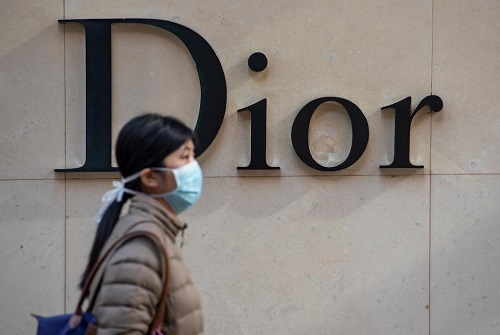 ultra-affluent elites may remain immune to the aftermath of the coronavirus, the same would not be the case with the professional class.
The AP report states, as layoffs and pay cuts will impact may white-collar professions in America, around 30 million citizens are likely to be unemployed. Similarly, the revenues and incomes of around 31 small business owners will be cut dramatically. These people inevitably make up the high-earners-not-rich (HENRY) demographic.
These HENRYs comprise around 80 per cent of the target consumers for luxury brands. In future, these may not be able contribute to 80 per cent revenues of these luxury brands. However, their share in their annual incomes would be way too important to lose. However, the shopping habits of these HENRYs are likely to shift radically as they would have ample time to reflect on what’s most important to them now and in the future. They would now prefer to indulge in more modest, discreet luxury indulgences where high-quality and long-lasting utility take precedence.
Personal well-being to drive luxe sales
Luxury brands would now need to ponder how their consumers’ luxury values and lifestyles will change as a result of the reset they have experienced. Their goal for future should be to provide the true luxury of wellbeing to their customers.
As achieving their personal well-being would be on topmost priority of consumers, luxury brands would have to reset to their objectives to these new dimensions as they pursue their own post-coronavirus journey.