FW
First online edition of World Congress on Textile Coating in February
International Newsletters launches its first online edition of World Congress on Textile Coating, scheduled for February 2021. The organisers have developed a well-structured programme of five sessions over four days with live discussion forums following each session for maximum attendee participation.
The programme aims to be inspiring and informative, and will showcase the best innovations and collaborative actions in the industry. Nick Butler, Head of the conference organising committee says, functionality can be added to textiles and nonwovens at the beginning or the end of the supply chain, with increasing range of raw materials, offering many options when designing and realizing a high-performance fabric. At the other end, there are many ways, such as applying a coating, to add functionality to an otherwise finished product. For example, the current pandemic has prompted new commercial anti-viral processes and four such presentations will outline the impact on industry and its response to the global pandemic.
World Congress on Textile Coating will feature time dedicated to networking, encouraging attendees to interact with conference speakers and industry peers throughout the online programme, offering the opportunity to expand professional networks. All the presentations and discussion forums will be recorded for post-event viewing.
imogo AB, Lamberti SpA, JX Nippon ANCI and Weitmann & Konrad GmbH & Co. KG will give individual presentations and host questions and answer session during the four days of the event.
Tiruppur Exporters’ Association submits Budget recommendations
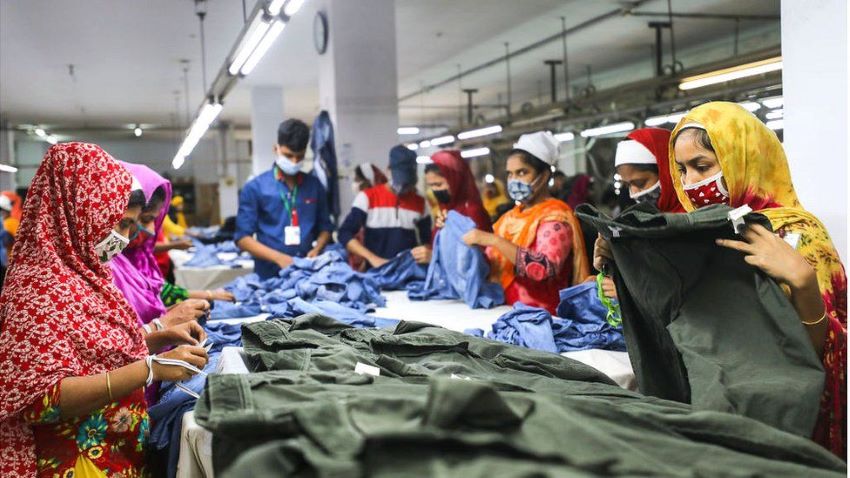
Tiruppur Exporters’ Association (TEA) has submitted some recommendations to the finance minister for next budget. The recommendations include tax concession on staff house construction by garment units in Tiruppur, setting up a research and development (R&D) centre at Tiruppur and offering market promotion support to industry associations as available to export promotion councils.
In a press statement, TEA said the association has a target of constructing one lakh houses for migrant workers in the next five years, primarily to address labour shortage issues and to achieve better utilisation of machinery, apart from enhancing productivity and quality.
In cases, where the units contribute the amount voluntarily for construction of houses to their own workforce, their contribution has to be treated as allowable business expenditure similar to Section 37 of the Income Tax Act, 1961, preferably providing weighted deduction or at least deduction, TEA pleaded.
An R&D centre at the cluster will be beneficial to accelerate the pace of industrial growth and the government can offer cent per cent exemption from income tax. A new scheme called Remission of Duties and Taxes on Exported Products (RoDTEP) has been introduced from January 1 this year and this is available for all physical exports, but the RoDTEP rate has not yet been notified. The concern is that the benefit under RoDTEP scheme shall not be allowed if benefits of the Advance Authorisation Scheme have been availed.
TEA says availing advance authorisation does not lead to complete zero-rating of the exports. Exporters even after procuring certain inputs under advance authorisation have to incur many costs (in the form of indirect taxes) that will get embedded in the price if not remitted. Such direct costs are indirect taxes on electricity, freight and fuel. There will also be indirect costs in terms of customs duties borne by the domestic supplier on imports used in further making the domestic supplies to exporter which are in turn used by the exporters for manufacturing and exporting the finished goods. TEA requested the finance minister to provide proportionate benefits to exporters availing the benefit of advance authorization as well.
Pakistan’s top denim player Artistic Milliners buys factory in Los Angeles
Pakistani denim specialist Artistic Milliners, an integrated producer with spinning, weaving, dyeing and garment manufacturing capabilities, is drawing closer to US customers, by buying a factory in Commerce, California. The new unit has an output capacity of 100,000 units per month. The factory’s new name is Star Fades International (SFI).
This acquisition gives the company a strategic foothold in the US, a region with significant geographic and demographic advantages sates Murtaza Ahmed, Founder of SFI and Executive Director of Artistic Milliners. California has historically been an important cornerstone for the international denim industry. In 2021, the company anticipates increased demand from international retailers and brands for nearshoring capacity, digital design services and sustainable solutions. The investment in this factory gives them a launch platform in the US to meet that demand, as they build the factory of the future.
The Pakistani group plans to rapidly step up SFI’s production capacity to 300,000 units per month, having retained part of the factory's technology know-how, as a base to expand its output. SFI acquisition serves as a major leap in Artistic Milliners’ evolution as a truly global denim company, since it adds multiple dimensions its operating model. Not only does it give their brand partners a US-based manufacturing option but also serves as a nucleus for co-creation and collaboration from fibre to garment at a scale and depth never witnessed before in the industry.
Pakistan’s textile and clothing exports to EU on the rise
The textile sector of Pakistan has immense potential for further expanding its share of exports to the European Union. Zaheer A. Janjua, Ambassador of Pakistan to Belgium, Luxembourg and the European Union, during a virtual meeting with CEOs of the Pakistan Textile Council, Saleha Asif, and other board members, expressed these views. Appreciating the performance of textile sector during the COVID-19 pandemic, Janjua underlined Pakistan’s exports in textile and clothing products to EU have increased in recent months.
The surge in textile exports was the result of government’s smart lockdown strategy, reopening of industry, as well as recently announced energy package to help exporters recuperate from pandemic’s effects.
Moreover, GSP Plus facility had been instrumental pushing up Pakistan’s textile exports to the EU. While emphasising the need for making textile internationally competitive, the ambassador stressed on the need for innovation, value addition, diversification and modernisation to make Pakistan’s products more attractive.
Messe Frankfurt India to host first hybrid Techtextil India in 2021
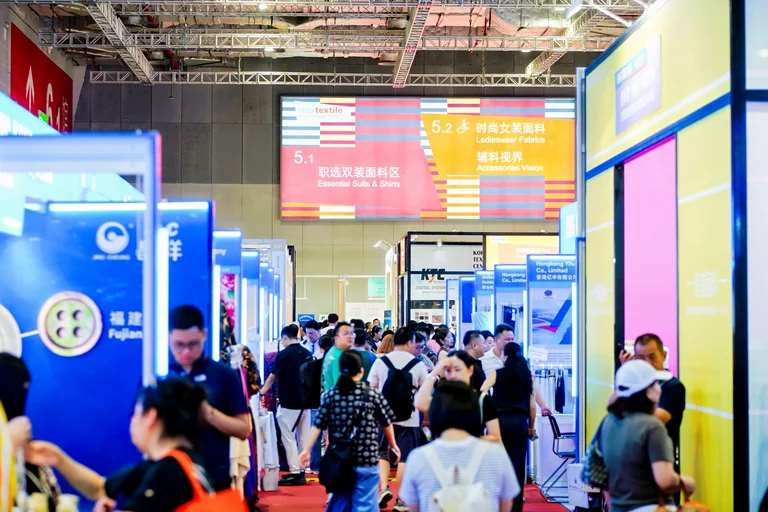
The new hybrid edition of Techtextil India will be held in Mumbai, this September. The event will connect technical textile players from across the globe through its multimodal platform. The combination of physical and digital platforms will enable exhibitors to connect with a wider audience, increase their market presence and expand their business alliances significantly.
The demand for medical textiles, particularly spun bond nonwovens have skyrocketed with the pandemic. Geotextile products in India have also experienced strong demand supported by government’s continual investments in the development of highways and roadways. With manifold opportunities lying ahead for the technical textile segment, it is crucial for players to increase their market presence and build networks to effectively leverage imminent demands.
Over the years, Techtextil India have been instrumental in uniting the technical textile fraternity and creating an atmosphere of collaboration through its physical platform. However, the new hybrid edition that is set to be held in September 2021 will not only physically, but also digitally unite exhibitors from the technical textile industry with key buyers and suppliers PAN India and worldwide.
While the physical fair offers the benefit of face-to-face interaction under strict observance of safety protocols, the digital platform will help exhibitors increase their brand exposure and interact with potential buyers from across the globe via features such as live streaming, video calls, live chats and more. Live product demonstration on dual platforms will further enables exhibitors to showcase their products and new emerging technologies to a vast array of business attendees.
The hybrid fair will also make collaborative engagements extremely simple through its AI assisted platform. Potential suppliers will be automatically matched when buyers launch product or service queries, following which virtual appointments can be set-up at a mutually agreed upon time.
Organiser of the fair, Messe Frankfurt India, is also looking forward to incorporate online panel discussions and knowledge programs to impart erudite market insights and rejuvenate confidence among players across the 12 application areas of technical textiles.
Currently the Indian technical textile industry is pegged at $19 billion (growing at a CAGR of 12 per cent since the past five years) and accounts to approximately 13 per cent of India’s total textile and apparel market. With new demands arising in the segment, the hybrid edition of Techtextil India 2021 will enable technical textile players to engage with businesses beyond geographical constraints, forge new alliances and gain specialised insights to strategically equip themselves for the new normal.
London Fashion Week confirms digital-only event in February
The British Fashion Council (BFC) has will go ahead with its February edition of London Fashion Week as an online-only event. In a bid to balance being Covid secure, while also ensuring fashion businesses continue to operate, the BFC has worked with the government to agree on a digital-only event.
Unlike last season, when a handful of brands staged socially distanced shows and intimate presentations, among them Bora Aksu, Mark Fast and Eudon Choi, February’s event will permit shows, presentations and installations to be filmed and photographed but not to take place with an invited audience.
Filming and shoots can at this stage continue under the COVID relevant secure guidelines, including Performing Arts, Shoot Guidelines and Filming Guidelines, however all permitted activity that involves interaction with individuals outside of immediate households is under constant review and these guidelines should be referred to regularly to ensure alignment with latest lockdown and tier levels, warns the organisation in a statement.
BFC CEO Caroline Rush, who’s fighting for an industry that is facing incredible difficulties post-Brexit, feels the government should engage to support the fashion industry. One of the main active requests made by Rush was to allow key creative and model talent to travel to and from the UK with a phased introduction of quarantine exemptions for the fashion industry, in order to carry out essential business, to protect the competitiveness of the British fashion industry.
London Fashion Week is not simply a glossy industry event dominated by influencers posing for street style photos, but also an invaluable opportunity for London’s brilliant fashion brands to showcase their work to international buyers and editors. Losing the physical aspect of the showcase – whether runway shows or opportunities for brands and buyers to meet in person and physically experience clothes and discuss orders – will inevitably be a blow for creative talents.
Despite falling production US cotton exports to China on the rise
US has had record shipments of cotton supporting a stronger US export forecast at 15.25 million bales (Mb), despite a drop in production by 5 Mb from previous year. Latest USDA report says, China accounted for almost half of US exports in the first five months, with the country’s total imports forecast at 10.5Mb bales, highest in seven years.
Moreover, China’s consumption is expected to recover 5.5Mb from the previous year and reach 38.5Mb, accounting for more than one-third of world use in 2020-21. China demand for US cotton has been mostly led by the State Reserve and State-owned Enterprises (SOEs), which accounted for over three-fourths of total imports of US cotton thus far in 2020/21.
Despite US prices being higher compared to Brazil and India (second and-third-largest exporters forecast in 2020-21), US sales and shipments to China through December exceeded previous year by more than 2.3Mb. Australia, another significant supplier to China, witnessed exportable supplies decimated by a 2020 drought. Like the US, Australia is a significant supplier of high-quality cotton to the world’s largest importer.
US exports are boosted this month and forecast to be mostly unchanged from the previous year due to a historic pace for shipments and resilient China demand, despite fewer shipments and sales to Vietnam and Bangladesh.
Fashionally and ITC store launch new collaboration
Fashionally.com, a non-profit local fashion platform pioneered by the Hong Kong Trade Development Council (HKTDC), has launched collaboration with the ITC store of The Hong Kong Polytechnic University (PolyU). The store showcases seven fashion brands from the Hong Kong Young Fashion Designers’ Contest (YDC), creating a brand-new online-to-offline (O2O) marketing and promotion channel to nurture business opportunities for local fashion designers at the start of the year.
From now to April, the ITC store X fashionally online store will feature a series of local fashion brand items including fabric face masks, women’s knitwear, leather clothing and accessories, and much more. Participating brands include Arto (designs by Arto Wong), Charlotte Ng Studio (Charlotte Ng), FromClothingOf (Shirley Wong), Kurt Ho (Kurt Ho), Lapeewee (Yannes Wong), Mum’s Design (Bicy Yeung) and phenotypsetter (Jane Ng). From now through April, ITC Store’s physical showroom will showcase exclusive fashion items from selected brands on a monthly basis, providing a new O2O shopping experience for fashion lovers.
The YDC aims to discover and nurture the next generation of young fashion talents in Hong Kong, providing a launch pad for them to showcase their designs.
Industry reaches out to Centre to help stabilise rising cotton prices
Textile and garment exporters and manufactures are finding it difficult to capitalise on the sudden spurt in demand for fabrics, garments and other textile products from the exports market. Exporters say, one of the main reasons for the crisis is the steep increase in cotton prices in global market.
Post-Covid, global textile market has opened up numerous opportunities for the Indian textiles and clothing industry mainly due to US sanctions on Xinjiang’s (China) cotton and cotton-based textile products. However, high cotton prices are a deterrent for exporters.
Since the spinning industry is left with no inventory and is struggling to reach pre-Covid levels amid continuing threat of the pandemic, there is a mismatch in supply and demand. There is a significant demand of yarns from garment makers. High demand has pushed the cotton prices northwards.
Perturbed over the high prices, the National Committee on Textiles and Clothing, which includes stakeholders of textile and clothing industry, has sought the intervention of Textiles Smriti Irani through a letter. Since the Cotton Corporation of India (CCI) has become a major player in cotton procurement, pricing methodology is essential to make the entire textile value chain competitive. The letter further states since fabric and garment exporters commit for orders over a longer period, the yarn prices need to be stabilised at least for a month. The CCI also needs to change the prices only on a monthly basis and ensure its stability.
Cifra launches antibacterial & antiviral garments
Demand for antibacterial and antiviral fabrics and garments have grown during the pandemic. Joining the bandwagon Italian manufacturing company, Cifra, has designed and produced a new generation of garments with antiviral properties made with the exclusive Q-Skin yarn powered by Amni Virus-Bac Off. It guarantees permanent anti-viral activity and therefore, protection from the risks of contamination.
The innovative yarn was developed in research laboratories of the Rhodia-Solvay Group and is distributed by Fulgar, a made in Italy excellence and leader in the sector of high-tech and eco-sustainable yarns, which has been working alongside Cifra in the creation of avant-garde solutions for clothing for several seasons now.
This polyamide yarn is effective against the proliferation of bacteria and the spreading of viruses, thanks to the antiviral and antibacterial agent permanently incorporated into its polymer matrix. According to several qualified studies, viruses can survive up to at least two days on textile surfaces. The electron affinity, together with proteins present in the external structure of viruses, causes this agent to prevent tissues from becoming a host surface for viruses and bacteria, thus helping to reduce the risk of contamination. The yarn’s antiviral properties have been tested by an independent laboratory following international textile protocols found in the ISO 18184 standard.
The technical characteristic of the new yarn ensures antiviral and antibacterial agents do not migrate onto the skin or into the environment. Unlike garments treated with dyeing finishes that have limited functionality that loses with washing, the antiviral and antibacterial properties of Q-Skin polyamide powered by Amni Virus-Bac Off are permanent, which is an added benefit for garments in that they remain unchanged over time, confirming the sustainability of the production process.
This special, soft, and easy to wash polyamide fibre also guarantees freshness and comfort, contributing to the thermal well-being of the wearer. WKS technology guarantees the practicality of seamless and warp-knit garments, truly unique in the sector, which is designed to offer differentiated functionality thanks to body-mapping. In terms of sustainability, each garment is designed and produced in Italy with STEP and Oeko-tex certification.