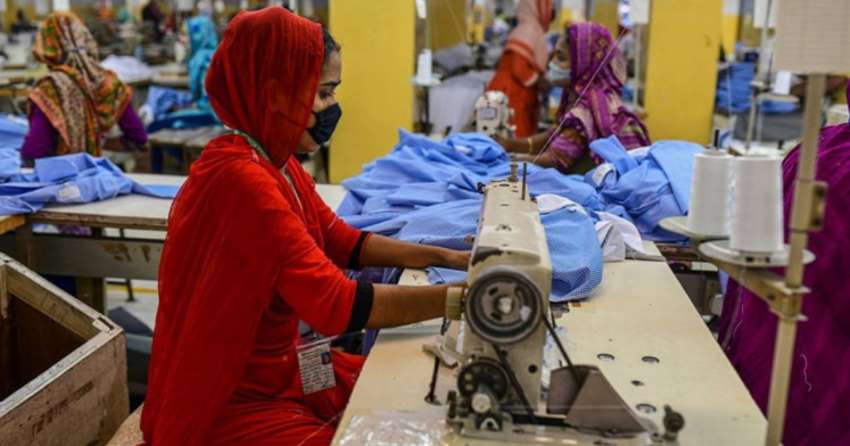
Accord will inspect 200 more garment factories in Bangladesh that were added to its list after completion of its initial assessment in September. It rolled out its initial safety inspection in February 2014 and completed assessment of some 1,103 factories in September 2014.
Accord is the European Union-based group with over 190 members including H&M and Inditex. The platform was formed to ensure workplace safety in Bangladesh’s apparel industry for a period of five years following the Tazreen and the Rana Plaza tragedies that killed more than 1,200 workers. On December 17, Accord sought a proposal from interested firms for carrying out fire, electrical and structural integrity assessment of 200 garment factories.
Accord has some 38 full-time permanent local engineers. After each factory is inspected for fire, electrical and structural safety, factory owners and signatory companies will develop a Corrective Action Plan, which will be published online after approval by Accord.
After its initial assessment, Accord found more than 80,000 safety hazards in its assessed garment factories. Accord inspections have also identified more substantial safety requirements, such as installing fire doors and automated fire alarm systems, establishing fire protected exits from factory buildings, and strengthening columns in the buildings.
- 1
- 2
- 3
- 4
- 5
- 6
- 7
- 8
- 9
- 10
The End of Geographic Masking: Shein and peers reclaim Made in China as a strate…
The era of the corporate ghost is ending. For years, the world’s most aggressive retail disruptors operated under ambiguity, relocating... Read more
$120 Crude, Zero Margin: How India’s textile hubs are paying the price
For India’s textile clusters, the current West Asia crisis is no longer a distant geopolitical headline. In Surat’s polyester corridors... Read more
Luxury under pressure as stagflation and geopolitics redefine the winners’ circl…
The 2025 earnings for Europe’s listed luxury majors have delivered a verdict that has far more implications than the prevailing... Read more
Luxury resale goes global, sneakers, handbags, archival fashion redrawing border…
The luxury resale market in 2026 is no longer a monolithic global block. According to the RB Insights January 2026... Read more
China out but can India deliver? The realities of the global sourcing shift
With the US imposing a flat 15 per cent tariff on Chinese imports under Section 122 as of February 2026,... Read more
Luxury in Retreat: Why the aspirational consumer is gone for good
The global luxury industry is confronting an unprecedented situation. The active consumer base, which peaked at 400 million in 2022,... Read more
The Invisible Bleed: How a single chemical is slowing India’s apparel machine
The global fashion industry has spent the better part of the past two years obsessing over visible disruptions viz. volatile... Read more
The Closet Paradox: How ‘nothing to wear’ is driving global overconsumption
In an era of overflowing wardrobes and instant fashion gratification, a striking paradox has emerged: the more clothes we own,... Read more
US trade rulings and labor slowdown reshape 2026 cotton supply chains
The global cotton industry is entering a period of adjustment, shaped by legal rulings, trade policy recalibrations, and a softening... Read more
Zero-tariff paradigm drives strategic re-sourcing at Global Sourcing Expo 2026
Projected to reach a valuation of $30.3 billion this year, the Australian textile and apparel market is entering a period... Read more