Daniel Lee gives Burberry new identity
Burberry has unveiled a rejuvenated identity under the direction of its newly appointed chief creative officer Daniel Lee.
Born and raised in England, Daniel Lee is an award-winning designer and one of the most exciting British creative talents of his generation. From 2018 to 2021, Daniel served as creative director at Bottega Veneta, where he helped reinvigorate the Italian luxury brand. He was previously director of ready-to-wear design at Celine, which he joined in 2012, and he has also worked at Maison Margiela, Balenciaga and Donna Karan.
He is an exceptional talent with a unique understanding of today’s luxury consumer and a strong record of commercial success. In his new role, Daniel will oversee all Burberry collections. He will present his debut runway collection at London Fashion Week in February 2023. Burberry is a British luxury brand. As the pandemic effect eases Burberry’s boutiques are all open back up fully.
Burberry has been pursuing a fusion between social media celebrities and the blockchain, including the launch of NFTs in the gaming world. Burberry’s ultra-savvy marketing drives are helping the company win new style-hungry customers across the world, desperate to get their hands on a slice of the brand and willing to pay full price for the privilege.
Paul Smith exits Russia
Paul Smith has decided to leave the Russian market. So the British brand will close its two stores in the country which were operated by a franchise partner.
In February 2022, on learning of Russia’s invasion of Ukraine, many brands took to cutting ties with suppliers and franchises in the region, or closing up shop altogether, in response.
UK fashion retailer Paul Smith has 130 stores in 70 countries and celebrated 50 years of independent design in 2020. Paul Smith is Britain’s leading independent design company. This is a British company with a global outlook.
Paul Smith champions positivity, curiosity and creativity. These qualities underpin every Paul Smith design, whether it’s a shirt, a shop or a special collaboration. Since Paul Smith products are crafted with fifty years of design knowhow, this experience informs everything it makes, from refined yet relaxed tailoring for men and women through to casual trainers, formal shoes and Paul Smith Junior pieces for young customers.
Days after the war began, Inditex decided to close its 502 shops in Russia, its second largest market after Spain, with more than 9,000 employees, and to suspend online sales in the country as a result of the Russian invasion of Ukraine.
Sri Lanka ends 2022 with a rise in apparel exports despite economic crisis

In the eye of an economic debacle that saw the implosion of the country’s stability, the apparel sector in Sri Lanka held its ground, closing the year 2022 with a 22 per cent growth in exports compared to the disastrous scenario in 2021. However, as expected, local sales have been low and retailers and manufacturers are seeing inventory stock piling. As per the country’s Joint Apparel Association Forum (JAAF), the first half of 2023 will be subdued as a controversy over the government’s plans of withdrawal of Gazette No 2041/10 of Licensing of Shipping Agents Act that protects importers and exporters from anti-competitive practices. JAAF is against this withdrawal and dissuading the government from going forward with the plan. Meanwhile the apparel segment revenue is projected to reach $424.50 million in 2023 and with an annual growth 15.30 per cent between 2023 and 2027. This will result in a projected market volume of $750.20 million by 2027.
Need to protect the sector
The government should not be influenced by a select few service providers who enjoy good relationship with the present authorities and not withdraw any market-friendly legislation that protects the apparel exporters’ interests in these fragile economic times, opine experts. In the long run, such random decisions would cause severe damage to the apparel sector.
The withdrawal of Gazette Notification No 2041/10 dated 17th October 2017 will result in the Minister of Ports abandoning his regulatory duties, such as protecting free-market competition and axing the cardinal principles of shipping where no price fixing is permitted; leading to increased costs of imports and adding to inflationary pressures. Additionally, Ministers should not have the power to punitively fix charges on transactions between private parties. The Minister must be an impartial regulator to protect the weaker party in the absence of equal bargaining power. Instead, the government has been advised to seek out as many FTAs as possible in the quickest manner.
Experts feel the only way to stay afloat is to ensure penetrating high-value markets with FTAs. The government has also been advised to help keep manufacturing costs down through incentives so Sri Lanka can continue to be competitive. For this reason, experts have advised the removal of bureaucratic red-tapeism and ease methods of doing business.
JAAF is rightfully concerned about the withdrawal of legislations that were a safety net for apparel exporters. They have raised concerns over apparent plans to end a regulation on shipping fees which they say protected them from wrongful charges from service providers. The original regulation was issued on the basis that the cost of carriage of containers from origin to destination must be identified as all-inclusive freight without dividing them into land costs and freight components, the service provider can only recover costs incurred from the use of the service to whom the service was provided, and not from a third party, with no such contractual liability and goods that landed at port could only indicate ‘Freight Pre-Paid’ or ‘Freight Collect’.
An increase in fabric imports from India
Meanwhile, the island nation saw an increase in fabric imports from India. While it may be attributed to the nation being grateful to India for its timely support during the worst days of the economic crisis, import of Indian fabrics increased almost 50 per cent. Sri Lanka’s fabric imports from India increased to $565.848 million in 2021 from $374.214 million in 2017, reveals a market study. Fabric imports from China to Sri Lanka were at $888.772 million in 2017 which increased to $897.101 million in 2021. In the first 11 months of 2022, Sri Lanka’s fabric imports stood at $2 .141 billion. China and India were the top suppliers with total contribution of more than 64 per cent. China’s import share was 38.73 per cent, while India’s share was 26.01 per cent of the total.
Myanmar faces garment export turbulence in a bifurcating economy
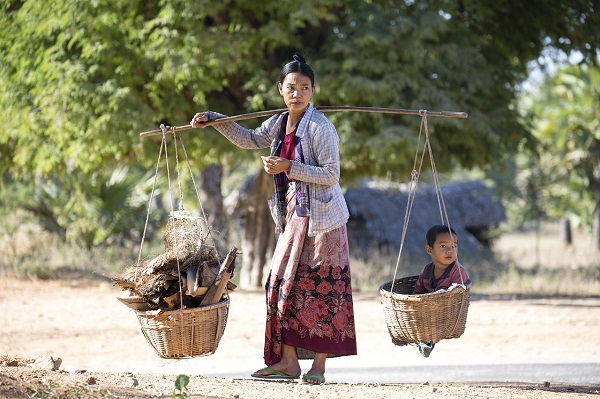
Global human rights organization are keeping a hawk’s eye on Myanmar as 1st February marks two years of military's takeover and the beginning of a nationwide state of emergency. The subsequent social and political turmoil has hampered the economy and stifled it almost completely. Social abuses are far-ranging from inhumane working conditions in factories, wage theft and violence leading to arbitrary arrest and killings.
During this bifurcating economy where on one hand, livelihoods of ordinary people are being badly affected but on the other, a few sectors, such as the garment industry, is moving toward some level of economic recovery. This is seen in the export records of garment products from January to September 2022 to the European Union, Japan US which was $3.3 billion or 1.6 times more than the same period a year earlier.
Companies continue operations
Although the Western governments have imposed sanctions on military-related companies, there are no legal restrictions for Western companies on dealing with partners in Myanmar. Thus the door to business is still ajar to many global apparel brands including H&M, Adidas and Uniqlo to continue ordering products from subcontractors in Myanmar. Companies in other sectors such as Unilever and Toyota Motor are continuing operations in Myanmar and giving a livelihood to factory workers and lower income categories.
According to the World Bank Economic Monitor, in 2022 the percentage of people living below the national poverty line in Myanmar reached 40 per cent, doubling from 20 per cent in 2019, due to the pandemic and military takeover. Weak economic activity is indicative of the range of constraints facing the Myanmar economy.
“Despite severe constraints, economic activity has picked up in some areas, demonstrating the adaptability of Myanmar’s businesses. However, industries more dependent on domestic demand are facing challenges from lower household incomes and rising prices, while agricultural production remains constrained by increased input prices, transport disruptions, and ongoing conflict,” says Kim Edwards, World Bank Senior Economist for Myanmar.
Many look for responsible exit
However, according to the United Nations Comtrade database, around 126 countries imported goods from Myanmar in 2021 which was slightly lower than 134 countries in 2020. Despite this, the total value of the countries' imports saw 7 per cent growth to nearly $21 billion, which shows the country’s exports in the first year of military control expanded sizeably despite international sanctions.
Experts feel it is time for Myanmar to closely cooperate with neighbours such as China, India, Thailand, Laos and Bangladesh to export its products. China had led the export boost as the largest customer for Naypyitaw, with purchases worth over $8 billion in 2021which was a 25 per cent increase from the previous year.
Given the ongoing political turmoil, many big retailers including M&S and Primark have taken steps to stop sourcing from Myanmar and are speaking to the fashion industry and garment workers' rights organizations about a responsible exit. Large UK retailers and other international retailers taking social responsibility and making a Modern Slavery Act submission and many others are expected to follow in the planned exit footsteps in the aftermath of the military coup. As the country faces a political and economic storm, apparel brands sourcing from the country currently remain confused about what the ‘Made in Myanmar” tag may hold for them from the global perspective.
“JAAF enabled favorable business environment amid challenges”, says Amalean, re-appointed Chairman
The Joint Apparel Association Forum (JAAF), the leading body for Sri Lanka's apparel industry, recently held its 19th Annual General Meeting, where industry veteran Sharad Amalean was re-appointed as Chairman. The Executive Committee was also unanimously re-elected, including Saifudeen Jafferjee and Felix Fernando as Deputy Chairmen.
In his Chairman's address, Amalean emphasized the importance of bringing in new, young leaders to drive the industry beyond 2025. He noted that JAAF's credibility has helped the industry work closely with the government and relevant authorities, contributing to a favorable business environment. Despite challenges faced in 2022, the textile and apparel sector recorded a turnover of LKR 5.5 billion.
Aroon Hirdaramani, past Chairman of the Sri Lanka Apparel Exporters Association, warned that 2023 will be a challenging year, with luxury brands expected to perform better than others. JAAF Secretary General Yohan Lawrence highlighted vital policy priorities and expressed concern over Sri Lanka's declining market share in the face of growing competition from Bangladesh.
JAAF is pushing for relaxation on rules of origin for the EU's GSP+ and UK's DCTS schemes. The AGM was also attended by JAAF's constituent associations, who thanked JAAF for its leadership during trying times and urged authorities to reassess measures affecting the industry's competitiveness.
EU Circularity regulations to curb rise of textile waste and GHG emissions in Pak's resale market
The export of textile waste and used clothing from the EU to countries such as Pakistan has increased due to fast fashion trends. In 2021, 46 million USD worth of used clothing was exported from the EU to Pakistan.
This lack of distinction between textile waste and second-hand clothing, along with the lack of regulations, has caused the rise of textile waste in landfills and an increase in GHG emissions and unsustainable water consumption.
The EU is now promoting textile circularity and regulating the export of textile waste. Pakistan has a large resale market for secondhand clothing and has the potential for recycling and redesigning used textiles. The introduction of recycling plants for recycled Polyester Staple Fiber (rPSF) has the potential to uplift the industry.
The EU's strategy for sustainable and circular textiles will greatly transform the textile production patterns in Pakistan and drive fast fashion out of fashion. The EU's strategy requires the industry to adopt resource-efficient processes and circular business models, with a focus on eco-design and recycling of used textiles. This will require skilled labor, efficient policies, and technical progress for recycling and treatment of used clothes.
The EU's stricter regulations will require tracking the origin of all textiles, and mandatory requirements for the second life of used textiles. The shift towards recycled secondhand textile products will ultimately help decouple textile waste generation from growth.
Karl Mayer introduces rigid Symm-Net lace for clothing
Karl Mayer, a textile technology specialist, has introduced a new lace called Symm-Net, which is characterized by an extremely precise and intricate appearance. The lace is made using a new multibar jacquard raschel machine, equipped with a split threaded jacquard bar and two ground bars, allowing for equal and counter-lapped patterns.
The Symm-Net lace is made using typical Chantilly yarns, including polyamide and 15% cotton, and is designed as a cross-band flounce on the MJ 92/1 B machine.
Lace expert Jamie Heather has used Symm-Net to create a rigid cross-band galloon for outerwear, relying on a delicate Chantilly-style design. He believes that Symm-Net's strength lies in its symmetry, which is particularly evident in designs with small holes and fine mesh structures. The new rigid Symm-Net patterns have received positive attention and Jamie Heather is already working on further developments, including several clip patterns.
Karl Mayer's Symm-Net lace brings clarity and balance to clothing, and is ideal for adding pizzazz to collars, cuffs, and inserts. The lace's visual clarity and fine mesh structures have been a hit with customers, making Symm-Net a must-have for the latest fashion trends.
Tonello launches EGO, next evolution in ozone garment treatment technology
EGO, a new ozone finishing system under the Tonello brand, offers simple and efficient garment treatment processes.
With its innovative features, it reduces water consumption by 80% and simplifies wastewater purification operations. This new technology is characterized by its ease of use, maintenance, and improved ozone generation system with a capacity of up to 3000 g/h.
EGO encompasses three different technologies for maximum flexibility and a wide range of aesthetic solutions. It is a strategic component in Tonello's "All-in-One System" and reflects their philosophy of constant optimization and responsible garment washing and finishing processes.
EGO is applied to Tonello washing machines, allowing for garment neutralizing without risk to the operator and with no loss of time.
Intimate Wash Care products market projected to grow 9.3% CAGR by 2032
The demand for intimate wash care products is projected to grow at a compound annual growth rate (CAGR) of 9.3% between 2022 and 2032, reaching a total of around US$7,922.4 million by 2032, says a study conducted by Future Market Insights.
This growth is driven by increasing awareness of the importance of health and hygiene in intimate areas, as well as government initiatives and health campaigns. Despite this growth, the market is faced with challenges such as the risk of allergies and other problems associated with intimate wash products.
North America is expected to be a leading market for intimate wash care products, with a market share of 17.4% in 2022, due to the growing demand for naturally formulated products. Europe is also a major market, with a share of 18.2% due to increasing disposable income and awareness of the risks of not maintaining intimate hygiene.
With about 20-50% of the women still using clothes and other substitute materials to manage intimate hygiene, to overcome these issues companies have scaled their capacity by introducing new products. Some of the leading players in the intimate wash care products market include Kao Corporation, Kimberly-Clark Corporation, Organic Glide Company, and others.
Companies have launched new products to meet consumer demand, such as Svish's line of products for men's intimate hygiene and Piramal Pharma's 'i-feel Gentle Intimate Wash', which is free of sulfates, paraben, and alcohol. Millennium Herbal Care has also launched GynoVash, a women's intimate wash brand that uses foam-based application for deep cleansing.
Premiere Vision to be held next week
Premiere Vision will be held in Paris, France, February 7 to 9, 2023.
With the return of exhibitors from Japan, Korea and China, plus an uptick in pre-registrations by attendees from inside and outside Europe, the outlook for the fashion world’s largest sourcing marketplace is positive in every one of its segments, which span fibers, fabrics, leather, accessories, design and manufacturing.The overall increase in exhibitors is 25 percent compared to February 2022, with more than 100 newcomers this year. There will be more Japanese and Korean exhibitorsand more than 40 Chinese weavers.
New at the textile marketplace, a barometer of the global supply chain, is sourcing by geographical zone, a deadstock purchasing itinerary and a dedicated Smart Tech area.The latter aims at helping designers, labels and sustainability teams decipher the explosion of digital solutions, particularly in traceability, which is an impending legal requirement. The show has reorganized its zone navigation by geography.
This spring/summer 2024 event is being held in the context of high inflation and rising sourcing environmental challenges. Inflation, the energy shock and the ongoing war in Ukraine are impacting companies across the fashion sector, as manufacturers grapple with rising operational costs. While luxury is resisting the slowdown, the entry-to-mid market is fragile.
More...
Pakistan textile exports fall 12 per cent
Pakistan’s textile sector exports fell by 12 per cent in January 2023 in comparison to the same month of the previous year.
The country’s textile exports in the first seven months of fiscal year 2023 decreased by eight per cent. The decline in textile exports is concerning for the South Asian economy, which is already facing depleting foreign exchange reserves.
The textile sector, the single largest manufacturing sector of Pakistan, is confronted with numerous challenges. The worsening international economic situation primarily caused by the Ukraine crisis combined with floods in Pakistan has negatively impacted the already inefficient supply chains of the country. Flooding in dozens of districts of Pakistan has destroyed a wide swath of agricultural land.
While the industry requires 14 million bales of cotton, the country could only produce five million bales domestically.To meet this gap cotton needs to be imported. However forex issues in the economy have curtailed imports of cotton and other essential inputs for exports. The issue of raw material clearance from the ports remains unresolved owing to unavailability of forex and therefore mills are currently unable to obtain cash against documentation and are closing down owing to the shortage of raw materials.
Turkey aims at meeting sustainability targets
The apparel industry of Turkey is going green. The approach will be based on a circular economy, adopting the principles of raw material efficiency and renewable energy use.
More than 40 per cent of Turkey’s total exports are to the EU countries and the ratio for apparel exceeds 60 per cent. EU countries are of vital importance for the country’s exports.
Turkey’s apparel industry has a zero carbon target by 2050. In order to reach this target, the sector is bringing its design, innovation and branded production under green principles as EU-based companies are restructuring their supply chain on the basis of sustainability criteria.
In this emerging green supply chain, apparel products will have to be long-lasting, recyclable and eco-friendly. To protect and increase its market share, the industry is making its preparations with this fact in mind and is rapidly transforming its infrastructure.However the apparel industry has already completed many projects and has been having ongoing projects on sustainability for years.
Turkey is one of the rare countries in the apparel supply chain where all apparel products from fiber to final product are produced. Turkey also distinguishes itself from its competitors with its design power, quality, proximity to target markets and strong supplier infrastructure.
Nigeria rebrands cotton farming
Nigeria is rebranding cotton farming.
The aim is to make cotton farming attractive to the younger population.Nigeria is revamping the cotton value chain.The golden age of cotton and textile was truncated after Nigeria discovered oil, which led to the closure of the popular Kaduna textile and other textile factories across the country.
Subsequently due to interventions in the cotton and textile value chain production increased from 80,000 metric tons to 133,000 metric tons. The number of factories in operation rose from seven to 23. The value of Nigeria’s cotton lint exports reached $64 million as of November 2022. An executive order mandating the military to patronise local textiles in producing their uniforms has also been a contributing factor to the growth of the cotton and textile sector. Some 24 states currently produce cotton in Nigeria. The country has developed two varieties of transgenic cotton. These are aimed at addressing the issues of low yields, high production costs and insect attacks on cotton farms.
However the revamp of the cotton, textile and garment sector significantly hinges on reducing smuggling at the country’s borders. Finished cotton products are being smuggled into the country. So the National Cotton Association of Nigeria (NACOTAN) has urged for more aggressive control at the country’s borders by setting up an anti-smuggling task force.
India’s athleisure and sportswear market to reach $40.64 billion by 2027: Study

Global consultancy Research and Markets has pegged an estimated $27.89 billion in 2022 for India's sports equipment, footwear and apparel market and by 2027 it is expected to reach $40.64 billion growing at a CAGR of 7.82 per cent.
Growth drivers
So, what is driving this healthy growth? For a start, the two years of working from home has raised awareness levels about sports and fitness significantly. Even the average urban couch potato has risen to attempt at a fitter lifestyle. Secondly, awareness has benefitted as India sees more organized community activities and sports events. Growing access to online retail platforms has exposed the Indian consumer to trendy athleisure and accessories that look good and promise to be comfortable.
However, while the change is more visible in adults market, the kids market does not show the same enthusiastic growth as Indian kids seem more inclined towards video games rather than real ones. Indian retailers vouch this fact as they state despite life returning to normal, fervent festive clothing and occasion wear sales between September and December 2022, athleisure and sportswear held their ground.
In fact it is quite the trend to mix a piece of athleisure wear with formal clothing, particularly footwear. As Venu Nair, MD and CEO Shoppers Stop points out, India’s casual wear space has really expanded and will continue do so in the foreseeable future as the casualization of attire continues in India’s post-Covid life. He feels, Indians now see no reason to look casually smart and feel wonderfully comfortable all at once. Shoppers Stop has witnessed that despite festive and wedding season purchases, athleisure and sportswear just kept selling.
Jubi Samuel, Senior Director, Myntra’s sports division says, more brands are designing and producing trendy and comfortable wear, being inclusive with sizes and creating lines of wear anywhere and every day kind of clothing. And tapping the lucrative market, Bollywood sar Akshay Kumar recently launched his leisure line of T-shirts, sweat shirts and caps called Force IX. Retailed online exclusively through Myntra, the brand targets consumers looking for trendy street and casual wear. Experts say, with a young population with higher disposable income, athleisure and sportswear will have a good run ahead.
Global trend also simila
Data from research company SkyQuest shows, globally, the athleisure and sportswear market is expected to reach $548 billion by 2028 from $326 billion in 2021, growing at a CAGR of 8.4 per cent, slightly higher than the Indian CAGR. Athleisure is a popular category because it appeals to several broad trends, such as the global shift toward consumers wearing more casual attire, the desire for comfortable clothing, and the increase in athletic activity among health-conscious consumers who need performance clothing for these activities.
Sales of athleisure and sportswear have received a robust boost from online retail platforms that continue to be the largest distribution channels for this category. The online distribution segment witnessed a 16.3 per cent surge in sales in 2021 and experts feel this will continue for the forecasted period between 2021 and 2028. The Asia Pacific region is anticipated to develop significantly as concerns about leading healthy lives among people increases. Additionally, the region’s athleisure market growth is growing due to increased foreign brand penetration, rising disposable income, and a desire for better lifestyles. The North American region is anticipated to have a significant market share due to rising health and fitness concerns.