Uniqlo to open 200 stores in North America
Uniqlo plans to open 200 stores in North America by 2027. The brand currently operates 72 stores across the US and Canada. It plans to open over 20 stores, taking the brand’s total store count to 92 by the year-end.
A few of the locations that the brand aims to open stores in 2024 include Providence, RI, in Spring 2024, a new market for the retailer, Tacoma Mall, Tacoma, Wash.; Alderwood Mall, Lynnwood, Wash.; South Shore Plaza, Braintree, Mass., and Staten Island Mall, Staten Island, New York.
Reasons for Uniqlo’s growth in the North America market vary from a focus on branding and customer interactions to providing superior products at valuable prices to customers, says Masahiko Nakasuji, Executive Officer, Fast Retailing Group and Head-Marketing, Uniqlo North America.
Since the opening of its first store in 2005, Uniqlo has grown a steady customer base in North America. It has also established its own brand concept, called LifeWear to offer iconic products and enhanced store experience to customers.
In 2022, Uniqlo North America opened an on-site repair service at its New York City flagship in SoHo. Called Re.Uniqlo Repair Studio, the hub can replace shirt buttons, mend seam rips and patch holes, among other services at a cost of $5. A part of the Re.Uniqlo program, the studio promotes a circular apparel system hallmarked by the four Rs: reduce, replace, re-use and recyle.
Winners and losers in 2023, countries re-shuffle in global apparel trade of exports, imports
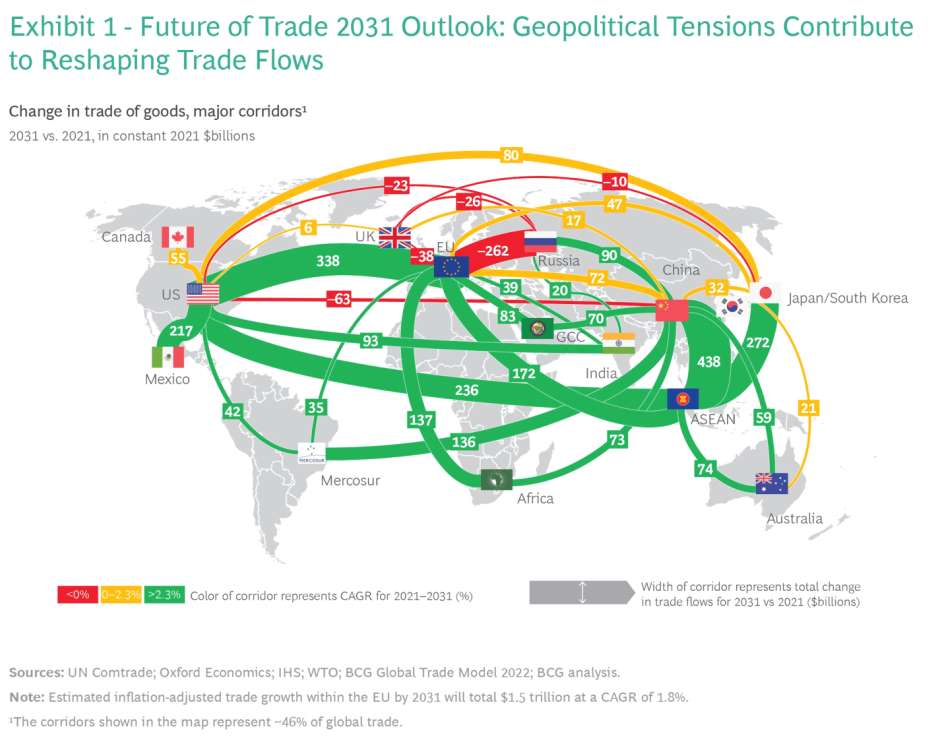
The year 2023 witnessed a dynamic tango in the global apparel trade, with export and import melodies weaving a complex symphony of triumph, transformation, and unexpected notes. Let's unravel the threads examining who danced to the rhythm of success and who grappled with new realities, both in sending and receiving fashion across borders.
Export: A Shifting Balance of Power
Top Gainers
• Vietnam: The undisputed maestro, Vietnam maintained its export dominance with a vibrant 15% growth. Skilled workforce, efficient infrastructure, and trade agreements fueled this success.
• Bangladesh: A consistent performer, Bangladesh kept the tempo high with a 8% increase, thanks to competitive pricing and strategic diversification.
• Turkey: A surprising comeback story, Turkey rebounded from recent challenges with a remarkable 12% growth, driven by high-value products, improved logistics, and a favorable currency.
Top Losers
• China: The long-reigning export king faced its first significant stumble in decades, with a 5% decline. Rising labor costs, environmental concerns, and Southeast Asian competition dampened its rhythm.
• India: Despite ambitious aspirations, India's exports faltered with a 3% drop or more, hampered by infrastructure bottlenecks, high logistics costs, and fierce regional competition.
• Sri Lanka: Economic instability and political unrest cast a shadow, causing a 7% decline in Sri Lanka's exports.
Import: Reshuffles across the Globe
Top Gainers in Imports
• United States: The insatiable fashion consumer, the US maintained its top spot with a steady 2% import increase, driven by a diverse appetite and global price competitiveness.
• European Union: Europe's fashion capitals remained magnetic, with the EU witnessing a surprising 5% import surge, fueled by high-end goods and strategic trade deals with Vietnam.
• Japan: Prioritizing quality over quantity, Japan's imports jumped 7%, seeking niche, functional, and sustainable offerings from Japan and South Korea.
Top Losers in Import
• China: The manufacturing powerhouse surprisingly saw a 4% dip in imports, reflecting a focus on domestic production and self-sufficiency.
• Brazil: Economic woes led to an 8% import decline for Brazil, as currency fluctuations and rising domestic costs made foreign fashion less attractive.
• Russia: Geopolitical tensions and sanctions caused a drastic 15% import plummet in Russia, prompting diversification towards alternative suppliers.
Factors orchestrated these dynamic shifts:
• Shifting consumer preferences: Sustainability, ethical choices, and fast-fashion trends influenced production and import locations.
• Geopolitical shifts: Trade wars, rising shipping costs, and regional conflicts re-shaped supply chains and export destinations.
• Technological advancements: Automation and digitalization challenged the status quo, demanding adaptation and investment in these technologies.
Looking Ahead: A Collaborative Future
The global apparel trade promises a vibrant choreography in the coming years. Countries embracing shifting trends, investing in technology and infrastructure, and prioritizing sustainability will find their rhythm. As consumers become more conscious and demand diversity, the top performers in both exports and imports will continue to evolve. The future of this intricate dance lies in collaboration, innovation, and a shared commitment to a sustainable and ethical fashion landscape.
Panipat textile and blanket exports to surge by 20%
This year, Panipat’s textiles and blanket exports are expected to increase by 20 per cent as compared to previous years, says Preetam Singh Sachdeva, President, Panipat Industrial Association.
According to Sachdeva, there are over 125 units manufacturing blankets in the town, especially both Mink and Flamo blankets having much demand not only in domestic market as well as in other countries due to better in quality as well as prices competitive as comparing to the blankets manufactured in China. The blanket industry records an annual business worth Rs 6,000 crore in international markets, supplying goods in United States, United Kingdom, Australia and many other countries.
Vinod Dhamija, President, Chamber of Commerce & Industry, notes, since the outbreak of the corona epidemic, foreign buyers have been diverting form Chinese manufacturers to those in Panipat. The blankets offered by these manufacturers are not only cheaper but also better in quality. This is resulting in a drop in procurement from the Chinese manufactures, adds Dhamija.
Declining sales of textile goods and blanket manufacturers in China are compelling a large number of manufacturing units in the country to shut down, adds Dhamija Panipat manufacturers consume nearly 1,250 tonne thread daily with this trend growing day by day.
Apparel retailers witness muted demand during Christmas
Despite malls witnessing an uptick in footfalls during the Christmas weekend, consumption across apparel category remained muted.
Apparel retailers witnessed a subdued demand during the October-November festive season as consumers continued to spend with caution. While demand surged during Christmas, the weakness in consumption spilled into December.
This year, consumers seem to have directed their spending to other essential categories. However, this may normalise next year, says Rajneesh Mahajan, CEO, Inorbit Malls.
Footfall in malls remained below expectations at 12 per cent of last year, notes Pushpa Bector, Senior executive Director, Head - Luxury and Shopping Malls, DLF Retail. Brands declared early discounts on account of weak winters which helped boost sales. The company expects sales to grow by over 15 per cent this year, she adds.
To boost demand, brands pre-poned their end-of-season sales. The like-to-like sales of a few companies stablised. However, conversion on apparel remained low compared to previous years, adds Akhil Jain, Executive Director, Jain Amar, which retails a women’s fashion brand Madame.
Demand for fashion and gadgets remained strong, says Jayen Naik, CEO, Nexus Select Trust, the operator of portfolio of premium malls. The retailer recovered almost 130 per cent of its revenues before holidays. It expects fashion, jewelry, and gadgets to perform strongly this holiday season.
China’s garments and accessories sales grow by 11.50% during Jan-Nov ‘23
Data released by the National Bureau of Statistics of China, shows, sales of garments and accessories grew by 11.50 per cent Y-o-Y from January-November 2023 to RMB 1,259.50 billion ($ 177.93 billion).
Specifically in November 2023, China’s revenues from garments and accessories surged by 22 per cent to RMB 150.30 billion ($ 21.23 billion).
The nation’s cumulative retail sales, during the period, grew by 7.20 per cent to RMB 42,794.50 billion or $6.045.72 billion.
In November 2023 alone, China’s retail sales surged by approximately 10.10 per cent, to RMB 4,250.50 billion or $600.48 billion.
China’s retail growth in 2023 aligns with the shifting sentiment of Chinese consumers to increase their spending on apparel and fashion accessories.
Make urgent policy changes for uninterrupted access to raw materials: President, ITMF
KV Shrinivas, President, International Textile Manufacturers Federation (ITMF) urged the Indian government to make urgent policy changes to ensure uninterrupted access to raw materials at competitive rates.
The Indian textiles and clothing industry has been facing significant challenges related to raw materials, including cotton and man-made fibres, and a drastic increase in power costs across various manufacturing states, said Srinivasan. He urged the government to remove the 11 per cent import duty on cotton, addressing the Quality Control Order (QCO) and price issues concerning PTA, MEG, Polyester, and Viscose, to establish a level playing field for the industry. He also condemned the government’s move to enforce QCOs on raw materials, stating it had negatively impacted the man-made fibre value chain.
Further, Srinivasan said, the government’s substantial incentives for new investments were making the industry’s existing capacities financially nonviable. India is the second-largest producer of raw materials. However, the country is yet to leverage this advantage, while neighboring countries like Bangladesh and Vietnam, lacking such resources, have experienced exponential export growth rates, he added.
US trouser imports plunge 27.45%, posing challenges for top exporters
In the period from January to October 2023, the United States encountered a significant 27.45% year-on-year decrease in trouser imports, tallying up to a worrisome $5.64 billion loss in the total value. This downturn raises concerns for global trouser exporters reliant on the US market.
Amid this challenging landscape, Vietnam managed to retain its lead as the top exporter to the US, despite a 29% decline, with exports totaling $3.02 billion. Bangladesh, the second-largest exporter, faced a substantial drop of 29.74%, reaching $2.57 billion, intensifying the competition with Vietnam in a sluggish market.
China, Indonesia, and India also grappled with significant declines in trouser exports, marking a broader trend of economic challenges in the global apparel industry. The industry now faces the critical task of navigating these hurdles and adapting to the evolving dynamics of international trade.
WHP Global secures G-Star RAW in key European expansion
WHP Global has successfully acquired G-Star RAW, marking a pivotal step in the New York-based brand management company's expansion into the European market.
The move includes plans for a new Amsterdam office. With the original owners retaining a minority interest, G-Star RAW's leadership, led by CEO Rob Schilder, will continue overseeing operations.
This marks WHP Global's third successful venture in 2023, bringing their portfolio to over ten brands with a cumulative global retail sales exceeding $7 billion.
In a separate development, WHP Global has entered a long-term licensing agreement with Fashioncenter, a Schmidt Group subsidiary, to enhance Lotto's presence in Central Europe.
Xinjiang dominates China's cotton production for over two decades
Xinjiang Uygur autonomous region in Northwest China maintains its stronghold on the nation's cotton output, surpassing 5.1 million tons this year, marking over 20 years of uninterrupted leadership.
The National Bureau of Statistics reveals Xinjiang's output constitutes a remarkable 89.5% of the country's total, driven by a 2.5 million-hectare planting area.
Boasting unique natural conditions, Xinjiang emerges as China's foremost high-quality cotton production hub, orchestrating a shift in the nation's cotton landscape since the 1990s.
The region's adoption of mechanized and intelligent cotton planting reflects advancements, positively impacting the livelihoods of growers and textile workers alike.
Italy’s fashion sector grows to €111.7 billion in 2023
Data from Italy’s fashion sector body, Confindustria Moda shows, turnover of Italy’s fashion sector grew to €111.7 billion in 2023 as compared to 2022. However, the growth was solely restricted to values as sales volumes registered a notable decline.
Italy’s apparel exports grew by 5.1 per cent €54.5 billion in the first eight months of 2023 compared to the same period in the previous year. Exports to the European Union grew by 47 per cent, while exports to non-EU regions covered 53 per cent. Confindustria Moda expects Italy’s exports to China to suffer with demand for domestic products rising in the country against imports,
Despite the growth in revenues, the fashion sector in Italy continues to suffer from a reduction in profit margins due to rising energy and raw material costs. Though energy costs are expected to return to pre-COVID levels, the industry remains uncertain over the future of raw material costs.
Acknowledging these challenges, Ercole Botto Poala, President, Confindustria Moda urges the industry to make collaborative efforts to address shared needs in training, sustainability, and innovation, preparing for the sector's future challenges.
More...
Luxury apparel 2023: From Milan to Mumbai, the world is the new catwalk
Forget your traditional fashion capitals! In 2023, the world's most captivating runways stretched far beyond the cobbled streets of Milan and the Champs-Élysées. From the vibrant bazaars of Mumbai to the sun-drenched shores of Rio de Janeiro, local designers and age-old traditions took center stage, redefining luxury fashion with a kaleidoscope of cultural influences and sustainable practices.
As 2023 gracefully twirls towards its finale, the global luxury apparel industry finds itself draped in a tapestry woven with shimmering threads of reinvention, resilience, and a dash of uncertainty. Let's embark on a sartorial odyssey, unraveling the key trends that defined the year and peeking into the crystal ball for 2024's prospects.
Comfort Takes the Crown: The pandemic's lingering touch painted a new chapter in luxury, where loungewear shed its sleepy connotations and strutted onto center stage. Loro Piana's cashmere tracksuits and Brunello Cucinelli's elevated sweats redefined cozy chic, proving that indulgence can bloom even in relaxed silhouettes. The trend's reign shows no signs of waning, with activewear giants like Lululemon ($384.29, -0.54%) venturing into the luxury realm through collaborations with brands like Roksanda.
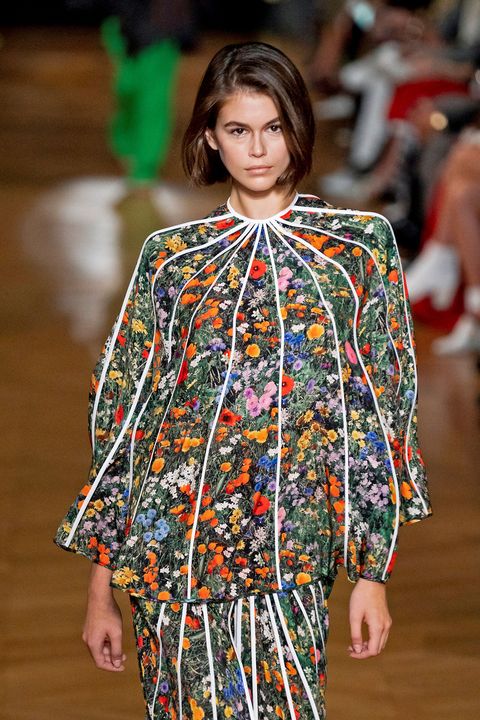
Sustainability Stitches a New Narrative: Eco-conscious consumers flexed their buying power, propelling brands like Stella McCartney and Gabriela Hearst to the forefront. Upcycling, once relegated to the realm of niche labels, became a boardroom buzzword, with luxury giants like Dsquared2 and Gucci breathing new life into pre-loved garments. This eco-awakening isn't a passing fad; expect innovative materials like Econyl and plant-based dyes to become the new black in 2024.
Digital Threads Weave a New Reality: From virtual try-on sessions powered by Zegna's Try-On Mirror to Burberry's AR filter fashion shows, technology became the industry's new runway. Livestream shopping, a phenomenon ignited by platforms like Douyin and WeChat in China, is rapidly seeping into Western markets, with luxury houses scrambling to adapt. As we step into 2024, the metaverse beckons, with the likes of Ralph Lauren and Prada prepping for a future where virtual wardrobes become coveted possessions.

Regional Riches Reimagine Luxury: Borders blurred as local treasures adorned global catwalks. Valentino's embrace of Japanese kimono motifs and Dior's ode to Indian embroidery shattered the confines of Eurocentric fashion. African designers like Thebe Magugu and Kenneth Ize painted the world with their vibrant narratives, proving that cultural heritage is the ultimate luxury. This trend promises to blossom in 2024, with collaborations and cross-pollination becoming the new normal.

Redefining the Lexicon of Luxury: The very definition of luxury is undergoing a metamorphosis. While impeccable craftsmanship and exclusivity remain hallmarks, inclusivity and social responsibility are gaining equal billing. Gucci's Chime for Change and Chanel's Métiers d'Art initiatives are testaments to this evolving landscape. Expect to see more purpose-driven partnerships and philanthropic endeavors in 2024, as conscious consumers seek brands that align with their values.
Challenges and the Road Ahead: The path ahead isn't without thorns. Inflationary pressures and geopolitical uncertainties could dampen consumer confidence. Supply chain snarls continue to cast a shadow on production and logistics. Yet, the industry's inherent adaptability and relentless innovation offer a beacon of hope.
Prospects and Outlook for 2024: The coming year promises to be a kaleidoscope of change and opportunity. Brands that prioritize personalization, curate seamless omnichannel experiences, and foster a sense of community will likely waltz ahead. Embracing technology not just for sales but for storytelling and emotional connection will be key. Remember, in the ever-evolving world of luxury apparel, the threads that win hearts are woven with empathy, purpose, and a dash of audacious imagination.
Data and Statistics:
• According to Bain & Company, the global luxury apparel market is expected to reach €336 billion ($358 billion) by 2025, growing at a CAGR of 6%.
• The Asia-Pacific region is expected to be the fastest-growing market, driven by the rising middle class and increasing disposable income.
• Online sales are expected to account for an increasing share of the market, reaching 30% by 2025.
• Sustainability is becoming a major priority for luxury brands, with consumers increasingly seeking
Bangladesh RMG exports decline consecutively for five months: BGMEA
RMG exports by Bangladesh have been declining continuously since the last five months. As per a report by the BGMEA, exports of knitwear and woolen garments combined declined to $4,360 million in June 2023 from $6,165 million in October 2022.
According to factory owners, reduction in purchase orders by 20 per cent is one of the major reasons for the decline in RMG exports by Bangladesh, says Rakibul Alam Chowdhury, Vice President, BGMEA
A 35 per cent increase in production cost including workers increased wage, together with lack of purchase orders is likely to lead to many factories closures in the next three months, he adds.
According to an analysis of Monthly Utilisation and Declaration Report of Readymade Garment Exports, as well as date of BGMEA, BKMEA and Chattogram EPZ, Bangladesh’s RMG exports decreased by 13.93 per cent in October due to lack of export orders resulting from global economic recession and the recent increase in garment workers wage by 56.25 per cent.
Also due to delayed and slow purchase orders, exports got delayed leading to a delay in payments. As per BGMEA data , Bangladesh’s apparel exports decreased consistently in last five months.
In June, Bangladesh’s RMG exports stood at $4,360 million. These decreased to $3,943 million in July.to further increase by$91 million to $4,444 million in August, In September 2023, Bangladesh RMG exports declined to $3,618 billion before increasing once again in October.
Export data of Chattogram EPZ shows, RMG exports stood at $ 219 million in June, and $153 million in October. In September, value of exports from Ctg EPZ increased to $150 million, from $172 million in July. The value of exports increased to $181 million in August.
Syed Mohammad Tanvir, Managing Director, Pacific Jeans warns, increased production cost together with increased workers’ wages will make it very difficult for the owners to run their factories in future.
E-commerce ad revenues increase by 39 % in fiscal 2023: Tofler
Data filed with the Registrar of Companies shows, the cumulative ad revenue of e-commerce giants Amazon and Flipkart rose by 39 per cent to Rs 8,705 crore in the fiscal year through March 2023.
The ad revenue of Amazon Seller Services grew by 29 per cent to Rs 5,380 crore, according to the RoC filings sourced from business intelligence platform Tofler. Ad revenue of Flipkart Internet, the marketplace arm of Flipkart, rose by 60 per cent to Rs 3,325 crore.
India’s digital ad revenue is is expected to increase by 13.8 per cent to Rs 56,703 crore in 2024, according to a Magna Global
Uday Sodhi, Senior Partner, Kurate Digital Consulting notes, increasing ad spends on ecommerce platforms allows brands to target their audience more effectively on the basis of category, brand and user behavior.
According to an Amazon spokesperson, customers’ fluid movement between browsing, streaming and purchasing across channels and devices, makes the digital landscape more complex.
Shashank Rathore, Vice-President – E-commerce, Interactive Avenues, the digital arm of IPG Mediabrands India, adds ecommerce as an ad platform now rivals performance marketing giants like Google and Facebook.
Hareesh Tibrewala, CEO, Mirum India, avers, ecommerce portals are proving as a valuable touch point for brands, encouraging them to increase their investments in such platforms. In future, ad revenues are like to shift from social to other channels like e-commerce and OTT, he adds.
Vishal Chinchankar, CEO, Madison Digital adds, brands on e-commerce platforms benefit from a sophisticated mix of creativity and data
India’s cotton production declines to 15-year low in 2023-24: CAI
Poor yields caused by use of outdated technology for BT cotton seeds and erratic weather and pests have lowered India's 2023-24 cotton production to a 15-year low due, said Atul Ganatra, President, Cotton Association of India (CAI), at its Annual General Meeting.
India’s cotton production declined by 8 per cent to 294.10 lakh bales of `170 kg each this year as compared to last year. This has tightened our balance sheets adds Ganatra.
According to Ganatra, the biggest challenge before Indian cotton traders is increasing n production. This year, India’s lint production is expected to drop to 396 kg of lint per hectare i.e 2.33 bales of170 kg each per hectare which is very low compared to the world’s average yield of 675 kg lint per hectare, he adds.
The main reason behind this is the use of outdated BT seed technology, opines Ganatra. Climate change and El Nino are also hurting India’s cotton crop in a big way as 73 per cent of its area is non-irrigated. Also pink ball worms’ attacks lower yields, he adds.
The government’s policy of granting subsidies for mills expansion is helping boost their capacities. Cotton consumption in India is also expanding with the addition of almost 20 lakh spindles each year, Ganatra notes.