Trident Group roped in as the silver sponsor for Bharat Tex
A prominent player in global textile manufacturing, Trident Group has being roped in as the Silver Sponsor for the forthcoming Bharat Tex event, scheduled from February 26-29 at the Bharat Mandapam and Yashobhoomi in New Delhi.
With India’s textile industry poised to reach $350 billion by 2030, growing at a steady CAGR of 10 per cent, this event emerges as a crucial platform to delve into the sector’s immense potential. Trident will unveil its innovative products and sustainable practices at the exhibition.
The group’s participation in this global event underscores a steadfast commitment to nurture growth and innovation within the textile industry, reflecting the government’s unwavering support for pivotal economic sectors.
Trident Group's presence at Bharat Tex exemplifies the essence of Atulaya Bharat and underscores India’s stature as a reliable textile manufacturing hub across the entire value chain, from cultivation to international markets.
In resonance with the event’s overarching theme, Trident Group will showcase its craftsmanship, embodying a seamless blend of tradition and eco-consciousness.
Attendees at the exhibition will encounter a diverse array of eco-friendly collections and sustainable manufacturing practices, providing a comprehensive glimpse into the company’s commitment to sustainability.
Marks & Spencer launches campaign for new denim collection
Reshaping notions of versatility and inclusivity, Marks & Spencer has launched an innovative campaign to showcase its assortment of latest denim pieces, from trench coats to tailored skirts. With sizes spanning from 6-24, and offering three different leg lengths of petite, regular and long, the collection pledges to adorn every body type with grace and ease.
The latest collection by Marks & Spencer transcends conventional denim boundaries, seamlessly blending pieces that effortlessly integrate into both formal and casual wardrobes. Trench coats, tailored items, skirts, and a myriad of denim silhouettes highlight the fabric's adaptability across various seasons and occasions.
This versatility extends beyond just wearability; it encompasses the range's inclusivity and sustainability endeavors. The array of sizing options ensures that everyone discovers their ideal fit, shattering barriers and establishing a fresh benchmark in fashion inclusivity.
At the core of Marks & Spencer's denim campaign lies a steadfast commitment to environmental stewardship. Each garment in the collection is crafted from cotton sourced from the Better Cotton Initiative (BCI), underscoring the brand's dedication to diminishing its ecological impact.
The BCI's mission to enhance global cotton production for the benefit of workers, the environment, and the sector's future aligns closely with Marks & Spencer's principles. By opting for BCI cotton, the brand guarantees that its denim pieces are not just chic and adaptable but also crafted with conscientiousness for the planet.
The collection's expansive array of pieces underscores Marks & Spencer's insight into the contemporary consumer's requirements. From the impeccable denim trench coat that injects sophistication into any ensemble to the tailored skirts promising comfort without sacrificing style, the brand presents a denim narrative that is both compelling and comprehensive.
The inclusion of varied leg lengths further enriches the collection's appeal, ensuring that customers no longer need to compromise on fit. Whether dressing for a laid-back outing or a formal gathering, Marks & Spencer's fresh denim collection offers solutions that are both trendy and practical.
Uniqlo to launch Spring/Summer collection in Paris
Global apparel retailer, Uniqlo is set to launch the Uniqlo U 2024 Spring/Summer collection, designed by Artistic Director Christophe Lemaire and the R&D team in Paris. To be available in India from March 8, the collection features a calming palette of subtle colors, creating a flexible wardrobe of technicity, protective layers, and future classics.
The Uniqlo U 2024 Spring/Summer collection emphasises lightweight volume, generous fabrics, iconic basics, and utilitarian garments with innate elegance, offering a simplified, modern wardrobe as an antidote to the demands of everyday life. The range includes a wide array of tonal looks and combinations in sage, celadon tints, mellow purples, bright khakis, creamy whites, and sorrel browns.
The men's and women's design teams collaborated to create genderless essentials, including the Utility Hooded Coat and the Boxy Tailored Jacket, featuring boxy silhouettes and a muted color palette for easy dressing for any body type.
This season the brand introduces the Uniqlo U Women’s Supima Cotton Crew Neck T-shirt and the Men’s AIRism Cotton Crew Neck T-shirt in fresh colors and fit. The brand has also updated its sports utility wear has also been updated, to include adaptable options like AIRism UV protection T-shirts and leggings for women, and Dry-EX T-shirts, tank tops, and shorts for men.
With a lineup of 19 items for women, 23 items for men, and 4 accessories, the majority of the Uniqlo U 2024 Spring/Summer collection is designed to be genderless, providing a versatile and functional wardrobe for the modern consumer.
Hyosung FDC unveils FW 25/26 Textile Trend report
Hyosung's Fashion Design Center (FDC) has unveiled its highly anticipated FW 25/26 Textile Trend report, signaling a strategic shift towards sustainable textile solutions amid global climate change and the rising cost of living.
Gary Oh, Team/General Manager, Hyosung FDC, underscores consumers' growing preference for durable, multi-functional garments that minimise carbon footprint and promote energy efficiency. To address these evolving consumer demands, FDC has presented three thematic trends for FW 25/26, leveraging Hyosung's creora and regen brands of spandex, performance nylon, and polyester yarns. These themes include:
Minimal for Future: Focused on versatility and sustainability, this theme advocates for seasonless, genderless, and ageless apparel. Emphasising thermal regulation to reduce home energy consumption, the sub-trends - All-Round Basics, Thermal Resilience, and Nature Power - highlight blends of natural fibers and bio-based synthetics.
Well-Being Theory: Centered on comfort and softness, this theme champions apparel that promotes wellness and relaxation. Featuring Body-Hugging Softness, Comfy Stretch, and Reimagined Ribs, the trend emphasises barely-there textures and refined fabrics for a luxurious feel.
Conscious Preparation: Celebrating the benefits of nature, this theme advocates for earth-friendly, adaptable apparel suitable for various weather conditions. With sub-trends like The Sweat Life, Mindful Explorer, and Lightweight Adventure, consumers are encouraged to embrace outdoor activities while minimising environmental impact.
Reflecting a concerted effort to align with consumer values, Hyosung's FW 25/26 Textile Trend report offers innovative textile solutions that prioritise sustainability, functionality, and comfort across the fashion industry.
Brazilian companies make a mark at Premiere Vision Paris
Brazilian companies made a significant impact at the latest edition of Première Vision Paris, held from February 06-08, 2024 with support from Texbrasil, a program fostering the internationalisation of Brazil's textile and fashion industry through the partnership of ApexBrasil and Abit.
The delegation, the largest in 14 years, comprised prominent brands such as Atelier Lucius Vilar, Brand Têxtil, Ecosimple, Estúdio Rocha, and others.
The event proved fruitful for Brazilian businesses, with over 700 new contacts established and sales exceeding $728,000 over the three days. The generated business expectations soared to an impressive $ 6.5 million for the year. Carina Prieto, Creative Director, Lúdico Estampas, notes, the event enabled the company make valuable connections with clients from Russia, the United States, England, and France.
Lilian Kaddissi, Executive Superintendent - Strategic Projects, Abit, emphasises, with positive response from buyers, this proved to be the best edition in five years for Brazilian brands. The event's success was underscored by its central theme of sustainability, resonating with 30,340 visitors and 1,180 exhibitors.
Global yoga clothing market to reach $70,291.0 million by 2030: Report
The global yoga clothing market is poised to reach $70,291.0 million by 2030, exhibiting a robust CAGR of 7.8 per cent from 2021 to 2030, as per a recent report by Allied Market Research.
The market growth is propelled by various factors. Firstly, the escalating incidence of obesity and lifestyle-related disorders has prompted individuals to adopt fitness practices like yoga, driving the demand for associated accessories such as yoga clothing. Additionally, governments and fitness clubs globally have actively promoted yoga, following initiatives like the proposal of International Yoga Day by Indian Prime Minister Narendra Modi. Such efforts have increased awareness and participation in yoga, thereby driving the market.
Despite the market's resilience, the COVID-19 pandemic posed challenges by disrupting manufacturing and supply chains, leading to temporary setbacks for the yoga clothing industry. However, the pandemic also spurred increased participation in yoga, as people turned to online platforms for fitness activities during lockdowns.
Segment-wise, the market is categorised by product type, end user, and distribution channel. Top wear is projected to be the fastest-growing segment, driven by investments in research and development to enhance clothing characteristics and comfort. Women comprise the majority of the market share (60.9 per cent), influenced by growing awareness of body aesthetics and endorsements by female celebrities.
Distribution channels play a pivotal role, with specialty stores dominating the market, particularly in developed regions like North America and Europe.
Key players in the market, including Nike, Puma, and Adidas, have employed various strategies including product innovation, strategic partnerships and geographic expansions to expand their market share and capitalise on opportunities.
Bharat Tex 2024 to be inaugurated on February 26, 2024
Prime Minister Narendra Modi is set to inaugurate the Global Textile Expo-Bharat Tex 2024 on February 26, 2024 in New Delhi. According to Rachna Shah, the Secretary of the Ministry of Textiles, the four-day-long event will span over 22 lakh sq ft across Bharat Mandapam and Yashobhoomi.
Buyers from around 100 countries are expected to participate in the exhibition alongwith around 100 international speakers.
The expo presents a unique opportunity to showcase India's textile value chain strength on an international platform, says Shah. Organised by a consortium of 11 Textile Export Promotion Councils and supported by the Ministry of Textiles,
Bharat Tex is founded on the principles of trade and investment, with a significant emphasis on sustainability and resilient supply chains. The Ministry plans to sign 46 MOUs during the event, including collaborations on an international scale. Moreover, the Expo will mark the launch of the Textiles Grand Innovation Challenge, aimed at identifying forward-thinking circular solutions for the textile industry.
India's silk industry: Production falters, imports arise, exports decline
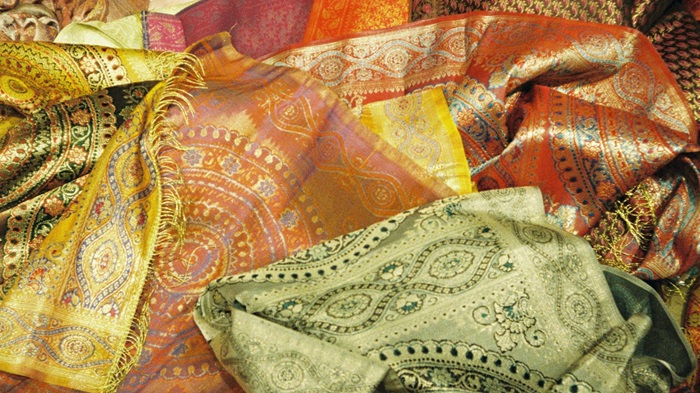
In the wake of China's staggering 67 per cent decline in raw silk production between 2017 and 2021, India appeared poised to ascend as the global leader in raw silk exports. However, this anticipated shift failed to materialize, as India's silk industry grappled with inertia and a lack of proactive measures to seize the initiative.
Global silk production dynamics: China and India dominate
China and India collectively dominate the global silk production landscape, accounting for approximately 95 per cent of the total output of 86,311 metric tonnes (MT), despite silk cultivation occurring in approximately 60 countries worldwide. China's production plummeted from 142,000 MT in 2017 to a mere 46,700 MT in 2021. Conversely, India's global share in 2021 stood at 36,543 MT.
Silk holds immense significance for India's economy, with the country producing all four commercially known varieties: mulberry, muga, eri, and tasar. Mulberry silk alone constitutes about 74 per cent of the total production. Moreover, the sericulture industry provides employment to approximately 9.2 million individuals in rural and semi-urban areas.
Despite India's potential, its silk industry has failed to capitalize on existing infrastructure. Alarming statistics presented in the 54th report of the Parliament of India's Standing Committee on Labour, Textiles, and Skill Development underscore the magnitude of the challenge. Across states like Chhattisgarh, Madhya Pradesh, Uttar Pradesh, Andhra Pradesh, and Karnataka, production targets have woefully lagged behind actual output, with various factors cited including adverse climatic conditions impacting tasar silk production.
Rising imports exacerbate concerns
Compounding the issue of sluggish production, India's reliance on silk imports is on the rise. Raw silk imports, which constitute 70 per cent of the total silk imports by value, have witnessed a significant uptick. This surge, attributed to heightened domestic demand post-COVID-19, underscores the widening gap between production and industry requirements.
India's silk exports have witnessed a decline in value from Rs 20,318.8 million in 2018–19 to Rs 17,733.8 million in 2022–23. Economic downturns and geopolitical conflicts have been cited as primary drivers of this decline. To mitigate this trend, exploring alternative markets beyond traditional ones like the UAE, USA, and EU becomes imperative.
The Central Silk Board (CSB), tasked with spearheading sericulture industry development, faces critical manpower shortages, with a significant portion of sanctioned positions remaining vacant. Operational inefficiencies stemming from retirements and recruitment challenges further compound the issue, jeopardizing the CSB's pivotal role in advancing the sector.
Branding deficiencies, exemplified by the voluntary nature of Silk Mark labels, pose challenges to ensuring product authenticity and market competitiveness. Additionally, stalled projects and low disbursal rates underscore systemic inefficiencies and underscore the need for streamlined coordination mechanisms and enhanced project execution frameworks.
Way forward: Urgent remedial actions required
To revitalize India's silk industry, urgent remedial actions are imperative. These include enhancing productivity through research and development, bolstering quality control measures, diversifying export markets, addressing manpower shortages, enforcing branding standards, and streamlining project execution processes. Only through concerted efforts and proactive interventions can India reclaim its position as a global silk powerhouse.
IAF, ITMF unite to combat audit and standard fatigue

In a concerted effort to tackle audit and standard fatigue plaguing the apparel and textile sector, the International Apparel Federation (IAF) and the International Textile Manufacturers Federation (ITMF) have issued a clarion call to industry stakeholders. Emphasizing the urgency of the matter, they urge stakeholders to prioritize addressing audit fatigue in the wake of escalating demands for responsible purchasing practices.
Key directives outlined by the IAF and ITMF include advocating for the adoption of third-party standard frameworks over proprietary standards and endorsing the Social & Labor Convergence Program's Converged Assessment Framework (CAF) as a promising avenue for streamlining social auditing processes.
Furthermore, the manifesto underscores the need for standard holders to minimize unnecessary discrepancies in standards, enhancing efficiency across the supply chain. The Standard Convergence Initiative (SCI), spearheaded by IAF and ITMF, seeks to align industry initiatives and proprietary tools to alleviate audit burdens on suppliers.
Highlighting recent progress, the manifesto points to the Social & Labor Convergence Program's success in driving converged assessments, with over 7000 facilities worldwide opting for SLCP verified assessments in 2022 alone. Additionally, collaborations with leading schemes and standard holders aim to facilitate data sharing and alignment, further alleviating duplication in verification processes.
The SCI's impassioned plea urges all stakeholders to embrace standardized frameworks and collaborate towards industry-wide compatibility, paving the way for a more efficient and responsible supply chain ecosystem.
New Advisory Board to futureproof Spring & Autumn Fair marketplace

In a strategic move to bolster the landscape of retail trade in the UK, Spring & Autumn Fair, the nation's premier showcases for Home, Gift, and Fashion, has unveiled the establishment of a pioneering Advisory Board. Objective is to spearhead the ongoing refinement of these flagship events and foster a robust marketplace for British retailers.
Helmed by Stephen Spencer, Ambience Director at Stephen Spencer + Associates, the Advisory Board comprises a stellar lineup of 15 industry luminaries. Among them are notable figures such as John Halliday from the British Independent Retailers Association and Sarah Ward representing the Giftware Association. This diverse assembly brings to the table a wealth of expertise and perspectives essential for propelling the Spring & Autumn Fairs to new heights.
Jackson Szabo, Portfolio Director at Spring & Autumn Fair, expressed enthusiasm for this milestone, hailing it as a pivotal moment in the annals of these venerable exhibitions. With Spring Fair's illustrious 70 year history and Autumn Fair's 30 year legacy, the formation of the Advisory Board signifies a dedicated commitment to fostering innovation and sustainable growth within the retail sphere.
Integral to the Board's mission is its mandate to proactively discern emerging trends and capitalize on untapped opportunities within the retail landscape. By expanding the reach of the shows and optimizing the experiences of both exhibitors and visitors, the Board aims to fortify Spring & Autumn Fair's position as the cornerstone of the industry.
Chairman Stephen Spencer underscored the significance of collaboration and innovation in shaping the future trajectory of these seminal events. His extensive experience spanning three decades lends invaluable insights into the evolving dynamics of retail, underscoring the Advisory Board's proactive approach to future-proofing the shows.
Samantha Gibbs, Director of renowned retailer Nest, echoed the sentiment of unwavering support for Spring and Autumn Fair, emphasizing the pivotal role these exhibitions play in showcasing the industry's dynamism and innovation.
The involvement of longstanding exhibitors and key industry associations further underscores the Board's commitment to inclusivity and industry-wide collaboration. Their collective vision is geared towards not just sustaining, but propelling the Spring & Autumn Fairs into a dynamic future, ensuring their relevance in an ever-evolving business landscape.
In an era characterized by digital transformation and shifting consumer behaviors, the Advisory Board's formation signals a resolute commitment to preserving the vitality of face-to-face interactions and tangible product experiences offered by Spring & Autumn Fair. As these events continue to evolve, they remain steadfast in their mission to provide retailers with unparalleled opportunities to discover the latest trends and innovations across Home, Gift, and Fashion sectors.
More...
India’s textile industry navigates headwinds with slow exports and stable domestic demand
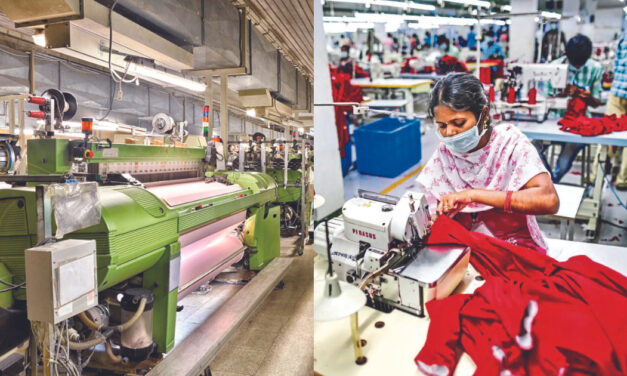
The textile industry, a key pillar of the Indian economy, witnessed a mixed bag of results in Q3 of the 2023-24 financial year. While some companies like Arvind saw profits grow, others like Century Textiles struggled with revenue dips. This indicates differing responses to market pressures within the industry. Rising input costs, particularly cotton, impacted margins across segments. Manufacturers are navigating this by exploring alternative materials and operational efficiencies. A slowdown in global demand, especially from key export markets like the US and Europe is putting pressure on export-oriented companies.
Sectoral analysis
A look at various sectors in the textile industry throws up an interesting pattern.
Fibres: The fibre segment witnessed moderate growth, driven by rising demand for man-made fibres like polyester and viscose. Cotton prices remained high, impacting yarn and fabric costs. However, some players are exploring man-made fibers and value-added products for better margins. For example, RSWM reported a decline in revenue and profit, highlighting the challenges
Yarns: Yarn exports saw positive growth due to increased global demand, but domestic demand remained sluggish due to rising input costs and competition from cheaper imports. Yarn producers like Vardhman Textiles witnessed modest growth, indicating a cautious recovery in demand
Fabrics: Fabric exports showed signs of weakness, due to global economic slowdown and rising raw material prices. Domestic demand, however, showed signs of improvement, particularly in the premium segment. Fabric manufacturers like Siyaram Silk Mills saw stable performance, suggesting resilience in the segment.
Home textiles: This segment witnessed positive growth, driven by rising domestic consumption and increasing exports to non-traditional markets. Home textile companies like Welspun India experienced positive growth, driven by rising domestic demand and exports.
Export performance
Export volume and value witnessed a decline in Q3 due to global slowdown and rising costs. Key export markets like the US and Europe remained subdued due to economic uncertainties. However, export value witnessed a slight increase in some segments like home textiles, thanks to rising product prices. Diversification into newer markets like Africa and Southeast Asia shows promise for future growth.
At the same time domestic demand remained relatively stable across segments, driven by rising disposable incomes and festive season spending. Particularly the home textiles and apparel segments saw demand growth. Focus on value-added products and online channels gave a boost to domestic sales.
Expansions and future investments
Despite challenges, some companies are strategically expanding capacities and diversifying product portfolios. Companies like Arvind and Raymond are focusing on expanding their brand presence and product portfolio. Similarly, companies, including RSWM, Siyaram, and Sutlej Textiles, announced capacity expansion plans to cater to rising domestic and export demand. Investments in technology and sustainability initiatives are also gaining traction. Sustainability initiatives are gaining traction, with companies investing in eco-friendly practices and recycled materials.
The bottomline is the future of the Indian textile industry remains uncertain, with several factors impacting its growth. Rising cotton prices, global economic slowdown, and trade tensions pose challenges. However, increasing domestic demand, government initiatives, and focus on value-added products offer opportunities. Companies that adapt to changing market dynamics, invest in innovation, and focus on sustainability are likely to thrive in the long run.
H&M Group, Arvind Ltd, collaborate to test Suprauno dyeing technology
H&M Group and Arvind Ltd have joined forces to revolutionise the fashion industry with a groundbreaking partnership focused on sustainability.
Together these two companies plan to test the Suprauno dyeing technology, crafted by Deven Supercriticals, which employs supercritical CO2 to color fabrics, eliminating water usage and toxic chemical discharge. This innovative approach signals a significant shift towards eco-friendly manufacturing, addressing pressing concerns such as water scarcity and pollution.
H&M's dedication to reducing its environmental impact is evident in its ambitious goals, including a 56 per cent cut in greenhouse gas emissions and a 30 per cent reduction in freshwater extraction within its supply chain by 2030. Through its alliance with Arvind Ltd, H&M not only strives for a greener supply chain but also sets a new standard for the entire fashion industry.
The collaboration between H&M and Arvind Ltd is a testament to their enduring partnership and shared commitment to sustainability. By investing in Suprauno technology, they aim to inspire other industry players to embrace eco-friendly practices. The potential benefits are substantial, from minimising water and energy consumption to mitigating the harmful effects of conventional dyeing processes.
The success of this pilot program could catalyse a transformative shift in the textile industry, ushering in an era where sustainable practices are the norm. In the face of climate change, the urgency for such innovations has never been greater.
Istanbul to host ITM 2024 and Texhibtion Istanbul in March 2024
In early March, Istanbul will host two major textile industry events: the textile machinery trade show ITM 2024 and the yarns and fabrics show, Texhibition Istanbul featuring 1,200 and 400 exhibitors respectively.
An international showcase for textile machinery, yarns, knitting, dyeing, printing, garment finishing, and hosiery, ITM is organised by Tüyap Fairs & Exhibition and Teknik Faire. At its last edition in 2022, ITM drew 64,500 visitors and 1,280 exhibitors.
To be held from March 04-08 at the Tüyap Fair and Congress Centre, the 2024 edition will host 1,200 exhibitors from Turkey and abroad. Delegations from Pakistan, Bangladesh, Uzbekistan, India, and Egypt will also attend.
Texhibition Istanbul, a trade show focusing on fabrics, yarns, components, and accessories for the fashion industry, will be held at the Istanbul Expo Centre.
With a spotlight on Spring/Summer 2025 collections, the event will feature 400 Turkish manufacturers and suppliers. Backed by the Turkish Exporters’ Assembly and ITHIB, Texhibition aims to attract visitors from Europe, the Middle East, and the USA.
These events follow IFCO, the Istanbul Fashion Connection, which unfolded from February 07-10 at the Istanbul Expo Centre. The fifth edition of IFCO, organised by ITKIB, welcomed 30,000 visitors and 600 exhibitors.
Enjoying tax-free access to the European market, Turkey's textile and apparel industry encompasses around 45,000 producers, providing 2 million jobs. Exports constitute 60 per cent of the industry's revenue. In the previous year, Turkey ranked as the third-largest textiles and apparel supplier to the European Union and the 12th largest to the US.
With its strategic location bridging Europe and Asia, Istanbul serves as a hub for the global textile trade. The city's textile events not only showcase cutting-edge technology and trends but also foster crucial business connections and partnerships.
Epson, HKRITA team up to explore Dry Fiber Technology for textile recycling
A global technology specialist, Epson and the Hong Kong Research Institute of Textile and Apparel Limited (HKRITA) have signed a joint development agreement to revolutionise textile recycling through innovative Dry Fiber Technology.
This collaboration targets the recycling of challenging textile products that have traditionally been difficult to process, thereby extending their lifespan and meeting the escalating global demand for recycled fibers.
This innovative solution promises to significantly expedite the adoption of recycled fibers by enabling the extraction of fibers from various challenging sources, including functional garments, linens, dress shirts, factory mill ends, unsold clothing pieces, and unwanted fabrics.
Epson is committed to implementing this technology expeditiously to drive positive change in textile recycling practices.
A proprietary development by Epson, the Dry Fiber Technology facilitates the creation of new value from post-consumer paper, wood, clothing, and other fibrous waste and used products.
In addition to offering recycled fiber production solutions, Epson endeavors to produce new paper and packaging materials from recycled paper and other raw materials. Furthermore, the company is actively engaged in developing stronger, more durable recycled plastics and bio-based plastics, underscoring its commitment to sustainability and environmental stewardship.
Through this collaboration and the innovative application of Dry Fiber Technology, Epson and HKRITA aim to pioneer a more sustainable and efficient approach to textile recycling, contributing to the global effort to reduce waste and promote a circular economy.