Value of New Zealand wool exports fall
In the past six months the value of New Zealand’s wool exports has fallen 10 per cent. The wool industry has had a tough season so far. China used to buy 60 per cent of New Zealand’s wool exports but no more. There has been a sharp decline in exports to China for a large part of last year. Also there has been a huge change in the value of the New Zealand dollar against the currencies in which wool is exported. Against the sterling, the New Zealand dollar is 30 per cent stronger than it was for the same time last season.
The value of medium wool exports per ton dropped by over 9.4 per cent. Fine cross bred wool is down 21 per cent and strong wool is down 12.5 per cent. The only rise in value is for fine wool. Fine wool returns are up about two per cent. Wool operations are becoming not really profitable. Overall low prices have made it hard for farmers to get decent prices. The cost of shearing is also hitting farmers.
Wool from New Zealand is cruelty free. Extra care and attention goes into the shearing process to secure the safety and well being of the sheep. The wool is not chemically processed and is sold in its raw, natural state.
Sri Lanka wants to diversify beyond RMG
Sri Lanka feels apparel exports are no longer viable and that it is time to look at other growth areas that promise better returns. The country is looking at production of electronic items such as mobile phone accessories and robotic machine spares since China has decided to use around 4000 robotic machines for production.
Another profitable area would be parts of electronic and electrical goods and other modern equipment which are needed by Japan and which are manufactured in countries such as Thailand.
With this in view, Sri Lanka is planning to introduce technology in schools soon. Sri Lanka is convinced in RMG, competing with countries such as Bangladesh where wages are lower is futile. While productivity and speed are Sri Lanka's hallmarks in the current fast fashion landscape, its garment makers are acutely aware that changes are afoot. Whole industries have been wiped out or completely changed because of technology. Competition from countries like Vietnam could deal a blow to the South Asian nation’s apparel export industry.
While Sri Lanka has been successful in establishing and growing its apparel manufacturing industry, more can be done to realize its potential as a regional hub and to continue to boost opportunities, especially for women and the poor.
Sri Lanka to host Textech fair on March 9th
Textech, the textile and garment exhibition, with over 200 stalls from six countries, will be held in Sri Lanka from March 9 to 11, 2017. The event showcases products like chemicals and dyes, office and commercial supplies, computer hardware and software, industrial products, printing and publishing, plant, machinery and equipment, textiles, fabrics and yarns. Investors and international textile and apparel players are looking at Sri Lanka with renewed interest.
One reason is the country may regain GSP Plus on exports to the European Union. This could expand export earnings of the country. Sri Lanka could enjoy the preferential tariff regime of the GSP Plus facility with the European Union until 2023.
GSP Plus is only awarded to countries in the low and lower-middle income categories and an upgrade to an upper middle income country makes it ineligible. Sri Lanka’s apparel exports account for over 50 per cent of its export earnings. Sri Lanka has always been an important location for apparel firms. And Sri Lanka’s garment exporters have a design-to-deliver supply chain. This means design, manufacture and logistics such as delivery are carried out in Sri Lanka. Meanwhile exporters are also teaming up with industry players in China and Hong Kong to improve overall supply chain management.
Kyrgyzstan upgrades sewing sector aiming to increase trade
Kyrgyzstan plans to create a full cycle of industrial production to develop its textile industry especially sewing. Kyrgyzstan’s sewing industry consists of small and medium-sized enterprises and provides about 1,60,000 jobs. The sewing industry is improving the skills of workers and upgrading production facilities and equipment.
The industry is now planning to enter new markets like Germany and Belarus. Kyrgyzstan is now creating a value chain in the apparel industry. All production stages will be merged into a single scheme, starting from farmers who grow cotton to sewing shops.
Garments make up seven per cent of the country’s total exports. Since 2013, there has been a decline in garment industry due to the global financial crisis, and falling orders due to lower purchasing power in Kyrgyzstan’s main export markets — Russia and Kazakhstan. More than 80 per cent of the garment products in Kyrgyzstan are produced by individual entrepreneurs who work under patents and do not report to the National Statistical Committee.
The just concluded 9th International Trade Fair in Bishkek dedicated to products and equipment in the fashion was aimed at strengthen business contacts and expanding cooperation between companies working in the garment and textile industries. More than 50 sewing, textile and handicraft enterprises, as well as representatives of companies from Uzbekistan, China, Russia, Turkey and India, took part.
Bangladesh looks to enhance trade ties with Kenya
Bangladesh and Kenya are looking to enhance bilateral trade. They are working on removing barriers such as the existing 25 per cent duty, ensuring smooth supply of raw materials and enhancing technical support. In the last fiscal, Bangladesh earned $10.78 million from exports to Kenya and knitwear exports stood at $0.38 million.
Kenya is preparing itself as one of the representative countries for garments made in the East African region. Agricultural products are central to Kenya's export industry with horticulture and tea being the most important.
Bangladesh is the world’s second biggest apparel exporter after China. Garments including knit wear and hosiery account for 80 per cent of export revenue. Bangladesh has a population more than four times Kenya’s but a lower dependency ratio, as population growth has been slower. Labor force skills - measured by the average number of years of schooling of the working-age population - have increased in both countries.
International sea freight transport costs have, until the late 1990s, been markedly higher in Kenya than Bangladesh. Inland road haulage rates remain higher, because haulage is more cartelised in Kenya than in Bangladesh. Labor costs in manufacturing have been lower in Bangladesh than in Kenya.
Australia looks to India as a major cotton importer
Australia wants India to turn into a major cotton buyer. India happens to be a big market for cotton. India is the largest producer and consumer of cotton globally. One advantage is that Australia has nearly 1,200 cotton growers and can supply even small quantities of cotton to India. Also Australian cotton finds favor with Indian spinners. Indian textile mills use Australian cotton as a blend to produce high value garments.
Where India used to purchase some five to seven per cent of cotton produced in Australia every year, in 2016 this shot up to nearly 23 per cent. Australian cotton is known for its quality and strength. And the country has what Indian spinners really need, long staple cotton. At present, Australian cotton and Indian cotton prices are almost at par.
There are more than 1,200 cotton farms in Australia. Australian irrigated lint yields are the highest of any major cotton producing country in the world, being about three times the world average. Most of this yield gain is attributed to seed technology.
Cotton represents 30 to 60 per cent of the gross value of total agricultural production in Australia, on an average year, Australia’s cotton growers produce enough cotton to clothe 500 million people.
India needs to raise its performance to capture global denim market
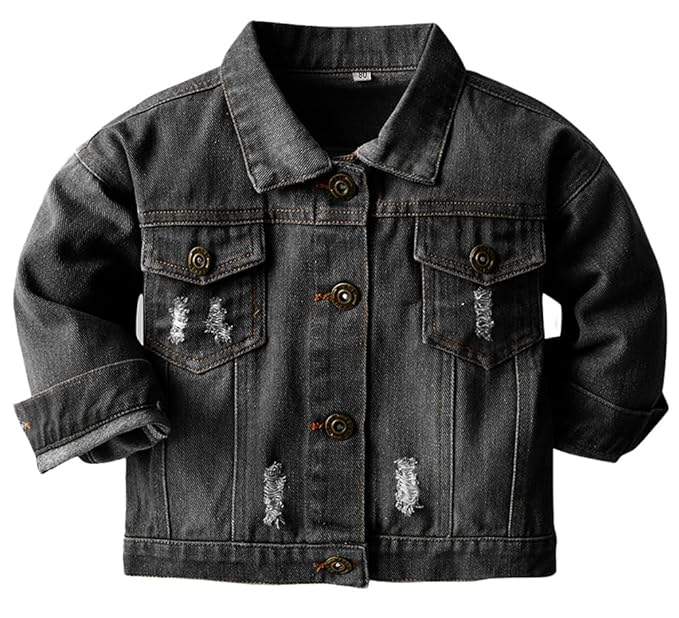
"Amid various ups and downs, the Indian denim sector has been able to sustain its growth momentum. Going ahead, it is expected to grow at a faster rate in spite of India’s apparel exports as well as the domestic market expected to register sluggish growth. Growing at a CAGR of 13 to 15 per cent y-o-y, the denim segment is registering growth at a time when overall apparel growth rate is being pegged at a lacklustre figure of 3-5 per cent, down from 12-15 per cent growth seen during the past couple of years."

Amid various ups and downs, the Indian denim sector has been able to sustain its growth momentum. Going ahead, it is expected to grow at a faster rate in spite of India’s apparel exports as well as the domestic market expected to register sluggish growth. Growing at a CAGR of 13 to 15 per cent y-o-y, the denim segment is registering growth at a time when overall apparel growth rate is being pegged at a lacklustre figure of 3-5 per cent, down from 12-15 per cent growth seen during the past couple of years.
Decoding denim performance

Denim makes up a sizable share of India’s total textile exports and production is expected to increase to 1.5 billion metres by 2020. Indian denim industry is primarily aiming to increase its exports share, currently pegged at 35 per cent of production compared to domestic consumption of 65 per cent. P R Roy, Chairman of Diagonal Consulting (India) points ut, denim is witnessing one of the fastest growth rates as an apparel fabric segment, up by 500 million metres from 700 million metres in 2010 to 1.2 billion in 2015. Yet, there is a gap of another 300 million metres if the denim industry needs to tap its full export potential.
As per Prashant Agarwal, joint MD, Wazir Advisors while total denim fabric capacity in the country is about 1.2 billion metres per annum, utilisation is at around 900 million metres, of which 250 million metres are exported. However, denim apparel exports is around 50-60 million metres, says.
Global denim market
Global denim market is slated to grow at about 8 per cent annually from $55 billion in 2015 to $59 billion in 2021. While the projected growth rate in Asia including India is around 12 per cent, that for Latin America, North America and Europe is expected to be around 15 per cent, 10 per cent and 4 per cent, respectively in the next six years, according to industry experts. Statistics by the National Bureau of Statistics of China indicate that the country’s denim export is dwindling.
Xintang used to be the most vibrant denim manufacturing centre of the world, which is facing several issues today. With initial investment from Hong Kong, cheap migrant labour from China’s inland provinces and a relatively accommodating local government policy framework, the town was an ideal manufacturing zone for international brands like Zara, Gap and H&M, until quite recently. This small town in Guangzhou province was home to more than 3,000 companies in the jeans and denim business, whose 200,000 workers cut and stitched 800,000 pairs of jeans a day.
That’s how things were before China’s labour cost increased by at least five fold during the past decade. Owing to low cost operations in India, Bangladesh and Vietnam, companies started investing in these regions and China’s denim sector started experiencing downfall. Having said that, it just doesn’t offer promising paradigms for Indian manufacturers in the wake of powerful opponents such as Bangladesh and Vietnam. To continue the growth story, consumption of denim apparel has to grow as well. US, a major consumer of denim apparels, has witnessed sizable decline in imports.
Country counting
China has maintained 26.5 per cent share of US denim imports; a year-to-date total of $522 million, down 4.4 per cent from last year. Unit imports from China dropped by 8 per cent but the average cost per garment rose by 4 per cent. The 7 per cent increase in men’s jean imports from China was more than offset by a 9 per cent drop in women’s jeans imports.
US brands imported $470 million worth of jeanswear from Mexico between January and July, or 11.7 per cent less than in 2015. Total units from Mexico fell by 6.4 per cent, with the average cost per pair down by almost 6 percent to $8.13. Men’s jeans comprised almost 90 percent of US denim imports from Mexico and were responsible for most of the decline from that country as well.
Imports from Bangladesh, the US’s third-largest source of denim apparel, increased by 8 per cent, with units up 11.7 per cent and average cost down by more than 3 per cent, with women’s seeing most of the gains. Bangladesh is a major supplier of jeanswear to many of the fast fashion retailers. Vietnam experienced the biggest increase, whose denim exports to the US rose by 16.1 per cent so far this year, to $78.7 billion. Women’s jean imports from Vietnam rose by almost 17 percent, to $86.6 million.
Vietnam’s cotton imports on the rise
Vietnam is currently ranked among the world’s top five textile and apparel exporting countries. This means the country needs a lot of raw material, especially raw cotton. Vietnam’s cotton imports are likely to reach five million bales in the 2016-17 financial year. The US will be one of the biggest beneficiaries. Cotton imported from the US has made up around 40 per cent of Vietnam’s total cotton imports over the past few years.
Vietnam’s cotton consumption has been increasing at an average 22 per cent year on year for the last five years. Domestic cotton consumption for 2014-15 represented a 35 per cent growth in quantity from the previous year. Vietnam’s spinning industry is expected to consume a lot of raw cotton in 2015-2016, up by 25 per cent from the previous year.
Vietnam is home to over 100 spinning mills with an estimated capacity of over 9,00,000 tons of cotton-based and manmade yarns. Up to two thirds of Vietnam’s cotton imports are spun in foreign-owned mills. The country’s textile and apparel exports are expected to have even bigger growth in the near future, thanks to several free trade agreements, such as the Trans-Pacific Partnership, the free trade agreement with the EU, and that between Asean and China and between Vietnam and Korea. This also means that Vietnam will remain as one of the fastest growing cotton importing countries.
Global textiles companies working on supply chains
Textile and apparel companies around the world are seeking better solutions and more sustainable models for their future development and supply chain management. Due to uncertainties and challenges in global textile sourcing, and with manufacturing and trading being driven by political and economic factors, companies are looking at more extensive integrations and collaborations to increase stability and sustainability in supply chain management.
Technology and innovation are not only beneficial to the textile production process but also helps in the development of new textile materials with different functionalities. The global textile market is experiencing an increasing demand for functional textiles in diverse industries such as aerospace, shipping, sports, agriculture, defense, health care, and construction.
Technical textiles and smart textiles are seen as the best solutions for meeting the requirements of health and safety, strength and durability, weight, versatility, customization, user friendliness, and eco-friendliness.Textile companies have transformed their production lines from mass production of fast fashion items to manufacturing more value-added technical and smart textiles; this trend is expected to continue over the next few years.
Modern data and information technology allows companies across the globe to form a virtual connection, whereby supply chain partners can exchange data and information in real time. This is viewed as the best solution for the problem of uncertainty in the global textile supply chain.
Pakistan’s exporters want reforms
Pakistan’s exporters say they are losing market share because of loss in competitiveness. These issues include the high cost of doing business, including high withholding and indirect taxes, and a distorted import tariff structure; weak implementation of export promotion measures; lack of coordinated support from formal institutions at federal and provincial levels; the relatively high cost of energy vis-a-vis regional economies; and an exchange rate regime that hurts exporters.
Another problem exporters face is in getting their duty drawback. The country’s falling competitiveness is also driven by poor trade facilitation, infrastructure gaps, inefficient logistics and poor investment climate.
Export competitiveness can be improved by making use of the country’s GSP Plus status and bilateral and regional trade agreements, for example with China, Malaysia, and Sri Lanka. Exporters say an export-oriented industrial policy is needed with a focus on broader institutional support to exporters along with a duty-free regime for inputs and a strategic collaboration between public and private sectors. Small and medium enterprises need to lend financial and technological help with a focus on operational management skills, financial assistance, innovation, and technological upgradation. What’s also needed is capacity building through education and training along with agreements to ensure transfer of foreign technology.
More...
Good times ahead for Indian textiles and apparel sector
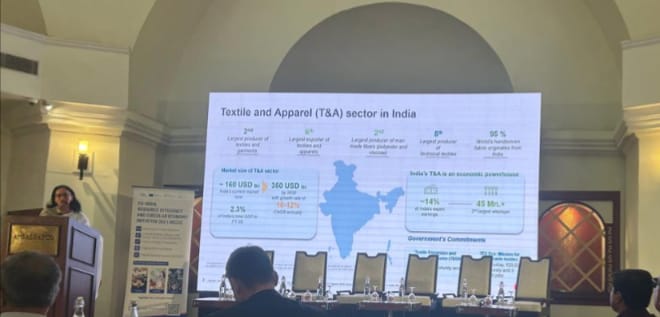
The Indian textile and clothing industry is set to grow substantially in the coming years. Growth will be driven by strong expansion of the domestic market as well as higher exports, aided by incentives and support policies. The textile policy has the aim of securing a substantial increase in exports by 2024-25 and generating 35 million new jobs, most of which would be taken by women.
‘Make in India’ initiative is aimed at transforming the country into a global manufacturing hub with the support of foreign manufacturers. India became the world’s leading recipient of FDI in 2015 — ahead even of China and the United States. Foreign investors have been attracted by India's sizeable and fast growing domestic market.
India's domestic market for textiles and clothing is forecast to growth 14 per cent per annum over a 12-year period — as a result of rising prosperity and a continuously growing population. High profile brands, including Aéropostale, Gap, H&M and Massimo Dutti, have entered the Indian market in recent years. Also global up market and luxury brands are looking to use the country as a base for manufacturing and supplying worldwide markets as well as supplying high income and middle income consumers in India itself.
Dhaka Apparel Summit stressed on ethical sourcing
The just concluded Dhaka Apparel Summit showcased the development of textile and apparel industry in Bangladesh. This year’s focus was on sustainability in apparel supply chain with the specific aim of creating a better future together. Panel discussions offered an interactive approach and the opportunity for a valid exchange of ideas.
Among suggestions to improve Bangladesh’s readymade garment industry were moving women into management roles, better training of the workforce and lower and mid-level managers and competitive wages. Vocational and soft skill training were seen as the need of the hour, together with trust and collaboration. Speakers said the race for cheap goods, which Bangladesh is currently doing, involves the risk of stagnation. Businesses were also exhorted to take the initiative in sustainability.
Buyers wanted assurances about issues such as environment, gender, labor rights and worker health. Buyers wanted products that meet the demands of their customers. They also wanted assurances that their markets and their major sources of goods are stable and dependable. Marks & Spencer does the bulk of its sourcing from Bangladesh. Where M&S ordered simple products like basic polo shirts and denims in the beginning, it has now moved up to value-added products like dresses and tailored suit jackets.
Nigerian textiles companies facing closure
Textile mills in Nigeria are shutting down. Reasons include poor maintenance, mismanagement, smuggling, little or no access to funds, low supply of electricity and high cost of inputs, competing textile imports from Asian countries and dumping of substandard fabrics in the country.
In the 1980s the country had over 200 factories producing fabrics for local and international markets. Between 1985 and 1991, the textile sector was responsible for 25 per cent of the entire manufacturing sector in Nigeria. Textile factories in the country are now producing below 30 per cent capacity. There are less than 30 functional cotton, textile and garment mills in the country. Capacity utilisation in the remains abysmally low.
Huge amount of money have been committed to revival of the industry in recent years but without any appreciable results. In spite of the importance of the textile industry to the economic recovery of the country, especially on account of its revenue and job creation abilities, little has been done to maximise its potential. In the face of stiff Asian competition, manufacturers are asking for protection. Traders, on the other hand, want a quick propping up of the local currency to make imports affordable. Until such interventions happen, more traders and manufacturers will be at the mercy of Asian suppliers.
Man-made fibres giving stiff competition to natural fibres
"In the Age of Sail, all lines and sails on ships were made of natural fibres, mostly hemp and sisal for ropes, and linen for sails, and millions of tonne of each fibre were produced each year. Today, with the exception of museums, all ships’ lines and sails are made of nylon, polypropylene or polyester, and world production of natural fibres used in lines and sails has reduced to just a few hundred thousand tonne. Prior to the advent of ‘fast fashion’ and ‘casual Fridays,’ wool was a major apparel fibre. In the 1960s, wool accounted for 10 per cent of world apparel fibre use. Today, wool accounts for 1 per cent of world fibre use."

In the Age of Sail, all lines and sails on ships were made of natural fibres, mostly hemp and sisal for ropes, and linen for sails, and millions of tonne of each fibre were produced each year. Today, with the exception of museums, all ships’ lines and sails are made of nylon, polypropylene or polyester, and world production of natural fibres used in lines and sails has reduced to just a few hundred thousand tonne. Prior to the advent of ‘fast fashion’ and ‘casual Fridays,’ wool was a major apparel fibre. In the 1960s, wool accounted for 10 per cent of world apparel fibre use. Today, wool accounts for 1 per cent of world fibre use.
In the 1800s and early 1900s, cotton accounted for 75 per cent of world fibre use, and in the 1960s, cotton still accounted for two-thirds of all fibre use. By the 1980s, cotton’s share had reduced to half, and today, cotton’s share of world fibre consumption is less than 30 per cent, and still reducing.
China – the biggest catalyst

As China started to industrialise in the early 1980s, textile production was a leading area of investment. In 1990, polyester fibre production in China was about 1 million tons but by 2015, polyester production in China had grown to approximately 35 million tons, equal to 70 per cent of the world total. The 35-fold increase in polyester production in China in 25 years is the single biggest factor reducing world demand for cotton today.
There are no comprehensive statistics on the number of polyester fibre production plants in China, their ownership, sources of financing or operating costs. However, the growth in polyester production in China has been so rapid, so enormous and so incongruous with investment patterns in other countries in Asia, that it is impossible to believe that industry expansion is a result of competitive, private sector investment. The cost of construction of a polyester plant with a capacity of 250,000 ton per year is estimated at about $150 million. It has been widely reported that the national, provincial and local governments in China encourage industrial expansion through loans that are never repaid made by government-owned banks.
Given the emphasis by all levels of government in China on textile production since 1990, it is highly likely that much of the expansion of polyester production capacity occurred with the help of loans that have become grants. It would be naïve to think that the expansion in polyester production in China occurred because Chinese consumers were demanding more polyester or that other market forces encouraged such growth. The expansion resulted from the industrial policies of the Government of China. Loss of market share for cotton has been largely the result of policies of the government of China following China’s accession to the World Trade Organization (WTO) in 2001 and the end of the Multifiber Arrangement (MFA) in January 2005.
Need of the hour
With global economy becoming highly competitive, and industries facing strategic threats, natural fibres, more than most other agricultural commodities are facing stiff competition from manmade alternatives. As of 2016, cotton appears to be the declining industry, stuck between low prices for polyester and huge stocks of cotton, as well as under attack from government agencies wishing to limit cotton production because of perceived environmental and social harm. The governments of countries concerned about the health of the cotton economy must unite to confront these threats. Governments must also premise policies and programs to enable cotton producers to innovate, adopt and implement the latest technologies that produce increased yields at lower costs and offer fibre to textile mills at prices competitive with polyester.
Governments with an interest in the preserving the global cotton industry needs to unite in the WTO to oppose China’s subsidization of polyester production, in the same way that governments have waged a campaign to reduce direct government measures that distort cotton production and trade. If that’s not done, then cotton’sloss of market share will keep on growing, and the livelihoods of cotton producers will be further compromised.