Resil Chemicals expanding footprint in Chinese, Brazilian and African markets
UL is the latest company to join the Sustainable Apparel Coalition (SAC). It will use the group's sustainability measurement tool, the Higg Index, to drive environmental and social responsibility throughout its supply chain. The Higg Index is an open sourced, indicator-based tool that allows suppliers, manufacturers, brands and retailers to evaluate materials, products, facilities and processes based on environmental and product design choices.
In its relationship with the SAC, UL will contribute both data and resources to support the Higg Index, which measures sustainability performance and drives supply chain transparency and decision-making to better efficiency and sustainability impact.
UL partners with clients to support them with every aspect of sustainability and supply chain management, including developing a proactive stance and demonstrating green and sustainable credentials, assisting in gaining better visibility into supply chain issues and mitigating risk and implementing customized and comprehensive environmental management systems.
UL helps companies demonstrate willingness to invest in the long-term future of the business through sustainable supply chain practices and assists them in gaining a competitive advantage through sustainability initiatives and implementation of best practice procedures.
Indian textile and apparel industry members of SAC include the Aditya Birla Group, Eastman Exports Global Clothing, Pratibha Syntex, Arvind and KG Denim.
CISMA 2017 opens to a vision of smart and intelligent sewing
CISMA 2017 opened yesterday here in Shanghai on Sept. 26, 2017 at Shanghai New International Expo Center, among the large gathering of Chinese government officials, including Zhang Chonghe (Chairman of China Light Industry Association) , He Ye (Chairman of Chinese Sewing Machinery Association) , Chen Dapeng (vice president of China Textile Industry Association and chief vice president of Chinese Garment Association), presence of global sewing machiery association leaders from Japan, Germany and the United States, and industry representatives. More than 100 people attended the opening ceremony.
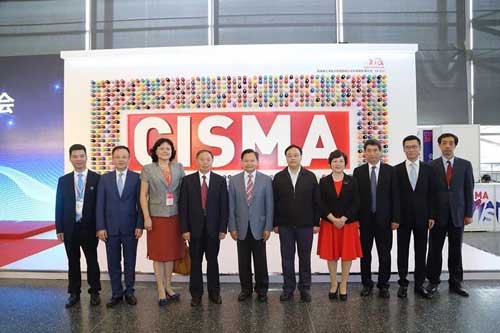
HeYe, Chairman of China Sewing Machinery Association, summed up the achievements gained by sewing machinery industry in the digital, intelligent technology innovation and application marking the beginning of this new round of industrial revolution. She pointed out that the CISMA2017 improves and enhances the comprehensive system of internationalization、specialization、and information of trade, information and communication ,thus boost the technology communication and industry linkage very much.
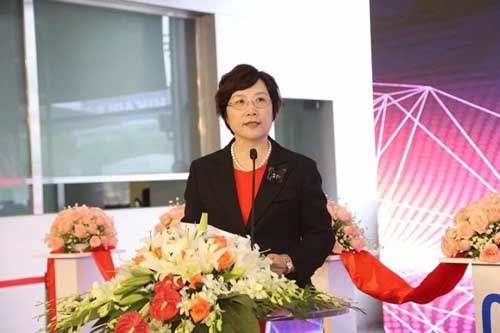
She assured CISMA will expand service, create value with the open mind like “all rivers run into sea”. “In the new journey of the ‘The Belt and Road Initiative’, under the guidance of the spirit of the Silk Road, CISMA expects to reach win-win co-operation in smart sewing” she summed it up.
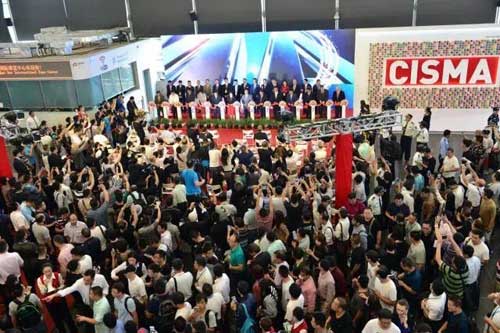
CISMA 2017 to promote intelligent sewing machine solutions
CISMA 2017, that opened today is showcasing the most advanced equipment and technical achievements of the industry in twelve exhibition halls. More than 1200 exhibitors from 24 countries and regions are going to meet face-to face and carry out communication and demand pairing with more than 50,000 professionals from more than 100 countries and regions through multiple media such as offline, online etc.

Two years ago, CISMA came up with the idea of revolutionary theme of Intelligent Sewing Solutions. It ushered in a new round of global sewing machinery technology and industry transformation. And now, two years later CISMA 2017 continued to focus on intelligent sewing machinery developments.
This edition of CISMA has further strengthened the organization of customers from overseas and the downstream industry. Professionals and garment associations from Pakistan, India, Sri Lanka and China, China Home Textile Industry Association, China Industrial Textiles Association, China Leather Industry Association, China Furniture Association, and other institutions and trade associations are expected to attend CISMA 2017.

Intelligent technology- a new industrial revolution
Since the launch of a new industrial revolution, the sewing machinery industry has become the global focus, becoming a model of digital, intelligent technology innovations and applications in many fields. The industry, whether in the unmanned manufacture of parts and components, or in the development of smart sewing equipment and sewing production lines, has made remarkable achievements in integrating multiple industrial platforms, while at the same integrating consulting, designing, manufacturing, warehousing and service in a single body and covering the related upstream and downstream industrial sectors.

The humanized smart sewing factory is also being transformed from a mere idea into a substantial, sensible and usable reality, which is widely used in the downstream fields of clothing, home textiles and leather.
In China, transformation and upgradation of the industry have been carried out effectively. The industry has developed vigorously and its status has improved significantly. The sewing machinery industry has become a typical equipment of intelligent manufacturing in light industry. Multiple product and projects are included in the national smart manufacturing pilot projects. The industry is rapidly changing from simple daily and industrial machinery manufacturing to overall solutions and value-added services.
Demand for cheap clothing creates havoc to the environment
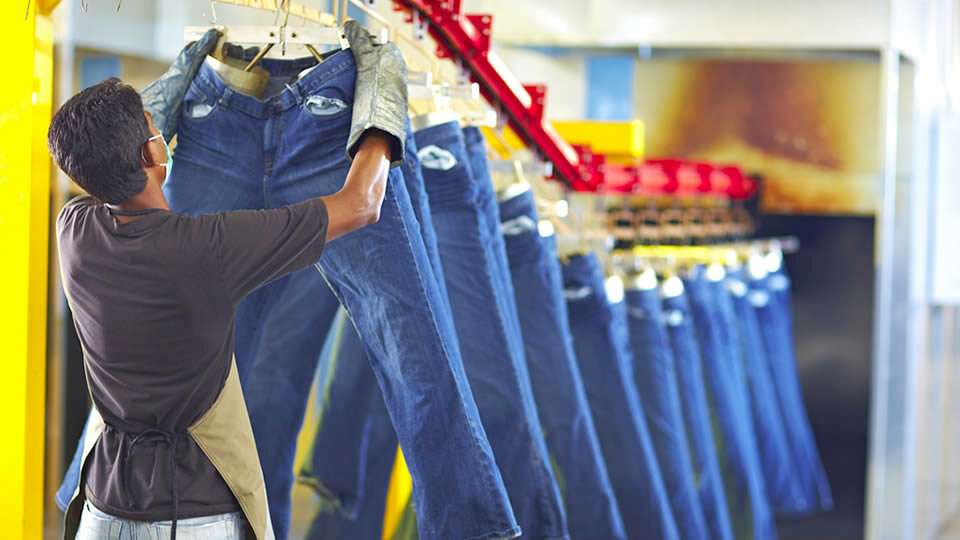
A river in China has turned blue, an indigo blue, all from the pollution of making blue jeans. In Bangladesh, tannery workers with no protective clothing treat leather with noxious chemicals, before dumping the runoff into the river. Further downstream, people bathe in the same waters that are deep black, orange, purple. Children in these areas are not able to smell and skin diseases – rashes, ulcers, boils – are widespread. Pollution, often carcinogenic, enters the food chain too: boatmen bring a haul of fish to shore, which they find floating on the surface of the black water, dead.
This is a systemic problem, driven in part by consumer demand for cheap clothing in wealthier countries. The developed world embraced free trade in the 1980s and 90s, resulting in the closure of the biggest textile factories in America and Europe, previously the hubs of global production regulated by strict pollution laws. The textile and leather industries were just two of many pollution-heavy industries that shifted across the planet towards the end of the twentieth century.
In pursuit of lower priced goods, higher profit margins from cheap labor, and nonexistent regulations, factories sprang up in China, India, Bangladesh and Indonesia. Simultaneously, demand, production and pollution ballooned as the west embraced the hedonistic rush of no-strings-attached cheap clothing.
Technology guides production and sourcing patterns, World Bank Report
As advances in technology and changing trade patterns affect opportunities for export-led manufacturing, innovations like smart automation, advanced robotics and 3-D printing are increasingly influencing which locations are attractive for production, says a World Bank Report. While these shifts threaten significant disruptions in future employment, particularly for low-skilled workers, they also offer opportunities.
Technology and globalization are changing how manufacturing contributes to development. In the past, the manufacturing sector created jobs for unskilled workers and increased productivity. In the future, developing countries will need to update their policies along with their infrastructure, firm capabilities and job creation strategies to meet the demands of a more technologically advanced world.
Changing technologies and shifting globalization patterns are destined to reshape manufacturing-led development strategies. Global value chains remain concentrated among a relatively small number of countries, and smart automation, advanced robotics, 3-D printing and other advances being incorporated by global manufacturers of apparel, cars, electronics, consumer and other goods are shifting how countries and firms compete for production.
While manufacturers of apparel and leather goods have traditionally sourced production in countries with low labor costs, greater demands for customization opens up the possibility of 3-D printed goods, which are design-intensive, typically produced in small batches on short cycles, and require proximity to consumer markets.
Pakistan’s hosiery body appoints Khurram Anwar Khawaja new chairman
Khurram Anwar Khawaja is the new chairman of Pakistan Hosiery Manufacturers Association (PHMA). Shahid Rafi and Naeem Ahmed are senior vice chairman and zonal chairman.
Khawaja expressed his resolve to meet the challenges of the times and to give a boost to the export sector by adopting diversified marketing techniques and giving practical support to the industry. He will continue with his efforts for the promotion and protection of value-added textile industry. His top priority would be uninterrupted energy supply to the knitwear sector, resolution of tax related issues, and a favorable environment for the promotion of hosiery industry in Pakistan, especially in Punjab.
The outgoing chairman and vice chairman highlighted the achievements made during 2016-17 and expressed the hope that the new team headed by Khurram would continue the excellent work in the best interests of hosiery manufacturers. There are about 13,372 circular knitting machines, 10,646 flat knitting and 23,241 socks knitting machines in the country. Capacity utilization is around 70 per cent.
Pakistan’s value added textiles in general and the apparel export sector in particular are under severe pressure due to hard competition in the international market being faced from competing countries like Bangladesh, Vietnam and Cambodia.
Invista develops new nylon technology to improve production
Invista has deployed a new technology for nylon to substantially improve the production process. The new technology is Invista’s adiponitrile or ADN technology.
ADN is used for the hydrocyanation of butadiene using a homogeneous nickel catalyst. ADN is a critical intermediate in the production of hexamethylene diamine, which is reacted with adipic acid to produce nylon 6,6. The update extends the company’s ADN technology in several aspects, including improved product yields, reduced energy consumption, lower greenhouse gas emissions, enhanced process stability and reduced capital intensity, compared to existing technologies.
As the preferred supplier for ADN, Invista supports growth and innovation in the nylon industry by continually investing in research and development, including the continued improvement of its ADN technology. The new ADN technology is the result of more than 40 million dollars in research and development spanning four years on two continents. These investments highlight Invista’s dedication to the nylon 6,6 industry and positions Invista and its customers with an advantaged and sustainable value chain.
With brands like Lycra, Coolmax, Cordura, Stainmaster and Antron, Invista is one of the world’s largest integrated producers of chemical intermediates, polymers and fibers. The company’s advantaged technologies for nylon, spandex and polyester are used to produce such products as clothing, carpets and air bags.
Pakistan’s textile exports rises in August
Pakistan’s August textile exports rose nine per cent year-on-year. Similarly, July textile exports picked up 16 per cent as compared to July 2016. So far for the second quarter of financial year ’18 there has seen a six per cent increase as compared to the corresponding period in previous year.
There was a boost in the value-added segments including readymade garments, knitwear, towels and bed wear. The highest growth was witnessed in knitwear at 21 per cent whereas bed wear and towels grew by 15 per cent and 12 per cent on a year-on-year basis.
However, yarn exports were down by 13 per cent, while cotton cloth exports dipped by eight per cent year-on-year. Falling cotton prices as well as slowing demand in neighboring China have resulted in lower volume as well as value growth.
There are a host of challenges confronting the textile sector. The cost of inputs used in higher value added segments such as readymade garments and knitwear is high. The rising cost of doing business has clawed away at Pakistan’s global cost competitiveness. An overvalued currency has aggravated matters further. When compared with regional competitors such as Bangladesh, Vietnam, India and China, the country’s electricity and gas tariffs are almost 30 per cent higher.
Nepali designers making the most of growing overseas demand
Many new Nepali designers have joined the garment business of late. Due to a competitive advantage, they enjoy owing to lower production costs at home, their business prospects are good and they are gradually expanding to overseas markets. They often receive orders from Nepalis living abroad and supply to countries like Hong Kong, United Kingdom, United States, Australia, Singapore, and Japan.
The clientele that orders designer clothes ranges from celebrities to regular customers who would love to flaunt their clothes at events, parties and other occasions. While a single costume of international designers could cost from 1000 to 1500 dollars, clothes of Nepali designers are available at much lower prices. Considering its prospects, many students are now studying and entering the field of fashion designing.
At the moment party dresses like lehangas and saris are trending. However, there is no textile company in Nepal that produces the exclusive fabrics that designers need. Nepali textile companies produce only dhaka and cotton fabrics, which is why designers have to import fabrics from other countries. They are focusing on mass production with marginal profit, keeping a long-term vision for sustainable business growth. The profit margin fluctuates most of the time.
Eight per cent rise in world cotton supply likely this year
World cotton supply is expected to rise by eight per cent in 2017-18 due entirely to an eight per cent expansion in the world’s cotton area. India is expected to remain the world’s largest producer in 2017-18 with output increasing by six per cent. After falling by six per cent in 2016-17, China’s production is projected to rebound by seven per cent.
World production of cotton is estimated at 30 million tons per year, with the main producers in 2016 being India and China. However, the United States remains the leading exporting country. Despite the rise of synthetic fibers, cotton remains a major contributor to the textile market, with a share of about 40 per cent.
The evolution of Chinese cotton stocks will continue to influence prices. More than half of the world’s stocks are held by China. High prices, sufficient soil moisture in dryland areas and beneficial weather during planting encouraged US farmers to expand their cotton areas by 18 per cent. Global demand remains dynamic with respect to US exports, which show record levels. Exports increased by more than 50 per cent between 2015-16 and 2016-17.
The rise in prices of the white fiber would not last, as Indian and Chinese production would remain high, and American production will stay high in the long-term.
More...
Accessories units flounder in Bangladesh
Many garment accessories factories have closed down in Bangladesh mainly due to lack of access to bank loans, short-supply of electricity and low technology-base. A total of 579 units have closed down between 2012 and 2016. Most of those were small size. Reasons: include a failure in installing modern machinery, production of fewer items, complexities among partners and failure to meet compliance issues.
On the other hand 432 new accessory manufacturing units, mostly large ones with modern technology, were added to the sector during the five-year period. The garment accessories and packaging industry is a backward linkage industry. Bangladesh’s garment accessories industry meets 95 per cent of the local demand for garment accessories. The country wants a bigger share of the global garment accessories market.
In the mid ’80s, the country’s entrepreneurs started to manufacture accessories and packaging materials. Now there are at least 30 varieties of accessories and packaging products produced. The industry supports the readymade garment, pharmaceutical, ceramic and frozen food sectors to reduce their lead time of exports. The value addition of the sector is more than 30 per cent a year. However growth of new investment has decreased in recent times due to the uncertainty of power and gas supply.
Prosperity launches denim at Kingpins
Prosperity Textile introduced its latest denim collections at Kingpins China 2017 edition.
The collection highlights Invista’s thermolite infrared technology. Denim fabrics made with this technology increase their temperature when exposed to solar or artificial light. Special ceramic pigments are added to the fiber which transfer the energy of infrared rays into heat the body can feel, helping to optimize performance. This new technology is a perfect fit for the fall/winter apparel market.

Kingpins is a boutique denim sourcing show featuring a selection of vendors that include denim and sportswear fabric mills from the US, Japan, China, India, Italy, Turkey, Egypt, Pakistan, Thailand, Spain and Mexico; wash houses; full package manufacturers; trim providers; and makers of technology, wash chemicals and business solutions. At this edition more than 30 exhibitors presented their new denim collections.

Prosperity Textile is a regular exhibitor at the Kingpins New York, Amsterdam and Hong Kong shows. Founded in 1995, Prosperity Textile is a denim fabric manufacturer with 80 million yards capacity, providing R&D, design and manufacturing services to global garment clients. With more than 20 offices and over 1200 employees around the world, Prosperity Textile provides global production capabilities back by in-time local customer service.

Jack and Dentsu sign branding cooperation

The world’s largest sewing machine company, Jack Sewing Machine, and the internationally renowned 4A advertising company Dentsu have signed a cooperation on the first day of CISMA, here in Shanghai, becoming China’s first official brand strategy cooperation of this kind.
China’s sewing machinery industry is evolving through reform and is opening up, although in the rapid development stage, but at the same time, faces a fierce price competition and competitive situation, leading to China's sewing machinery industry being big but not strong, lacking identity and in a position of being brand-oriented, the kind of brand positioning international machinery brands have.
“China-Made” to be a brand

Now there is a comprehensive shift to this idea and China wants to promote “China-made” especially in technology and machinery manufacturing. Jack took the lead in this brand-drive and global brand vision, and cooperates with Dentsu to become the world’s first brand of sewing equipment. This may help China's sewing machinery industry to grow in strength.
In the implementation of the brand strategy, Jack will be committed to guide global consumers to come above the perception of the foreign brands and enhance the public recognition of its brand and self-confidence. At the same time, Jack will also accelerate the internationalization of its brand, in the international arena, taking the story of China's sewing brands to the next level, boosting the Chinese brand change.
Jack has more than 5,000 marketing and service centers in more than 100 countries, with offices in major markets, with 300 foreign employees from more than 30 countries and with the support of Dentsu, in future, the brand will become one of the most important driving forces for Jack’s long-term sustainable development.
Implementation of a three pronged strategy
The implementation of the "three pronged" strategy as to Increase Variety, to Improve Quality, and to Build Brand, is being undertaken by Jack, as part of 13th five-year planning period of China's sewing machinery industry which is the world's largest sewing machinery industry .

China Light Industry Federation vice president, China Sewing Machinery Association, He Ye, said in an interview, “The cooperation of Jack and Dentsu, is assured and is “fast service” combination.
Jack has more than 5,000 marketing and service centres in more than 100 countries, with offices in major markets, with 300 foreign employees from more than 30 countries and with the support of Dentsu, in future, the brand will become one of the most important driving forces for Jack's long-term sustainable development. The variety, quality and service are the biggest support for Jack to build the brand, and the brand will spur and drive Jack's innovative technology, improve quality and deepen the service. Jack global sewing equipment will boost China's sewing machinery industry from Big to Strong!
Prosperity partners with UseDem
Prosperity Textile has partnered with UseDem in its denim recycling project.
Prosperity Textile will provide UseDem with leftover stock fabrics, out-of-season jeans samples and denim hangers for free. The company is also going to showcase UseDem bags at Intertextile Shanghai, October 11 to 13, 2017.

Both companies will co-host seminars and workshops in future to further promote sustainable development in the denim industry.

Founded in 1995, Prosperity Textile is an industry-leading denim fabric manufacturer with 80 million yards capacity, providing R&D, design and manufacturing services to global garment clients. With more than 20 offices and over 1200 employees around the world, Prosperity Textile provides global production capabilities backed by in-time local customer service.

UseDem is a project about upcycling old jeans into a new wearable product. It was founded by Xenia Sidorenka, a Russian designer who has been active within the denim industry for many years. Having witnessed the decline and decay of many a nice pair of jeans, she decided to not only start recycling these castaways, but to take things one step further and re-style them in a creatively and responsibly fashionable manner.

This cooperation is part of Prosperity’s continued efforts to build a green environment. The hope is that more companies and consumers do their bit to make denim more sustainable.