Knitting and Stitching show to exhibit potential health benefits of arts and crafts
The Knitting and Stitching Show, to be held in London’s Harrogate from November 22-25, 2018, will showcase the health benefits of arts and crafts. It will include dress-making and children’s workshops, drop in knitting and crochet class, mindfulness area, etc.
Artist Jenni Dutton will displayher series 'The Dementia Darnings' which depicts her mother's journey through life including living with dementia over the last few years. The art which is created out of fine wool explores the mother-daughter relationship along with the emotional changes of a person living with dementia.
Another display from artist Caren Garden will focus on the difficulties of eating disorders. The bedroom installation features hospital and domestic furniture, with one of the main items on display is a quilt which features a pattern designed by a talented young lady who sadly passed away after suffering from an eating disorder.
Pollution from cotton, linen fibers make up 80 per cent of all deep-sea microfibers
A new research on Southern European seas reveals, pollution from cellulose fibers such as cotton and linen accounted for 80 per cent of all deep-sea microfibers. Polyester microfibers accounted for just 13 per cent of the 202 microfibers identified in 29 surface sediment samples analysed, while acrylic made up 4.5 per cent. The researchers presented new data on the distribution of microfibers after a widespread survey of seabed sediments in southern European seas including the northeast Atlantic Ocean (Cantabrian Sea), the Mediterranean Sea (Alboran Sea, Catalan Sea, Cretan Sea and Levantine Sea) and the Black Sea at depths from 42 m at the continental shelf to 3,500 m in the abyssal plain.
In contrast, synthetic fibers dominate the global fiber market, with 65 per cent of the share, while natural and man-made cellulosic fibers altogether comprise only a 35 per cent. Shedding of fibers is a relatively new concept in textile development and, no studies have yet investigated microfiber shedding from cellulose vs. plastic textiles. Assuming a roughly equivalent release of fibers of each polymer to the aquatic environment, data suggest that polymer density is the key component controlling the spreading of microfibers to the deep.
US cotton industry introduces plan to meet sustainability goals
Cotton Council International President Ted Schneider, at the Cotton Sourcing USA Summit, revealed plans to introduce the US Cotton Trust Protocol to help the US cotton industry meet its 2025 sustainability goals. The protocol is an integrated data collection, measurement and verification procedure which will benchmark farmers’ gains towards the industry goals and provide the global textile supply chain additional assurances that U.S. cotton is produced in a responsible manner.
The details of the Protocol are being fine-tuned, and a pilot program will be launched in 2019 and fully implemented with the 2020 cotton crop year. Participating growers would be required to adopt a data tool that allows for the quantitative measurement of key sustainability metrics, such as the FieldPrint Platform from Field to Market.
Growers would also complete a self-assessment checklist of best management practices; with a sampling of participating producers subjected to independent verification. The online interface and associated databases are currently being developed by a Memphis-based company The Seam.
Japanese lifestyle brand Muji to relaunch Toronto store
Japan-based global lifestyle brand Muji will relaunch its store in Toronto, Eastern Canada. The retailer has tripled the size of the original store from 5,658 sq. ft. to 19,110 sq. ft..
Additionally, it will provide in-store customisation services including the Digital Fabric Printing Service that will enable shoppers to print a photo directly from their phone on to select Muji apparel and home fabric items, and the Laser Engraving Service, which will allow consumers to have letters engraved onto a selection of Muji products.
The new outlet will stock Muji Canada’s full range of products that includes over 4,000 items like household goods, apparel and accessories. Furthermore, a pop-up exhibition named ‘What is Muji’ will also be carried out by the retailer from November 19-23 at the retailer’s previous location. The company will showcase some of its most iconic products at the do.
US retailers try to soften tariff impact
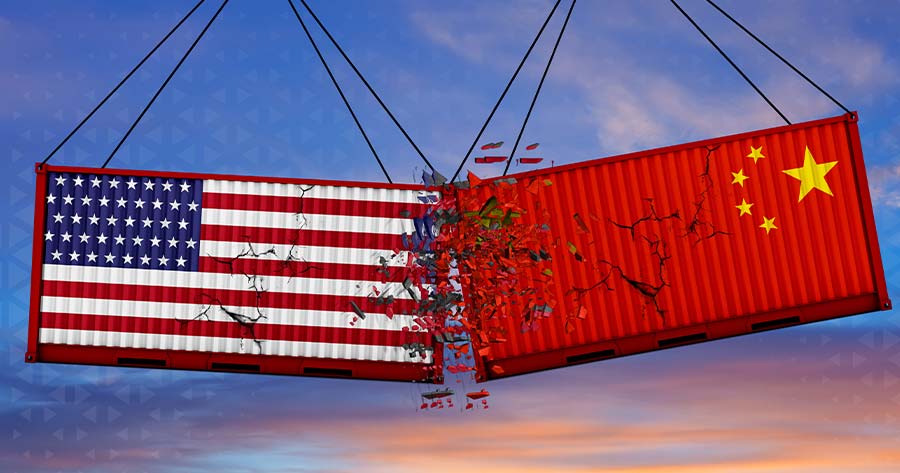
US retailers and their suppliers are looking to mitigate impact of tariff on shoppers once 2019 starts. There are a variety of ways importers and shippers could offset tariff impact. Those include: sharing the cost of tariffs between importers and shippers and removing third-party fees from the landed costs of Chinese goods.
Importers could also get waivers if Chinese-made components are assembled in and shipped from a third country to the US or the third country’s components are just assembled in China. The US has imposed tariffs worth $250 billion on Chinese goods and China has imposed reciprocal duties of $110 billion on US goods. It is possible the US will impose new import duties on yet another $267 billion of Chinese goods.
This fourth tranche of import duties would likely hit a broader swathe of consumer goods such as apparel and personal electronics. The US wants China to end practices including technology transfer, subsidies to local Chinese companies and restrictions on foreign ownership that provoked the tariffs in the first place.
But China continues to resist—and in some cases reverse progress on—many promised reforms of China’s state-led economic model. The US trade deficit with China hit $375 billion last year.
Japanese lifestyle brand Muji to relaunch its store in Toronto
Japan-based global lifestyle brand Muji will relaunch its store in Toronto, Eastern Canada. The retailer has tripled the size of the original store from 5,658 sq. ft. to 19,110 sq. ft. of space.
Additionally, it will provide in-store customisation services including the Digital Fabric Printing Service that will enable shoppers to print a photo directly from their phone on to select Muji apparel and home fabric items, and the Laser Engraving Service, which will allow consumers to have letters engraved onto a selection of Muji products.
The new outlet will stock Muji Canada’s full range of products that includes over 4,000 items like household goods, apparel and accessories.
Furthermore, a pop-up exhibition named ‘What is Muji’ will also be carried out by the retailer from November 19-23 at the retailer’s previous location. The company will showcase some of its most iconic products at the do.
RadiciGroup introduces new color chart
RadiciGroup Performance Yarn has introduced a new Radifloor Solid BCF PA 6 1300 F68 color chart in the contract and residential flooring market with an array of yarns that are designed to reduce the environmental impact of the end product. The color chart encompasses 112 colors that are most widely used by interior designers, with a predominance of beige and grey shades, together with bright colors in many tones.
The yarns in this series have two common traits: they are all solution-dyed aimed at saving water; and branded RadiciGroup. These products boast a new feature: an accurate sampling service for customers, the company explains. Besides fitted carpet, the Radifloor Solid BCF PA 6 1300 F68 yarn is suitable for the manufacture of standard 50x50-cm tufted carpet tiles. The yarn provides ample design margins: the individual tones available can be blended, mixed and balanced to produce a large variety of colors, which the designer’s creativity can transform into carpet motifs and designs.
Timberland to facilitate creation of greenspace
Timberland has teamed up with Belgian non-profit King Baudouin Foundation to facilitate the creation, maintenance and improvement of greenspaces in five European cities as part of a five-year-long grant-funded programme. This year, the My PlayGreen initiative will be introduced in Berlin with Paris and Barcelona selected for regenerative work in 2019 and 2020 respectively.
The initiative aims to significantly improve air quality and biodiversity through the rehabilitation or improvement of city parks, community gardens, small farms, vegetable gardens and green spaces, which are easily accessible to people living in cities. MyPlayGreen was originally developed by Timberland in collaboration with the King Baudouin Foundation to improve social cohesion in Europe.
Both environmental and social benefits are cited by Timberland as motivations for its participation in the project, which has previously been responsible for improving spaces in London and Milan.
Timberland, since 2001, has planted over 9 million trees worldwide and hopes to increase this to 10 million by 2020.
As global Lyocell fiber market grows, applications widen
The lyocell fiber market is primed for a profitable future. Vendors operating in the market are researching and developing the potential of the fiber across diverse applications.
Lyocell fiber is used by the textile industry to manufacture clothes such as denim, casual wear, lingerie, socks, sweater, towel, baby diapers, bed sheets, and men’s dress shirts. As these products are made using non-toxic and organic solvents, they have no harmful properties.
The fiber can also be blended with linen, cotton, silk, wool, and others to formulate specialty products such as medical dressings and conveyor belts. There is a demand for products that are not only manufactured using eco-friendly measures but are biodegradable. Players of the lyocell fiber market have realized this trend and are marketing their products as better than their alternatives, as they are produced using natural wood.
With properties of hygroscopicity and air permeability, lyocell fibers enable the making of diverse surface effects that give the desired softness and cool feeling. Products manufactured using lyocell fiber offer high tensile strength and also support washing and maintenance.
The market for lyocell fiber is segmented into apparels, home textiles, and others including baby diapers and surgical products. More than half of the total demand is currently coming from the apparel segment.
China slowly moving towards becoming a textile supplier
China is gradually shifting its role in the world textile and apparel supply chain. While China remains the largest apparel exporter, its market share based on value fell from 38.6 per cent in 2015 to 33.7 per cent in 2017. Its market shares in the world’s top three largest apparel import markets, the United States, EU, and Japan, also indicate a clear downward trend in the past five years.
Fashion brands and retailers are actively seeking alternative apparel sourcing bases to China. No country, including China, can forever keep its comparative advantage in making labor-intensive garments when its economy becomes more industrialized and advanced.
However, China is playing an increasingly important role as a textile supplier for apparel-exporting countries in Asia. For example, measured by value, 47 per cent of Bangladesh’s textile imports came from China in 2017, up from 39 per cent in 2005. Similar trends can be seen in Cambodia (up from 30 per cent to 65 per cent), Vietnam (up from 23 per cent to 50 per cent), Pakistan (up from 32 per cent to 71 per cent), Malaysia (up from 25 per cent to 54 per cent), Indonesia (up from 28 per cent to 46 per cent), Philippines (up from 19 per cent to 41 per cent) and Sri Lanka (up from 15 per cent to 39 per cent) over the same time frame.
More...
In first half of year, Gap faces excess inventory
Gap performed poorly in the first half of the year. The operating model improvement process at the company’s namesake brand has been fraught with inventory problems. As a result, the company was saddled with excess inventory coming into the first quarter, which consequently impacted the company’s sales from this brand as well as its ability to optimize its margins, since it forced the brand to be more promotional.
Overall gross margins fell 10 basis points in Q2. Looking ahead, the company has cut 30 per cent styles heading into the second half of the financial year, which should help to improve the performance.
The company has one platform for all of its brands, ensuring customers can purchase items for any of them in one place. This has also ensured its new brands get the recognition that would not have been possible if they had had a separate web presence. An upshot of this is that the company was able to deliver strong growth from its online and mobile channels in the second quarter. The company has also focused its investment into the native mobile apps and on improving site speed. These factors should ensure the growth of this segment in the future.
Africa turns fashion pioneer
Africa’s role as both a consumer and a producer of fashion is on the rise. Powered by e-commerce and social media, demand for African fashion is likely to go up among the continent’s growing middle class, which is the fastest growing in the world, with consumer spending expected to hit $1.4 trillion by 2020.
South Africa and Nigeria are the continent’s top fashion markets but Ethiopia, Lesotho, Kenya, Mauritius and Swaziland are leaders in textile and apparel exports. Extremely talented young entrepreneurs have begun to gain global recognition as they pioneer strategies to market and brand fashion concepts grounded in cultural heritage.
The African textile and fashion industry is raising its profile in the international stage. It wants Africa to be seen not just as a new source of labor but as a source of creativity and innovation with talented entrepreneurs that can serve local, regional and global markets. Fashion in Africa is a multi-billion dollar industry that creates millions of jobs, particularly, for women and young people. The country is aiming at exporting finished textile products. The world fashion industry is expected to double in the next decade.
Bangladesh turns apparel frontrunner in high-end clothing
Bangladesh is one of the most preferred sourcing destinations owing to its low cost manufacturing. While this was true for low-end apparels till now, its competitive advantage is making way for high-end clothing as well. The country’s exports and sustainability have both grown faster than those of most of its global counterparts.
Bangladesh’s clothing manufacturers have been quite aggressive in making their factories greener. For starters, the top three LEED certified factories in the world are based in Bangladesh, the country has seven out of the top ten LEED certified apparel manufacturing plants. There are 67 factories in Bangladesh that are LEED certified, and 222 factories are on their way to becoming LEED certified.
Going by the trend, it will soon become the country with the most environment-friendly apparel industry and be an example for others to follow. Concepts such as lean manufacturing have improved efficiency. Among other things, the country’s success can be attributed to the academic institutions that have come up to address the demand for apparel education. In the past, their aim was to just provide basic education on merchandising but with industry expansion the curriculum has expanded to include engineering concentrations, part-time intensive diploma programs, and high-end fashion.
Bangladesh accessory makers ramp up production
Makers of garment accessories in Bangladesh are gearing up to meet the demand of apparel sector. They are emphasising more on producing high-quality accessory items to establish the sector as an individual industry rather than a backward integration of the readymade garment industry.
About 100 new factories have started operations this year. Currently, around 1,700 factories are producing accessory items in the country. Bangladesh produces and exports accessories like woven labels, leather badges, stone and metal motifs, rubber patches, gum tapes, satin and cotton ribbon hangers, price tags, and buttons and zippers. In all, accessory makers and packagers supply 34 types of products.
The sector contributes 15 to 20 per cent of the net export earnings of the readymade garment sector. Bangladesh also exports accessories to the Middle East, South Africa, Sri Lanka, Malaysia, Europe, Vietnam, Cambodia, and Laos. Accessory items also meet the demand of the country’s agro-business and plastic sectors.
The industry wants cash incentives on exports. Since banks charge double-digit interest rates on loans from businesses, this increases the cost of doing business. China is the biggest player in manufacturing garment accessory items in the world. Bangladesh holds the second position. The market for garment accessories in Asia alone is worth $24 billion.