July cotton prices fall in India
Cheap imports and sluggish exports are looming large over India’s cotton market. Sluggish exports have dampened cotton sentiments in the market. India’s 2018-19 export is expected to be around 46 lakh bales compared with the 69 lakh bales it exported in the 2017-18 season. The downturn in export is mainly due to availability of cheaper cotton in the international market. On the other hand, imports have doubled.
Adequate steps will be taken to ensure cotton prices remain steady in the new season, set to start post-October. One of the measures to stop the dumping of cheap imports into the domestic market and keep prices steady would be by imposing a higher import duty on raw cotton.
Cotton sowing has been going on at a steady pace, with India reporting a five per cent year-on-year increase in sowing. As of August 2, India has reported 115.5 lakh hectares of cotton sowing, which last year was 109.79 lakh hectares. Domestic prices of kapas (seed cotton) have been well above the minimum support price throughout the 2018-19 season. However, July prices have dipped, which is attributed to sluggish exports for both yarn and lint cotton. This trend has been observed in most major cotton producing states in the country.
US jeans imports from China decline 10.44 per cent
Import of jeans by the United States from China declined by 10.44 per cent in the first six months of the year upto June to a value of $369.97 million. This brought China’s market share of the category down to 22.82 percent, a 5.11 percent decline for the year ended June 30. Levi Strauss & Co. has reduced its import of denims from China to less than 8 percent of overall production for Levi’s and plans to bring the number down to “very low-single-digits” by 2020.
The other top suppliers of denim jeans to the USA posted gains in their exports. These included Mexico, whose imports rose by 14.44 per cent to $410.07 million. This growth led the Western Hemisphere increase of 12.03 percent to $509.74 million, which also included a 28.02 percent gain by Nicaragua to $55.19 million, and a 12.06 percent advance by Guatemala to $16.22 million.
Jeans imports from Vietnam increased by 29.36 percent to a value of $142.36 million. The country’s market share rose by 36.39 percent to 8.38 percent for the 12 months, as makers look to capitalise on its apparel manufacturing expertise. The imports from Pakistan rose by 15.49 percent to $119.72 million. The country’s market share increased 16.27 percent to 6.69 percent.
Indo Rama Synthetics (India)’s Q1 net revenues increase
Bet revenues of Indo Rama Synthetics (India) increased to Rs 533.33 crore in the first quarter of FY 20 that ended June 30, 2019 as against Rs 355.54 crore in the corresponding quarter of the previous year. The operational EBIDTA of the company for the quarter stood at Rs. 7.12 crore as compared to Rs. 2.37 crore for the corresponding quarter in the previous year. The net loss for the quarter ended June 30, 2019 is reported at Rs. 30.09 crore as compared to net loss of Rs. 29.25 crore in corresponding quarter of the previous year.
H&M collaborates with a South African fashion brand
H&M is collaborating with a South African brand, Mantsho to launch a new collection for women who crave for distinctive fashion for the first time. The collection, featuring graphic prints and contemporary silhouettes, offers tunic-styles dresses with high neckline and fluid silhouette, black polo neck and black tights. The entire collection has a fresh and modern vibe to it. The colors used in this collection perfectly complement the merlot and mustard shades of the season.
Established in 2004, Mantsho, which means ‘black is beautiful’ in Mokubung's native Sesotho language, has appeared on several runways in countries as diverse as Greece, India, the USA and Jamaica.
Egypt’s garment exports up four per cent
Egypt’s exports of readymade garments grew 4.4 per cent during the first half of 2019. The US’ imports of readymade garments from Egypt rose by 19 per cent. In addition, Egypt’s readymade garment exports to Arab countries surged by 24 per cent. Readymade garments exported by Egypt to Europe dropped by seven per cent while readymade garments exported by Egypt to African countries plunged by 60 per cent.
In June 2019, readymade garment exports from Egypt increased by 11 per cent compared to June 2018. Egypt’s garment exports go mainly to the US, Turkey, Spain, Britain, North Ireland, Germany, Italy, France, Saudi Arabia, Belgium and the Netherlands. Egypt wants to have stronger trade relations with Africa. Steps include taking part in international exhibitions in the African continent and setting up an Egyptian-African free trade zone. Egypt’s main exports to Africa are engineering industries, pharmaceuticals, chemical garments, food industries, and construction materials. Egypt wants to increase exports to the African continent by 35 per cent in 2017. The main countries Egypt is interested in are Kenya, Zambia and Ivory Coast. However, working to make Egypt a leading international trade center in the Middle East requires work to increase the capacities of Egyptian ports in order to attract more container ships as well as working on the development of logistics capabilities and infrastructure to support this trend.
Buyers and designers to converge at footwear event
Materials Show will be held in the US, August 6 to 7, 2019 and August 14 to 15, 2019. The event is designed to position attendees and exhibitors at the forefront of what’s happening in the footwear industry. Buyers, designers, and thought leaders in the footwear industry will mingle and source material and components at the event. Taking place one week apart on both the east and west coasts, the semi-annual Materials Show is one of the most forward-thinking trade expos in the industry. Footwear designers seek out inspiration for upcoming seasons, and buyers source the practical components, textiles and processes they need to turn those designs into reality.
Attendees will participate in sessions led by suppliers and professors with decades of material expertise. Materials and innovation leaders from top footwear companies will discuss current trends, challenges and best practices. Attendees tour textile development labs, learn about new materials, and explore how to better manage cost and quality issues. A trend presentation will explore key socio-cultural and aesthetic influences uncovered through extensive research by a massive network of international trend explorers. It will summarize the mindsets, desires, societal pressures, and other factors brands should expect to see exerting force on the market in three to five years. Brands looking to anticipate what’s coming next will find the detailed, highly visual summary invaluable for planning their design direction.
Dutch fashion event in September
Amsterdam Fashion Week will be held September 5 to 8, 2019. This fashion event in Amsterdam takes place in the months of February and September each year. It celebrates Dutch fashion through runway shows and presentations. Amsterdam Fashion Week combines fashion shows, off-schedule events and exhibitions, and is visited by buyers as well as national and international press. Participants in the event are a mix of up-and-coming talent, commercial label designers and brands. Several catwalk shows are also open to the public. The catwalk program recognizes both established designers and young talent.
Amsterdam Fashion Week started in 2004 as an initiative to put Amsterdam on the map as an internationally oriented destination for fashion. It means four days of exhibitions, shows, launches, parties and more. All the studio events are organised in collaboration with local museums, galleries, designers, clubs and shops. The event provides a platform for the finest and best that the Netherlands has to offer in the world of fashion, celebrating the creativity, glamour and magic that fashion can generate. Lighting, a fashion industry prize launched in 2007, is awarded to the most promising graduate each year. The competition sees a selection of the best students chosen from the seven leading Dutch fashion academies who present their collections to the fashion press and industry.
Shanghai CBME expo attracts delegations from 13 countries
China’s edition of Child Baby Maternity Expo (CBME) was held from July 24 to 27, 2019 in Shanghai. This is the world's largest trade fair for maternity products and services for babies and children. There were over 100 big buyers and quality suppliers, agents/distributors, chain stores, e-commerce operators, hypermarkets, department stores/shopping centers and boutiques. China’s child, baby and maternity industry has changed tremendously. The consumer market is segmented, consumer demand is more fragmented and personalized. CBME China 2019 attracted delegations from 13 countries and regions, including Ireland, Australia, Russia, France, South Korea, Canada, the United States, Japan, Spain, Singapore, New Zealand, the United Kingdom, Taiwan (China) and Hong Kong (China), bringing premier products from around the world.
Cool Kids Fashion Shanghai joined hands with 130 fashionable children's wear brands from all over the world to meet new demands of stylish parents for children's wear products in the new era. This year the scope was expanded to cover natural and organic food, meat and aquatic products, natural and organic beverages, nutritional products, vegetarian products, etc. Exhibitors exhibited props and equipment, software and information technology, industrial service platforms, early education services and postnatal confinement centers, postpartum repair institutions and other service institutions of the child, baby and maternity products industry, attracting a large number of visitors for matchmaking. There were specialized zones like a fabulous mom zone, an outdoor recreation and sports zone, a fun learning zone and a smart home zone.
APEC appeals for continuation of MEIS Scheme
APEC has appealed to the government to continue the Merchandise Exports from India Scheme (MEIS) for garment exports as it provides a 4 per cent support to the exporters. The Council wrote to all the MPs from Tamil Nadu and requested them to take up the issue with the Prime Minister and the Finance Minister. The chairman and vice-chairman of AEPC also met 20 MPs in New Delhi and explained the benefits of MEIS for garment exports to them; why it should be continued, and the impact on the exports if the scheme was withdrawn.
The MPs assured the AEPC members they would take up the issue with the government. Raja M Shanmugham, President of Tiruppur Exporters’ Association also supported the AEPC’s member stance. He said that since the apparel industry counters the three major challenges including lack of infrastructure, high interest rates, and delay in India signing Free Trade Agreements, schemes such as MEIS should be continued. He also advised the government to insulate MSMEs from the Basel III norms.
Need for women’swear brands to regain their focus
"With several women’swear designers entering the menswear fold, the era for men’s fashion has arrived. Brands are launching new collections catering exclusively to mens’ fashion sense. In September 2018, designer PrabalGurung launched his first men's collection after nearly a decade in business. A month later, Mary-Kate and Ashley Olsen's the Row launched their own collections of menswear. French ready-to-wear and leather luxury goods brandCelinelaunched its first menswear collection in January 2019."
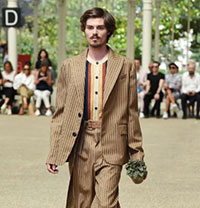 With several women’swear designers entering the menswear fold, the era for men’s fashion has arrived. Brands are launching new collections catering exclusively to mens’ fashion sense. In September 2018, designer PrabalGurung launched his first men's collection after nearly a decade in business. A month later, Mary-Kate and Ashley Olsen's the Row launched their own collections of menswear. French ready-to-wear and leather luxury goods brandCelinelaunched its first menswear collection in January 2019.
Growing demand spurs growth
The reason womenswear designers and brands are expanding into menswear is the increasing demand for men’s clothing. Male celebs are increasingly engaging with stylists for their red carpet looks which has led to the popularity of men’s fashion. Stylist Ilaria Urbinati has a client list that includes celebs like Dwayne ‘The Rock’ Johnson, Donald Glover, Chris Evans and Bradley Cooper. Similarly, Los Angeles-based stylist Samantha McMillen’s high-profile client list includes reputed names like Ryan Gosling, Chris Rock and Chris Hemsworth. Both these stylists are elevating menswear to standards of the global pop culture. Innovative features of social media platforms like IG fit pics feature on instagram have helped to give rise to the popularity of menswear.
Growing demand has encouraged many women’swear designers to launch new designs and styles in the market.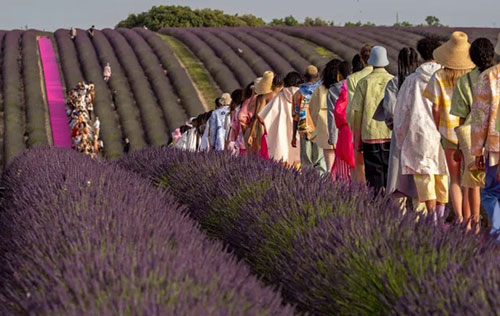 Two such designers who are making a mark in menswear include are: Marco de Vincenzo and GherardoFelloni. Vincenzo entered menswear in February 2019, while Felloni, the creative director at Maison Roger Vivier, released the first men's shoe in the house's 70-plus year history in 2019.
Practicality drives men’s fashion
Along with the evolution of men’s fashion, its business too is evolving. From theyet-not so-stable popularity of streetwear to luxury brands released limited amounts of their collections on a regular basis; the popularity of menswear shows no signs of slowing down. As predicted by Euromonitor International, menswear is likely to outpace women’swear in growth by 2022.
Practicality also determines the choice of clothes for men. Designers are tapping into this practicality aspect while designing their menswear ranges. For instance, designer Kim Jones is introducing the saddle bag for men. A lot of other brands are launching crossbody bags for men. These are evolved fanny packs that are worn crossbody style.
Thus demand for men’s fashion is growing and brands are catering to this demand. However, these women’swear brands need to remember that the core of their brand is women’swear and they should not lose sight of it.
More...
Burberry reveals new collection made from recycled nylon
Luxury fashion house Burberry has revealed designs for a new capsule collection made using recycled nylon, woven from plastic fibres recovered from discarded fishing nets. The brand’s new collection is made using Econyl – a recycled nylon developed by manufacturer Aquafil. Econyl is predominantly made using discarded fishing nets, with other waste streams such as industrial plastic and textile scraps, including carpet, accounting for the remainder of its content.
Crucially, the material is classed as fully recyclable at the end-of-life stage. Aquafil has used life cycle assessment tools for more than three years to determine the environmental impacts of its products. Burberry is using one of its most iconic and popular designs – its classic car coat – to spearhead the recycled collection.
The move from Burberry comes shortly after outdoor clothing brand Napapijri and designer Prada both unveiled their own Econyl products. The former is using the recycled nylon to make a new waterproof jacket, launching in October 2019, while the latter has opted to make an Econyl handbag as part of its pledge to only use recycled nylon by 2021.
US holds Functional Fabric Fair show
Functional Fabric Fair was held in the US, July 22 to 24, 2019. The apparel sourcing trade show presented apparel industry professionals with latest innovations in high-performance functional fabrics, finishes, trims and accessories from fabric mills and branded technology companies in a sustainable/minimal waste exhibition. Functional Fabric Fair doubled its exhibitors and increased attendance by 75 per cent compared to its inaugural event.
The show’s 135 exhibitors had to meet certain criteria to participate in the event, including being certified by Bluesign, a system that ensures products were manufactured with responsible use of resources, and the lowest possible impact on people and the environment. Attendees had a chance to review sustainable solutions such as e.dye’s waterless color systems and Polartec’s clothing featuring stain-resistant technology that reduces the need for regular washing. Functional Fabric Fair supplied the booth package for all exhibitors. Booth walls were made of reusable Veloce fabric, which is made from recycled poly and plastic. Exhibitors were not permitted to bring booths made of unsustainable materials such as foam to the show. This rule not only helped reduce waste, but also meant exhibitors shipped less material, therefore reducing the environmental impact of transporting heavy booths to the show.
UAE apparel sales up four per cent
In 2018 the value of apparel sales in the UAE grew 4.8 per cent. The UAE has positioned itself as a world-class retail hub, which continues to attract retailers and consumers from around the world.
Men’s wear is the top-performing category with the segment accounting for 53 per cent of the market value last year , followed by women’s wear with 34 per cent and children’s apparel with seven per cent.
The outlook for UAE apparel sales is expected to improve over the next five years as economic conditions become more favorable and consumer confidence strengthens. Despite the dominance of store-based retail sales, online retail sales are witnessing strong growth as many well-established brands explore omni-channel retail, either through third parties, their own digital storefronts, or both. This trend is expected to put pressure on prices as the industry becomes more competitive with traditional retailers expected to offer more deals to capitalise on consumer demand. Menswear is expected to register a compound annual growth rate (CAGR) of about 3.8 per cent between 2019 and 2023. Women’s wear is expected to see a CAGR of 4.9 per cent in sales over the same period. The children’s apparel segment is expected to register a CAGR of 3.7 per cent.
Telangana acts against child labor in cotton farms
Telangana will map its cotton farms and spinning mills as part of an effort to weed out child labor and slavery from fields and factories. Children are hired for seed production as their small hands are useful in cross pollination to produce hybrid seeds. Two children do the work of three adults but are paid less. Six of the ten cotton growing districts of Telangana will initially be mapped for labor violations under the project. It will also look at gender discrimination in salaries for agriculture workers and whether they have collective bargaining rights.
This is for the first time in India that an integrated approach to identify both child and bonded labor is being undertaken. India, the world’s second largest cotton producer after China, has child and forced labor in both cotton seed production as well as cotton growing. A 2014 study found that 2,00,000 children under 14 were working on cotton seed farms, double the number since 2010. However, the cotton supply chain is the hardest to track as the journey from field to retailers involves many stages - such as seed production, cotton growing, gins to separate seeds and fiber, spinning mills and garment factories.