Haiti to soon reopen its textile factories
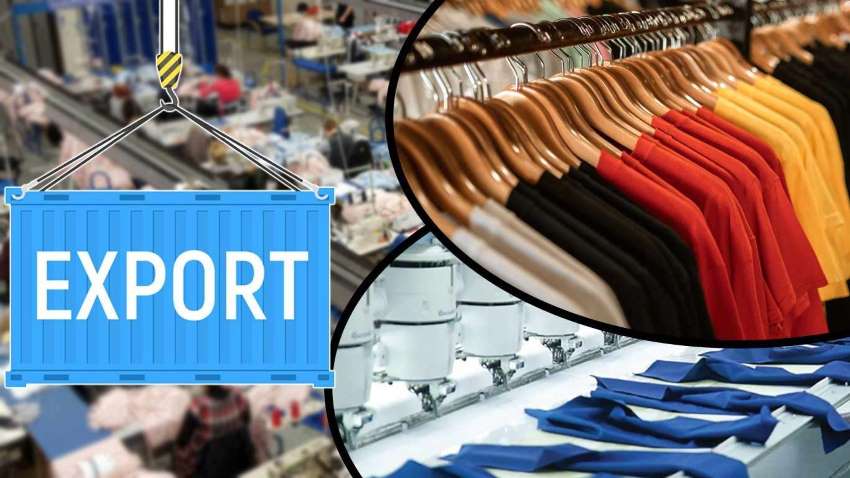
Haiti has decided to reopen its textile factories from April 20. The poorest country in the western hemisphere had immediately declared a state of emergency after detecting its first two cases nearly a month ago, closing borders and shuttering schools, places of worship and industrial parks.
As the initial term of the state of emergency expires shortly, he government is considering whether to extend it. The textile manufacturing sector accounts for 90 per cent of the country’s exports.
The industry would start running at 30 per cent of its capacity to ensure social distancing in the workplace, according to global newswires.
Factories accounting for around a third of textile manufacturing workers were allowed to re-open two weeks ago to make cloth masks and medical garments.
Big brands cancel Bangladeshi clothes orders
Big-name international brands have cancelled billions of dollars in orders because of the pandemic, decimating Bangladesh's most important export industry and hurting in particular rural woman who dominate the workforce.
Making the shirts, pullovers, bras and socks for stores in wealther nations accounts for 80 percent of Bangladesh’s $40 billion of annual exports and has played a vital role in its growth of the past two decades.
More than four million people, mainly women from poor rural villages, are employed in the sector.
But the industry has a reputation for running sweatshops, with workers toiling in unsafe factories without labour protections or a social safety net.
The 2013 Rana Plaza diaster, when the collapse of the garment complex claimed the lives of 1,130 lives, exposed appalling safety conditions in Bangladeshi factories.
Now, with international brands walking away and a government lockdown stopped people in Bangladesh travelling, laid-off workers are complaining of being dumped without any help.
According to BGMEA, International brands have cancelled or held up orders worth $3.11 billion, affecting more than two million workers in the country.
COVID 19 results in $3 billion loss to the industry: RBC Survey
As per the findings of a survey conducted by Rajesh Bheda Consulting (RBC), the impact of COVID-19 pandemic on business is unfathomable as of now but the total business impacted so far can be estimated at $3 billion. The combined value of orders cancelled and on hold is $1.49 million per respondent factory; 56 per cent respondents revealed payments were delayed, whereas in 19 per cent cases, customers refused to pay for the orders. Of the cancelled orders in 22 per cent cases buyers had paid for the material, in 35 per cent cases partial payment for the material was received and in remaining 43 per cent cases no payments were received.
RBC undertook a quick survey to understand the gravity of the situation in India. In all, 77 apparel exporting organizations from different manufacturing hubs of the country responded. Though the results are based on a relatively small sample, these do provide some much-needed data reflecting the scale of the challenge, as experienced by the respondents and its potential impact on the industry.
Nike retains position as the world’s most valuable apparel brand
Brand Finance Apparel 50 index revealed Nike has retained its spot as the world’s most valuable apparel brand but the brand value of the sector could fall by 20 per cent due to the COVID-19 pandemic. The US sportswear brand’s value jumped 7 per cent to $34.8 billion as of January 1. Sporting goods rival Adidas stayed in third place as its brand value dropped 1 per cent to $16.5 billion, behind Gucci in second, which rose 20 per cent to $17.6 billion.
Jeans brand Levi’s was the fastest growing brand, rising 38 per cent to $4.1 billion, while Valentino and Gap suffered the sharpest falls in value. However, the report warned the brand value of the world’s biggest 500 companies could fall by up to $1 trillion, with the apparel sector one of the worst affected falling 20 per cent.
Nike and Adidas have both been forced to close stores around the world, with sales expected to be severely hit in the first half. Brand Finance also ranked sectors in terms of how severely they would be impacted by Coronavirus, with the brand value of apparel, airlines, restaurants, retail and auto parts industries all falling 20 per cent.
LVMH to cut dividends by 30 per cent
LVMH, which is largest luxury goods conglomerate in the world, plans to cut dividends by 30 per cent to €4.80 per given the current financial landscape. Chairman and CEO Bernard Arnault and the members of LVMH’s executive committee have already waived their salaries for the months of April and May, and will forgo their bonus compensation for the whole year.
LVMH generated revenue of €10.6 billion ($11.48 billion) for the first quarter of 2020. A 15 per cent drop for the three-month period ending March 31, with sales falling across all of its business segments – from its fashion and leather Goods group and perfumes and cosmetics division, where sales decreased 18 per cent, to watches and jewelry, and selective retailing, which saw sales sink by 24 and 25 per cent, respectively.
Italy fashion giants urge for gradual reopening of manufacturing activities
Responsible for 5 per cent of the country’s gross domestic product and employing more than 500,000 individuals, Italian luxury goods might face irreparable damage due to the prolonged lockdown. Carlo Capasa, Chairman of Italy’s National Fashion Chamber, stated in an online interview that Italy has been among the hardest countries hit by COVID-19, with death toll surpassing 20,000. He suggested, April 20 as a date to gradually reopen manufacturing activities in order to deliver fall/winter collections on time to shops around the world, and start production of spring/summer collections.
His sentiment was echoed by Claudio Marenzi, head of the fashion division at Rome-headquartered lobbying firm Confindustria, who feels while fashion factories have closed throughout Italy as a result of their status as non-essential businesses, “countries like France, Spain, Portugal, and Turkey” are gradually reopening manufacturing facilities.
Meanwhile, fashion giants like Gucci’s parent company Kering have put forth slashed outlooks for the year. Paris-based conglomerate Kering, whose brand Gucci sales consist of the bulk of annual revenues said last month it expects consolidated revenue for the first quarter of 2020, ending March 31, will be down by between 13 to 14 per cent in reported terms compared to the first quarter of 2019. The group expects sharp impacts for the second quarter, as well, as consumer opt out of luxury spending amidst the global health crisis.
Luxury continues ruling while world tackles an economic slowdown
At the conclusion of 2022, the top five luxury brand values indicate that even though most of the world is in a fix with never-ending inflation, luxury just carries on as if all is well with the world. The top five luxury brands closed 2022 with brand values of: Louis Vuitton $124,273 million, Hermès $80,323 million, Chanel $53, 021 million, Gucci $37,887 million and Dior $10,534 million. Year 2023 is turning out be quite similar as the first quarter 0f 2023 shows Louis Vuitton’s sales growing 17 per cent and Hermès sales grew 23 per cent compared to the same period last year.
The buoyant lifestyle of ultra-high wealthy is clearly keeping the luxury sector in the black. Compared to the ultra-high net worth individuals, income-groups lower down the ladder are actually slashing spends on designer items by half. The return of Chinese consumers after nearly three-years of self-imposed lockdown has added to the buoyancy of luxury goods as witnessed by the LMVH collective of Louis Vuitton, Christian Dior and Celine whose sales increased 30 per cent in mainland China in the first quarter of 2023 compared to the first quarter of 2022. European luxury stocks have been on a jubilant run, gaining 23 per cent on average this year compared to 14 per cent rise in the MSCI Europe index.
Luxury goods could be the best to invest in
The flush of the luxury sector continuous success has been noted by wealth managers as they have now begun advising investing in the sector. Luxury is actually an interesting market to secure money. Beyond representing history, know-how, prestige and scarcity, it is an industry that resists crises, since luxury customers, due to their financial wealth, recover very quickly or even do not suffer when they arrive. Luxury goods might become to best assets to invest on in the coming years.
Almost recession-proof, the flourishing luxury goods market is still one of the most successful industries worldwide and has a very bright future ahead. With a high profitability in a short period of time, it is going to be the biggest rival of real estate or stock market investments for wealthy people. However, in terms of investing in stocks, the investor has to be careful in choosing. Last year, three companies — LVMH, Hermès and Richemont — took home 75 per cent of the industry's incremental revenue, revealed a Bank of America analysis.
When rivals report their results, it will become clearer who is winning or losing market share. It’s even more interesting for people living in emerging countries where financial markets and domestic currencies are not stable. The reason to believe in luxury is because the industry has been surprisingly resilient in previous economic downturns. In the global financial crisis, the sector had two quarters of lower sales before it began to grow again, while global gross domestic product contracted for four.
Experts question if this growth is sustainable in the long run? It looks like it really is. This year, bullish analysts expect luxury industry sales to increase by 8 to 10 per cent compared with the International Monetary Fund's 2.8 per cent forecast for global growth.
Luxury’s big new playground India
India, the world’s fifth largest economy now supports a 105 per cent rise in millionaires by 2026 and living in India will be the single largest consumer group of all things luxury. In India though, luxury real estate and automobiles top the list of luxurious acquisitions with experiential luxury coming in a close third with holidays, staycations, F&B and of course lavish destination weddings. Luxury fashion and accessories such as watches and exclusive jewellery have been around but now they are full on as brand after luxury brand make Indian metros their must have destinations.
Pitti Filati 87 owners postpone decision on hosting event until May
Pitti Immagine, owner of the Pitti Filati yarn show, has delayed making any decision about this summer’s fair. The direction taken by Pitti Immagine was welcomed with satisfaction by the Technical Committee – composed of representatives of various components involved in Pitti Filati: exhibiting yarn manufacturers, knitwear factories, buyers – which started a wide-ranging discussion on the main issues currently under discussion.
Along with an evaluation on extension of containment measures and forecasts for recovery of production activities in the textile-clothing sector, the owner also discussed operatively on different issues: timing schedule (presentation of the color chart, sending of samples, collection of orders), new formulas for a setting up of stands, with the aim to reduce the production costs for the exhibitors and the ideal position of Pitti Filati in the events calendar.
Given the complexity of the situation, where many elements are still in progress the Technical Committee asked for three more weeks to decide on the format and dates of the show and the next meeting was convened in the first week of May.
Bangladesh: Garment export plummets by 83.74 per cent, says BGMEA
Data from BGMEA indicates, garment export fell drastically, by 83.74 per cent to $194 million in the first 15 days of April compared to the same period last year. In the first 15 days in 2019, the earning from garment shipment was $1.19 billion. The pandemic affected shipment of garments significantly as a majority of Western retailers and brands shut down their stores in Europe and the US.
Apart from the steep fall in shipment, international retailers and brands have already cancelled work orders from different local factories worth more than $3.11 billion as of this week due to the COVID-19 pandemic. The receipts from garment shipment also declined significantly in March this year. Garment export declined by 26.70 per cent to $1.97 billion in March this year compared to the corresponding month in 2019, when export netted $2.69 billion.
Canada RMG imports declines 13 per cent
Canada has registered a massive fall of 13.54 per cent in its apparel import values during January-February ’20. The country imported apparels worth $1.40 billion during this period as against $1.62 billion in the corresponding period of the prior year.
India, China, Bangladesh and Vietnam dwindled significantly and that’s one of the rarest occasions when all top four apparel exporting destinations fell in value-wise RMG exports to Canada. Shipment from China to Canada was worth $440 million, marking 26.79 per cent downfall on Y-o-Y basis. Bangladesh shipments fell 13.10 per cent to. On the other hand, Vietnam’s shipment value of $148.43 million. India’s shipment to Canada valued at $48.38 million, reduced by 17.45 per cent on a yearly basis. Exports to Canada did not pick even in March as India and Bangladesh were facing industry closures to stop COVID-19 spread.
While China recovered in early March, there are no buyers from any part of the world coming forward to place orders for now.
More...
Bestseller, LVMH assure cooperation to suppliers
Bestseller, the Denmark-based clothing company with over 20 brands, and French multinational corporation LVMH are in communication with suppliers, working in close cooperation with them and even supporting them during the Covid-19 crisis.
During this period, Bestseller reached out to suppliers to spark a dialogue on current and future orders. LVMH is also committed to maintaining responsible and fair relationships with its partners. The brand has given special instructions to accelerate payments to suppliers. Furthermore, several of its Maisons have provided guidance and concrete support for the sanitary crisis by giving gels, masks, etc. to our suppliers.
Assuring suppliers of support, Bestseller will do its utmost to live up to its commitments and take delivery of garments already made and those in production. The brand emphasizes on collaborating with its suppliers and placing orders for the coming seasons.
US retail sales decline by 4.4 per cent
Apparel retail sales in the US by dropped 4.4 per cent in March compared to last year, after a 7.8 percent increase in February. Department stores were hit hard with a drop of 25.3 per cent and apparel/accessories stores dropped 52.0 per cent year-over-year. A large portion of department store sales come from fashion businesses like clothing, shoes and accessories.
Revenue loss comes at the most pivotal time in the spring season, precisely when regular price selling takes place across most categories. The missed Easter sales and warmer weather selling will significantly impact the margins, especially in fashion apparel goods. As former Macy’s senior executive stated, basic commodities will likely be taken in since they have little to no margin risk. However, it is most likely that buyers and wholesalers have been in negotiation as the pandemic has escalated to reduce or cancel orders where possible.
New tech to blur lines between digital experiences and reality in fashion
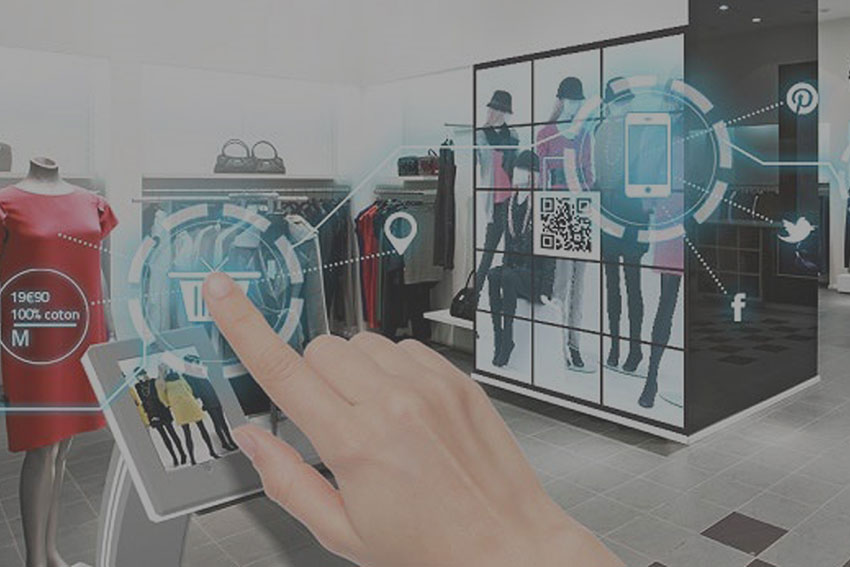
 The impact of digital disruption can be seen everywhere in the fashion industry, right from production and supply chain to marketing and sales. Digital devices, platforms, and technologies such as smart phones, social media, advanced data analytics, artificial intelligence, and e-commerce are re-shuffling the dynamics of the fashion market.
A platform for retailers to enhance shopping experience
The rise of online-only retailers provides a platform for selling fashion products, besides enhancing customer experience. Retailers use different means, such as social media, advanced data analytics tools, and artificial intelligence. These digital tools enable customers to react quickly to consumer insights and incorporate them into their decision-making process.
The trend of using digital tools and platforms to buy fashion products will continue to increase rapidly over coming years. To survive, traditional fashionplayers will have to integrate new technologies, invest in adopting innovative business models, and engage consumers through different digital channels to provide an excellent shopping experience online.
Artificial Intelligence to be more common
Many fashion retailers and brands are already using AI in their operations. This trend will increase in functions ranging from production to supply chain management to customer service. Fashion retailers can personalize their offerings using digital data and trend analysis tools. Since consumers interact with digital tools and platforms more, they also give away a lot more data about themselves. A clever use of this data can be made through advanced data and analytic tools.
Rise of smart fashion
Established brands are moving away from the traditional fashion calendar and imitating the “drop” approach commonly used by street wear labels to release smaller and more frequent collections that create rarity value and elevate anticipation. This has given rise to a broader range of holiday offerings as well as the introduction of micro-seasons.
From connected jackets to smart sports apparel, clothing is quickly becoming connected to the Internet of Things (IoT). Soon, clothing will incorporate devices like heart rate monitors.
Fashion companies are embracing wearable technology as a component of their products. One example is the “data dress,” which is a dress that is customized based on personal information gathered about the customer.
Challenges faced by retailers
As consumer demands keep changing retailers face several challenges such as:
Faltering brand loyalty: Consumers have numerous options to choose from, it is difficult for them to be loyal to a particular brand. In addition, consumers today can avail of a variety of brands easily.
Rise of multi-channel shopping: Most consumers still prefer to try their clothes before buying them. Hence, finding a garment that not only looks good but also fits well can be a time-consuming chore. When consumers know they can quickly jump online and order it right while they are standing in the store, however, they are more likely to frequent stores that offer this option.
Lack of Data Analyses: Online data gives retailers a competitive advantage over brick and mortar stores just don’t have. Smart tech is certainly moving the fashion world forward, but this may also cause some retailers to get left behind.
In future, technology will continue to blur the line between digital experiences and reality. 5G will finally be rolled out commercially, enabling technological advancements across the board. On-demand product customisation and 3D printing will lead a boom in personalised offers.
Retailers turn to digital fashion and games to boost sales
 Analysis of US consumers by Quantum Metrics till late March reveals, online revenues of apparel retailers declined 11 per cent year-on-year, their overall online revenue increased 50 per cent. This indicates the rising importance of platforms that let people engage with clothes digitally.
Users of fashion try-on apps are doubling each week. Users are spending 50 per cent more time on these apps and trying almost double as many outfits per user, says Ben Chiang, co-founder and CEO of the six-month old fashion gaming app Drest. Similarly, data from App Annie reveals, overall time spent on apps has increased by 20 per cent globally with an increase in apps that allow consumers to maintain normality while staying at home.
Opportunity to increase customer engagement
Digital platforms offer brands an opportunity to increase engagement, attract new customers and harness the power of fashion as a respite from real life.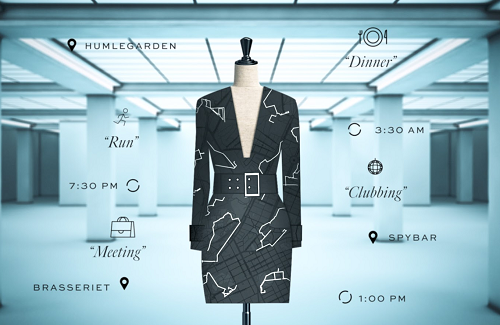 For digital players, this could serve as an unexpected catalyst that helps transition digitized clothes from fun experiment to must-have tool. The Forma app, launched in 2019, lets users try on fashion virtually by uploading a front-facing image of themselves or selecting a model. Thousands of outfits on the app, from brands such as Marc Jacobs, Proenza Schouler and Farfetch, are sourced directly. Brands can also add a Forma try-on option to their e-commerce pages. The company has seen a “huge jump” in inbound requests from brands and retailers, with pilots in the works.
Using virtual games to boost sales
Drest, a fashion styling game created by former magazine editor Lucy Yeomans lets players dress model avatars in digital versions of real designer clothes. Users can compete in style challenges, pay for in-game extras and click to buy the products from brands like Gucci, Burberry and Farfetch. In addition to the dramatic increases in app installs, sharing and connectivity have moved to the next level.
Roblox, which has offered virtual Nikes, added a user-generated content store to provide players with a catalogue to buy digital hats, hair, wings and glasses — all designed by other users — to dress their in-game avatars. The monthly average revenue for full-time creators selling items on the Roblox UGC store is about $26,000, with the most successful making an annual income that’s in the high six figures The top-selling item, a pair of “Deal With It” shades, sold 500,000 times.
Creators and designers understand their audience because they are in the same age category as buyers, believes chief business officer of Roblox, Craig Donato. While the platform originally was popular with children and Gen Z, now more than 40 per cent of users are older than 13.
A fertile environment for innovations
This unprecedented time is providing a fertile environment for digital designers to test concepts beyond games and apps. Last week, digital fashion house The Fabricant began testing Leela, a platform that creates 3D avatars from users’ submitted selfies. They can then see themselves in the same types of digital designs that last year sold for $9,500 at a blockchain conference.
Jonas Niedermüller and Grigorij Aronov have introduced digital fashion brand Rohbau with a collection of hoodies designed by Central Saint Martins alum Assaf Reeb. For €40, customers can submit an image that is then dressed in one of four hoodies that are chrome or transparent.
Online store visits to the brand, launched on 21 February, have doubled with sales increasing by 500 per cent, and influencer posts about the brand received approximately 49,000 likes.
Once the lockdown ends, many of these new trends will continue. As Niedermüller says, inertia is strong and everybody keeps doing more of the same when things are fine, so sometimes it takes something bigger to break the inertia.