Declining prices, falling orders threaten Indian cotton yarn mills
 When Prime Minister Narendra Modi extended the nationwide lockdown till May 3, most of cotton mills in India were shut down. However, the government allowed some spinners in Uttar Pradesh, Gujarat, and Punjab to resume production. A small number of spinners resumed work with operating rate ranging between 10 to 50 per cent, mainly focused on fulfilling recent contracts.
Despite this, production has not resumed to its full capacity due to the lack of workers and orders. Some factories have decided to shut down their operations after completing domestic sales and a small number of export orders.
Lackluster market with bleak shipments
Even before India entered into a lockdown, cotton yarn market was still lackluster with bleak shipments in spite of liberating policy on Indian yarn mills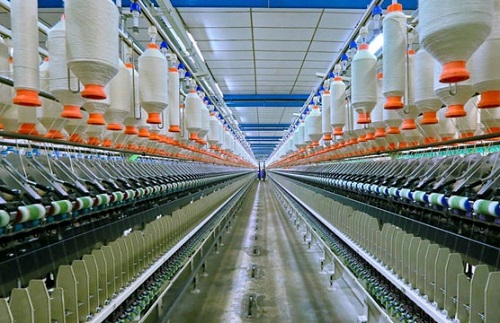 operation. As CCF Group Index reports, the price of Indian forward cotton yarn kept sliding with prices of yarns mainly exported to China, such as Indian carded yarn, combed yarn and open-end yarn declining since February. Prices of combed 32S dropped from $2.96/kg to $2.47/kg; those of carded 32S dropped from $2.59/kg to $2.29/kg, and of OEC10S fell from $1.66/kg to $1.52/kg.
Rapid decline in spinners’ profits
The spot price of Indian cotton also declined from Rs 39,400/maund at the start of Chinese New Year holiday to Rs 37,100/maund. Although this reduction was a result of depreciation of Indian rupees, profits of Indian spinners also declined rapidly. Based on the one-month and two-month cotton stocks, these spinners suffered losses about 10cents/kg.
Declining prices fail to stimulate orders
Cargo prices declined during the period as did the prices of spot imported yarn. The prices of Indian carded 32S declined to 19,100yuan/mt from 20,600yuan/mt in February. Compared to prices in United States dollars into RMB after-tax price, these prices failed to stimulate forward yarn orders. Since the outbreak of the epidemic, however, the prices of these yarns in United States dollars have fluctuated rapidly.
Lockdown leads to decline in orders
The social stock of imported yarn before the lockdown was at an all time high, and shipments were not fast. The operating rate of downstream fabric mills was around 30 to 40 per cent, much lower than that in same period last year. Post lockdown, the willingness of imported yarn mills to order cargos is unlikely to significantly improve before the orders of the fabric mills are improved. Due to the initiatives launched to prevent the spread of COVID 19 outbreak, it will take some time for Indian yarn mills to resume work. As the prices of Indian cotton and cotton yarn prices have been falling, the theoretical profits of spinners are mostly at a loss. Even transactions are limited due to poor shipments in the spot market.
Though the operating rate of Indian yarn mills is gradually recovering, it would be difficult for them recover to 100 per cent.
Comfort over fashion scores as loungewear becomes new dressing norm
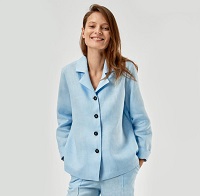 As the work from home culture grows across the world, Fashion Snoops women’s wear editor and head of intimates and loungewear Patricia Maeda and Nia Silva, Fashion Snoops’ materials editor, expect a few key apparel trends to wash over the loungewear and intimates categories in the next 18 months.
As per the trend, comfort will be the backbone of these categories with the required quality achieved through thoughtful, sustainable and aesthetically pleasing designs.
Restoring comfort
Maeda says one of the growing trends is of restoration of comfort. As the need to disconnect and rest is becoming increasingly relevant among millennials they are seeking products that facilitate calm. Hence, sleepwear and loungewear are becoming an essential part of their self-care regime. Silva points out, touch-centric fabrics work such as textured yarns with fuzzy irregularities and fluffy aspects communicate comfort to such consumers.
Maeda opines, skin friendly fabrics rule as soft sleepwear sets made with lightweight, refined natural materials enhanced with smooth cool-touch yarns are preferred by consumers. According to her, softening treatments can be added in the finishing process of these sets to boost the fabric’s comfort level. She also believes that fibers like Supima cotton are essential, not only to ensure the comfort of these sleepwear sets but also for their material strength.
The restore trend also touches on growing trend for restorative travel kits. These practical kits include items like socks, sleep masks and base layers and are often made with hidden functions, like temperature-regulating fibers.
Function over fashion
The second trend is of ‘bare’ and back to basics. As more people are taking a proactive attitude to enhancing the quality of their life, they prefer back to basics functional lingerie that offer a no-fuss comfortable wear. Maeda advises designers to eliminate uncomfortable elastic waistbands and underwire as well as pared-down concepts that reduce the number of chemicals and dyes on the wearer’s body. Soft breathable materials, including those made with man-made cellulose fibers like modal and Tencel, are key to success with consumers. She also reveals that sustainable stretch fibers by Roica and fibers made from citrus byproducts are picking up momentum.
Key items in the bare trend include lingerie sets, like triangle bras and hipster panties, in neutral colorways. Silva also indicates a growing interest in sheer fabrics amongst consumers. According to her, these fabrics emphasize the idea of second-skin intimates. For loungewear, the trend focuses on effortless dressing one-piece garments—either a roomy jumpsuit or cozy romper.
Spurt in street wear styles
Fashion Snoops touts the ‘Back to Street’ trend to be the next evolution of athleisure. This new category of all-purpose fashion offers consumers versatility, practicality and sophisticated style. The trend is spurred on by the growing number of freelancers and part-time employees who are creating the “gig economy” and by lifestyles that require people to wear multiple hats in a single day.
Tapping luxury through minimalistic trend
This trend emphasizes on the quality and luxury of a garment. Silk and satin, high-stretch ribbed knits and elements from fashion like Lurex threads and plush velvets are the preferred materials in this trend.
Key items include athleisure staples like joggers remade in silk, sweater dresses, cashmere sets and tops that play with sculptural volume like big sleeves and cinched waists. Focusing on practical and minimalistic aesthetic, this trend includes thoughtful details, like robes with waist-tie pockets.
World Economic Forum releases new blockchain toolkit
To help organisations improve pandemic preparedness and accelerate an economic rebound post COVID-19, the World Economic Forum (WEF) has released ‘Redesigning Trust: Blockchain Deployment Toolkit’, which enables leaders to maximise benefits and minimise risks of the technology. The first of its kind toolkit is the culmination of more than a year of efforts to capture best practices from blockchain deployment across industries.
Drawing on the global expertise of more than 100 organisations, including governments, companies, start-ups, academic institutions, civil society, international organisations and technology and supply chain experts, the toolkit helps companies manage the complexities of deploying this new technology and will accelerate its positive impact.
The toolkit has been piloted in a variety of different contexts by organisations developing blockchain solutions within their supply chains, including the Abu Dhabi Digital Authority, Hitachi, Saudi Aramco and a number of small and medium enterprises.
The aim of this toolkit is to maintain and strengthen the resilience of global supply chains.
L Brands amends revolving credit facility
L Brands has amended its revolving credit facility to ensure liquidity in light of the ongoing coronavirus pandemic. The parent company of Victoria’s Secret reduced its 2020 capital expenditures from its original forecast of approximately $550 million to approximately $250 million.
It also reduced its spring inventory receipts by approximately 45 per cent at Victoria’s Secret and 20 percent at Bath & Body Works versus last year. The Columbus, Ohio-based apparel group is not paying rent as the Covid-19 pandemic continues to force store closures across North America and globally.
Since the beginning of the COVID-19 crisis, L Brands has announced a number of measures to strengthen its financial flexibility including suspending its quarterly cash dividend as of the second quarter of fiscal 2020, and making a substantial reduction in capital spending and other expenditures.
In particular, it is reducing the base compensation of senior vice presidents and above by 20 percent, while CEO Leslie H Wexner and other members of the board of directors will take no cash salary at all.
Most of its store associates including those currently not working to support the online businesses or who cannot work from home have been furloughed since April 5, 2020.
US textile association urges Kenya to reverse ban on import of used clothing
The Secondary Materials and Recycled Textiles Association (SMART) in the United States has urged the Kenyan government to reverse its recent COVID-19 related ban on the import of used garments and shoes, saying all available research on the novel coronavirus shows they do not pose a threat to people who wear such garments or footwear.
The Kenya Bureau of Standards (KEBS) notified representatives of SMART, a non-profit association of for-profit businesses in the textile reuse and recycling industry, on April 1 that the country’s import of used garments and shoes had been suspended until further notice. KEBS implemented the ban as a precautionary measure to prevent the spread of the COVID-19, a decision made under the false pretenses that the virus can be transmitted through used footwear and textiles
According to guidelines issued by the US Centres for Disease Control and Prevention (CDC), mitigating whatever small risk might be present on soft, porous surfaces like textiles is easily addressed by laundering the textile according to manufacturer instructions in warm water.
This advice is supported by the fact that countless hospitals and other medical facilities are utilising reusable linens and personal protective equipment and hospital apparel to protect healthcare workers that are treating patients infected with COVID-19.
Furthermore, used clothing that is shipped overseas is typically in transit for weeks, if not months at a time–far longer than the virus has ever been shown to survive on even the most hospitable non-porous hard surfaces.
HanesBrands cuts discretionary costs
In order to navigate the challenges presented by the ongoing health crisis, HanesBrands, the Winston-Salem, North Carolina-based owner of brands has reduced its discretionary spending and capital expenditures, cut salaries and furloughed specific employee groups, as well as managing its inventory and supply chain production. These measures are expected to result in a $200 million saving in 2020. The company also intends to secure around $500 million in debt financing.
HanesBrands reported a loss in its first quarter as a stronger than expected performance early was undermined by the escalation of the coronavirus pandemic. For the first quarter ended March 28, 2020, the company announced a net loss of $7.8 million, or $0.02 per diluted share, down from earnings of $81.1 million, or $0.22 per diluted share, in the prior-year period.
The group’s quarterly net sales totaled $1.32 billion, representing a 17.1 per cent decline compared to the $1.59 billion reported by the company in the same period in the previous year. Along with the negative impact of the ongoing global health crisis, sales were also affected by HanesBrands’ exit from its C9 Champion mass program and DKNY intimate apparel license, which together represented around $94 million in revenue in Q1 2019.
Sales declined by 14 per cent in the company’s international segment, 11 per cent in its US innerwear segment and 29 per cent in US activewear. Before mid-March, the innerwear and activewear segments were performing better than expected, but both have since suffered a significant negative impact due to the Covid-19 pandemic.
HanesBrands’ international segment was impacted both by wholesale declines and the temporary closure of its brand stores, approximately 1,000 of which (out of a total 1,200) are located in international geographies. However, the company’s sales from its online channels increased by 5 per cent in the first quarter.
Philexport urges for technological up gradation to boost garment exports
Robert M Young, the trustee of The Philippine Exporters Confederation (Philexport) has revealed that post COVID-19, garment retailers in the country aim to focus on selling their remaining inventory. He urged the government to improve internet and manufacturing technology capabilities in the country.
He also urged the government to continue its negotiations for free trade agreements (FTA), especially with the US. According to him, selected goods such as garments, apparel, wearables can enter the US tax-free. This will encourage foreign buyers to buy more from Manila.
Post COVID-19, consumers will likely be more conservative in buying clothing. He expects garment orders from retailers to reduce by about 50 per cent as already 50-70 per cent of recent orders have been cancelled by buyers.
Columbia Sportswear predicts operating loss in Q2
Columbia Sportswear Company predicts a significant decline in net sales and an operating loss in its second quarter. First quarter sales of the Portland, Oregon-based outdoor apparel and sportswear maker declined 13 per cent year over year due to the pandemic. For the first quarter ended March 31, 2020, the company’s net sales totaled $568.2 million, down from $654.6 million in the comparable period in the previous year.
Its quarterly net income declined by 100 per cent to $0.2 million, or $0.00 per diluted share from $74.2 million, or $1.07 per diluted share, in the prior-year period.In order to deal with the problems presented by the current health situation, Columbia has implemented a number of measures to enhance financial liquidity and preserve capital. These initiatives include the expansion of the company’s domestic credit facility, the suspension of its quarterly dividend and share repurchases and the reduction of planned capital expenditures, with capital outflows expected to decrease by at least $130 million in 2020.
The company has also introduced cost containment measures, such as compensation adjustments, employee furloughs, the reduction of demand creation speed and the minimisation of discretionary expenditures, all of which is expected to result in a $100 million decrease in 2020 operating expenses.
Chinese factory owners to extend holidays
The dismal performance of Chinese apparel and textile factories due to lack of orders is now forcing factories’ owners to extend their holidays to save operational and overhead costs in order to survive. As China Customs Statistics (CCS) reveals, China’s textile and apparel exports declined by 15.13 per cent on Y-o-Y basis to clock $15.43 billion revenue in March 2020.
Textile yarns and fabrics declined by 6.32 per cent and exports of the same valued at $8.92 billion, while the export of apparel and accessories plunged by 24.83 per cent to earn $6.51 billion revenue.
Apparel exports from China fell by 20.3 per cent to clock $14.27 billion of revenues in the first two months of 2020 and the continued dip in March which indicates the country doesn’t have significant export orders to cater to.
In order to stop the pandemic, majority of apparel markets put a hold on their retail operations resulted in a drastic fall in Chinese exports even in April. The orders, which Chinese factories worked once they resumed operation in March, were pre-holiday orders. However, majority of these orders couldn’t be shipped due to overseas outspread of COVID-19 and resulted in overall decline.
Textile manufacturers located in Jiangsu, Henan and other manufacturing clusters did not receive new export orders and domestic orders were sluggish too till mid-April.
Indonesia’s textile associations urge for relaxation in government polices
Indonesian Filament and Fiber Producers Association (APSyFI) and the Indonesian Textile Association (API) have requested the government for relaxation policies. One of the requests includes penalty fee waivers from state electricity company PLN and state gas company PT PGN for textile companies with electricity and gas consumption below the minimum threshold.
The associations also complained about the financial sector not providing credit relaxations to textile companies, even though the Financial Services Authority (OJK) has issued regulation No.11/2020 on credit restructuring for companies impacted by the pandemic.
They say around 70 per cent of textile and textile product (TPT) companies in Indonesia face permanent closure due to plunging domestic and export demand. At the moment, 80 per cent textile companies in the country have halted operations temporarily while facing cashflow issues, so financial support from the government is urgently required.
The association warned that massive business closures could cause a spike in unemployment, as around 1.8 million TPT industry workers are already furloughed or laid off because of the pandemic.
More...
ITME 2020 postponed to Dec 2021
‘Covid 19’ has brought disruption and distress for the general life, industry and economy, especially for the textile and textile engineering industry all over the world.
Under the circumstances, India ITME Society has postponed India ITME 2020 by one year to December 2021. The event will now be held from December 08-13, 2021 in Greater Noida.
The revised exhibitor manual and schedules shall be available at our website(https://itme2021.indiaitme.com) shortly. All participation guidelines remain same and the payments shall be adjusted against revised exhibition dates.
COVID 19: Retailers struggle to find buyers as pandemic forces sale
 As the pandemic tightens its grip on high streets, dozens of distressed retailers are seeking buyers to save themselves. Prominent amongst these are” TM Lewin and footwear chain Office and Monsoon/Accessorize, reveals Drapers. Retailers like Cath Kidston, and Oasis and Warehouse Group had also appointed advisers to initiate sale before both businesses collapsed earlier this month.
In future, many more retailers are likely to put their businesses up for sale as the pandemic is pushing them to the brink. Left with little cash, these retailers are being left with no choice but to pursue a potential sale.
Dwindling businesses fuelling sales
One major reason retailers are selling is due to the dwindling value of their businesses. As Matt Truman, Co-founder of retail and consumer innovation investment firm True reveals the pandemic has lowered the value of these businesses to a fraction of what it was five weeks ago. There are two types of businesses that are selling, those who were struggling anyway, and those that probably do not deserve to go under but will be in trouble because of prevailing conditions.
Hesitation amongst buyers
An important challenge that arises before these sellers is of finding appropriate buyers. Some players previously known for hovering on high streets, chiefly Sports Direct’s Mike Ashley, and Edinburgh Woollen Mill’s Philip Day, could have had their appetites for acquisition dulled. Others, that that already have in-store partnerships with third-party fashion brands, might look at the market.
Even acquisitions agreed before the outbreak and subsequent lockdown are not being considered safe to be executed. For example, Moss Bros’ suitor Brigadier Acquisition Company, owner of Crew Clothing, is trying to retract its £22.6milion deal to buy the tailoring chain, a mere month after originally making the offer in early March.
Stability and innovation to succeed
A consultant at a large investment firm with stakes in high street retailers further warns many more retailers are likely to abandon their acquisition plans a result of the pandemic. However, players who specialize in supporting businesses with some kind of problem will still look.
Truman opines two types of retail businesses will emerge winners from the pandemic: those who provide staple products and those who are focused on innovative proposition – which includes product.
Growth potential and control to drive sales
David Kaplan, Partner and solicitor at law firm Nelsons, agrees retail businesses with large store estates are unlikely to appeal to buyers who will now look for growth potential and control over overheads. He believes, one option that could emerge is buyers cherry picking what they want from distressed retailers – such as just the brand name and key stores – rather than the entire bricks-and-mortar estate.
Retail and acquisitions expert Paul Cuatracasas, founder of investment banking firm Aquaa Partners views retailers who have failed to adapt to changing times will struggle. They would have little choice but to put the business up for sale and see what they can get for it.
Agrees Moss Bros suitor Brigadier Acquisition Company, the owner of Crew Clothing, who is trying to retract its £22.6million deal to buy the tailoring chain According to him, strong ecommerce retailers might see it as a good time to acquire businesses with a physical presence relatively cheaply and explore bricks-and-mortar. Buyers might also be interested if the business up for sale has retained some brand name value and still means something to consumers.
Though far from ideal, the coronavirus pandemic has left retailers with no choice than to conduct a sale and find an appropriate buyer.
COVID-19: French luxury brands launch La Mode S’Engage auction
As per Business of Fashion, the biggest names in French fashion have come together to help provide relief in response to the coronavirus pandemic. These brands have started a one-off auction, called La Mode S’Engage, to raise money for the non-profit organization #ProtegeTonSoignant, which sources and distributes essential supplies and personal protective equipment to healthcare workers on the frontlines in France.
The organization was created by Ami’s chief executive Nicolas Santi-Weil and Sarah Adelman, former founder of the infamous Colette boutique. Together, the duo has secured some of the country’s most influential fashion houses. Auction entrants will include: Louis Vuitton, Chanel, Dior, Celine, Balenciaga and Comme des Garçons, among others. Each house has been tasked with either customizing an object from their existing archives or creating something entirely new and unique—but each piece must somehow include the foundation’s electric blue colorway.
Designers who are currently practising social distancing without access to studio space will be able to submit sketches and offer made-to-order services to potential bidders.
La Mode S’Engage auction will go live from May 1 and will run through Monday, May 4. Bidding starts at €100 but Santi-Weil and Adelman hope these offerings will fetch in the millions—#ProtegeTonSoignant currently has over 167 requests for medical supplies, which is worth about €20 million.
Iconix sells Umbro China business
Iconix Brands Group Inc has entered into an agreement to sell all its equity interests in Umbro China to HK Qiaodan Investment. The deal earned the New York-based brand management company $62.5 million and includes the sale of the Umbro sports brand in the People’s Republic of China, Hong Kong, Taiwan and Macau.
The Umbro China sale is anticipated to close on or prior to September 15, 2020. The company, which owns brands like Joe Boxer, Danskin and Lee Cooper, anticipates using the net proceeds from the sale to repay amounts due under its existing financing arrangements and otherwise for general corporate purposes.
Last month, the company announced a net loss of $95.0 million in the fourth quarter. In the full fiscal year 2019, Iconix’s revenues totaled $149.0 million, a 21 percent decrease from $187.7 million in the previous year. Annual net loss was $111.5 million, or $10.56 per diluted share, compared to a loss of $100.5 million, or $14.93 per diluted share, in fiscal 2018. Due to uncertainty caused by the ongoing Covid-19 pandemic, Iconix has not yet provided financial guidance for fiscal 2020.