VSF exports decline by 4% from January-September 2020
VSF export of India totaled 54,000 tonneduring January-September this year and the import volume was 33,000 tonne for the same period, respectively down by 4 per cent and 3 per cent from the comparable 2019 level. The minor decline reflects that the import and export starts to further recover and we also maintain the expectation of rising apparent consumption of VSF around 30,000 tonne from India in 2020.
Rayon yarn import of India in Jan-Sep totals 47.2,000 tonne, up 46 per cent y-o-y, but export volume decreases by 18 per cent to 19.8000 tonne. The import of rayon single yarn increased by 41.4 per cent to 45.2,000 tonne and export amounted to 10.8000 tonne. The percentage of single yarn in imports improved further, which is 95per cent, 97.5 per cent and 98 per cent respectively from July to September. Rayon yarn apparent consumption growth of India can be 35000 tonne in 2020 and that of single yarn could be over 40,000 tonne, offsetting the expanding gap between blended yarn import and export.
Oxam report accuses Australian brands of sustaining systemic inequality
A new research from Oxam has accused some of biggest Australian fast fashion brands of sustaining systemic inequality by purchasing clothing from factories where workers are paid poorly and forced to work long hours.
Oxfam found that of the major retailers in Australia, H&M was deemed to be the most equitable with its suppliers while Mosaic Brands – owner of Katies, Rivers and Crossroad – was deemed to be the worst.
The report, titled Shopping for a Bargain ranked 10 fashion retailers in Australia including Best&Less, Big W, Cotton On, H&M, Inditex (Zara), The Just Group, Kmart, Myer, Mosaic Brands and Target.
It found that retailers were accused of aggressively negotiating prices, providing short lead times and making last-minute changes to orders that directly impacted factory workers' lives.
All of the above retailers source their clothing from Bangladesh, who Oxfam approach to grade the retailers on how fair they were with their pricing, as well as their willingness to negotiate.Ranking in a four-star system, the Bangladeshi factories scored H&M the highest with 3 out of 4, followed by Big W, Kmart and Target who all scored 2.5 out of 4.
Wool prices on a rebound: AWI
At the organization’s annual general meeting, Colette Garnsey, Chairman, Australian Wool Innovation (AWI), informed wool prices are seeing a rebound on the back solid underlying support. For the week ended November 20, the benchmark Eastern Market Indicator declined by 24 cents to $8.45 after an 18 cent pop to 8.69 a week earlier.
Garsney said, lower wool prices and other factors has resulted in a 45 per cent fall in AWI’s revenue in 2019-20. There remained a significant uncertainty in the global industry in the short term, particularly with large parts of Europe and North America heading back into lockdowns as they head into winter. However, she said the longer-term tailwinds for our fiber are undiminished given its sustainability, traceability, wearability and durability.
Stuart McCullough, CEO, AWI said, the demand for Australian wool overwhelmingly came from one place in 2020–China–although AWI was also pursuing other markets. He said, WI has also pursued an “Emerging Markets” strategy for eight years that has seen an increase in processing and consumption of wool in places including India, Vietnam, Bangladesh and Sri Lanka.
Invista expands Nylon Polymer Plant capacity
Invista Nylon Chemicals (China) has expanded capacity of its 40,000-ton per year nylon 6.6 polymer plant at the Shanghai Chemical Industry Park (SCIP) to 190,000 tons annually. As per Sourcing Journal, this is Invista’s fourth continuous polymerization line at SCIP, where the company now has 30,000-ton per year autoclaves and 160,000-tons annual continuous process nylon 6.6 polymer capacity.
The company is also developing an ADN plant at the Shanghai Chemical Industry Park that will deploy the company’s most-advanced, energy-efficient ADN technology in China. The plant will integrate with Invista’s existing HMD and polymer facilities to directly supply domestic customers with the key building blocks to produce nylon and other specialty materials, such as high performance polyamides and polyurethane coatings, in China and throughout the Asia Pacific region.
A subsidiary of Koch Industries since 2004, Invista brings to market the proprietary ingredients for nylon 6.6 and recognized brands, including Stainmaster, Cordura and Antron.
Intangible assets of companies jump to $10.8 trillion: Brand Finance
As per a Brand Finance report, value of intangible assets of the world’s most valuable companies has jumped to $10.8 trillion as of September 1. During the COVID-19 crash, this value had dropped by $1 trillion. The top 10 valuable companies in terms of intangible assets are: Apple, Amazon, Aramco, Microsoft, Alphabet, Facebook, Alibaba, Tencent, Tesla, and VISA, respectively. These companies have the ability to differentiate themselves with limited physical assets, defending price and demand, with 32 internet and software and technology & IT companies included in the top 100 ranking of companies with the highest total intangible value.
A few apparel and cosmetics companies made it to the list this year. LVMH Moët Hennessy Louis Vuitton was ranked 31st. The Paris-based luxury goods conglomerate – which owns over 70 luxury brands, including Louis Vuitton, Dior, Celine, Givenchy, and Loewe – has a total intangible value $233 billion, according to Brand Finance’s calculations, with that total intangible value accounting for 88 percent of the company’s overall enterprise value.
At the same time, Brand Finance notes cosmetics, pharma and healthcare companies continue to be highly intangible, due to the combined impact of branding and technology, which play a critical role in value-generation for these industries.
Nike ranks 49th with a total intangible value of $172 billion, which represents 94 per cent of the company’s enterprise value, and cosmetics giant L’Oreal is at number 55th spot (down from 53rd last year). Its total intangible value reached $166 billion this year, which is 90 percent of its enterprise value.
Brand Finance states the enormous volatility not just in the market but more specifically in terms of the intangible value of the world’s biggest companies suggests fundamental flaws in investor understanding of company assets. The London-based business valuation consultancy asserts that most investors do not fully understand the underlying value of the companies they invest in, leaving room for wildly fluctuating share prices and mass panic.
CCI to complete major export order to Bangladesh by December
As per the Cotton Corporation of India (CCI), a large cotton export order between India and the Bangladesh is expected to be completed in December. The total size of this export order is 1.5 million bales. In 2019/20, CCI acquired 10.5 million cotton bales, of which 4.5 million bales remain unsold. Since 2020/21, CCI has acquired 1.1 million bales.
As per a report in the China Textile Magazine, Bangladesh currently imports 2.5-3 million bales (170 kg/bag) of cotton from India every year. In June this year, India began discussing its cotton exports with Bangladesh, China, Vietnam and Indonesia. The discussions revealed that Vietnam currently has sufficient stocks to last until December. The country imports 400-500,000 bales from India each year.
Gap Inc reports 5 per cent increase in comparable sales in Q3
For the third quarter ended October 31, 2020, American fashion company Gap Inc reported a 5 per cent increase in its comparable sales as the retailer’s Athleta and Old Navy brands continued to shine. Net sales of the San Francisco-based company remained flat at $3.9 million compared to the same period in the prior year. Brick and mortar sales declined by 20 per cent which were offset by a 61 per cent increase in online sales.
The retailer’s Old Navy brand posted 15 per cent and 17 per cent increases in its net and comparable sales, respectively, with the acceleration of its online business making a significant contribution to this progress.
Net sales of Athleta increased 35 per cent, while its comparable sales rose 37 per cent. Its digital sales contributed more than 50 per cent of its revenues in the quarter, the brand also benefited from its recent expansion into selling masks.
In contrast, Gap’s eponymous flagship brand experienced a 14 per cent decrease in its quarterly net sales and a 5 per cent decline in its comps. Banana Republic’s net sales fell by 34 per cent, while the brand’s comparable sales dropped 30 per cent.
The company also appointed two new executives. Effective January 2021, Asheesh Saksena has been appointed as the group’s chief growth officer, a newly created position focused on leading the retailer’s growth initiatives. He previously served as president of Best Buy Health.
Sandra Stangl has been appointed as the new president and CEO of Banana Republic, a role in which she will help lead the brand’s repositioning efforts, starting December 2020.
China’s apparel sector stages faster recovery than other countries: USDA
Recent trade data from the HS Code reveals COVID-19’s impact and signs of recovery in the sector, says a USDA report. According to this report, China’s recovery has been fastest among all countries. However, the speed of recovery in consumer demand is uncertain, and the impact of working remotely is not known. In April and May, global apparel imports dropped dramatically with US imports dropping 55 per cent in May. Imports by EU and UK dropped over 40 per cent while imports by Japan declined 30 per cent during the same period.
This decline in textile and garment exports was noticed across all major markets, Exports by Bangladesh and India fell by 85 and 90 per cent respectively, while shipments from Pakistan, Turkey, and the European Union declined by 60 per cent.
The impact of COVID-19 hit both demand and supply at the same time. Lockdown restrictions slowed consumer spending while also halting cotton-related processing. Spinning mills’ operating rates in India, Pakistan, and the United States fell over 90 percent, while declines were slightly lower in China. Similar to the export data, Vietnam’s operating rate declined by only 30 percent.
Cone Denim launches Cone Community Collection
In order to support its efforts to end the global water crisis and increase access to clean water Cone Denim has launched ‘Cone Community Collection’. It features a teal selvage I.d. for water conservation awareness, these denims are made from OCS-certified 100 per cent organic cotton with comfort stretch and dyed using Distilled Indigo, the cleanest on the market and part of Cone’s eco-friendly dye technologies. Sustainability and conservation remain a core focus that drives Cone’s development and production of new denims with significant reductions in water consumption, chemicals and energy used throughout the process.
The denims are fueled by the spirit of collaboration. From passionate discussions across the brand’s design team, to partnerships with its sister brand American & Efird to supply the teal I.d. yarn to selecting Water.org to receive donations from the sale of its Clean Water denim, the brand aims to inspire and empower people through dialogue, collaboration and action to raise awareness for key social issues.
It will donate a portion of proceeds from the sale of its water-inspired Clean Water selvage denim to Water.org, an international nonprofit organization that has positively transformed millions of lives around the world with access to safe water and sanitation.
Fast Retailing ranked on the Dow Jones Sustainability index
For the first time in 2020, Fast Retailing secured a position on the Dow Jones Sustainability Index. This year, the index ranked retailers and brands like Moncler SpA, Burberry, Hugo Boss, Kering, H&M, Industria de Diseño Textil, SA, Lojas Renner SA, Marui Group Co, Rakuten Inc, Gildan Activewear, Kohl’s Corp, Gap Inc, Wesfarmer, etc. The number of participants on this index increased by18.9 per cent this year from 2019.
Moncler was named a leader based on total sustainability score in 2020. The company was honored with this title for the second consecutive year which proved sustainability to be its strategic asset. Since its launch 21 years ago, the index has also been listing adidas on various top positions. However, this year the brand missed its place on the index. It now plans to analyze the results and increase its score next year.
More...
Urban Outfitters Q3 profits rise 38 per cent
The third quarter profits of Urban Outfitters, owner of brands Anthropologie, Free People, Terrain and Bhldn increased 38 per cent year-over-year, thanks to strength in the Urban and Free People brands, along with reduced overhead expenses. For the three-month period ending October 31, the company’s total revenues declined from $987 million to $969 million. However, many of the company’s losses were in the food and beverage business. Its apparel brands, Urban Outfitters, Free People and even Nuuly increased their profit margins, year-over-year.
Urban Outfitters’ revenues increased from $374 to $394 million; that of Free People’s increased to $206 million from $205 million a year ago, while Nuuly logged $6.7 million in revenues, up from more than $2 million last year. However, the revenues of Anthropologie declined to $358 million from $398 million a year ago.
As a result, the company’s profits increased to $76.7 million for the quarter, from $55.6 million a year earlier. Not surprisingly, comparable retail segment net sales were flat for the quarter as a result of negative retail store sales and reduced in-store traffic with coronavirus cases on the rise and many consumers still fearful of in-person shopping experiences.
By brand, comparable retail segment net sales increased by 17 percent at Free People and 4 percent at Urban Outfitters, but fell by 9 percent at the Anthropologie Group.
The company ended the quarter with $624 million in cash and cash equivalents and 630 stores, or 250 Urban Outfitters locations, 234 Anthropologie units and 146 Free People shops, in addition to the company’s e-commerce businesses and catalogues. Free People also opened its first FP Movement stand-alone store during the quarter.
India’s RMG exports rise by 10% in October ’20
As per the data released by the Ministry of Commerce, India registered a massive increase in its apparel exports in October ’20 both on monthly as well as yearly basis.
A report by the Apparel Resources shows, India’s RMG exports increased by 10 per cent in October to $ 1.17 billion from October ’19. Similarly, India’s apparel shipments to the world also surged by 79.67 per cent on a monthly basis in October as compared to September when it shipped apparels worth just US $ 651.16 million.
However, India apparel exports during April-October ’20 period declined by 29.41 per cent from the same period of 2019 to $ 6 billion.
Though the increase in exports signals an export recovery in all major export destinations, a fresh wave of lockdown across major countries threatens to derail India’s exports in coming months.
Localization can make India the epicenter of global textile growth
 In June this year, home textiles major Welspun India forayed into the health and hygiene vertical by creating antimicrobial towels, sheets and carpets. Besides, antiviral products, masks and other goods, the company also launched several sleepwear products. The company started by manufacturing masks and distributing it in its communities, notes Dipali Goenka, CEO and Joint Managing Director in an interview with The Economic Times. She believes the next generation of textiles will focus on value and extensions. And the importance of health and care economy will grow, be it in terms of product, food, FMCG or home space.
Demand for sustainable textiles to grow
Goenka emphasizes besides, health and hygiene, consumers will emphasize on sustainability in textiles which is the second biggest polluter in the world. There will be increased demand for anti-viral fabrics that help in inhibiting the micro-organisms, says Goenka. According to her even sleep inductive textiles will become important as they will promote physical and mental well-being. Currently, there is a surge in demand for home textiles with all of Welspun’s factories working at full throttle. The company is highly dependent on MSMEs and hopes to make it the foundation of its future business.
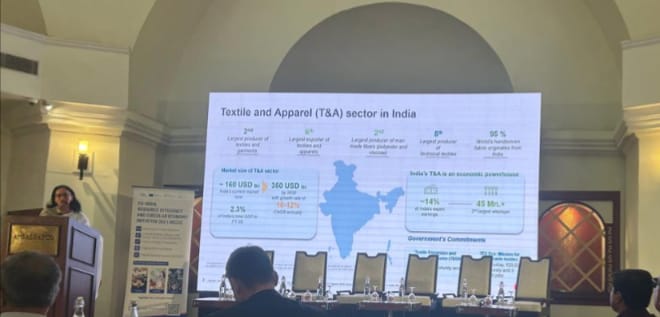
Textile industry to save India from COVID-19 downfall Goenka expects India to create 90 million non-farming jobs in the next couple of years. According to her, textile is the biggest employer after agriculture in the country. Hence, the industry needs to create an ecosystem to make India an important growth center for textiles. Industry leaders need to focus on localization which will help India become the bright spot of the textile world, she adds.
Textiles will also become an important industry for India in the next two years as more people will move towards non-farming jobs. Demand for home textiles will rise as consumers will spend more time at home, adds Goenka. The textile industry will emerge as a savior from the current crisis as India not only has the required manpower, technical knowledge and vertically integrated facilities but is also the largest producer of cotton in the world after China, she says.
ROICA launches Imagining Sustainable Fashion Award
ROICA has launched the ‘Imagining Sustainable Fashion Award ‘that aims to recognize companies that have made investments, have innovated to achieve loftier ethical and responsible goals, but have not been able to communicate them. Takaaki Kondo, General Manager of ROICA™ Global Marketing Department of Asahi Kasei and Main Sponsor of the Award says, “ROICA™ is a world leading company bringing forward innovation and sustainability to manufacture premium smart and high-tech stretch for the wardrobe of tomorrow.”
The company strongly believes that together with responsible innovation, communication is the key to bring sustainability to the next level: to inspire, educate, inform and allow both professionals and consumers to make the right choices. That’s why it decided to endorse the “Imagining Sustainable Fashion Award.
Hashimoto, Senior Managing Director, Asahi Kasei Advance says, “Consumers’ needs have moved towards new pillars such as traceability, transparency, water, energy, CO2 savings, material health and social values. In this perspective, innovation plays an important key role, as it makes it possible to achieve important objectives and targets from a sustainable point of view. But when it comes to communicate all these values, we still experience some difficulties nowadays. Imagining Sustainable Fashion Award is the opportunity to find the most effective way to spread this new era of consciousness.”
The project is collaboration between Connecting Cultures, a non-profit research agency spearheading the Out of Fashion platform, and C.L.A.S.S., a smart platform that offers innovative tools for those directly interested in responsible fashion and textile business.