SCI to combat audit fatigue by aligning standards across key areas
An initiative of the International Apparel Federation (IAF) and the International Textile Manufacturers Federation (ITMF), the Standard Convergence Initiative (SCI) aims to combat growing audit fatigue by aligning third party and brands/retailers’ proprietary standards across four key areas. Multi-stakeholder initiatives such as the Social & Labor Convergence Program are already tackling the issue of audit fatigue. To complement these efforts, retailers plan to adopt streamlined third-party standards in place of proprietary standards.
The SCI has just released preliminary results of assessing the degree to which standards are prepared to converge across four key areas. The preliminary results assess six prominent standards operating in the textile and footwear sector, specifically: amfori BSCI, Fair Labor Association (FLA), Global Organic Textile Standard (GOTS), Made in Green by Oeko-Tex, SA8000 and WRAP.
The SCI website will promote standards that initially show a high preparedness for convergence and, subsequently, work toward increased convergence. Once standard bodies understand their position on the spectrum of convergence, they will be encouraged to work toward a common goal of increased alignment across certain standard requirements, quality assurance processes and oversight methodologies.
Sports brands to release high-fashion collaborations in the market
Nike and Adidas will release their highly anticipated high-fashion collaborations next month, with Jacquemius and Gucci respectively. Brand Ellesse launched an Emily Ratajkowski-fronted collaboration with Michael Kors this month alongwith New Balance which launched its collaboration with cult fashion brand Aries in March. Meanwhile Fila is expected to launch a collaboration with London-based Serbian designer Roksanda Illncic in August.
Earlier, sports brands would launch collaborations around trainer launches and sports star sponsorship deals but nowadays, it is proving hard for brands to ensure player exclusivity, says Julie Pont, Creative Director, Heuritech, a French fashion insights agency. While sports-fashion tie-ups are nothing new, these fashion brands are far removed from the sportswear industry, adds Pont.
Roksanda describes its forthcoming collaboration with Fila – which features billowing dresses and duvet coats – as an encounter between two very different identities to create a new one, at once unexpected and authentic.
The logic behind these partnerships is about raising sports brands’ fashionability, while also easing the entry points into fashion for younger customers. Though practical, these fashion pieces are not always designed for activity, says Emily Gordon-Smith, Head-Fashion, Stylus.
The collabs make some notable pieces, she adds, predicting the accessories – for example, the Gucci bucket hat and Gazelle trainers, the Roksanda moon boots and 1980s-style barrel bag, the Jacquemus X Nike Humara trainers – will sell out first. Collabs is expected to influence the fashion landscape and elevate the aesthetics of athleisure.
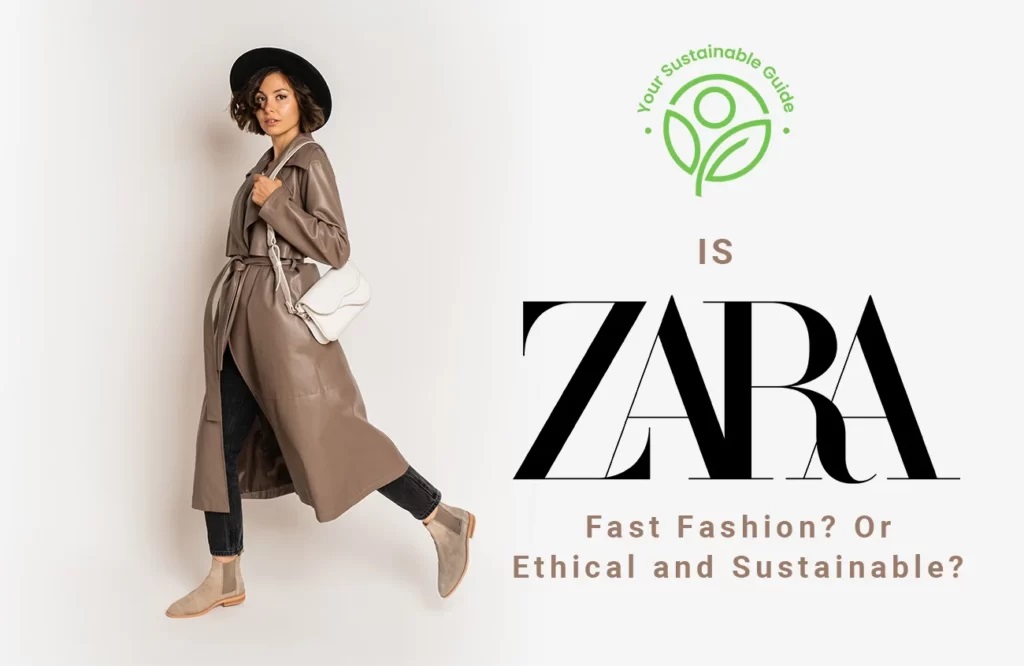
According to Gordon-Smith, this new wave of collabs will have a significant impact on the high street with elevated sports looks to sell in shops like Zara from June.
Move to be body-inclusive leaves Old Navy customers frustrated: Report
Decision to sell clothes for women of all body types has created two big problems Old Navy, says a Wall Street Journal report. It has left the brand’s customers irritated as they have not been able to size their desired size, and it has made it impossible for the brand to find stocks it needs to discount to sell. The GAP-owned retailer accounts for far more of the company's sales and profits than the GAP and Banana Republic chains.
As per a Business Insider report, Old Navy developed its inclusive sizing as well as research on the basis of data provided by the National Center of Health Statistics The Center found women aged 20 and over weighed an average of 170.8 pounds as of 2016. The company scanned almost 400 women's bodies to create digital avatars and build new fit blocks for sizes 20 to 28.
Clothing brands like Good American, Veronica Beard or Universal Standard have long tried to provide sizes to all body sizes. Other big brands like Victoria’s Secret have also embraced size inclusivity by adding more ranges. Fashion designer Diane von Furstenberg says, brands should not penalize the small people by making them pay more for smaller sizes.
The Children’s Place Q1FY’22 sales decline by 16.8%
The Q1 FY’22 sales of largest pure-play children’s specialty apparel retailer The Children’s Place declined by 16.8 per cent to $362.4 million in the three months ended April 30, 2022, compared to $435.5 million in the three months ended May 1, 2021, and decreased by 12.1 per cent, compared to $412.4 million in the three months ended May 4, 2019. The decrease in net sales compared to Q1 2021 was primarily due to lapping the COVID-19 stimulus relief program last year, the impact of unprecedented inflation on our customer, prolonged unseasonably cold temperatures through the end of the quarter in our major markets, and the impact of permanent store closures. Comparable retail sales decreased 16.9% for the quarter.
Gross profit of the brand decreased by $46.3 million to $141.9 million in the three months ended April 30, 2022, compared to $188.2 million in the three months ended May 1, 2021, and decreased $10.1 million compared to $152.0 million in the three months ended May 4, 2019. Adjusted gross profit decreased by $47.3 million to $141.9 million in the three months ended April 30, 2022, compared to $189.2 million in the comparable period last year, and decreased $9.5 million compared to $151.4 million in the comparable period in 2019. Operating income decreased $46.6 million to $19.3 million in the three months ended April 30, 2022, compared to $65.9 million in the three months ended May 1, 2021 and increased $14.3 million compared to $5.0 million in the three months ended May 4, 2019. Adjusted operating income decreased $50.1 million to $20.6 million in the three months ended April 30, 2022, compared to an adjusted operating income of $70.7 million in the comparable period last year and increased $14.0 million compared to $6.6 million in the comparable period in 2019. Net income decreased $25.4 million to $19.8 million, or $1.43 per diluted share, in the three months ended April 30, 2022, compared to net income of $45.2 million, or $3.01 per diluted share, in the three months ended May 1, 2021 and increased $15.3 million compared to $4.5 million, or $0.28 per diluted share, in the three months ended May 4, 2019. The Company ended the first quarter of 2022 with 665 stores and square footage of 3.2 million, a decrease of 8 per cent compared to the prior year and a decrease of 30 per cent compared to the end of Q1 2019 when the Company operated 971 stores pre-pandemic. The company plans to close a total of approximately 40 stores this year.
Patrik Frisk resigns as President and CEO of Under Armour Inc
Patrik Frisk, President and CEO, Under ArmourInc has resigned from his position in the company with effective from June 01.2022.
The Baltimore-based apparel maker has named Colin Browne, Chief Operating Officer as nterim CEO, while it searches for a permanent replacement. Browne joined Under Armour in 2016 and succeeded Frisk as operating chief in 2020.
Frisk, who joined in 2017 and was named as CEO in 2020, will remain with the company as an adviser through September 1.
Frisk helped Under Armour " dramatically improve" the health of its business over the last couple of years by focusing on building inventory, says Simeon Siegel, Analyst, BMO Capital Markets.
However, earlier this month, Under Armour forecast full-year profit below estimates and posted a surprise loss for the fourth quarter, as it struggles with supply chain disruptions and lockdowns in China.
Underperforming rival Nike’s 34 per cent decline, Under Armour’s stock have fallen by over 50 per cent this year. Like Nike, the brand continues to be troubled by , transportation delays.
Lenzing’s new sustainability report emphasizes on balancing needs with circularity
Titled ‘Linear to Circular, the recently released 2021 Sustainability Report by the Lenzing Group emphasizes on the company’s focus on balancing its needs with the spirit of the circular economy.
Lenzing continues to pursue climate neutrality with its two key projects in Brazil and Thailand. The company has also made several investments at sites in China and Indonesia. It aims to reduce its carbon emissions by 50 per cent by 2030 and to be net-zero carbon emissions by 2050
Another of Lenzing’s climate change initiatives includes its partnership with Swedish pulp producer Södra. The two companies, which have promoted the circular economy in the fashion industry for several years, have teamed up to reduce global textile waste. They also plan to expand capacities to recover pulp from waste textiles. Their goal is to recycle 25,000 tons of used textiles annually by 2025.
In 2021, Lenzing introduced the first Tencellyocell fibers made from wood- and orange-based fiber pulp. The upcycling of orange peels is part of the Tencel Limited Edition initiative, which is another stop in the company’s effort to develop closed-loop solutions with partners along the value chain. The company also has introduced the first carbon-neutral fibers on the global nonwovens market under the Veocel brand.
The company received several awards worldwide in 2021 for its achievements, especially in the sustainability area. It was one of 14 companies worldwide to receive a AAA rating from global nonprofit environmental organization CDP for its environmental leadership in climate change, water security and forest conservation.
Also, in the EcoVadis CSR rating, Lenzing achieved platinum status for the first time, ranking among the top 1 per cent of companies evaluated worldwide in terms of the environment, fair working conditions and human rights, as well as ethics and sustainable procurement.
Morarjee Textiles’ profit grows by 19.52% in Q4FY’22
In its fourth quarter ended March 31, 2022, Morarjee Textiles was able to record a 19.52 per cent surge in net profit to Rs -19.83 crore from Rs -23.70 crore during the quarter ended December 31, 2022.
As per an Equity Bulls report, the company’s total income surged by 3.19 per cent to Rs. 79.89 crore during the fourth ended March 31, 2022 as compared to Rs. 77.42 crores during the third ended December 31, 2021.
The company’s EPS increased by 19.42 per cent to Rs. -6.52 for the period ended March 31, 2022 as compared to Rs. -5.46 for the period ended December 31, 2021.
On a Y-o-Y basis, Morarjee Textiles’ the decline in profit grew by 73.37 cent to Rs -23.70 crore from Rs -13.67 crore in the corresponding quarter last year. The company’s total income grew by 23.14 per cent to Rs. 79.89 crore during the period ended March 31, 2022 as compared to Rs.64.88 crore during the period ended March 31, 2021.
The company has reported EPS of Rs.-6.52 for the period ended March 31, 2022 as compared to Rs.-3.76 for the period ended March 31, 2021.
Ingka Group plans €3 billion investment to ramp up store network
IKEA retailer Ingka Group plans to set up new stores and expand current ones with an investment of € 3 billion ($3.2 billion) through 2023. As per an Indian Retail report, the company aims to modify its out-of-town outlets to double up as e-commerce distribution centers.
The company will spend a third of the investment on its operations in London. Most of the capital will spent on its existing stores in the city, as per TolgaOncu, Retail Manager, Ingka Group
In the past few years, Ingka has adapted to the rise in online shopping by developing smaller stores, revamping its website, and rolling out a new app as well as digital services such as remote planning tools.
During the pandemic, IKEA has seen record demand for its cut-price home furnishings as people spent more time at home.
Over the past three fiscal years, Ingka has invested around 2.1 billion euros in new and existing stores in its 32 markets.
The latest spending will also focus on new traditional "blue-box stores" in Romania, China, and India, and new city stores, as well as planning studios, in Canada, Denmark, Italy, India, the United States, and other countries.
India’s RMG exports grow by 16.4% in April’22
India's readymade garment (RMG) exports grew by 16.4 per cent to $1,510 .8million during the month of April of the current financial year 2022-23. In financial year 2021-22, India achieved a growth of 30.4 per cent in garment exports. Industry experts said that garment exports rose in terms of value, but the volume of exports might have declined.
Experts argued that costlier raw material, including cotton, has pushed up garment prices which caused export value figures to soar.
According to the latest data from the government, India’s garment exports in April 2021 totaled $1297.7 million. In April 2022, the garment exports surpassed the pre-COVID levels in April 2022. In April 2019, India’s garment exports stood at $1408.8 million.
According to government data, garment exports not only increased by 30.4 per cent on annual basis, but also exceeded the pre-pandemic level in financial year 2021-22. Garment exports from India stood at $160.18 billion in the financial year 2021-22, while in financial year 2020-21, exports stood at $122.85 billion. The financial year 2020-21 began with lockdowns, which affected the country's economic activities and normal life in the first quarter. Prior to the pandemic, garment exports were $155.09 billion in FY 1019-20. The exports had fallen by 20.8 per cent in the FY 2020-21 due to the pandemic.
Global wool market to reach $49 billion by 2029-end
Currently worth $33.8 billion, the global wool market is projected to grow to $49 billion by 2029-end. As per a Persistent Market Research report, the wool market is expected to grow at 3 per cent CAGR from 2019-2029.
This significant growth in the global wool market can be attributed to several factors including the increasing disposable income of consumers across various geographies, which has significantly boosted the spending capacity of consumers on apparels and interior textiles.
China is one of the prominent regions in terms of the growth of the textile industry. A prominent share of the global wool market volume is consumed from the textile producers located in China. The wool consumption is comparable in all the end uses of wool, which include the production of apparels, interior textiles, and floorings.
Furthermore, other favorable conditions, such as economical textile production, the availability of raw material, and significant growth of the manufacturing sector in China, are expected to boost the consumption of wool from textile industries. Thus, East Asia, with a significant contribution from China, is expected to provide attractive opportunities for the growth of the global wool market.
For better quality and optimized apparel production, fine wool is significantly preferred by textile industrialists. This factor has resulted in the prominent consumption of fine wool among the other types of wool. Therefore, fine wool is expected to witness lucrative growth in the global wool market.
In regions such as North America and Europe, consumer awareness about clothing fibers has increased. Consumers are now more concerned about the adoption of apparels made from natural fibers. This factor has significantly increased the sales of textile products made of wool in these regions
More...
Growers’ participation doubles since launch last year: US Cotton Trust Protocol
The US Cotton Trust Protocol announced that cotton growers’ participation in the program has doubled in 2021/22 since its launch last year. The Trust Protocol aims to bring quantifiable and verifiable goals and measurement to the key sustainability metrics of US cotton production.
The initiative aims to set a new standard in sustainable cotton production where full transparency is a reality and continuous improvement to reduce our environmental footprint is the central goal. The program’s core values include a commitment to U.S. cotton’s legacy of authenticity, innovation and excellence, environmental stewardship, caring of people, and personal and corporate integrity.
Virtually all the top 100 global brands and retailers have created lists of sustainable raw materials and publicly committed that 100% of their sourcing will come from these lists over the next 5-10 years. The Trust Protocol was designed to meet and exceed the rigorous criteria for these lists.
The Trust Protocol has welcomed more than 600 brands, retailers, mills and manufacturer members since its launch in 2020. This includes J Crew, Madewell, Levi Strauss & Co and Gap Incas well as global apparel manufacturer Gildan.
The US Cotton Trust Protocol aligns with the UN Sustainable Development Goals, recognized by Textile Exchange and Forum for the Future. It is a part of the Sustainable Apparel Coalition, Cotton 2025 Sustainable Cotton Challenge, Cotton 2040 and Cotton Up initiatives. The program has also been recognized and published in the ITC Standards Map.
HSE raises Rs 40 crore funds from Stride Ventures
The parent company of women’s fashion brands FabAlley and Indya, High Street Essentials (HSE) has raised Rs 40 crore from Stride Ventures. As per an Inc42 report, the company will use the funds to expand offline presence by launching exclusive brand outlets, franchisees and an additional 100 large format stores in the 12-18 months.
High Street Essentials will also set up its first offline store in Malaysia. The company currently has 30 exclusive brand-owned stores across India. It’sIndya brand will also foray into occasion and festive wear category.
Founded in 2012 by ShivaniPoddar and Tanvi Malik, HSE has two women-focused brands – Indya and FabAlley. Under the brand Indya, it sells women’s ethnic clothes and jewellery, while it sells women’s western apparels and lounge wear under FabAlley brand.
HSE sells products and accessories via its website, online marketplaces, offline retail stores and large format chains including Lifestyle and Shoppers Stop, etc.
Scaling up can help India explore the $100 billion textile export opportunity by 2030
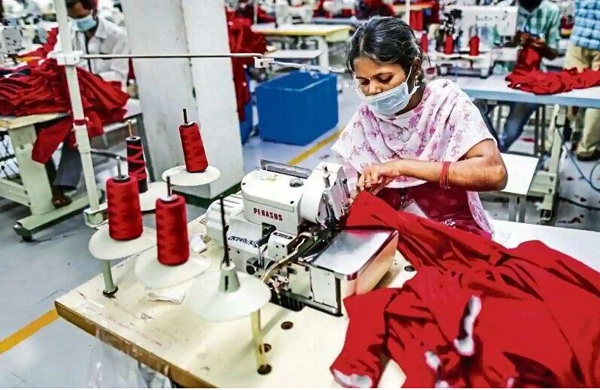
Reducing dependence on China, international brands have been diverting their orders to India since the last three years. Exporters in the Tiruppur cluster have received more orders leading to a $44 billion jump in textile exports in 2021-22, says Raja Shanmugham, Managing Director, Warshaw International. CRISIL Ratings projects, India’s readymade garment exports will grow y 12-15 per cent this fiscal as customers across the world are diversifying their sourcing away from Sri Lanka and China.
Explore China Plus One strategy
Since 2020, global textile trade has been moving away from China due to the pandemic and supply chain disruptions. In December 2021, the US banned imports from Xinjiang. Other markets followed suit by adopting the ‘China Plus One’ strategy that encourages business with more countries.
India can leverage this opportunity by exploring the US, EU and UK markets that account for nearly half of its textile and apparel exports. The government can introduce policies to develop a business-friendly environment in the country and best-in-class infrastructure to attract more investments, recommends a report tabled by the Standing Committee on Commerce on Budget. The report also recommends the government to sign new Free or Preferential Trade Agreements (FTA) or interim and mini trade agreements with countries that seek to invest in India under the ‘China Plus One’ strategy.
Target $65 billion exports by 2026
A CII-Kearney report titled, ‘Creating a competitive advantage for India in the global textile and apparel industry’ says, to achieve $100 billion textile and apparel exports by 2030, India needs to increase textile exports to $65 billion by 2026. Gautam Nair, Owner, Matrix Clothing, points out, China too has been losing share in the global apparel market due to an increase in increase minimum wages and labor shortages. However, the loss of business to China has not benefitted India as textile exporters have not been able to cash in on the opportunity.
Obstacles remain despite advantages
Despite this, India offers several advantages including an integrated market with enough raw material supplies, and new government initiatives to boost textile manufacturing including the MITRA and the PLI schemes. India has also initiated negotiations for a trade agreement with the UK. It plans to sign an FTA with EU to allow duty-free access to Indian textiles besides other agreements with moderate-sized markets such as Australia, Canada and Japan. However, it would be difficult for Indian companies to replace Chinese supplies, as banks hesitate to offer credit to small and medium textile units says Shanmugham. One reason for this is fragmented manufacturing of Indian companies in most parts of the value chain, adds Dhall. Also, the suboptimal investment-to-return ration in India is below the capital cost.
Shanmugham believes, the MITRA scheme could help India create large textile players. However, setting up a textile park in the country requires up to three years, around 1,000 acre and many clearances, he adds. India’s high labor and power costs also make it exports more uncompetitive, affirms Nair. The government needs to restrict cotton and yarn exports by introducing quota systems and levying heavy duties.
As per an analysis by the CRISIL, India’s working capital requirement will increase marginally this fiscal. Domestic as well as export demand will also remain healthy with RMG manufacturers having enough capacity to meet the expected surge, says the report.
India has an opportunity to lead industry growth. To explore it, textile manufacturers need to expand scale, improve production processes and delivery timelines.
Government to launch PLI 2.O
The government plans to launch the second edition of production-linked incentive (PLI) scheme for textiles and has begun consultations with the industry.
PLI 2.0 for the textile sector is being considered as the ministry has an unutilized budget of about Rs 4,000 crore after it approved 64 applications with an investment potential of Rs 19,798 crore and projected turnover of Rs 1.93 lakh crore in the next five yeaRs under the fiRs t phase of the scheme last month.
Industry has demanded inclusion of knitted fabrics in the scheme, besides manmade fibre and technical textiles and a lower investment threshold of Rs 25 crore instead Rs 100 crore now. It also does not want the government to impose any condition to set up a new company for the purpose of investment.
One of the key demands of the industry is a lower investment threshold. In part-1 of the PLI schemes, the minimum investment required is Rs 300 crore and the minimum turnover required to be achieved for incentive is Rs 600 crore. In part-2, the industry has sought minimum investment threshold of Rs 100 crore and the minimum turnover ofRs 200 crore.