Indian textiles exports may be negatively affected if the Chinese currency continues its downward swing. The Yuan has fallen 4.9 per cent against the rupee to date and may fall further if the Chinese slowdown deepens further. The rupee depreciated by 44 per cent against the Yuan from 2009-2013, but the trend seems to have reversed in the current year with the rupee gaining 5 per cent year to date. Though Yuan's depreciation till date is too marginal to make a lasting impact, if its depreciation continues then the things could reverse.
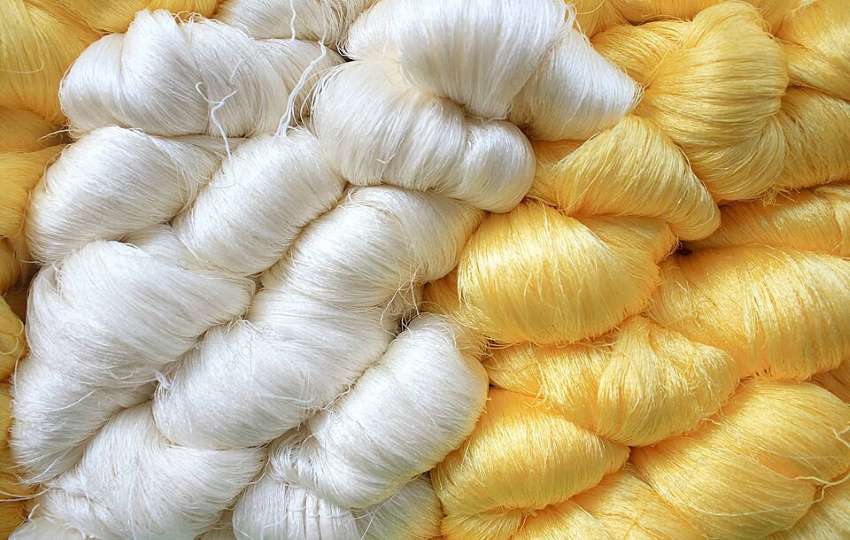
Since China is one of the largest commodity manufacturers, slow domestic growth and a weaker Yuan will help them increase exports, which would impact most of the Indian commodity companies. Textiles and engineering goods exports would be affected deeply. At present, 10 per cent of yarn produce of India goes to China. If the depreciation in the Chinese currency continues for six more months, India's cotton and yarn manufacturing companies would record a 3per cent-5per cent price decline.
Consistent demand for cotton and yarn from China had increased the revenue of most textile companies by 35 per cent- 40 per cent. Due to the expensive quota system in China and the Chinese government's cotton stock piling policy of supporting its farmers by buying cotton at high prices and selling them to farmers, most Chinese companies preferred buying cotton and yarn from India and Pakistan. But, the Yuan depreciation would now lead to Chinese companies buy raw materials from China itself, instead of souring from other countries.

- 1
- 2
- 3
- 4
- 5
- 6
- 7
- 8
- 9
- 10
MediaVision report signals the end of mass-market fashion marketing
" " The latest MediaVision Q1 2026 Fashion Report highlights, the age of broad-spectrum marketing and passive brand awareness is rapidly... Read more
Circularity as Strategy: BRICS countries turn waste into competitive advantage
The global fashion industry’s long-standing take-make-dispose model is being reset as BRICS economies increase their transition toward circular production systems.... Read more
Amazon’s €15 bn bet on France and the future of commerce
As Europe’s luxury sector enters a phase of austerity, a parallel transformation is unfolding in the continent’s retail foundations. What... Read more
Global Sourcing Expo Sydney 2026: Bridging the gap in global apparel procurement
The upcoming Global Sourcing Expo Sydney, scheduled for June 16–18, 2026, at the International Convention Centre (ICC) Sydney, is poised... Read more
Zara’s precision retail model leaves global competitors drowning in inventory
The global apparel sector is currently grappling with a punishing inventory overhang, yet Inditex, the parent company of Zara, has... Read more
Beyond the mall collapse, the profit push driving 2026 retail closures
The American retail sector has entered 2026 in the midst of one of its most impactful recalibrations in decades. Over... Read more
Status, Rewired: Health, AI and experience are displacing heritage luxury
The global luxury industry is not facing a demand fall it is confronting a redefinition of value. As bellwethers like... Read more
No More Easy Wins: Why global retailers are losing ground in China
China’s retail sector has entered a new phase, one defined not by aspiration, but by scrutiny. The long-standing advantage enjoyed... Read more
India’s 45°C economy is reshaping apparel retail and consumer spending
The intensifying heatwaves sweeping across the Indian subcontinent are no longer mere meteorological anomalies; they have become the primary engineers... Read more
FY26 Textile Scorecard: Integration, specialization are winning the margin battl…
As the curtains close on FY2025-26, India’s textile industry is revealing a sharp divide. On one side stand integrated and... Read more