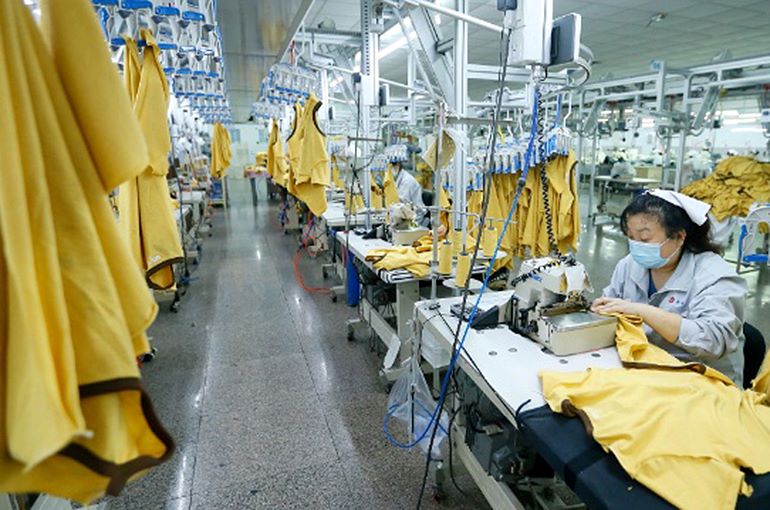
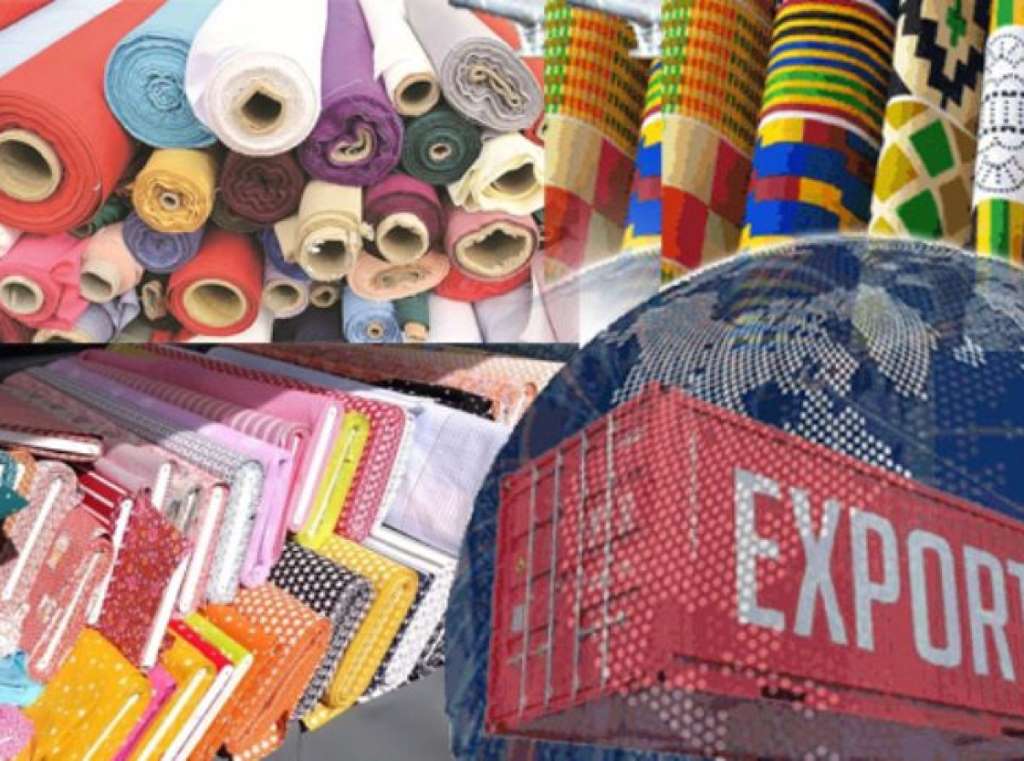
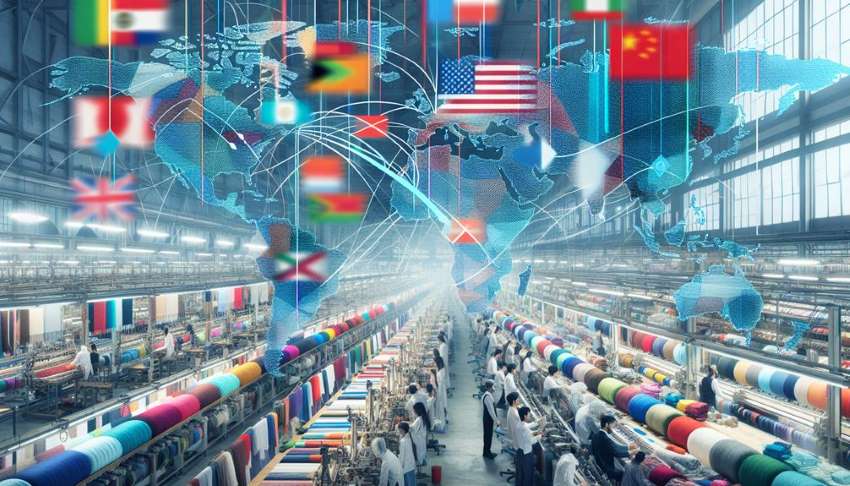
Over five lakh workers employed in readymade garment units in and around Tirupur have not been paid wages, following the demonetisation initiative. Another two lakh workers employed in small and medium spinning and weaving mills have also got impacted due to the cash crunch.
Most of these workers do not have a savings bank account and 70 per cent are migrant workers from the North and Northeastern India. There are over 5,00,000 workers employed in more than 1,200 knitwear or garment units in and around Tirupur and they get paid an average weekly wage of around Rs 3000.
Not only workers, owners too have suffered. While could not pay weekly wages to workers on time, they themselves could not mop up the necessary funds from their buyers who too were hit hard by the decision.
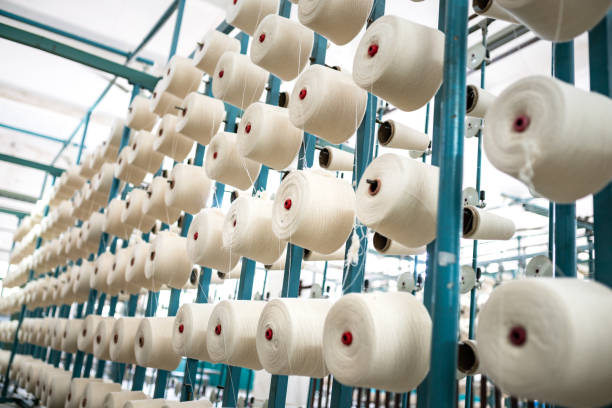
There was a 15 to 20 per cent decline in the offtake of yarn from spinning mills in the last few days due to the cash crunch. Most of the buyers pay cash to get their stocks delivered. The move has impacted the mills in a number of ways, including payment of logistics costs, workers’ wages, cotton purchase and other daily cash-based activities.

- 1
- 2
- 3
- 4
- 5
- 6
- 7
- 8
- 9
- 10
Global Sourcing Expo Sydney 2026: Bridging the gap in global apparel procurement
The upcoming Global Sourcing Expo Sydney, scheduled for June 16–18, 2026, at the International Convention Centre (ICC) Sydney, is poised... Read more
Zara’s precision retail model leaves global competitors drowning in inventory
The global apparel sector is currently grappling with a punishing inventory overhang, yet Inditex, the parent company of Zara, has... Read more
Beyond the mall collapse, the profit push driving 2026 retail closures
The American retail sector has entered 2026 in the midst of one of its most impactful recalibrations in decades. Over... Read more
Status, Rewired: Health, AI and experience are displacing heritage luxury
The global luxury industry is not facing a demand fall it is confronting a redefinition of value. As bellwethers like... Read more
No More Easy Wins: Why global retailers are losing ground in China
China’s retail sector has entered a new phase, one defined not by aspiration, but by scrutiny. The long-standing advantage enjoyed... Read more
India’s 45°C economy is reshaping apparel retail and consumer spending
The intensifying heatwaves sweeping across the Indian subcontinent are no longer mere meteorological anomalies; they have become the primary engineers... Read more
FY26 Textile Scorecard: Integration, specialization are winning the margin battl…
As the curtains close on FY2025-26, India’s textile industry is revealing a sharp divide. On one side stand integrated and... Read more
Intertextile Shenzhen 2026: Pioneering the Future of Textile Innovation
As Shenzhen cements its status as China’s premier hub for manufacturing, artificial intelligence, and startup cultivation, Intertextile Shenzhen Apparel Fabrics... Read more
The Devil Wears Prada 2 reflects fashion’s power shift, where consumers replace …
" " The release of The Devil Wears Prada 2 has sparked a debate far bigger than a Hollywood sequel. What... Read more
The 30-minute problem reshaping the $63 bn leggings market
The global leggings makers are racing to solve one of the apparel industry’s most expensive hidden problems: discomfort that appears... Read more