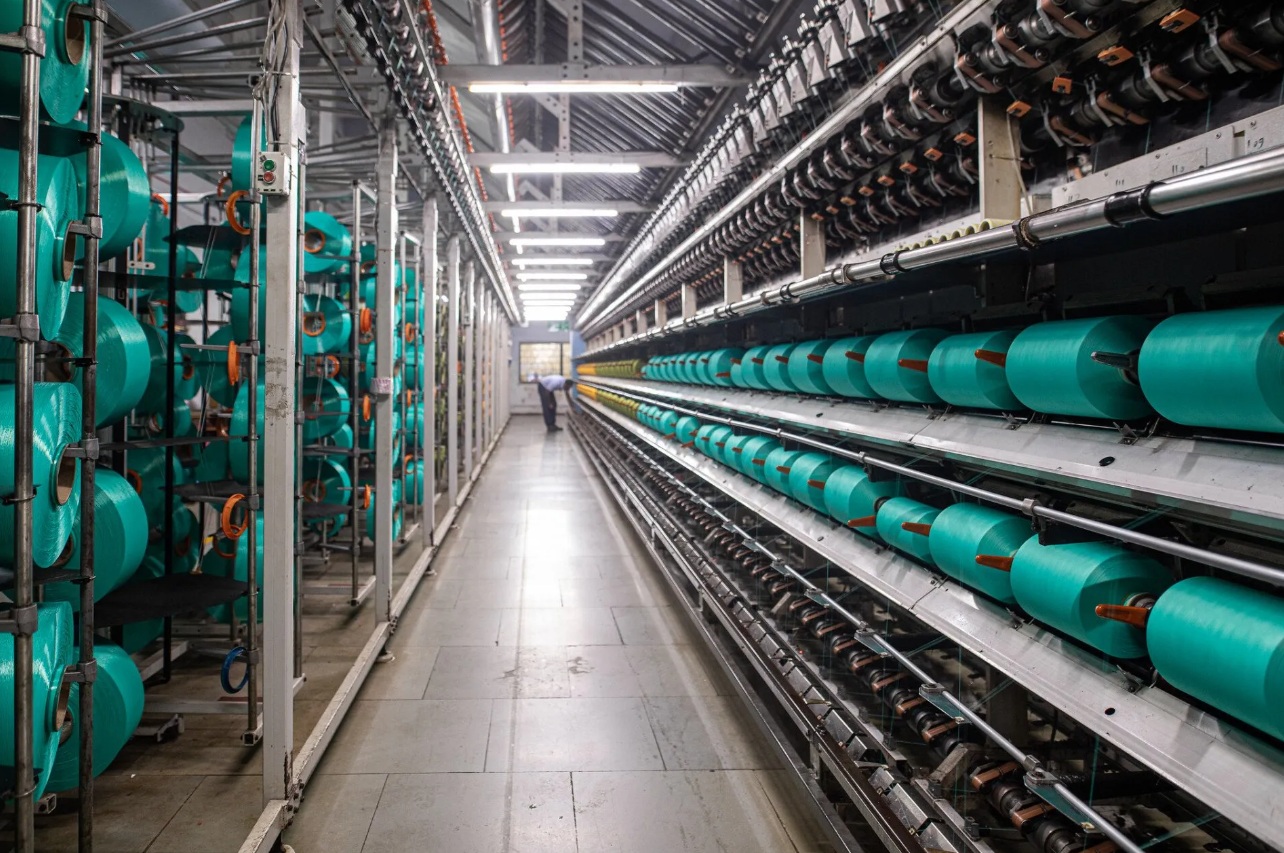
The Southern Gujarat Chamber of Commerce and Industry (SGCCI) has officially inaugurated the 13th edition of the Surat International Textile Expo (SITEX 2026) at the Surat International Exhibition and Convention Centre. Running from February 21 to 23, the event serves as a critical barometer for India’s textile engineering sector, which is projected to reach a market valuation of $3.58 billion this year. With over 110 exhibitors and 30,000 registered stakeholders, the expo highlights a structural shift toward high-speed automation and energy-efficient weaving.
Strategic modernization and global debuts
SITEX 2026 is distinguished by the unveiling of several textile machines appearing for the first time on a global stage. Leading the technological charge, Swiss innovator Stäubli showcased its next-generation LX PRO Jacquard machine and S3018 rotary dobby, specifically engineered for the high-intensity water-jet weaving demands of the Surat cluster. These advancements align with the Union Budget 2026–27 priorities, which emphasize a Rs 5,279 crore allocation to catalyze scale and sustainable manufacturing. Industry experts at the venue estimate that integrating such automated systems can enhance output by 25 per cent while simultaneously reducing labor-dependent overheads.
Sustainability and market competitiveness
The expo also addresses the ‘Tex-Eco’ mandate, with a heavy focus on technical textiles and circular fiber processing. As India targets a $100 billion export goal by 2030, Surat’s Man-Made Fiber (MMF) industry is leveraging SITEX to bridge the productivity gap with regional competitors. The showcasing of circular knitting and high-efficiency finishing machines - expected to hold nearly 30 per cent of the machinery market share this year - reflects a localized push to meet stringent European ESG compliance standards.
Established in 1940, The Southern Gujarat Chamber of Commerce and Industry (SGCCI) is the apex body driving the Rs 4,000 crore investment cycle in South Gujarat’s MMF sector. Serving 12,000 members, it focuses on modernizing weaving clusters to achieve the ‘Vision 2030’ textile export objective of Rs 9 lakh crore.