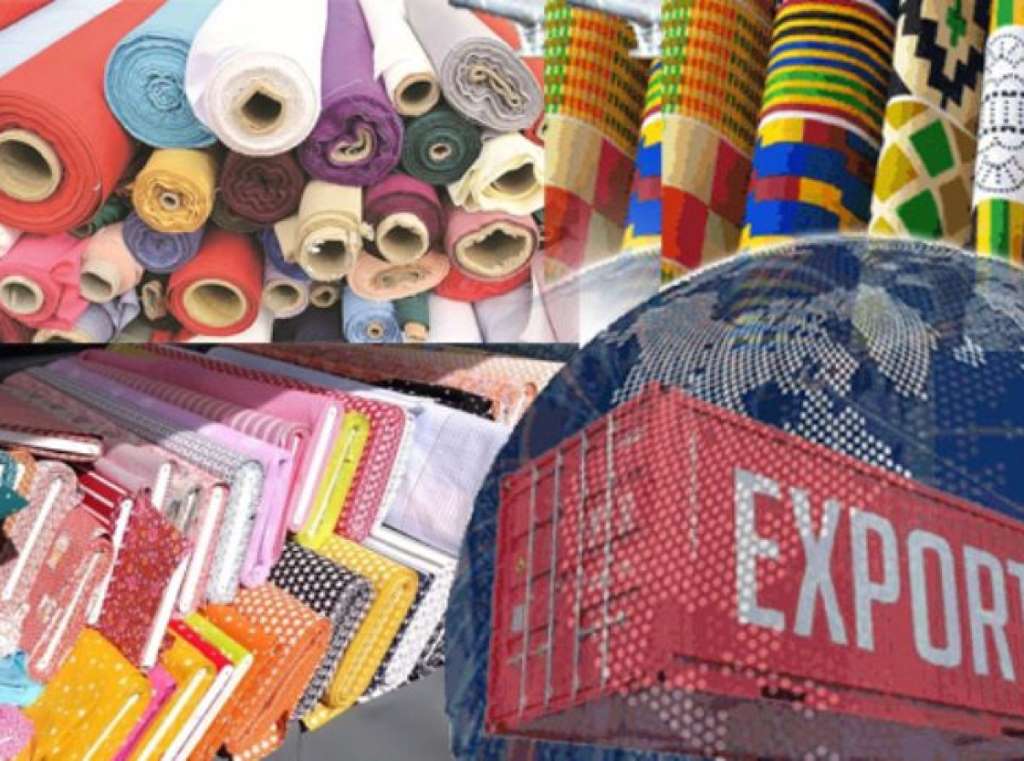
In early February 2026, a landmark reciprocal trade agreement between the US and Bangladesh was concluded, marking a new chapter in global textiles trade. Under this pact, the US agreed to reduce its general tariff on Bangladeshi exports to about 19 per cent, and more importantly, introduced a zero-tariff provision for select Bangladeshi textile and apparel products that are manufactured using US-sourced cotton or man-made fiber inputs.
For Bangladesh, a country whose garment industry is its economic backbone the deal is significant. The textiles sector accounts for a major share of its export earnings and employs millions of workers. Zero tariffs on certain products destined for the US market could potentially lower landed costs for Bangladeshi exporters and make their garments more competitive, particularly with major US buyers seeking cost efficiencies.
At the same time, India has also been engaged in its own trade negotiations with the US. Newer arrangements have reduced US tariffs on Indian textile exports to around 18 per cent, a meaningful improvement from previous levels. However, India’s tariff advantage, perceived as a clear edge over regional competitors is now being viewed through a different lens in light of Bangladesh’s emerging tariff concessions.
This juxtaposition of trade deals has created a complex competitive scenario. India’s textile exporters and industry stakeholders find themselves both reassured and alarmed reassured that tariff barriers have eased compared with previous punitive rates, and alarmed that Bangladesh’s conditional zero-tariff access could shave off price advantages in some product segments. Tariffs, costs and market dynamics The heart of the matter lies in how tariffs and sourcing requirements shape buyer decisions. For Indian exporters to the US, particularly in labour-intensive apparel categories such as T-shirts, casual wear and basic cotton garments the relative tariff burden remains critical. With Bangladesh able to offer certain finished apparel tariff-free if they meet the US-input condition, this alters the price differential in the minds of US importers and global supply-chain managers.
Yet this is only part of the narrative. India’s textile sector is very diversified, covering not just labour-intensive garments but also cotton yarn, fabrics, home textiles and technical textiles. Bangladesh, by contrast, has a narrower export mix, heavily centered on ready-made garments. In segments where Indian firms hold technological, quality or product-diversity advantages such as technical textiles or high-end fabrics, the competitive threat is less pronounced.
Table: Comparison of the tariffs and related conditions reshaping trade
|
Feature |
Bangladesh |
India |
|
Standard US Reciprocal Tariff |
19% (Reduced from 37% in Feb 2026) |
18% (Strategic reduction from 50% in Feb 2026) |
|
Zero Tariff Provision |
Yes; Zero duty for products using US cotton/MMF (subject to quota) |
Limited; Focus is on the 18% flat rate, though re-exports with 20% value-add may see concessions |
|
Primary Export Focus |
Mass-market Ready-made Garments (RMG); Basics (T-shirts, trousers) |
Broad mix: Apparel, yarns, fabrics, and growing Technical Textiles |
|
Relative Labor Cost |
Lower; Remains the global hub for low-cost, high-volume production |
Higher; Shifting toward skilled, value-added, and "sustainable" apparel |
|
Vertical Integration |
Low; Heavily dependent on imported yarn/fabric (mostly from China/India) |
High; farm-to-fiber integration (domestic cotton and spinning) |
|
Dependence on US Market |
Significant (approx. 15-18% of exports), but EU remains primary |
Significant; US is the top destination, with growing share in niche markets |
Market dynamics
The cotton trap: While Bangladesh secured a 0 per cent tariff on goods made with US cotton, industry experts note this may be difficult to scale quickly. Bangladesh currently sources the vast majority of its raw materials from India and China; switching to US cotton involves higher freight costs and longer lead times.
India’s advantage: India’s 18 per cent tariff is a flat advantage across more categories. Because India is vertically integrated (it grows its own cotton and spins its own yarn), it doesn't need to import US materials to remain competitive, whereas Bangladesh must buy American to hit that 0 per cent mark.
The EU factor: While the US market is a battleground, India recently signed a comprehensive FTA with the European Union (Feb 2026), which eliminates duties on nearly 99.5 per cent of Indian exports. This puts massive pressure on Bangladesh, which is also preparing to graduate from LDC (Least Developed Country) status.
Immediate market reactions and policy responses
The announcement of the US-Bangladesh agreement triggered measurable reactions in Indian financial markets. Shares of several listed textile firms experienced declines on concerns that increased competition from tariff-free Bangladeshi products could weigh on future export volumes and margins, even as Indian tariffs were lowered under parallel negotiations.
Industry bodies and political stakeholders within India have actively debated this shift. Critics argue that Bangladesh’s zero-duty provision could undermine Indian cotton and yarn exports to Dhaka, given that Bangladesh is a major importer of Indian raw materials. If Bangladeshi manufacturers pivot toward US cotton to qualify for tariff exemptions, this could reduce demand for Indian cotton and yarn areas in which India has historically held export strength.
At the same time, business councils and exporters note that realignment in supply chains is rarely instantaneous. Sourcing patterns, logistics agreements, and contractual commitments with buyers take time to evolve. While Bangladesh’s tariff rules provide an incentive to increase procurement of certain US inputs, the entrenched role of Indian yarn and fabrics in regional value chains still gives Indian suppliers time to adapt.
Paths to strategic advantage for Indian firms
Indian textile leaders recognize that surviving and thriving in this new arrangement requires both policy engagement and operational agility. One clear avenue is negotiating reciprocal benefits or equivalent tariff exemptions tied to US inputs. If Indian manufacturers can qualify some products for similar zero-tariff access, they could neutralize Bangladesh’s price edge.
Another thrust lies in market diversification. While the US remains a critical destination for Indian textiles, Europe, the UK and other markets offer duty-free or preferential access under separate trade frameworks. Indian firms that can pivot to these markets, especially with higher-value or design-led products may offset competitive pressures from the US. In addition, India’s investment in technical textiles, innovative fabrics and value-added products can create niches that Bangladesh, with its labour-intensive focus, cannot easily replicate. These segments tend to have higher margins and are less sensitive to small tariff differentials, positioning Indian exporters to retain a competitive foothold globally.
Long-term structural implications
Over the longer term, the restructuring of textiles trade within the context of US tariff policy is likely to reshape supply chains across South and Southeast Asia. Bangladesh’s conditional tariff benefit links market access to upstream sourcing from the US, a model that may inspire similar conditional access clauses in other agreements. India’s policy response, therefore, needs to be forward-looking, aligning trade diplomacy with industry transformation.
While some industry voices believe the deal poses only a limited threat to India’s textile exports given the distinct market segments served by each country others caution that the competitive landscape will increasingly be defined by flexibility in sourcing, cost structures and buyer preferences. Over time, Indian firms that can seamlessly integrate across fibres, fabrics and finished apparel, while leveraging free-trade frameworks in other markets, may emerge stronger despite short-term disruptions.
Indeed, the US-Bangladesh trade agreement has injected both challenge and urgency into India’s textiles strategy. While Bangladesh’s zero-tariff access for products using US inputs introduces a fresh competitive dimension, India’s diversified industry structure, policy options for tariff reciprocity, and global market outreach collectively offer pathways for responsive growth. How Indian textile firms adapt through negotiation, diversification and value addition will determine whether this moment becomes a setback or a springboard for renewed global competitiveness.