India should allow its currency to slide, says a Assocham study, else Indian exports will suffer at the hands of China and other emerging countries witnessing corrections in their currencies.
The RBI should use its foreign exchange reserves to defend the currency only if there is a rout situation. In the meantime, India must also ensure that its exports need to get back their competitiveness even in the midst of the global slowdown.
The major challenge is coming from China in various forms with a sizeable influence on currency valuation. Yuan devaluation will negatively impact Indian firms, which have export exposure to China in sectors such as tyres, pharmaceuticals, steel and organic chemicals textiles due to a volatile change in the terms of trade. The devaluation will make Indian exports expensive.
With a sharp reduction in the prices of primary commodities, which India ships out, export value is bound to decline in a disproportionate manner to imports since the inward shipments comprise capital, telecom and manufactured goods. In 2014-15, the trade imbalance increased by over a third from the previous year. This large trade deficit is essentially a reflection of India’s inability to penetrate the Chinese markets, a problem that seems to have aggravated over the past three years.

- 1
- 2
- 3
- 4
- 5
- 6
- 7
- 8
- 9
- 10
Europe cuts apparel volumes and prices, testing South Asian suppliers
European apparel sourcing entered 2026 under simultaneous volume and price pressure, forcing suppliers to absorb a decline that is reshaping... Read more
FICCI-TAG 2026: Mandatory reporting & Textile ID rolled out; Non-Compliance …
In a stern regulatory announcement aimed at creating a robust statistical backbone for India's textile sector, Textile Commissioner Vrunda Manohar... Read more
India’s apparel exporters face a new US tariff risk as margins shrink
The enactment of the Lindsey O. Graham sanctioning Russia and Iran Act of 2026 in Washington has introduced a fresh... Read more
Cellulosics challenge polyester dominance in global fibre market
The global textile raw-materials market has entered a phase where plant-based and regenerated cellulosic fibres have gain ground against fossil-fuel-derived... Read more
From cotton to MMF cost equation is rewriting global textile trade
The global textile and apparel trade has grown from $560 billion in 2006 to $914 billion in 2025, reveals the... Read more
Polyethylene stretch yarn challenges elastane’s hold on activewear
The global activewear, denim and intimate apparel markets have built a substantial business around stretch. But the same fibre combinations... Read more
Automation Meets Italian Design: FFI Srl unveils ‘Next-Gen Robotics’ to help bra…
At the recently concluded autumn edition of Ready to Show inside Hall 10 at Fiera Milano-Rho—staged alongside the Milano Fashion... Read more
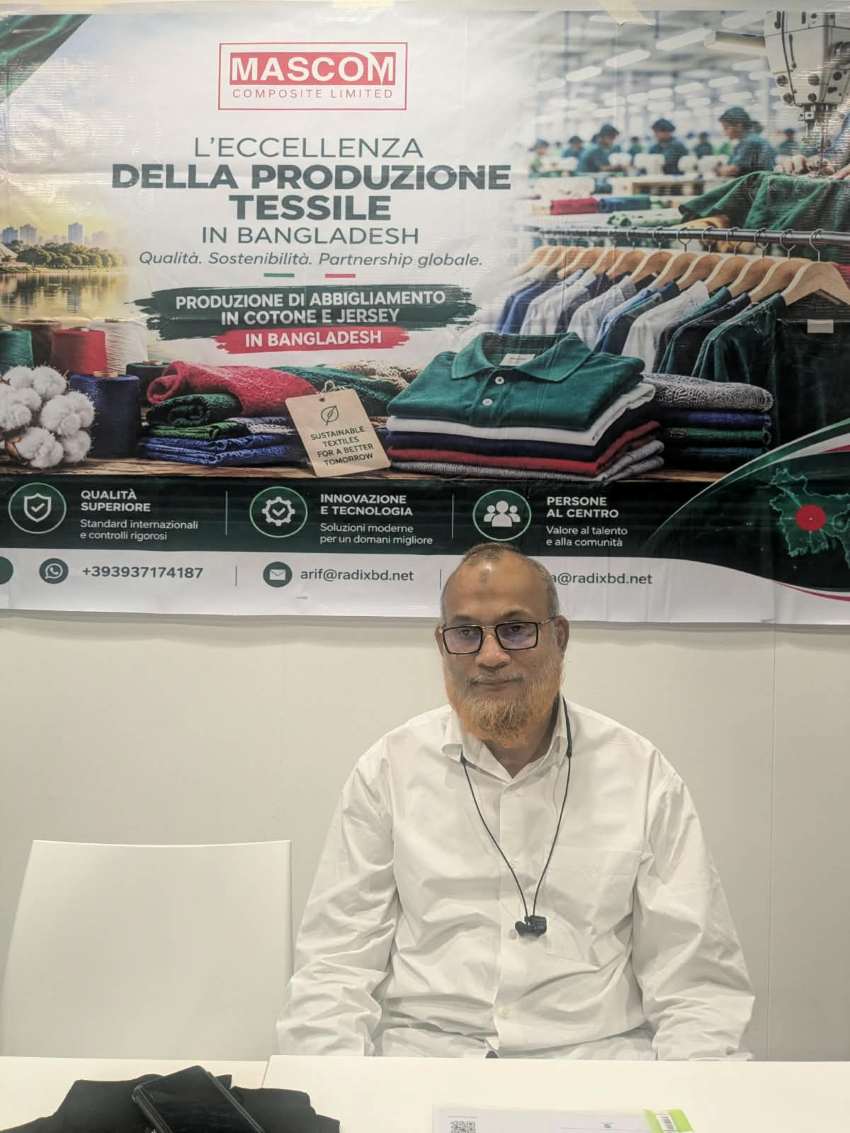
From Dhaka to Milan: Mascom Composite backs Southern Europe’s sports and lifesty…
While the trade floor of Ready to Show Milano inside Hall 10 at Fiera Milano-Rho placed a heavy spotlight on... Read more
How surging silver prices are reshaping ‘Mid-Tier’ fashion jewellery
Escalating global bullion volatility and raw material pricing pressures are forcing a fundamental reassessment across the mid-tier fashion jewellery trade.... Read more
Milano Fashion & Jewels: How ‘Re-Engineered’ heritage crafts are driving hig…
A counter-movement against industrial uniformity is reshaping European bijouterie, transforming authentic craftsmanship into a powerful lever for high-margin boutique growth.... Read more