Workers in factories of South India that produce clothing for Dutch brands are exploited and poorly paid. Women get paid lower than men for doing the same work. Many garment workers are indebted, with most of them having taken loans. Savings from monthly wages are a distant dream.
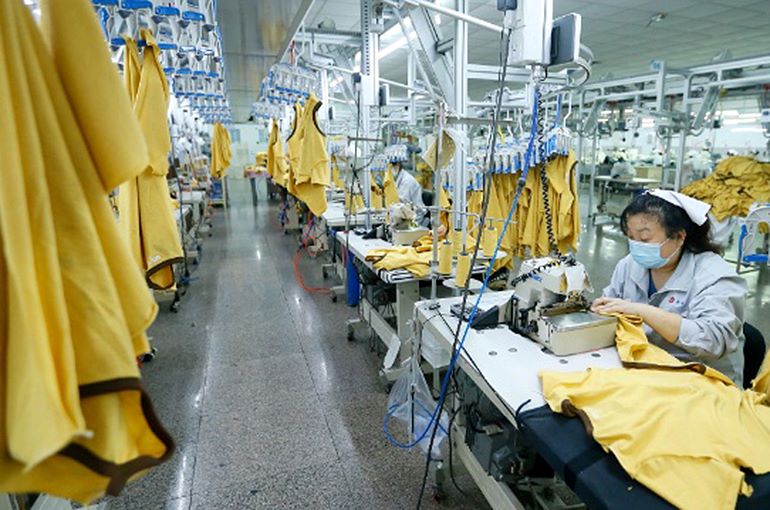
The production target is easy to reach only when the product is easy and small. For finishing tasks, like attaching sleeves, cuffs or necks, the target is 60 to 90 per hour. The stress of production targets is constant. Supervisors shout and use abusive words. If a worker uses the factory bus, money is deducted from wages. Women workers are forced to resign if pregnant or if management thinks they are too slow and have to pause too often. Many Dutch brands are not transparent about where their garments are made.
The Indian textile and garment industry is the second largest foreign exchange earner after agriculture, with Bangalore as a major hub, accounting for about 15 per cent of the production of exported garments. There are about 1,200 garment factories in Karnataka, 700 of which are officially registered, employing an estimated 5,00,000 people, many of them migrants from Orissa, Assam and Jharkhand.
- 1
- 2
- 3
- 4
- 5
- 6
- 7
- 8
- 9
- 10
The second life economy gets a boost as resale outgrows traditional apparel reta…
For decades, resale existed in the margins of the apparel economy, thrift stores, peer-to-peer marketplaces, and charity bins quietly absorbing... Read more
Rising polyester costs shake India’s textile manufacturing hubs
India’s synthetic textile industry is confronting a sudden and destabilizing price shock that is reverberating across its vast manufacturing ecosystem.... Read more
Cotton markets hold firm as tariffs, higher supply reshape global fiber economic…
In a year marked by tariff escalations, geopolitical brinkmanship and a recalibration of global trade flows, the international cotton market... Read more
Beyond Cotton How Kapok could redefine sustainable insulation in textiles
In the lush, humid heart of Southeast Asian rainforests stands a giant, a silent sentinel of the forest canopy. Growing... Read more
Bharat Tex 2026: Redefining the global textile value chain
Union Minister of Textiles, Giriraj Singh, has officially unveiled Bharat Tex 2026, signaling a significant leap in India’s influence over... Read more
Intertextile Shanghai Spring 2026: A hub for global textile innovation
The textile industry’s pulse is quickening as Intertextile Shanghai Apparel Fabrics – Spring Edition prepares to open its doors from... Read more
Moscow Fashion Week 2026: Blending sustainable innovation with timeless glamour
Scheduled to run from March 14-19, 2026 in Moscow, Russia, the Moscow Fashion Week (MFW) is cementing its status as... Read more
The Store as Stage: How fashion is crafting immersive consumer worlds
The North American fashion retail sector in 2026 is shedding its product-first identity and shifting towards a model that values... Read more
Turning the supply chain upside down, on-demand production reshapes apparel
The global fashion industry, long celebrated for its creativity and scale, is facing a structural reckoning. For decades, retailers and... Read more
Intertex Milano 2026 - A global nexus for textile innovation
Intertex Milano is set to return this summer, confirming its status as a premier international destination for the textile and... Read more