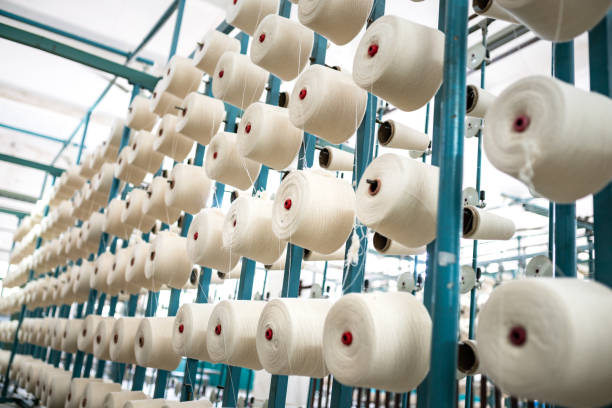
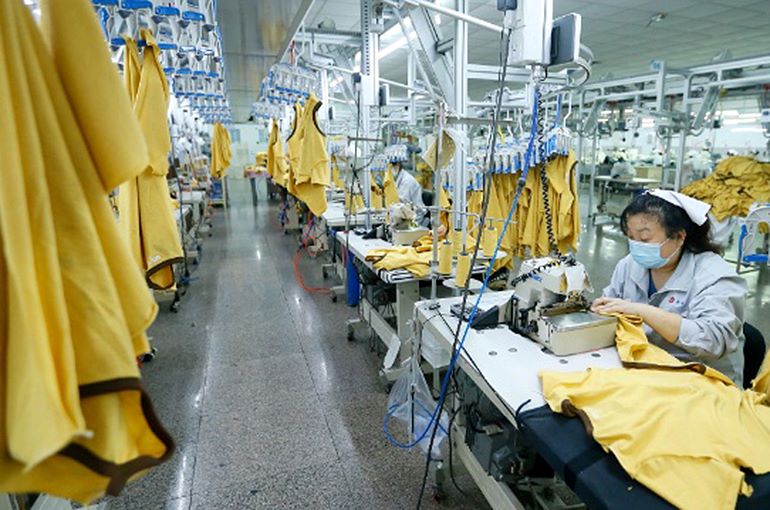
The Surat textile cluster is facing a labor shortage. These units are heavily dependent on migrant labor, especially from Uttar Pradesh, Bihar, Orissa and Rajasthan. These workers haven’t returned after Holi and have taken a prolonged vacation especially in view of the elections. And this is happening at a time when textile units are flooded with orders for fabrics, dress materials, sarees and home furnishing due to the peak marriage season. Production has fallen by nearly 30 per cent. On an average, the daily minimum dispatch of textiles from Surat to other cities is around Rs 125 crores, but this has fallen to Rs 90 crores.
Surat’s textile cluster is one of the biggest textile clusters of India. Mandap cloth manufacturers in Surat and neighboring places are facing a similar issue. Surat is the biggest manufacturer of mandap cloth in the country with more than 250 units manufacturing only mandap cloth. There are nearly 1000 other units manufacturing mandap cloth as well as other fabrics. Surat’s textile cluster consists of more than 6.50 lakh power looms, nearly 4.50 lakh process houses and about 70,000 traders who add value in terms of making dress material, sarees and readymade garments. The industry is often plagued with labor absenteeism in case of natural calamities or disasters in the states from where migrant laborers hail.

- 1
- 2
- 3
- 4
- 5
- 6
- 7
- 8
- 9
- 10
Global Sourcing Expo Sydney 2026: Bridging the gap in global apparel procurement
The upcoming Global Sourcing Expo Sydney, scheduled for June 16–18, 2026, at the International Convention Centre (ICC) Sydney, is poised... Read more
Zara’s precision retail model leaves global competitors drowning in inventory
The global apparel sector is currently grappling with a punishing inventory overhang, yet Inditex, the parent company of Zara, has... Read more
Beyond the mall collapse, the profit push driving 2026 retail closures
The American retail sector has entered 2026 in the midst of one of its most impactful recalibrations in decades. Over... Read more
Status, Rewired: Health, AI and experience are displacing heritage luxury
The global luxury industry is not facing a demand fall it is confronting a redefinition of value. As bellwethers like... Read more
No More Easy Wins: Why global retailers are losing ground in China
China’s retail sector has entered a new phase, one defined not by aspiration, but by scrutiny. The long-standing advantage enjoyed... Read more
India’s 45°C economy is reshaping apparel retail and consumer spending
The intensifying heatwaves sweeping across the Indian subcontinent are no longer mere meteorological anomalies; they have become the primary engineers... Read more
FY26 Textile Scorecard: Integration, specialization are winning the margin battl…
As the curtains close on FY2025-26, India’s textile industry is revealing a sharp divide. On one side stand integrated and... Read more
Intertextile Shenzhen 2026: Pioneering the Future of Textile Innovation
As Shenzhen cements its status as China’s premier hub for manufacturing, artificial intelligence, and startup cultivation, Intertextile Shenzhen Apparel Fabrics... Read more
The Devil Wears Prada 2 reflects fashion’s power shift, where consumers replace …
" " The release of The Devil Wears Prada 2 has sparked a debate far bigger than a Hollywood sequel. What... Read more
The 30-minute problem reshaping the $63 bn leggings market
The global leggings makers are racing to solve one of the apparel industry’s most expensive hidden problems: discomfort that appears... Read more