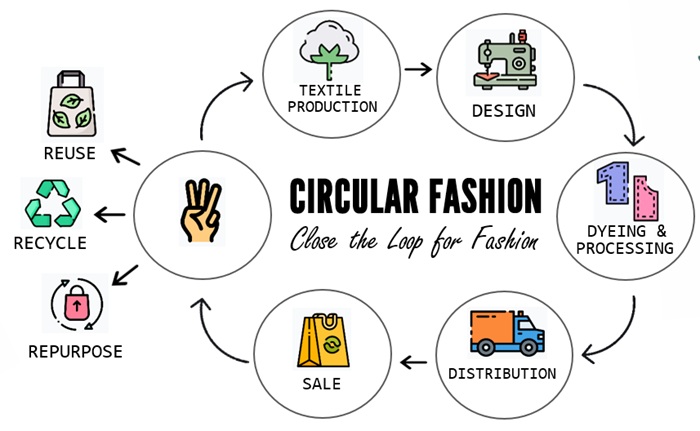
As Bangladesh nears its official graduation from Least Developed Country (LDC) status in November 2026, the Intex Bangladesh 2026 exhibition, scheduled for June 18–20 at the ICCB in Dhaka, has emerged as a critical platform for industrial recalibration. The event arrives as the nation’s apparel sector - valued at over $45 billion in annual exports - transitions from high-volume manufacturing to a value-added, circular model. To maintain duty-free access to the EU market via GSP Plus, local manufacturers are seeking global partners for bio-based materials and recycled fibers, moving beyond traditional cotton toward man-made fibers (MMF) and technical textiles.
Collaborative ecosystems and chemical innovation
The 18th edition introduces the InDyChem pavilion, a specialized zone focusing on sustainable dyes and finishing solutions, organized in partnership with the Basic Chemicals, Cosmetics & Dyes Export Promotion Council (CHEMEXCIL). This initiative addresses the urgent need for zero liquid discharge (ZLD) and water stewardship across the supply chain. Over 100 Indian companies supported by councils like TEXPROCIL and the Powerloom Development & Export Promotion Council (PDEXCIL) will showcase innovations in low-impact processing. Dr. Siddhartha Rajagopal, Executive Director of TEXPROCIL, noted that the event serves as a milestone for regional integration, facilitating direct access between global fiber suppliers and over 200 LEED-certified factories in Bangladesh.
Navigating global regulatory and economic headwinds
Despite a challenging global environment marked by energy supply fluctuations and Red Sea shipping disruptions, Bangladesh maintains its position as the world’s second-largest apparel exporter. The exhibition is designed to bridge the gap between international sustainability mandates, such as the EU’s Digital Product Passport (DPP), and ground-level manufacturing capabilities. By integrating blockchain-backed traceability and AI-driven production tools, exhibitors aim to reduce typical fabric waste- currently averaging 8 per cent - down to sub-3 per cent levels. Arti Bhagat, Executive Director, Worldex India, emphasized, the 2026 focus is on empowering the region with technologies that drive global competitiveness through transparency and resource efficiency.
Global textile connector: Intex South Asia
Intex South Asia is the region's premier international textile sourcing platform, connecting over 3,000 suppliers with 70,000 global buyers since 2015. Focused on fiber, yarn, and accessories, it facilitates trade across India, Bangladesh, and Sri Lanka. The organizers aim to accelerate intra-regional trade, supporting Bangladesh’s push toward a $100 billion apparel export target by 2030.