The global textile and apparel sector is undergoing a significant structural transformation, with the market valuation projected to reach $2.36 trillion by late 2026. This trajectory is increasingly underpinned by the e-textiles and smart clothing segment, which is expected to command a $3.08 billion valuation this year. Industry data indicates, approximately 60 per cent of this specific growth stems from consumer demand for integrated health-monitoring solutions. Unlike traditional garments, these high-functionality fabrics utilize conductive fibers and flexible sensors to track biometrics, representing a move toward ‘performance-as-a-service’ in the activewear and medical sectors.
Logistics decentralization and the e-commerce imperative
Supply chain resilience has replaced lean manufacturing as the primary operational priority. With online apparel sales anticipated to represent 25 per cent of total retail by 2026-end, brands are moving away from centralized distribution. Current logistics data reveals, 86 per cent of e-commerce enterprises are actively establishing distributed fulfillment nodes to reduce last-mile delivery times. This shift is a direct response to geopolitical volatility, such as the Red Sea disruptions, which have escalated shipping lead times by up to 40 per cent. Consequently, manufacturers are diversifying production hubs into South Asia and Mexico to mitigate single-region dependency.
Circular economy mandates and regulatory compliance
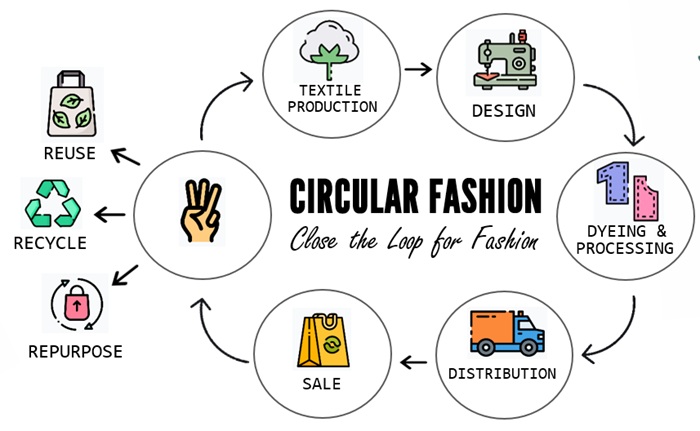
Sustainability is no longer a voluntary branding exercise but a core compliance requirement. The implementation of the EU’s Green Deal and India’s Solid Waste Management Rules 2026 has introduced mandatory reporting for Scope 1 and 2 emissions. These regulations are driving the textile waste management market toward a $10.05 billion valuation. The transition to a circular model is now an economic necessity, states a senior analyst at Frost & Sullivan. Companies failing to integrate recycled feedstock or digital product passports face an estimated 5-10 per cent increase in operational overhead due to carbon penalties and regulatory friction.
Industry composition and outlook
The global textile industry provides essential materials across fashion, industrial, and medical categories. Currently, synthetic fibers maintain a 68.9 per cent market share due to their cost-efficiency in technical applications. Moving into 2027, the sector focuses on nearshoring and enzymatic recycling to maintain a steady 4.2 per cent CAGR amidst fluctuating raw material costs.