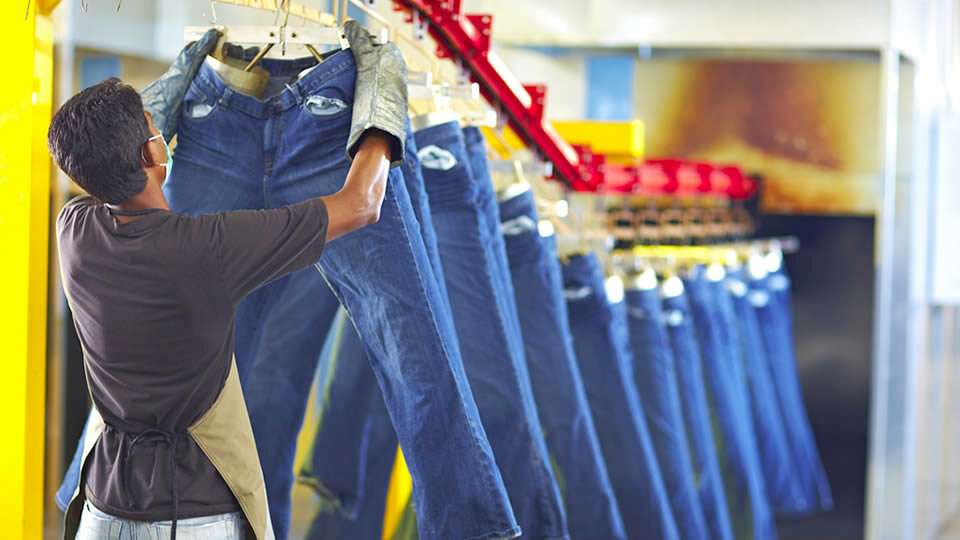
For the first quarter, Indonesian exports of non-knitted clothing declined by 2.9 per cent while shipment of knitted goods dropped by 4.9 per cent. Indonesia is preparing to start talks on the long-delayed comprehensive economic partnership agreement with the EU, which is expected to boost the competitiveness of its products to the 28-member bloc.
Without free trade deals, Indonesian textile and garment producers are currently being charged duties ranging from 11 to 30 per cent to main export destinations, including the EU and US. The trade arrangement may push down levies to as low as zero per cent, resulting in an enhanced edge of traded goods in terms of price.
Indonesia has seen its share decline in textile trading with major partners from 2007 to 2013. New challenges have been faced in recent years, including automatic electricity-price adjustments. Power prices fluctuate each month depending on the rupiah exchange rate, crude oil price and inflation.
Depreciation of the local currency against the dollar has been pushing up electricity rates, which contributes between 18 per cent and 26 per cent to costs in the textile and garment industry. Indonesia’s main destinations of textile and textile products are the US, Japan, Turkey, Germany and South Korea.
- 1
- 2
- 3
- 4
- 5
- 6
- 7
- 8
- 9
- 10
Beyond the DTC Rush: Levi’s hybrid channel strategy sets a new retail benchmark
The global apparel sector is entering a phase where channel strategy is no longer a tactical lever but a core... Read more
The New Rules of Resale: EPR turning secondhand into fashion’s strategic growth …
The global fashion industry is facing a decisive regulatory and commercial reset. What began as a sustainability narrative around reuse... Read more
The 2027 Mandate: Why denim’s future hinges on verifiable data
For decades, the global denim industry has relied on a narrative of durability, heritage, and authenticity. That narrative is now... Read more
Europe’s textile core unravels as costs, imports and policy pressure bite
Europe’s textile and apparel sector, long seen as a benchmark for craftsmanship and industrial depth, is slipping into a prolonged... Read more
Automation, innovation, regulation are the forces shaping textiles in 2026
The global textile sector has entered a new era. Early 2026 saw the industry breach a $1.06 trillion valuation, reflecting... Read more
The new Brussels rulebook, every EU apparel order is now a balance-sheet risk
The humble export order sheet is undergoing a transformation. What was once a straightforward commercial instrument: SKU, volume, FOB price,... Read more
Why 2026-27 could be a defining cotton year for India’s farm-to-fashion economy
The global cotton economy is entering a more constrained phase, and for India, the implications run far beyond the farm... Read more
Luxury resale’s next big battle is no longer digital, it is about who controls s…
For nearly a decade, the luxury resale story was written in the language of platforms. Market leadership was measured by... Read more
Digital Arms Race: Indian apparel giants deploy AI to neutralize tariff crisis
The Indian textile and apparel sector is in a digital survival phase in 2026, shifting from traditional labor-intensive models to... Read more
Europe’s Textile Endgame: Why Project FAE is becoming fashion’s most critical in…
Europe’s apparel majors are no longer treating circularity as a branding layer. With Project FAE or Feedstock Activation Europe, the... Read more