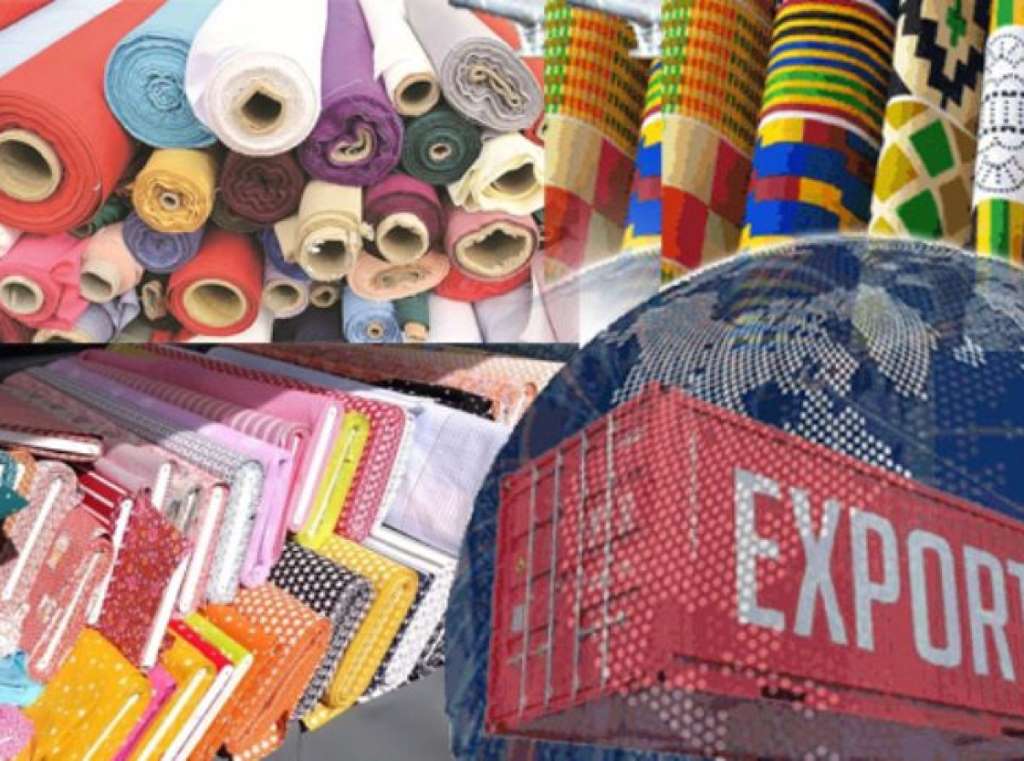
India has been implementing various schemes for the welfare and development of textile workers/weavers including handicraft artisans. Under the group insurance scheme, insurance cover is provided to all power loom weavers/workers in the case of natural death, accidental death as well as partial and permanent disability due to accident. Additionally, weavers/workers enrolled under this scheme are entitled for an educational grant for children for a maximum period of four years. Under the scheme, total number of power loom weavers/workers enrolled was 1.11 lakh in 2015-16, 1.32 lakh in 2016-17 and 1.62 lakh in 2017-18.
Welfare programs being implemented for handicraft artisans are the Rajiv Gandhi Shilpi Swasthya Bima Yojana, BimaYojana for handicrafts artisans, Aam Admi Bima Yojana, support to artisans in indigent circumstances, credit guarantee scheme, interest subvention scheme and issue of identity cards and creation of a data base.
Under the Textile Workers Rehabilitations Fund Scheme, which has been merged with the Rajiv Gandhi Shramik Kalyan Yojana, textile workers rendered jobless due to permanent closure of mills are provided a relief of 75 per cent of the wage employment in the first year, 50 per cent in the second and 25 per cent in the third year. Under the Handloom Weavers Comprehensive Welfare Scheme, life and accidental insurance is provided to handloom weavers/workers in the age group of 18 to 50 years.

- 1
- 2
- 3
- 4
- 5
- 6
- 7
- 8
- 9
- 10
Crude correction gives polyester a fresh cost advantage
A sustained correction in crude oil and petrochemical benchmarks is reshaping the economics of synthetic yarns, widening the cost gap... Read more
Chinese apparel majors trade volume for margin in premiumisation push
China’s apparel and consumer goods market is moving beyond the traditional volume-at-any-cost model, with leading domestic brands betting on premium... Read more
India’s MMF push faces rising risk from China’s petrochemical dominance
India’s ambition to build a globally competitive synthetic textile industry is facing constraints as downstream capacity alone cannot solve: concentration... Read more
Shein’s Vietnam retreat exposes the limits of nearshoring
The global apparel industry has spent the past few years pursuing a straightforward strategy: reduce dependence on China by moving... Read more
Regional pavilions compete on fiber strengths and supply chain niches at Yarn Ex…
The trade floor at Yarn Expo Autumn 2026 in Shanghai, held between Aug 25-27, capitalizing on a sharp rebound in... Read more
Inside activewear's shift from stitched mesh to precision engineered textiles
The global functional apparel market, on track to touch $640 billion, is looking at a production shift as activewear manufacturers... Read more
Brazil’s cotton dominance puts Asian spinners on a new sourcing map
Brazil’s emergence as the world’s largest cotton exporter is no longer simply an agricultural success story. It has given a... Read more
Textile industry sees long-term growth but $100-bn export goal stays a stretch: …
India’s textile and apparel industry is entering a phase of optimism, but that confidence is tempered by a hard export... Read more
Apparel trade slumps as global textile mills move upstream
Global manufacturing is growing, but finished apparel is failing to capture that growth. United Nations Industrial Development Organization (UNIDO) data... Read more
Global apparel value chain converges in Shanghai as Intertextile Autumn 2026 ope…
The global apparel and textile community gathered in full force yesterday, August 25, 2026, as the Autumn Edition of Intertextile... Read more