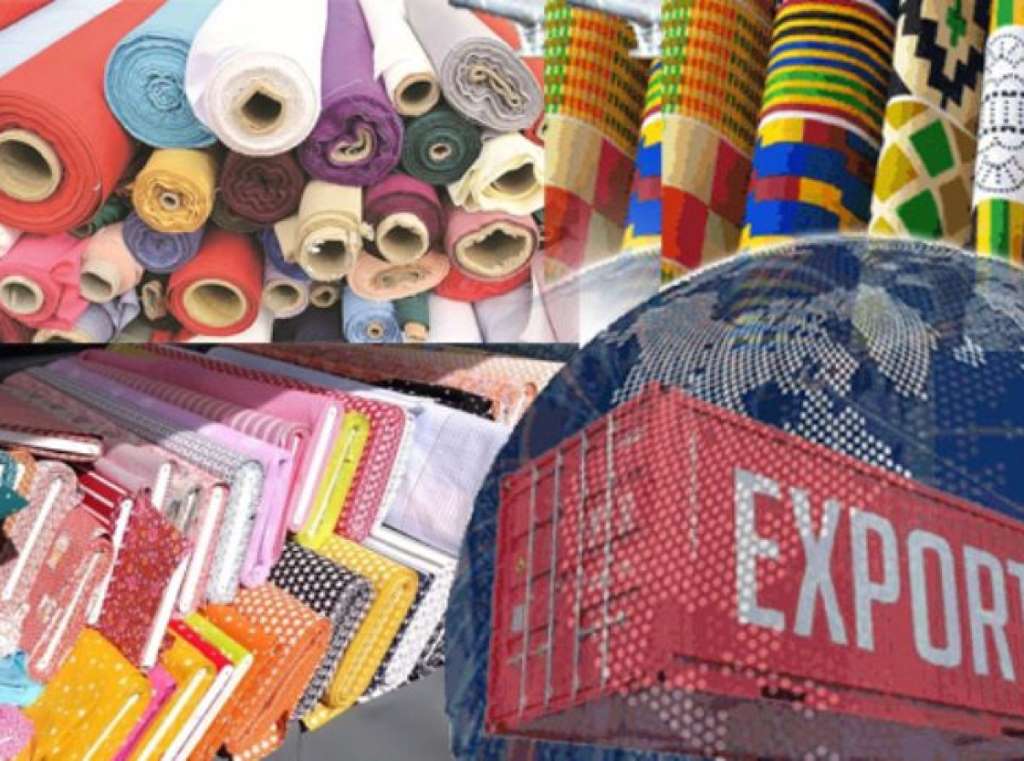
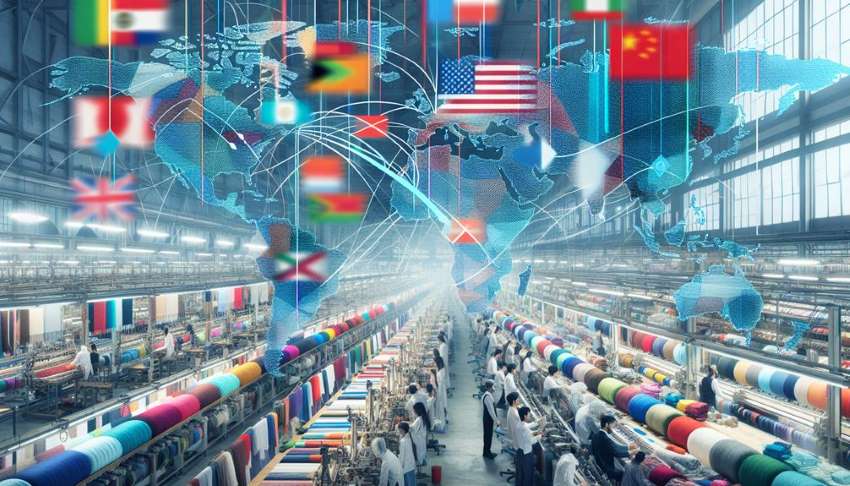
The textile industry in Ghana is facing serious difficulties.Workers are being laid-off because of the pace of smuggling of cheap and fake prints from China. The market is flooded with counterfeit textiles.
Togo and Ivory Coast are often the entry point for smugglers, with some Ghanaian market traders even travelling to China to collect designs.
The borders are very porous with only a few of them manned by security people, making it very easy for these counterfeiters to pass through.
Employment figures in the industry reduced from a high of 25,000 in 1975 to 5,000 in the year 2000, before sliding further down to 3,000 in 2003 and 1,500 at the close of 2016.
Similarly, production level of fabrics was 130 million meters in 1975, 46 million meters in 1995, 65 million meters in 2000 and 39 million meters in 2003. Today, production is below the 30 million meter mark.
Workers are calling for the re-activation of the textiles piracy task force that was set up in 2010 to deal with traders in counterfeit textiles.
While locally produced cotton is used by firms, many of the dyes, chemicals and machines are imported from abroad at significant prices.

- 1
- 2
- 3
- 4
- 5
- 6
- 7
- 8
- 9
- 10
Recycled polyester’s next growth phase will be driven by data, not fiber
For much of the last decade, recycled polyester was one of the easiest sustainability wins available to brands. Replacing virgin... Read more
Lefties becomes Inditex's new weapon against Primark and Shein
While much of the global apparel industry has focused on the rapid rise of digital-first retailers such as Shein and... Read more
Bangladesh’s apparel export model hits a breaking point as price wars reduce mar…
Bangladesh's apparel industry, long regarded as the world's manufacturing hub for affordable, high-volume garments, is facing one of its most... Read more
EU textile labeling crackdown exposes apparel supply chain compliance risks
The European apparel industry is facing a major compliance challenge after a coordinated market surveillance exercise by the European Commission... Read more
Can Surat overcome raw material volatility to become a global MMF hub?
Surat remains the undisputed heart of India's man-made fibre (MMF) textile industry. The Gujarat cluster produces nearly 65 per cent... Read more
Emerging markets redraw the global fashion spending map
The global apparel industry is facing a geographic realignment as rising middle-class in developing economies reshape consumer spending patterns. New... Read more
Shrinking cotton harvest puts global textile supply chains under pressure
The global textile industry is heading into another challenging procurement cycle as falling cotton production and shrinking cultivation areas threaten... Read more
Global Sourcing Expo Sydney 2026 reports 20% growth in attendance
The Global Sourcing Expo Sydney 2026 has officially concluded, marking a watershed moment for Australia’s textile and apparel trade sector.... Read more
Bharat Tex 2026: Setting the global standard for textile commerce and innovation
As the industry prepares for a major milestone, Bharat Tex 2026 is set to strengthen its position as the premier... Read more
UK fashion sourcing shifts south as Bangladesh overtakes China
The UK’s apparel sourcing has seen a realignment in recent years, as retailers increasingly diversify production away from traditional East... Read more