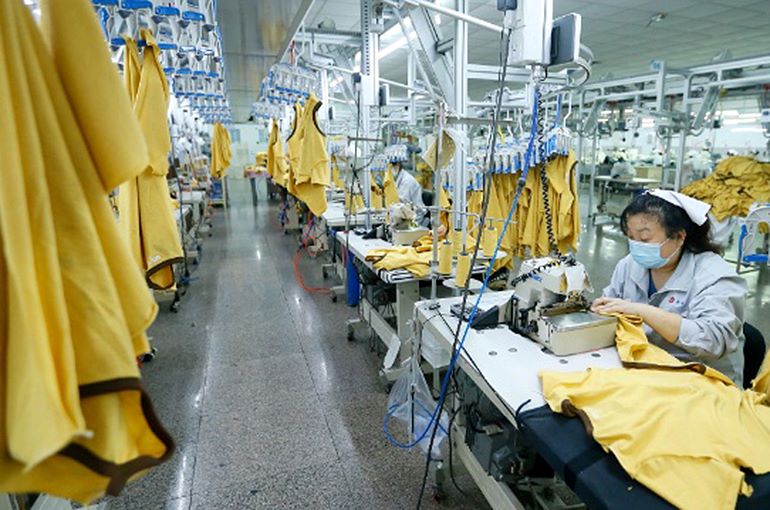
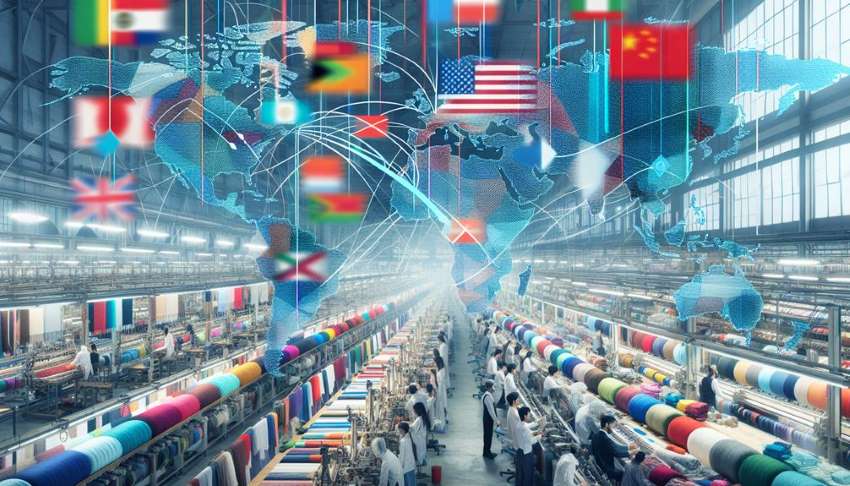
Climate changes may be affecting the readymade garment sector in Bangladesh. Diseases spike during extreme weather events. In garment factories, the humidity, combined with heat and fabric dust emitted by the sewing machines, makes breathing difficult. These conditions exhaust workers’ energy and focus, affecting their efficiency and productivity, which in turn also may be affecting the performance of the readymade garment sector.
From May to September, monsoon in Bangladesh brings tropical rains, muddy roads and a kind of shocking humidity that makes clothes stick to the skin. In addition to causing extreme temperatures, the monsoon’s heavy rains fill streets and seep into buildings, turning factories and residential areas into breeding grounds for mosquitoes and water-borne diseases.
Rising temperatures and more frequent flooding events are likely to increase with climate change, and in Bangladesh, this will affect the lives of the four million people working in the garment industry. These employees are disproportionately women. The industry is the largest employer of female workers in Bangladesh. By holding back the industry, climate change could undermine the progressive women’s social and economic achievements that Bangladesh has experienced over the last 30 years. The projections of increasing extreme weather events due to climate change pose a significant future risk for the garment industry.

- 1
- 2
- 3
- 4
- 5
- 6
- 7
- 8
- 9
- 10
Spykar accelerates offline expansion: plans 100 new stores across India
A titan of the Indian denim-first fashion scene, Spykar has officially unveiled an aggressive retail growth strategy. As consumer demand... Read more
The Inventory Illusion: Rethinking the Zara benchmark in a volatile retail era
For over a decade, the global fashion industry has treated the Zara playbook as the gold standard of inventory efficiency.... Read more
Retail Without Retail: How Walmart’s depot network is turning space into logisti…
Walmart is fundamentally rewriting the commercial real estate and retail logistics playbook with the rise of its ‘Walmart Depots’ a... Read more
Global textile regulation tightens, forcing realignment across fashion supply ch…
Global fashion and consumer goods supply chains are entering a decisive regulatory transition as Extended Producer Responsibility (EPR) frameworks for... Read more
Luxury’s new power axis, US dominance, China reset, Gulf surge
As the post-China luxury order takes shape, the US is emerging as the industry’s most dependable growth engine, while Japan,... Read more
India’s $9 Billion Landfill Blind Spot How trashed clothes hold the key to globa…
A massive economic windfall is sitting uncollected in India’s landfills, and the key to unlocking it lies in rethinking how... Read more
Red Sea crisis reshapes textile trade routes, challenges India’s export margins,…
Global apparel trade is now in a new operational phase where geopolitical stability and logistics reliability are as important as... Read more
EU’s textile waste rules enter enforcement phase, raising alarms across fashion …
Europe’s apparel and textile industry is approaching one of its most significant regulatory transitions in decades. As the European Union... Read more
Corporate fashion adopts reverse logistics to unlock the $367 bn resale market
Global fashion retailers are rapidly changing their business models around resale, repair, and textile recovery as the secondhand apparel market... Read more
Tariff Shock 2026: Forced-labor enforcement is repricing global fashion trade
Washington’s latest trade intervention signals a break in the global apparel sourcing patterns. The Office of the United States Trade... Read more