Lower imports and production and marginally higher consumption of cotton in China are expected to reduce China’s stocks-to-use ratio in 2015/16. China’s stocks-to-use ratio in 2015/16 is expected to slip to around 170 per cent, down from 190 per cent in 2014/15.
Although these are record high stock levels, China’s stock accumulation policy is not entirely unprecedented. Similar rapid stock run-ups occurred from 1982/83 to 1984/85 as well as from 1993/94 until 1998/99.
In previous cases, high stocks-to-use have usually been reduced by approximately 20 percentage points per year, similar to current 2015/16 forecasts for China.
Slightly lower 2015/16 stocks-to-use ratios are forecast for most major markets outside of China, both importers and exporters.
India’s stocks-to-use are forecast to decline from 48 to 43 per cent, while most other large markets are expected to see declines under five percentage points.
Bangladesh’s and southeast Asia’s stocks-to-use, on the other hand, are projected to remain roughly even or rise slightly.
The US season average farm price is projected at 60 cents a pound, with the mid-point slightly lower than the current season estimate.
For 2014/15, world production and ending stocks also have been reduced, while world trade has been raised on somewhat higher expected Chinese imports and use has been hiked slightly.

- 1
- 2
- 3
- 4
- 5
- 6
- 7
- 8
- 9
- 10
Europe cuts apparel volumes and prices, testing South Asian suppliers
European apparel sourcing entered 2026 under simultaneous volume and price pressure, forcing suppliers to absorb a decline that is reshaping... Read more
FICCI-TAG 2026: Mandatory reporting & Textile ID rolled out; Non-Compliance …
In a stern regulatory announcement aimed at creating a robust statistical backbone for India's textile sector, Textile Commissioner Vrunda Manohar... Read more
India’s apparel exporters face a new US tariff risk as margins shrink
The enactment of the Lindsey O. Graham sanctioning Russia and Iran Act of 2026 in Washington has introduced a fresh... Read more
Cellulosics challenge polyester dominance in global fibre market
The global textile raw-materials market has entered a phase where plant-based and regenerated cellulosic fibres have gain ground against fossil-fuel-derived... Read more
From cotton to MMF cost equation is rewriting global textile trade
The global textile and apparel trade has grown from $560 billion in 2006 to $914 billion in 2025, reveals the... Read more
Polyethylene stretch yarn challenges elastane’s hold on activewear
The global activewear, denim and intimate apparel markets have built a substantial business around stretch. But the same fibre combinations... Read more
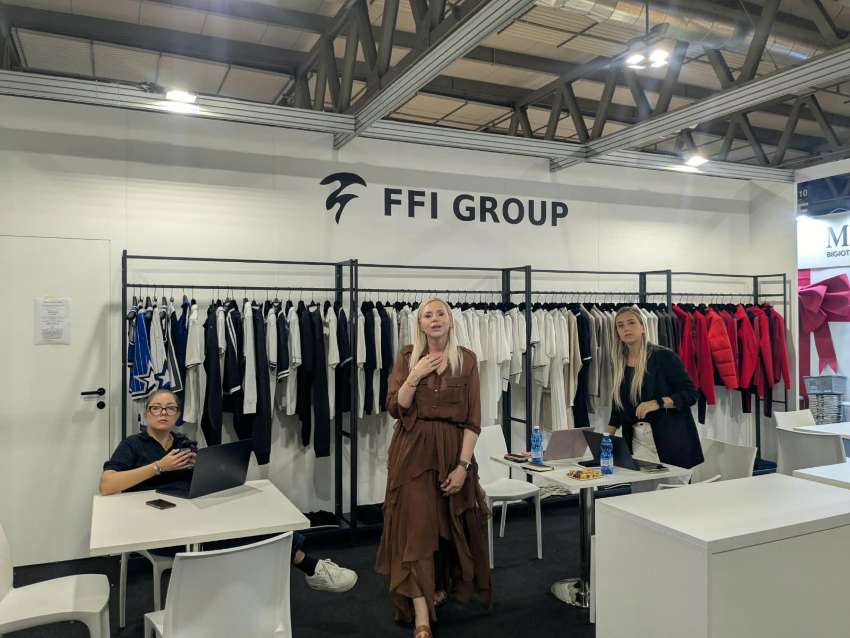
Automation Meets Italian Design: FFI Srl unveils ‘Next-Gen Robotics’ to help bra…
At the recently concluded autumn edition of Ready to Show inside Hall 10 at Fiera Milano-Rho—staged alongside the Milano Fashion... Read more
From Dhaka to Milan: Mascom Composite backs Southern Europe’s sports and lifesty…
While the trade floor of Ready to Show Milano inside Hall 10 at Fiera Milano-Rho placed a heavy spotlight on... Read more
How surging silver prices are reshaping ‘Mid-Tier’ fashion jewellery
Escalating global bullion volatility and raw material pricing pressures are forcing a fundamental reassessment across the mid-tier fashion jewellery trade.... Read more
Milano Fashion & Jewels: How ‘Re-Engineered’ heritage crafts are driving hig…
A counter-movement against industrial uniformity is reshaping European bijouterie, transforming authentic craftsmanship into a powerful lever for high-margin boutique growth.... Read more