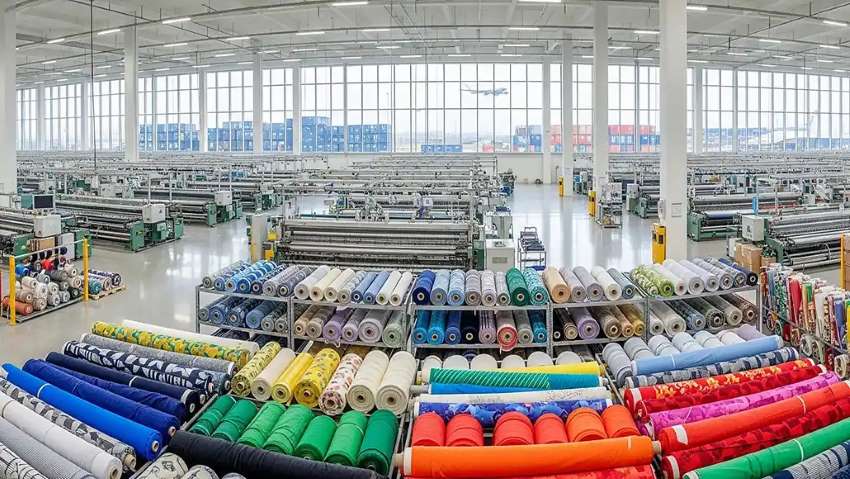
China’s cotton output increased 7.8 per cent this year.
The total area of cotton fields expanded 4.9 per cent and the yield per hectare edged up 2.8 per cent.
Northwest China’s Xinjiang Uygur Autonomous Region, the country's largest cotton growing area, saw an 11.9 per cent jump in cotton output and accounted for 83.8 per cent of the national total output this year, up three percentage points from 2017.
World cotton production for 2019 is forecast to be down, led by Pakistan, China, and India more than offsetting higher production in Brazil.
Trade is projected up with higher Brazil exports and rising Pakistan demand.
Global use is down sharply mainly because of China’s lower-than-expected annual growth amid uncertain economic prospects and textile exports.
China’s cotton stocks have drastically fallen, from 60 million bales in 2014 to just under 13 million bales.
This dramatic reduction has been due to three years of aggressive selling with 11.5 million bales sold in the latest annual round of selling which ended in September.
China was able to increase reserves dramatically as additional imports were allowed to offset purchases from the domestic crop.
In 2015-16, China’s shift away from a price support program for cotton caused internal prices to fall, which helped to boost consumption but also helped to lower production.
- 1
- 2
- 3
- 4
- 5
- 6
- 7
- 8
- 9
- 10
The £7 Billion Question: Who pays for fashion’s ‘free rental’ habit?
The global fashion industry is facing an uncomfortable paradox: its most valuable customers may also be its most destructive. A... Read more
India, China Bangladesh face fresh headwinds as global apparel markets rebalance
Global apparel trade is entering a more uneven recovery phase, with demand growth persisting but losing uniform momentum across major... Read more
Global cotton enters a deficit year in 2026 as supply drop meets logistics risk
The global cotton economy has entered a fragile and sensitive phase. Early projections for the 2026-27 season suggest that world... Read more
India’s textile trade gets a Pacific push as New Zealand FTA removes tariff barr…
India and New Zealand have inked a ‘once-in-a-generation’ Free Trade Agreement (FTA), one that will have a profound impact on... Read more
Lululemon’s world-first nylon circularity push signals a new apparel arms race
The global apparel industry’s circularity narrative is entering a more technically demanding phase. Polyester recycling once the flagship of sustainable... Read more
Beyond the DTC Rush: Levi’s hybrid channel strategy sets a new retail benchmark
The global apparel sector is entering a phase where channel strategy is no longer a tactical lever but a core... Read more
The New Rules of Resale: EPR turning secondhand into fashion’s strategic growth …
The global fashion industry is facing a decisive regulatory and commercial reset. What began as a sustainability narrative around reuse... Read more
The 2027 Mandate: Why denim’s future hinges on verifiable data
For decades, the global denim industry has relied on a narrative of durability, heritage, and authenticity. That narrative is now... Read more
Europe’s textile core unravels as costs, imports and policy pressure bite
Europe’s textile and apparel sector, long seen as a benchmark for craftsmanship and industrial depth, is slipping into a prolonged... Read more
Automation, innovation, regulation are the forces shaping textiles in 2026
The global textile sector has entered a new era. Early 2026 saw the industry breach a $1.06 trillion valuation, reflecting... Read more